It’s been nearly a decade since the smartphone market saw one of its most intense rivalries reach a peak. In 2016, the Samsung Galaxy S7 Edge and the Apple iPhone 7 Plus stood as flagships representing opposing philosophies in mobile technology. One embraced bold design and hardware innovation; the other prioritized ecosystem integration and long-term software support. Today, with the benefit of hindsight, it's worth asking: was the grass really greener on the other side?
Back then, consumers faced a real dilemma. Android loyalists praised Samsung’s curved display and expandable storage, while iPhone users celebrated iOS optimization and camera consistency. But how do these devices hold up now—not just in performance, but in lasting value, user satisfaction, and influence on future designs?
Design Philosophy: Curves vs. Corners
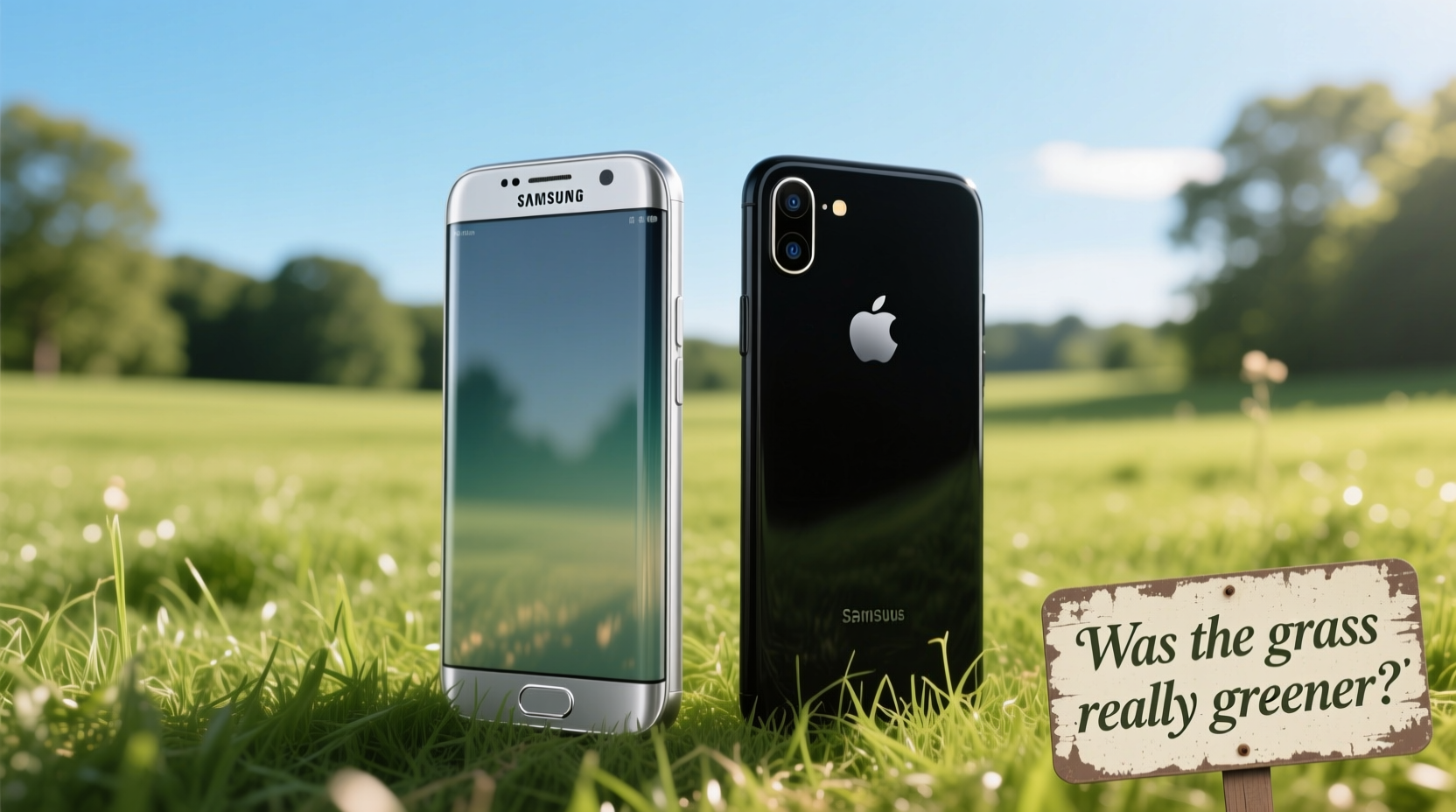
The Galaxy S7 Edge turned heads with its dual-edge AMOLED display, creating a sense of futuristic elegance. The glass-metal sandwich felt premium, and the curved screen wasn’t just aesthetic—it introduced edge panels for quick access to contacts and apps. At the time, it was a standout in industrial design.
In contrast, the iPhone 7 Plus took a more conservative approach. It refined Apple’s signature aerospace-grade aluminum body with improved water resistance (IP67) and removed the headphone jack—a controversial move that sparked debate. Its flat 5.5-inch LCD screen lacked the visual drama of Samsung’s curve, but offered better outdoor visibility and color accuracy for many users.
Tip: When evaluating phone design longevity, consider not just aesthetics but ergonomics—how well the device fits in hand over extended use.While the S7 Edge looked bolder, it was also more prone to accidental touches along the edges and slightly less durable when dropped. The iPhone, though heavier and boxier, proved sturdier in daily use. Design isn't just about first impressions—it's about how a device ages in your pocket.
Performance and Software Longevity
Under the hood, both phones were powerhouses for their era. The S7 Edge used either Qualcomm’s Snapdragon 820 or Samsung’s Exynos 8890, depending on region, paired with 4GB of RAM. The iPhone 7 Plus featured Apple’s A10 Fusion chip with 3GB of RAM. On paper, specs favored Samsung, but real-world efficiency told a different story.
iOS has always excelled in memory management. Despite having less RAM, the iPhone 7 Plus delivered smoother multitasking and longer app retention. More importantly, Apple provided five years of iOS updates, supporting the device through iOS 15. This meant security patches, feature upgrades, and compatibility with new apps well into the 2020s.
Samsung, at the time, offered only two major Android version updates. The S7 Edge launched with Android 6.0 Marshmallow and received updates to Nougat and Oreo. By 2019, it was effectively abandoned by Samsung, leaving users vulnerable to newer security threats and incompatible with modern apps.
“Software support is the true measure of a phone’s lifespan. A fast device today can become unusable tomorrow without updates.” — David Kim, Mobile Security Analyst at TechInsight Group
Battery Life and Charging: A Tale of Two Approaches
Battery capacity favored Samsung: 3,600mAh in the S7 Edge versus 2,900mAh in the iPhone 7 Plus. Yet real-world endurance was surprisingly close. Why? Because iOS’s efficient rendering and background process control helped the iPhone stretch its smaller battery further.
However, the S7 Edge had adaptive brightness, always-on display, and higher-resolution video playback—all features that drained power faster. Users often reported needing midday charges, especially with heavy usage.
Charging options diverged too. The S7 Edge supported fast charging and wireless charging out of the box—features Apple wouldn’t adopt fully until later models. The iPhone 7 Plus required a separate adapter for fast charging and didn’t support wireless charging at all.
| Feature | Samsung S7 Edge | iPhone 7 Plus |
|---|---|---|
| Battery Capacity | 3,600 mAh | 2,900 mAh |
| Fast Charging | Yes (wired) | Limited (with adapter) |
| Wireless Charging | Yes (Qi compatible) | No |
| Water Resistance | IP68 | IP67 |
| Expandable Storage | Yes (microSD up to 256GB) | No |
Camera Comparison: Innovation vs. Consistency
The iPhone 7 Plus made history by introducing a dual-camera system—wide and telephoto lenses—that enabled 2x optical zoom and portrait mode effects. While early versions of portrait mode struggled with edge detection, the foundation was laid for what would become a standard in smartphone photography.
The S7 Edge, meanwhile, featured a single 12MP rear sensor with larger pixels (1.4µm) and an f/1.7 aperture—one of the fastest lenses available at the time. Low-light performance was exceptional, often outperforming the iPhone in dim environments. However, its software processing sometimes oversharpened images or over-saturated colors.
In daylight, both cameras produced excellent results, but Apple’s tuning leaned toward natural tones, while Samsung preferred vibrant, punchy output. Video recording was strong on both, with the iPhone offering better audio stabilization and stereo sound.
Tip: Don’t judge a camera solely by megapixels. Aperture size, pixel binning, and image processing matter more in real-world conditions.Real-World Example: Two Users, Two Paths
Consider Mark and Lisa, both tech-savvy professionals who bought these phones in 2016.
Mark chose the S7 Edge for its sleek design and microSD slot. He loved the curved screen and expanded his storage to 200GB for music and photos. But by 2018, he noticed slowdowns, failed app updates, and declining battery health. Without official support, he switched to a newer Android device earlier than expected.
Lisa opted for the iPhone 7 Plus despite missing expandable storage. She appreciated the consistent camera quality and seamless integration with her MacBook. Even in 2021, she was still using the phone as a backup device, thanks to continued app compatibility and iOS updates.
Their experiences highlight a broader trend: initial excitement versus long-term usability. The grass seemed greener with Samsung’s features, but Apple’s ecosystem provided lasting value.
Checklist: What to Learn from These Flagships
- Evaluate software update policy before buying—longer support means longer usability.
- Prioritize build quality and repairability, not just aesthetics.
- Consider ecosystem integration if you use multiple devices (e.g., tablet, laptop).
- Don’t overlook battery degradation—replaceable batteries were rare even then.
- Assess real-world camera performance, not just specs or marketing claims.
Frequently Asked Questions
Which phone had better resale value over time?
The iPhone 7 Plus retained value significantly better. After three years, used models fetched 30–40% of original price, compared to 15–20% for the S7 Edge, due to stronger demand and longer software relevance.
Could the S7 Edge run modern apps in 2023?
No. Most modern apps require Android 8.0 or higher with security patches. The S7 Edge stopped receiving updates after Android 8.0 Oreo, and lacks necessary APIs for apps like Google Maps, banking services, and messaging platforms.
Why did Samsung discontinue the S7 Edge so quickly after launch?
While not discontinued immediately, Samsung’s update policy limited its lifespan. Additionally, the 2016 Note 7 recall impacted brand trust temporarily, shifting focus away from S-series support in favor of rebuilding reputation.
Conclusion: Was the Grass Greener?
In 2016, the Samsung S7 Edge felt like the future—curved glass, vivid display, innovative features. The iPhone 7 Plus seemed restrained, even stubborn, clinging to a home button and removing a beloved port. But time revealed a deeper truth: sustainability matters more than spectacle.
Apple’s commitment to long-term software support gave the iPhone 7 Plus a functional lifespan nearly twice as long as the S7 Edge. Features like wireless charging and expandable storage may have given Samsung an edge initially, but they couldn’t compensate for premature obsolescence.
The grass wasn’t greener—it was just a different shade. True value in smartphones isn’t measured in launch-day excitement, but in how long they remain useful, secure, and integrated into your life.
🚀 Still holding onto an old flagship? Consider what truly makes a phone last—and share your experience in the comments below.