In the evolving world of video gaming, two distinct eras define how players access and experience their favorite titles: physical retro cartridges and modern digital downloads. While both offer unique advantages in gameplay and convenience, their long-term value trajectories couldn’t be more different. As collectors, investors, and nostalgic gamers look back at classic Nintendo games, a pressing question emerges: which format—tangible cartridges from the NES, SNES, or Game Boy era, or today’s digital-only releases—holds its worth better over time?
The answer isn't just about nostalgia—it's rooted in scarcity, ownership rights, preservation challenges, and market dynamics. Understanding these factors reveals why, despite the dominance of digital distribution, retro cartridges are increasingly seen not just as relics, but as appreciating assets.
Physical Scarcity and Tangible Ownership
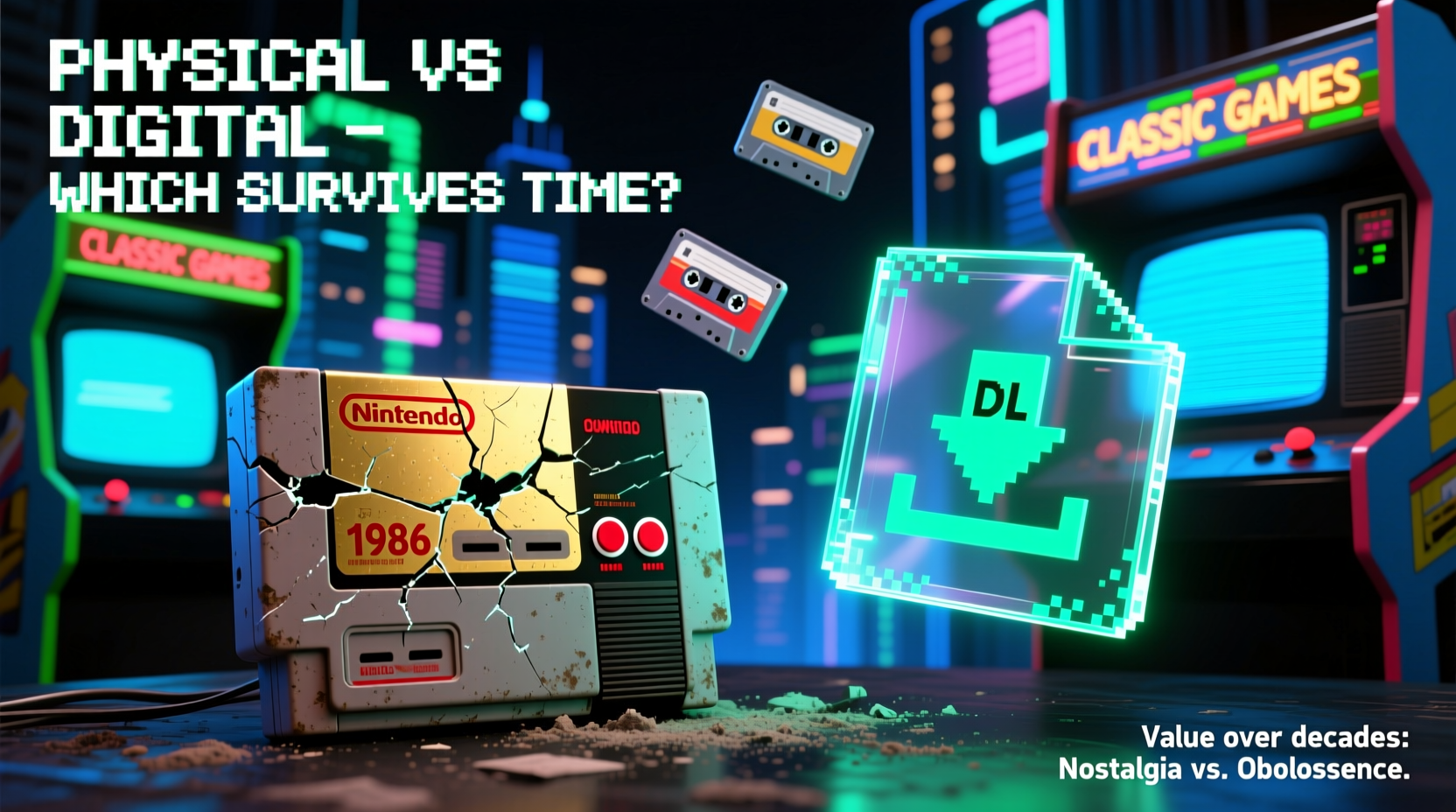
Retro Nintendo cartridges exist as finite physical objects. Once production ceased for systems like the Nintendo Entertainment System (NES) or Super Nintendo (SNES), no new units were made. This creates natural scarcity, especially for rare titles or limited regional releases. Games such as Stadium Events, F-Zero: Maximum Velocity, or sealed copies of The Legend of Zelda have sold for tens of thousands of dollars due to their rarity and condition.
Digital downloads, by contrast, are infinite. There is no cap on how many people can purchase a game through the Nintendo eShop, Steam, or other platforms. Even if a title is delisted, it remains replicated across countless user accounts and servers. Digital ownership is essentially a license—not possession. You don’t “own” your download; you’re granted permission to access it under the platform’s terms, which can change or disappear without warning.
“Scarcity drives value. A cartridge in mint condition with original packaging is a collectible artifact. A digital file, no matter how beloved, is replicable and revocable.” — David Chen, Vintage Game Appraiser & Founder of RetroGame ValuationsTip: Always keep retro cartridges in their original boxes with manuals when possible—this can increase resale value by 50% or more.
Preservation Challenges: Longevity of Formats
Cartridges may degrade over decades due to battery failure (in games with save functions), corrosion on contact points, or physical damage. However, they remain remarkably durable compared to optical discs or digital media. With proper storage—away from heat, moisture, and UV light—many cartridges from the 1980s still function perfectly today.
Digital formats face far greater existential threats. Servers shut down, storefronts close, and licensing agreements expire. The Wii Shop Channel closed in 2019, rendering many purchased titles inaccessible unless already downloaded. Similarly, Nintendo has never offered a true backward compatibility solution for most digital purchases across generations. Buy a digital NES game on the Switch Online service? It vanishes if the subscription ends or the service shuts down.
This impermanence undermines long-term value. An asset that could disappear tomorrow cannot appreciate reliably. Cartridges, while vulnerable to wear, remain playable on original hardware or flash-enabled clones—even decades later.
Market Trends and Collector Demand
The collector’s market for retro Nintendo games has exploded in the past decade. What was once a niche hobby has become a global marketplace fueled by online auctions, grading services like WATA, and social media communities. High-grade, sealed games now rival rare comic books or trading cards in auction prices.
Consider this timeline of notable sales:
- 2020: A sealed copy of Super Mario Bros. graded WATA 9.6 sold for $114,000.
- 2021: A factory-sealed The Legend of Zelda reached $870,000 at auction.
- 2023: Multiple high-grade Mega Man and Kirby titles surpassed $50,000 each.
These figures reflect not just nostalgia, but confidence in the item’s authenticity, rarity, and enduring desirability. Meanwhile, digital versions of these same games—sold via Virtual Console or Nintendo Switch Online—are priced at $5–$10 with no secondary market.
Comparison Table: Key Value Factors
| Factor | Retro Cartridges | Digital Downloads |
|---|---|---|
| Scarcity | Finite supply; some titles extremely rare | Infinite availability; no scarcity |
| Ownership Rights | Full physical ownership | Licensed access only |
| Long-Term Preservation | High with proper care | Dependent on company policies |
| Resale Market | Active global market; auction growth | No legal resale option |
| Appreciation Potential | Proven track record of value increase | No appreciation; often devalued over time |
| Authentication & Grading | Third-party grading available (WATA, VGA) | No standardized verification |
Real Example: The Case of \"Battletoads\" and Digital Disappearance
In 2012, Nintendo re-released the notoriously difficult Battletoads on the Xbox Live Arcade and Nintendo’s Virtual Console. Fans welcomed the return of the classic beat-'em-up. But by 2023, the digital version had been removed from all storefronts due to licensing issues with the underlying music rights.
Meanwhile, original NES cartridges of Battletoads—especially those in good condition—have steadily increased in value. A loose cartridge now sells for $80–$120, while sealed copies exceed $2,000. Collectors who relied on the digital version lost access entirely. Those with the physical cartridge retained both playability and investment value.
This case illustrates a broader trend: digital availability is temporary, while physical media, if preserved, endures. When rights disputes, corporate decisions, or platform sunsets occur, digital owners have no recourse. Physical owners retain control.
Step-by-Step Guide to Preserving Cartridge Value
If you own retro Nintendo cartridges—or plan to invest in them—preservation is key to maintaining or increasing their worth. Follow this sequence to maximize longevity and market appeal:
- Assess Condition Honestly: Check for scratches, label wear, battery leaks, and dirty contacts. Use a soft pencil eraser or isopropyl alcohol (90%+) to gently clean connectors.
- Store Properly: Keep cartridges upright in a cool, dry place away from sunlight. Avoid basements or attics where humidity fluctuates.
- Retain Original Packaging: Boxes, manuals, and inserts significantly boost value. Store them in acid-free sleeves or plastic protectors.
- Consider Professional Grading: For high-potential titles, submit to WATA or VGA. A high grade can multiply value tenfold.
- Document Provenance: Keep records of purchase, restoration, or grading. Authenticity documentation builds trust in resale markets.
- Avoid Modding for Daily Use: While flash carts are great for playing, modifying originals reduces collectibility. Preserve one unaltered copy.
Why Digital Fails as a Long-Term Asset
Digital downloads are designed for accessibility, not permanence. They operate within tightly controlled ecosystems governed by End User License Agreements (EULAs). These contracts typically state that you do not own the software—you are merely licensed to use it under specific conditions.
Furthermore, digital storefronts are subject to business decisions beyond consumer control. Nintendo has discontinued multiple online services, including:
- Nintendo Wi-Fi Connection (2014)
- Wii Shop Channel (2019)
- 3DS and Wii U eShops (2023)
When these shops closed, users could no longer purchase new digital content. While previously downloaded games remain playable, there is no guarantee this will last forever—especially as hardware fails and firmware updates alter compatibility.
There is also no secondary market. You cannot resell, gift, or loan your digital game in the way you can a cartridge. This lack of transferability eliminates a core component of value retention.
Checklist: Evaluating Long-Term Value Potential
Use this checklist to determine whether a game—physical or digital—is likely to hold or grow in value:
- ✅ Is it a physical cartridge with original packaging?
- ✅ Was it produced in limited quantities or region-exclusive?
- ✅ Does it feature popular characters (Mario, Zelda, Metroid)?
- ✅ Is it in unopened or near-mint condition?
- ✅ Has it been professionally graded?
- ❌ Is it only available digitally with no physical release?
- ❌ Is it part of a subscription service (e.g., Switch Online)?
- ❌ Has the publisher discontinued support or delisted it?
If most answers are “yes” to the first five and “no” to the last three, the item has strong value-holding potential.
FAQ
Can digital games ever gain value?
Not in the traditional sense. While fan-made mods or rare in-game items might gain underground value, the game itself cannot be resold or collected. Without ownership rights and scarcity, digital titles lack the fundamentals of appreciation.
Are all retro cartridges valuable?
No. Only a small percentage—due to rarity, demand, and condition—are worth significant money. Common titles like Tetris or Super Mario World may sell for $20–$100 loose, while ultra-rare games reach six figures. Research is essential before assuming value.
Will future digital-only games become collectible?
Unlikely in the current model. Unless companies adopt blockchain-based ownership, NFT-style certification, or offline archival rights, digital games will remain non-transferable and revocable—disqualifying them from true collectibility.
Conclusion
When comparing retro Nintendo cartridges to digital downloads, the winner in long-term value is clear: physical cartridges win decisively. Their scarcity, durability, ownership clarity, and active collector ecosystem make them not just nostalgic keepsakes, but legitimate cultural artifacts with financial upside.
Digital downloads, while convenient, are inherently ephemeral. They are products of a rental economy, where access replaces ownership. As platforms evolve and services sunset, today’s easily accessible games may vanish tomorrow—leaving no trace, no legacy, and certainly no value.
If you're holding onto old cartridges, consider their preservation seriously. If you're building a collection, focus on condition, completeness, and provenance. And if you're relying solely on digital libraries for your favorite classics, understand that you’re prioritizing convenience over legacy.
🚀 Start preserving your retro games today. Whether you’re a collector, parent, or gamer, treat physical cartridges like heirlooms—they may be worth far more than you think in 10 or 20 years.