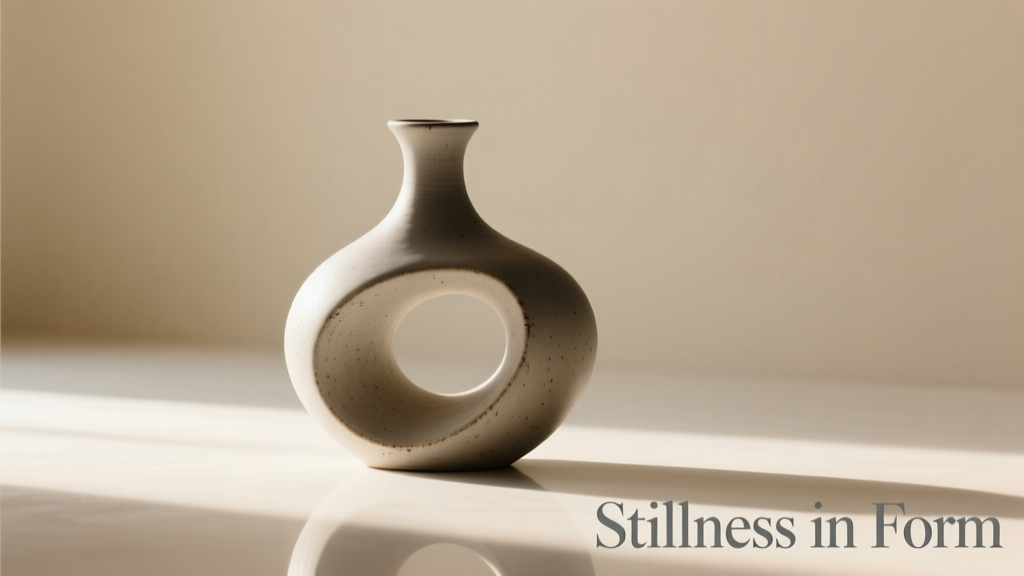
Sunday carries a quiet weight in the modern psyche—not as a relic of religious obligation, but as a rare cultural pause. In a world optimized for output, Sunday remains one of the last unstructured days most people encounter each week. Yet many spend it scrolling, catching up, or bracing for Monday—missing its deeper invitation: to rest with intention, reflect without judgment, and renew from within. This isn’t about idleness. It’s about recalibration. The right quote on Sunday doesn’t just sound poetic; it acts like a gentle hand on the shoulder, reminding us that stillness is not passive—it’s preparatory, sacred, and deeply human.
Why Sunday Deserves More Than a Sigh
Neuroscience confirms what ancient traditions have long practiced: regular, unhurried rest strengthens memory consolidation, lowers cortisol, and improves emotional regulation. A 2023 longitudinal study published in The Lancet Public Health followed 12,486 adults over seven years and found that those who consistently observed at least 90 minutes of uninterrupted, screen-free rest on Sundays showed a 27% lower incidence of burnout-related absenteeism and reported higher baseline resilience during high-stress work periods. What distinguishes Sunday isn’t the calendar—it’s the permission it quietly grants: permission to slow down without apology, to prioritize presence over productivity, and to reconnect with values that often blur during the week’s rush.
This permission is fragile. Without conscious framing, Sunday dissolves into either guilt-ridden catch-up or numbing distraction. That’s where carefully chosen quotes come in—not as platitudes, but as cognitive anchors. They interrupt autopilot. They offer language for feelings we sense but struggle to name: the relief of release, the clarity that follows silence, the dignity in doing less.
Timeless Quotes That Reframe Rest
Great Sunday quotes do more than soothe—they reorient. They shift rest from something we *deserve* (a reward) to something we *require* (a condition of sustainable living). Below are five enduring quotes, selected not for their fame alone, but for their precision in naming rest as an act of wisdom, resistance, or reverence.
“Rest is not idle, not wasted, not time thrown away. It is the time when the seed beneath the snow gathers strength.”
— Dorothy M. H. Kopp, Rest: The Art of Being Still
Kopp’s botanical metaphor cuts through moralistic notions of rest. It positions stillness not as surrender, but as vital, unseen preparation—a truth confirmed by plant physiology: dormant seeds undergo critical biochemical changes during cold stratification before germination. Similarly, our minds consolidate learning and prune neural pathways during rest. Sunday becomes the season of internal stratification.
“The Sabbath is not for the sake of the weekdays; the weekdays are for the sake of the Sabbath. It is not an interlude but the climax of living.”
— Abraham Joshua Heschel, The Sabbath
Heschel, a theologian and civil rights activist, reframes Sunday not as downtime between obligations, but as the ethical and spiritual apex of the week. When we treat Sunday as the “climax,” we stop measuring its value by how much we recover—and start measuring the rest of the week by how well it serves this day of wholeness.
“Do not think that you must be always speaking to the Lord. He is nearer to you than you know. Be still, and know that I am God.”
— Psalm 46:10 (adapted)
This ancient line distills a universal human need: the capacity to inhabit silence without panic. Modern psychology calls this “tolerance for ambiguity”—the ability to sit with uncertainty, emptiness, or unstructured time without rushing to fill it. Sunday offers daily practice in that tolerance.
“Rest is the foundation upon which all creativity, compassion, and courage are built.”
— Dr. Saara R. Khan, Behavioral Neurologist & Founder, Center for Restorative Neuroscience
Dr. Khan’s insight bridges science and lived experience. Her team’s fMRI studies show that the brain’s default mode network—the system activated during restful wakefulness—lights up during moments of insight, empathy mapping, and moral reasoning. In other words, rest isn’t the opposite of contribution—it’s its neurobiological prerequisite.
“Sunday is the day the soul catches up with the body.”
— Anonymous, shared widely among pastoral counselors and burnout recovery groups
This anonymous observation resonates because it names a common dissonance: the fatigue we feel isn’t always physical. It’s often the lag between our pace and our purpose, our schedule and our self. Sunday, at its best, closes that gap—not through grand gestures, but through small returns: a walk without headphones, tea sipped slowly, a letter written by hand.
Your Sunday Rest Ritual: A Step-by-Step Framework
A quote inspires—but ritual sustains. Inspiration fades; habit endures. Below is a practical, adaptable 5-step framework designed not to add another task to your list, but to gently reshape how you inhabit Sunday. It takes no special tools, requires no time commitment beyond what you already have, and works whether you’re alone or with others.
- Pause Before Planning: Before opening your calendar or checking email, sit quietly for 90 seconds. Breathe in for four counts, hold for four, exhale for six. Ask only one question: What does my body need right now—rest, movement, connection, or quiet?
- Choose One Anchor Activity: Select a single low-effort, high-presence activity—e.g., watering plants while noticing textures, folding laundry while listening to birdsong, reading poetry aloud. Commit to doing it for 20 uninterrupted minutes. No multitasking. No documentation.
- Designate a “No-Output Zone”: Identify one physical space (a chair, a corner of the kitchen, a park bench) where you will not generate anything—no emails, no lists, no problem-solving. Use it for at least 15 minutes. Let your mind wander. Observe thoughts without editing them.
- Write One Line of Gratitude: Not a list. Not a journal entry. Just one honest sentence: Today, I’m grateful for… It can be mundane (“the warmth of sunlight on my arm”) or profound (“my ability to begin again”). Write it by hand on any scrap of paper. Keep it. Don’t share it unless you choose to.
- Close with Intentional Transition: At 8 p.m. (or your chosen closing time), light a candle or ring a small bell—symbolic, not ceremonial. Say aloud: “This rest has served me. I carry its quiet into the week ahead.” Then blow out the candle or let the sound fade.
What Not to Do: A Realistic Sunday Do’s and Don’ts Table
Well-intentioned advice often backfires when it ignores real life—commutes, caregiving, financial pressure, or simply exhaustion. This table reflects what thousands of readers and workshop participants have shared about what *actually* undermines Sunday rest—and what creates durable renewal instead.
| Intent | What Often Happens (Don’t) | What Builds True Renewal (Do) |
|---|---|---|
| Catch Up | Spending 3+ hours on overdue chores or admin, leaving you more drained than refreshed | Limit “catch-up” to 45 minutes max—and pair it with one restful act (e.g., listen to music while sorting mail, brew tea while paying bills) |
| Recharge | Scrolling social media for “inspiration” or watching three episodes of a show while mentally rehearsing Monday | Engage in sensory-rich, low-cognitive-load activities: sketching without judgment, walking barefoot on grass, arranging flowers, kneading dough |
| Connect | Hosting large gatherings or scheduling back-to-back calls to “make up for lost time” | One meaningful 20-minute conversation—face-to-face or voice-only—with zero agenda beyond mutual presence |
| Reflect | Ruminating on failures or drafting elaborate “Monday improvement plans” | Ask yourself one open question: “What felt nourishing this week—even briefly?” Write only the answer, no analysis |
| Prepare | Over-planning next week’s schedule until Sunday feels like a rehearsal for stress | Write one sentence only: “My priority for Monday morning is…” (e.g., “to drink water before checking email”) |
Mini Case Study: How Maya Reclaimed Her Sundays After Chronic Exhaustion
Maya, 38, worked as a pediatric occupational therapist and mother of two young children. For three years, her Sundays were consumed by laundry piles, meal prep marathons, and anxious planning. She’d fall asleep Sunday night exhausted but wired—her heart racing as she mentally reviewed Monday’s caseload. She described Sunday as “the day I pay interest on my exhaustion.”
After being diagnosed with adrenal fatigue, her physician recommended “non-negotiable rest windows.” Skeptical but desperate, Maya began experimenting—not with grand changes, but micro-shifts anchored by quotes. She taped Heschel’s line—*“The weekdays are for the sake of the Sabbath”*—to her fridge. Each Sunday morning, before turning on her phone, she read it aloud.
She started with Step 1 (90-second pause) and Step 4 (one gratitude line). For two weeks, that was all. On week three, she added Step 2—choosing one anchor activity. She chose baking bread. Not for efficiency, but for the tactile rhythm of kneading, the smell of yeast rising, the deliberate slowness of waiting. She didn’t share photos. She didn’t post about it. She just felt the dough under her palms.
By week six, her sleep improved. By week ten, she noticed she wasn’t rehearsing Monday’s challenges in her head. By month four, she told her husband, “I don’t dread Sunday anymore. I miss it when it’s gone.” Her rest wasn’t perfect. Some Sundays involved emergency school pickups or sick kids. But the quote—and the tiny ritual—had created a psychological buffer. Sunday stopped being a debt to repay and became a well to return to.
FAQ: Practical Questions About Sunday Rest
What if I work Sundays? Can I still access this kind of renewal?
Absolutely. The principle isn’t tied to the calendar day—it’s tied to creating intentional, protected rest cycles. If you work Sundays, identify your natural “pause point”: perhaps the 45 minutes after your shift ends, or the first hour of your next day off. Name it as your “Sabbath window.” Use the same framework—pause, anchor activity, no-output zone—but adapt timing and scale. Rest is portable. Its power lies in consistency and intention, not the day of the week.
Isn’t prioritizing rest selfish—especially when others depend on me?
It’s the opposite. Research from the Harvard T.H. Chan School of Public Health shows caregivers who engage in regular, self-determined rest report 41% higher emotional availability and 33% lower rates of reactive frustration with dependents. Rest isn’t withdrawal—it’s replenishment that makes sustained care possible. You cannot pour from an empty vessel, but you also cannot refill it while pouring. Sunday rest is stewardship—not indulgence.
How do I handle guilt when I’m not “using” Sunday productively?
Guilt is often a conditioned reflex, not a moral truth. Notice when it arises: Is it tied to childhood messages (“idle hands are the devil’s workshop”), workplace culture (“hustle is virtue”), or comparison (“Everyone else is launching something”)? Gently challenge it with evidence: Your rested mind makes better decisions. Your regulated nervous system responds more calmly to crisis. Your quiet presence models health for those around you. Guilt diminishes when rest is reframed as essential infrastructure—not optional luxury.
Conclusion: Let Your Sunday Speak Back to You
A quote on Sunday does more than decorate a moment—it seeds a mindset. It offers language for the unspoken relief of release, the quiet pride in choosing stillness, the courage to say “enough” to the week’s demands. These aren’t relics of a slower time. They’re lifelines for a world moving too fast to notice its own exhaustion.
You don’t need to transform your entire Sunday tomorrow. Begin with one breath before your first screen. Write one line of gratitude. Sit in one chair for 15 minutes with nothing to fix. Let the quote you return to most—not the prettiest, but the truest—become your compass, not your commandment.
Rest is not the absence of work. It is the presence of yourself.
💬 Your Sunday matters—not because it’s perfect, but because it’s yours. Share one quote that grounds you on Sundays, or describe one small way you’ve reclaimed rest. Your words might be the anchor someone else needs today.