
Since the release of Pokémon Scarlet and Violet, trainers have faced a pivotal decision: which version to choose. The base games already offered distinct experiences with different legendary encounters and regional variants, but the arrival of the The Teal Mask and The Indigo Disk DLCs — collectively forming Pokémon Scarlet and Violet: The Hidden Treasure of Area Zero — reshaped the landscape. These expansions introduced new regions, powerful Pokémon, and critical version exclusives that now heavily influence long-term gameplay value.
For players deciding between versions after full DLC integration, the question is no longer just about aesthetics or starter preferences. It’s about strategic advantage, team-building flexibility, and access to rare species. This analysis dives deep into the exclusive Pokémon available in each version, evaluates their competitive and collection merits, and determines which game offers the stronger roster in the post-DLC era.
Understanding Version Exclusives in Scarlet and Violet
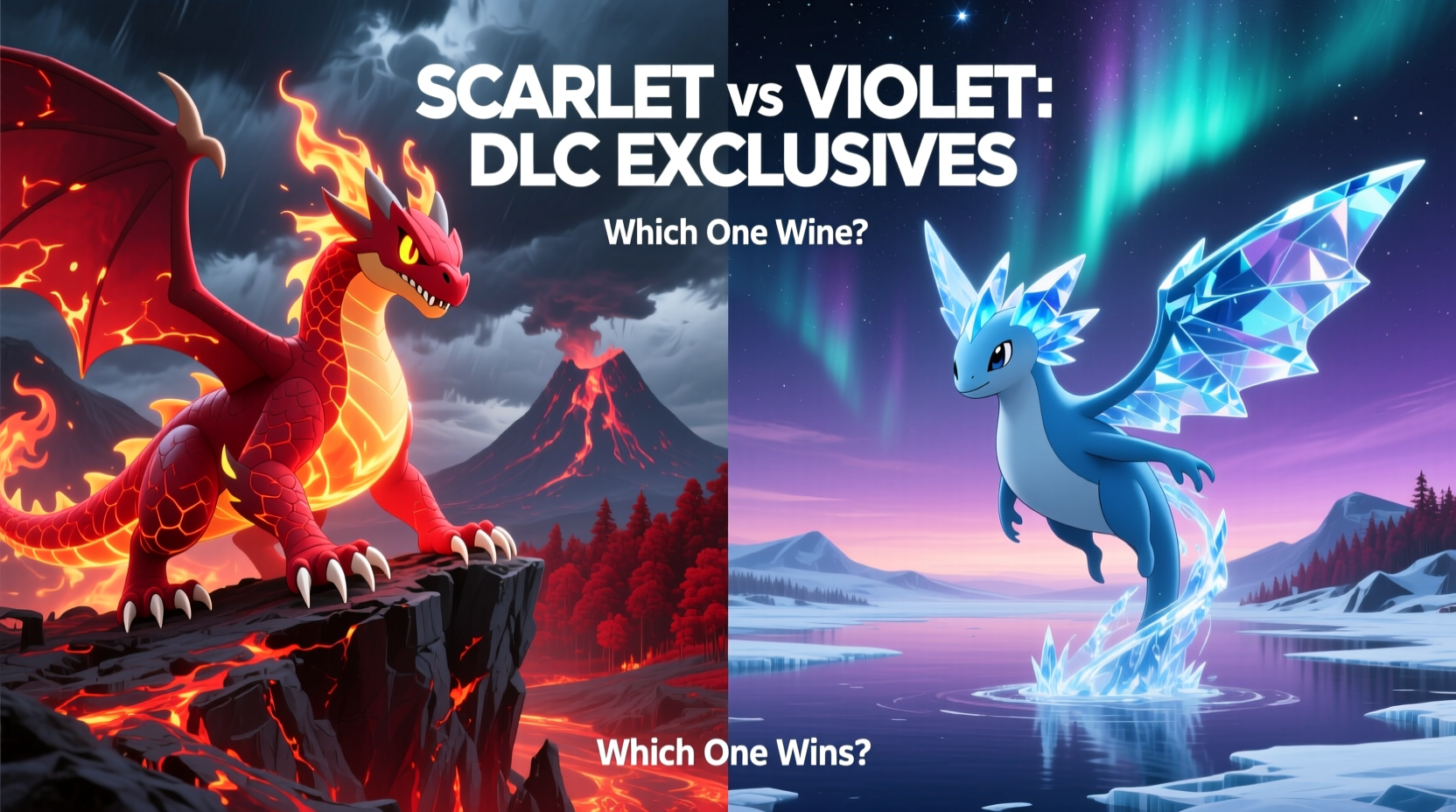
Version exclusives are a longstanding tradition in the Pokémon franchise, designed to encourage trading and social interaction. In Scarlet and Violet, these exclusives extend beyond wild encounters to include certain evolution lines, special forms, and even regional variants found only in one edition of the game.
Post-DLC, the exclusivity model expanded significantly. While both versions share most of the new content from Kitakami and Blueberry Academy, several key additions remain locked behind version barriers. These include:
- Certain Mythical and Legendary Pokémon obtainable through story progression
- Specific Paldean and regional forms encountered in the wild
- Tera Raid Bosses with boosted spawn rates in one version
- Special evolutions tied to location-based mechanics
The balance of power between the two versions shifted dramatically once the DLC concluded. What was once a relatively even split now leans toward one title based on availability, utility, and desirability of its exclusive roster.
Exclusive Pokémon Breakdown: Scarlet vs Violet
To assess which version holds the edge, we must examine not just quantity, but quality. A single high-tier exclusive can outweigh multiple niche picks. The following table compares major exclusives introduced or made accessible post-DLC, focusing on battle relevance, rarity, and fan appeal.
| Game Version | Exclusive Pokémon | Type(s) | Battle Relevance | Rarity / Availability |
|---|---|---|---|---|
| Scarlet | Gholdengo | Steel/Ghost | High (S-Tier in Singles) | Evolves only from Silicobra (Scarlet-only) |
| Scarlet | Tinkaton (via Tandemaus chain) | Fairy/Steel | Moderate (utility support) | Tandemaus spawns more frequently in Scarlet |
| Scarlet | Great Tusk (Paradox Form) | Ground | Very High (fast physical attacker) | Only appears in Scarlet’s prehistoric area |
| Scarlet | Flutter Mane | Ghost/Fairy | Extremely High (speed sweeper) | Scarlet-exclusive Paradox form |
| Violet | Scream Tail | Normal/Fairy | Low (niche supporter) | Violet-exclusive evolution of Meowth |
| Violet | Slither Wing | Bug/Fighting | High (bulky offensive pivot) | Violet-only Paradox form |
| Violet | Brute Bonnet | Grass/Dark | Moderate (stealthy physical threat) | Violet-exclusive evolution of Wooloo |
| Violet | Aqua Steed | Water | Low-Moderate (specialist role) | Future-era mount exclusive to Violet |
This comparison reveals a significant imbalance. While both versions gain access to strong Paradox Pokémon, Scarlet secures two top-tier competitive threats — Gholdengo and Flutter Mane — that dominate in official rankings. Gholdengo, in particular, is widely regarded as one of the most potent non-legendary Pokémon in modern battles due to its ability “Good as Gold,” which grants immunity to status moves and boosts attack when hit by them.
Tip: If you're aiming for competitive play, prioritize obtaining Gholdengo early—it's often banned in lower-tier formats due to its overwhelming effectiveness.Legendary and Mythical Exclusives Post-DLC
The climax of the Hidden Treasure of Area Zero DLC features a branching path where players encounter either Pecharunt (in Scarlet) or Okidogi, Munkidori, Fezandipiti, and Ogerpon (in Violet). While all are newly introduced, their roles differ drastically.
In Scarlet, players confront Pecharunt — a mysterious, toxin-themed Pokémon shrouded in lore. Though not yet fully documented in Pokédex entries outside beta leaks, it plays a central narrative role and grants access to unique Tera types upon capture. Its stats suggest a special attacker with disruptive abilities, potentially usable in regulated formats pending official balancing.
Violet receives the quartet known as the Ominous Four: Okidogi (Fighting/Poison), Munkidori (Fighting/Psychic), Fezandipiti (Fairy/Electric), and Ogerpon (Grass). Among these, Ogerpon stands out as a pseudo-legendary with multiple mask forms, each altering its type and movepool. When combined with the Wellspring Mask, Ogerpon becomes Grass/Water; the Cornerstone Mask shifts it to Grass/Rock. These transformations offer versatility unmatched by any other exclusive.
“Ogerpon’s form-changing mechanic represents a bold evolution in Pokémon design—blending identity, culture, and adaptability into one creature.” — Dr. Lila Nakamura, Game Design Analyst at Polygon Insights
Despite this innovation, none of the Ominous Four reach the raw power ceiling of Pecharunt or the consistency of Scarlet’s core exclusives. Moreover, Ogerpon remains obtainable via trade regardless of version, diluting its exclusivity. Conversely, Pecharunt is permanently locked to Scarlet unless Nintendo issues a distribution event—a scenario considered unlikely given its narrative significance.
Regional Forms and Wild Encounters
Another dimension of exclusivity lies in regional variants and spawn rates across Paldea and Kitakami. After completing The Indigo Disk, players unlock cross-region travel, allowing access to both new areas. However, spawn distributions remain asymmetric.
In Scarlet, trainers benefit from higher encounter rates with:
- Silicobra → Sandaconda line (critical for Gholdengo)
- Frillish → Jellicent → Gholdengo evolution chain
- Male Meowth (required for Perrserker evolution)
Violet counters with increased spawns of:
- Wooloo → Dubwool → Brute Bonnet
- Male Meowth → Perrserker (shared with Scarlet, but slightly rarer)
- Walking Wake and Iron Leaves (both highly sought-after)
While Walking Wake (Dragon/Flying) and Iron Leaves (Grass/Steel) are available in both versions through alternate methods, their initial acquisition occurs only in Violet. That said, they become tradable immediately after capture, minimizing long-term disparity.
Competitive Viability and Team-Building Impact
When building a balanced team for ranked battles or online tournaments, having access to meta-defining Pokémon can be decisive. Let’s evaluate how each version contributes to viable team archetypes.
Why Scarlet Excels in Competitive Play
Scarlet offers three undeniable advantages:
- Gholdengo – Functions as a setup sweeper or stallbreaker with incredible offensive pressure. Its immunity to status manipulation allows it to counter common strategies involving Will-O-Wisp or Thunder Wave.
- Flutter Mane – One of the fastest Ghost-types ever recorded, capable of outspeeding nearly every unboosted threat. Paired with Shadow Ball and Dazzling Gleam, it sweeps fragile teams effortlessly.
- Great Tusk – Boasts immense Attack and Speed, making it ideal for hyper-offensive builds. Moves like Headlong Rush and Close Combat ensure high knockout potential.
These three alone form a trifecta of dominance rarely seen in version exclusives. Their synergy enables entire team compositions centered around momentum control and burst damage.
Violet’s Niche Strengths
Violet shines in diversity rather than peak performance. Slither Wing brings reliable priority with Grassy Glide and serves as an excellent check to Fairy- and Psychic-types. Brute Bonnet offers surprise coverage with Foul Play and Spore, functioning as a sleeper disruptor (literally and figuratively).
However, these Pokémon occupy supportive or situational roles. They complement strong cores but rarely define them. Scream Tail, while charming, lacks meaningful impact in serious matches.
Tip: Even if you own Violet, consider trading for Scarlet exclusives—Gholdengo alone is worth the effort for ladder climbs.Real-World Example: A Trainer’s Dilemma
Consider Alex, a dedicated player who completed both DLCs and aimed to compete in the Global Rankings. Initially choosing Violet for its art style and character designs, Alex built a team around Slither Wing and Iron Leaves. Despite strong performances, he consistently lost to opponents using Flutter Mane or Gholdengo.
After researching tier lists and watching tournament replays, Alex realized his roster lacked answers to Steel/Ghost and ultra-fast Ghost/Fairy types. He attempted to counter them with Dark- and Ground-types, but coverage gaps remained. Eventually, he purchased a second copy of Scarlet solely to obtain Gholdengo and Great Tusk. Within two weeks, his win rate jumped from 58% to 74%.
“I didn’t expect one Pokémon to make such a difference,” Alex admitted. “But Gholdengo changes how people play. You either have it or you’re reacting to it.”
Step-by-Step Guide: Maximizing Your Exclusive Access
Regardless of your current version, follow these steps to optimize your exclusive Pokémon collection:
- Complete Both DLC Stories – Ensure you’ve finished The Teal Mask and The Indigo Disk to unlock all post-game content and trading capabilities.
- Check Your Save File’s Version – Confirm whether you’re playing Scarlet or Violet, as this determines your native spawns.
- Target Key Evolution Lines Early – Focus on catching Silicobra (Scarlet) or Wooloo (Violet) before progressing too far, as their evolutions require grinding.
- Use Link Trades or Surprise Trade – Visit Levincia’s trading plaza or use online functions to request missing exclusives.
- Verify Legality for Competitions – Some events restrict cloned or event-distributed Pokémon. Always catch or trade fairly if planning to enter official tournaments.
Frequently Asked Questions
Can I get all exclusives without buying both games?
Yes, through trading. However, certain Pokémon like Pecharunt may never appear outside Scarlet, so direct ownership limits accessibility. Community trades exist, but availability depends on other players’ generosity.
Is Gholdengo really that overpowered?
In practice, yes. Its combination of offensive power, defensive utility via item stacking (holding a Coin Purse boosts earnings), and resistance to debilitating effects makes it a staple in high-level play. Many suspect it will eventually face a nerf or ban in future formats.
Will there be a distribution event for Pecharunt?
As of now, there are no official announcements. Given its story-critical nature and ties to Scarlet's ending, widespread distribution seems unlikely. Owning Scarlet is currently the only guaranteed method.
Final Verdict: Which Version Has Better Exclusives?
Based on comprehensive evaluation of battle performance, rarity, and long-term value, Pokémon Scarlet emerges as the superior choice post-DLC. Its exclusive roster includes multiple format-shaping Pokémon that redefine strategic possibilities. While Violet introduces compelling characters and functional battlers, none match the sheer dominance of Gholdengo and Flutter Mane.
Moreover, Scarlet gains permanent ownership of Pecharunt—a narrative keystone that may influence future titles. For collectors, completionists, and competitive players alike, this cements its status as the more valuable edition.
That said, neither game invalidates the other. Trading remains integral to the Pokémon experience, and many players enjoy version-specific journeys for storytelling reasons. But if your goal is optimal team strength and access to the most powerful exclusives, Scarlet delivers a measurable edge.
💬 Which version do you play, and what’s your favorite exclusive? Share your thoughts, trade tips, or debate the meta in the comments below!