
If you're facing a tax bill this year, you're not alone. Millions of taxpayers discover they owe more than expected when filing—sometimes hundreds or even thousands of dollars. While owing taxes isn't inherently a financial emergency, it can strain your budget and signal underlying issues in your tax planning. The good news is that most situations leading to a tax shortfall are preventable. By understanding the common causes and adjusting your strategy early, you can reduce or eliminate what you owe next year.
Why You Owe Taxes This Year
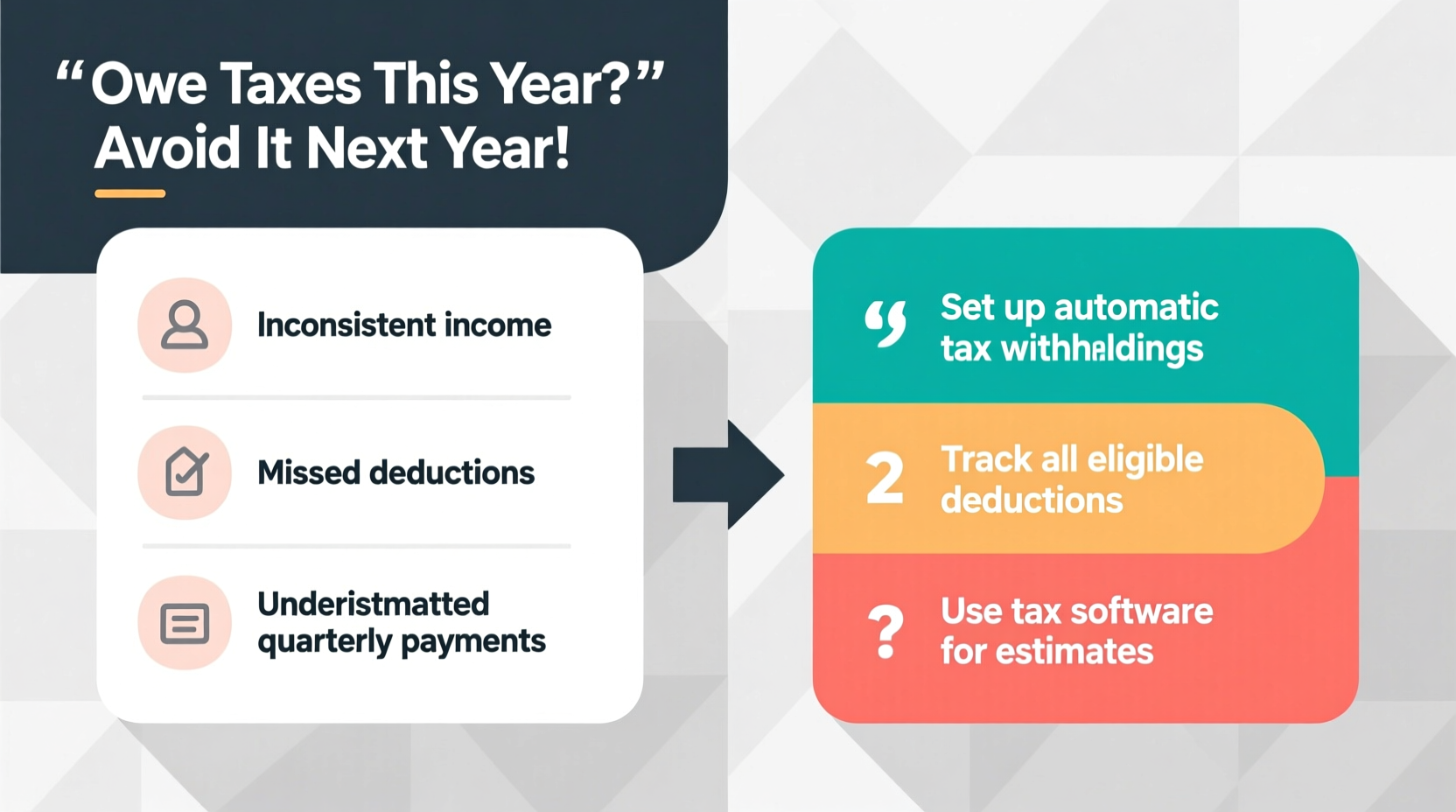
Owing money on tax day doesn’t mean you’ve made a mistake—it often reflects changes in income, deductions, or withholding that weren’t properly accounted for throughout the year. Here are the most frequent reasons people end up with a tax bill:
- Under-withholding from paycheck: If too little federal income tax was withheld from your wages, you’ll likely owe when filing.
- Freelance or side income not taxed at source: Self-employed individuals and gig workers must pay estimated taxes quarterly. Skipping these payments leads to a large year-end balance due.
- Life changes not reflected in W-4: Marriage, divorce, new job, or additional income sources can shift your tax bracket but go unreported if you don’t update your employer.
- Deductions or credits were lower than expected: Changes in itemized deductions (e.g., medical expenses, charitable contributions) or loss of certain tax credits affect your final liability.
- Investment gains or retirement distributions: Capital gains, stock sales, or withdrawals from traditional IRAs or 401(k)s increase taxable income unexpectedly.
How to Prevent Owing Taxes Next Year
The key to avoiding a surprise tax bill is proactive management. Waiting until April to assess your tax situation is too late. Instead, treat tax planning as an ongoing process throughout the year.
Adjust Your W-4 Withholding
Your Form W-4 tells your employer how much tax to withhold from each paycheck. If you consistently owe, it’s time to revise it. Increasing withholding reduces your take-home pay slightly but ensures more tax is paid upfront, minimizing year-end surprises.
To adjust your W-4:
- Visit the IRS Tax Withholding Estimator.
- Enter your current income, filing status, dependents, and deductions.
- Follow the tool’s recommendation for allowances or additional flat withholding.
- Submit a new W-4 to your employer.
Make Estimated Tax Payments (If Applicable)
If you earn non-wage income—such as freelance work, rental income, or investment returns—you’re typically responsible for paying taxes directly via estimated quarterly payments. Missing these deadlines results in underpayment penalties and larger balances due.
Estimated tax due dates (for 2024 income):
| Payment Period | Due Date |
|---|---|
| January 1 – March 31 | April 15, 2024 |
| April 1 – May 31 | June 17, 2024 |
| June 1 – August 31 | September 16, 2024 |
| September 1 – December 31 | January 15, 2025 |
“Many freelancers assume their clients will handle taxes, but independent contractors must manage their own liabilities. Quarterly payments aren’t optional—they’re required by law.” — Sarah Lin, CPA and Small Business Tax Advisor
Action Plan: Steps to Take Now
Don’t wait until next tax season to act. Start today with this timeline-based approach:
- Review your tax return – Identify exactly why you owed. Was it low withholding? Unreported income? Lost deductions?
- Calculate your effective tax rate – Divide total tax paid by taxable income to understand your real tax burden.
- Update your W-4 – Adjust withholding based on projected 2024 income and changes in deductions.
- Set up quarterly payment reminders – Use calendar alerts or automated banking tools to pay estimated taxes on time.
- Maximize retirement contributions – Increase 401(k) or IRA contributions to reduce taxable income.
- Track deductible expenses – Keep receipts for home office costs, mileage, education, or medical bills that may lower your tax base.
Common Mistakes That Lead to Owing Taxes
Avoid these pitfalls to stay ahead of your tax obligations:
| Mistake | Better Approach |
|---|---|
| Assuming last year’s W-4 still applies | Re-evaluate annually or after major life changes |
| Ignoring side income for tax purposes | Treat all earnings as taxable; set aside 25–30% for taxes |
| Waiting until April to save for taxes | Start setting aside funds monthly or quarterly |
| Overestimating deductions without documentation | Keep detailed records and consult a tax pro if unsure |
| Not contributing enough to tax-deferred accounts | Boost 401(k), HSA, or IRA contributions to reduce taxable income |
Real Example: How Maria Avoided a Repeat Tax Bill
Maria, a graphic designer in Austin, owed $3,200 in taxes last year. She worked full-time but also earned $18,000 from freelance clients. Since no taxes were withheld from her freelance income, and she didn’t make estimated payments, the entire amount was added to her taxable income come filing season.
After consulting a tax advisor, Maria took action:
- She increased her W-4 withholding at her main job to cover part of her freelance tax liability.
- She opened a separate savings account and began transferring 28% of each freelance payment into it.
- She scheduled quarterly estimated tax payments using EFTPS.
- She contributed an additional $5,000 to her Roth IRA, reducing her adjusted gross income.
This year, Maria received a modest refund instead of a bill—and built better financial habits in the process.
Checklist: Prepare for a Smoother Tax Season Next Year
Use this checklist to stay on track and avoid another surprise tax bill:
- ✅ Review your most recent tax return for red flags
- ✅ Update your W-4 with your employer if needed
- ✅ Estimate income from all sources (wages, self-employment, investments)
- ✅ Calculate quarterly estimated tax payments and mark due dates
- ✅ Open a dedicated savings account for tax funds
- ✅ Increase contributions to retirement or health savings accounts
- ✅ Track deductible expenses throughout the year
- ✅ Schedule a mid-year tax check-in (July or August)
Frequently Asked Questions
Can I still adjust my withholding this year?
Yes. You can submit a new W-4 to your employer at any time. Changes typically take effect within one to two pay cycles. The sooner you act, the more you can reduce potential underpayment next year.
What happens if I underpay estimated taxes?
The IRS may charge an underpayment penalty if you pay less than 90% of your total tax liability during the year. However, exceptions exist—for example, if you owe less than $1,000 after withholding or meet the safe harbor rule (paid 100–110% of last year’s tax).
Is it better to owe or get a refund?
While a refund feels like a bonus, it means you gave the government an interest-free loan. Ideally, aim for a small refund or near-zero balance. This keeps more money in your pocket during the year for savings, debt repayment, or investments.
Final Thoughts: Take Control of Your Tax Future
Owing taxes isn’t a failure—it’s feedback. It highlights gaps in your financial planning that, once addressed, can lead to greater stability and control. Whether you’re a salaried employee, freelancer, or retiree, managing your tax obligations proactively prevents stress and surprise bills.
Start today: analyze what went wrong this year, adjust your withholding, plan for estimated payments, and build systems that support consistent tax compliance. A few small changes now can save you hundreds—or even thousands—next April.
🚀 Ready to stop owing taxes next year? Download the IRS W-4 assistant, review your income streams, and make one adjustment this week to get started.