
Netflix, once a DVD-by-mail startup, has evolved into one of the most influential entertainment companies in the world. Over recent years, its stock has experienced a significant surge, defying market volatility and investor skepticism. From strategic pivots to global expansion and AI integration, multiple factors have converged to propel Netflix’s share price upward. Understanding why Netflix stock is so high—and whether this momentum can continue—requires a close look at its business model, financial health, technological innovation, and long-term vision.
Strategic Shifts Driving Market Confidence
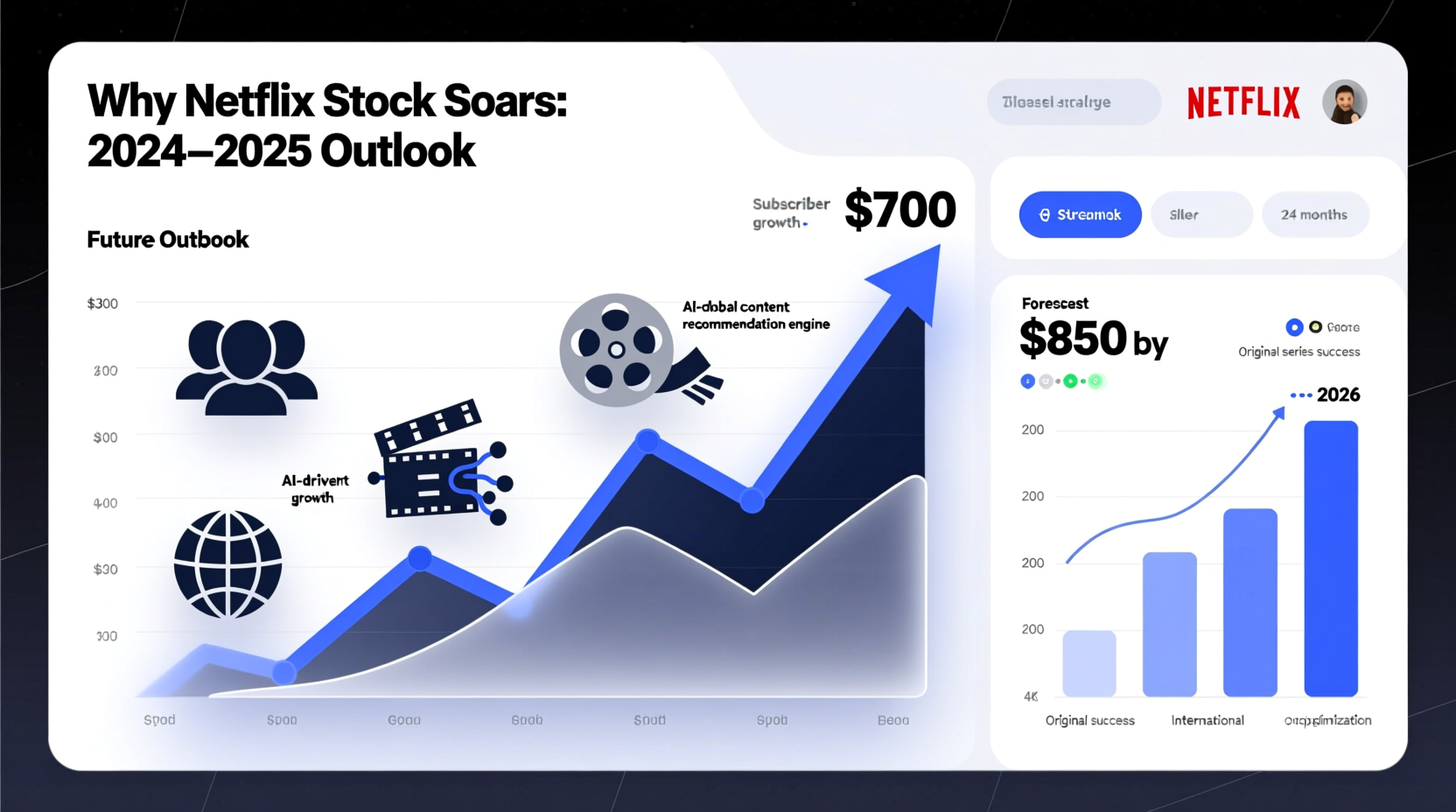
One of the primary reasons behind Netflix’s rising stock value is its decisive shift from a subscription-only model to a diversified revenue engine. For years, Netflix relied almost entirely on monthly subscriber fees. However, increasing competition from Disney+, HBO Max, and Amazon Prime forced the company to rethink its approach.
In 2022, Netflix introduced an ad-supported tier—a move that many analysts initially doubted. But by Q4 2023, advertising partnerships with companies like Microsoft and Samsung began generating meaningful revenue. More importantly, the lower-priced tier attracted millions of new users in price-sensitive markets, reversing a period of subscriber decline.
This pivot demonstrated adaptability. Investors responded positively, seeing it as evidence that Netflix could evolve without sacrificing profitability. The company reported over $9 billion in advertising-related pipeline opportunities by early 2024, signaling strong future growth potential in this segment.
Tip: When evaluating tech-driven media stocks, watch for signs of operational agility—like new pricing models or platform integrations—as they often precede valuation surges.Global Subscriber Growth and Market Penetration
Another key driver of Netflix’s stock performance is its relentless global expansion. While North American markets are nearing saturation, Netflix has aggressively targeted regions such as Southeast Asia, Latin America, and Africa.
In countries like India and Indonesia, mobile-first viewing habits align perfectly with Netflix’s app-based delivery system. By offering localized content—such as Indian series “Sacred Games” and Korean phenomenon “Squid Game”—Netflix has built deep cultural resonance, fueling word-of-mouth adoption.
As of Q1 2024, Netflix reported over 260 million paid memberships worldwide, with more than 60% coming from outside North America. This geographic diversification reduces reliance on any single market and buffers against regional economic downturns.
“Netflix isn’t just selling entertainment; it’s selling accessibility. Their ability to localize content while maintaining global infrastructure gives them a unique competitive edge.” — Sarah Lin, Senior Analyst at MediaEdge Research
Content Innovation and Data-Driven Production
Unlike traditional studios that rely on gut instinct, Netflix leverages vast viewer data to inform every stage of content creation. Algorithms track what users watch, when they pause, and even which thumbnails generate the most clicks. This intelligence allows Netflix to greenlight shows with higher predicted success rates.
The results speak for themselves. In 2023, Netflix produced 12 original films that each garnered over 100 million views within four weeks of release—more than any other studio. High-performing titles like “The Gray Man” and “Glass Onion” not only boosted engagement but also strengthened licensing and merchandising opportunities.
Moreover, Netflix has begun integrating generative AI tools into pre-production workflows. These assist in script analysis, casting recommendations, and even trailer editing—cutting development time and reducing costs. While still in early stages, these innovations suggest long-term margin improvements.
Do’s and Don’ts of Evaluating Streaming Stock Potential
| Do | Don't |
|---|---|
| Assess international subscriber trends | Rely solely on U.S. metrics |
| Analyze content ROI (views per dollar spent) | Focus only on total content spend |
| Monitor churn rate and ARPU (Average Revenue Per User) | Ignore pricing strategy shifts |
| Consider advertising revenue trajectory | Overlook non-subscription income |
Financial Performance and Shareholder Returns
Beyond user growth and content, Netflix’s financial discipline has impressed Wall Street. After years of heavy reinvestment, the company turned a corner in 2023, achieving free cash flow of $5.2 billion—up from negative $500 million just two years prior.
This newfound cash flow has enabled strategic share buybacks. In early 2024, Netflix announced a $10 billion repurchase program, directly boosting per-share value. Combined with improved operating margins (now above 20%), these moves have made the stock attractive to both growth and value investors.
Earnings per share (EPS) grew by 38% year-over-year in 2023, outpacing broader market averages. With debt levels manageable and liquidity strong, Netflix now has the flexibility to pursue acquisitions, expand into gaming, or further develop its ad platform.
Mini Case Study: How “Squid Game” Changed the Game
When “Squid Game” premiered in September 2021, few expected a Korean survival drama to become a global sensation. Yet within 28 days, it reached 142 million households—the most-watched series launch in Netflix history.
The ripple effects were profound. Netflix’s stock rose 12% in the following month. Merchandise sales exceeded $100 million. Most importantly, it proved that non-English content could drive mainstream success, prompting increased investment in international productions.
By 2023, nearly 40% of Netflix’s top 10 watched list came from non-English titles. This case illustrates how a single hit can validate a business strategy, attract subscribers, and lift investor sentiment across quarters.
Future Outlook: What Lies Ahead?
The question now isn’t whether Netflix can grow—but how sustainably. Several upcoming initiatives will shape its next chapter:
- Gaming Expansion: Netflix has launched over 30 mobile games, integrated directly into its app. While still a small revenue stream, it enhances user retention and opens monetization paths beyond ads and subscriptions.
- Ad-Supported Tier Scaling: Targeting 50 million ad-tier users by 2025, Netflix is building direct relationships with advertisers through self-serve platforms and measurement tools.
- AI-Powered Personalization: Upcoming features include dynamic previews tailored to individual viewers and voice-cloned dubbing in multiple languages—reducing localization costs and improving accessibility.
- Live Streaming Experiments: From comedy specials to sports-like events (e.g., live “Reality Games”), Netflix is testing real-time content to boost engagement during off-peak hours.
Analysts project annual revenue growth of 12–15% over the next three years, supported by pricing power, ad revenue, and low-cost international expansion. Earnings estimates suggest EPS could reach $18 by 2026, up from $12.50 in 2023.
Step-by-Step: How Investors Can Evaluate Netflix’s Long-Term Viability
- Review quarterly subscriber reports – Focus on net adds outside the U.S. and churn rates.
- Analyze ARPU trends – Is revenue per user growing due to price hikes or upselling?
- Track ad revenue disclosures – Even if small now, accelerating growth here signals optionality.
- Monitor content ROI – Compare production budgets against viewership and renewal rates.
- Assess balance sheet strength – Look for consistent free cash flow and responsible capital allocation.
Frequently Asked Questions
Is Netflix stock overvalued given its current price?
While Netflix trades at a premium P/E ratio compared to traditional media companies, its valuation reflects growth in international markets, advertising, and operational efficiency. If execution continues, current multiples may be justified by future earnings.
Can Netflix compete with free platforms like YouTube or TikTok?
Netflix doesn’t aim to replace short-form video but instead offers premium, narrative-driven content that keeps users subscribed monthly. Its focus remains on quality, exclusivity, and depth—not virality.
Will password-sharing crackdowns continue to boost growth?
Yes. The enforcement of account sharing policies added over 7 million incremental subscribers in 2023 alone. Further rollout in emerging markets, combined with low-cost “add-on” user options, ensures this remains a near-term tailwind.
Tip: Watch Netflix’s quarterly “time spent viewing” metric—it’s a leading indicator of engagement and future retention.Conclusion: Positioning for the Next Era of Entertainment
Netflix’s stock surge isn’t a bubble—it’s the market recognizing a matured disruptor. Once seen as a risky bet on cord-cutting, Netflix has proven its ability to innovate, scale globally, and generate profits. From data-driven content to ad-tech integration and AI experimentation, the company is no longer just a streaming service but a full-stack entertainment platform.
The road ahead won’t be without challenges—regulatory scrutiny, content oversaturation, and macroeconomic pressures loom. But Netflix’s combination of brand strength, financial resilience, and strategic foresight positions it well for sustained growth.
🚀 Ready to dive deeper? Review Netflix’s latest earnings call transcripts and track their ad revenue disclosures—you might spot the next inflection point before the market does.