In 2015, smartphone buyers faced a pivotal decision: choose between LG’s bold new flagship with dual screens and rugged build, the LG V10, or Samsung’s sleek, glass-clad powerhouse, the Galaxy S6. Both devices arrived amid heavy marketing, promising top-tier experiences. But beyond the glossy ads and launch-day excitement, did upgrading to either phone deliver lasting value—or was the upgrade simply driven by hype?
This analysis dives deep into real-world usage, comparing design, performance, camera quality, software experience, and longevity to answer whether the jump from previous-generation phones to either the LG V10 or Samsung S6 was truly worthwhile.
Design and Build: Durability vs. Elegance
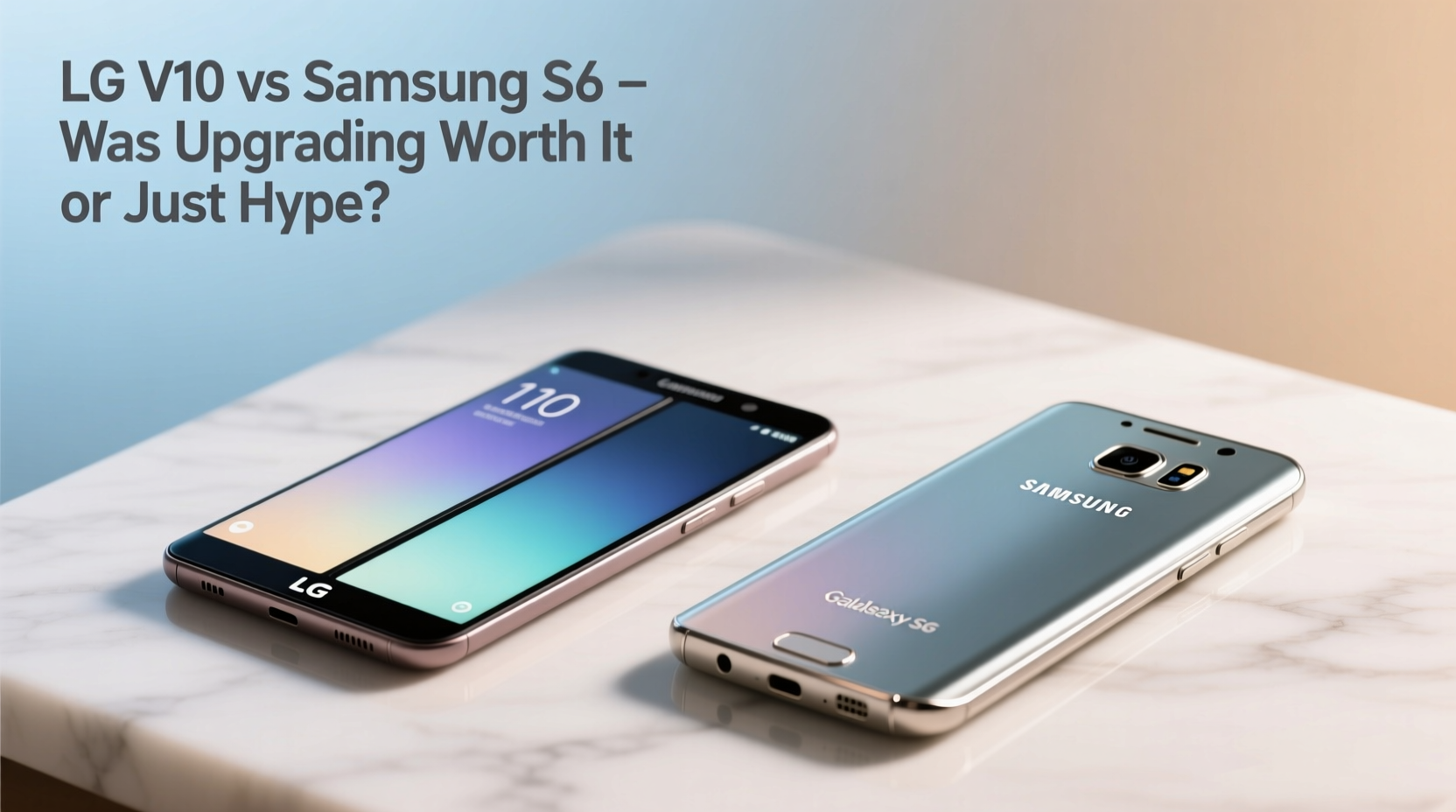
The LG V10 stood out immediately with its industrial-grade stainless steel frame and silicone-finished polycarbonate back. It felt substantial—some might say bulky—but that weight came with confidence. The device was designed for resilience, surviving drops and daily wear better than most flagships of its time. Its standout feature? A secondary “ticker” display above the main screen, useful for notifications and quick glance information without waking the primary display.
In contrast, the Samsung Galaxy S6 embraced premium aesthetics with a glass-and-metal sandwich design. While stunning in person, the glass back made it prone to cracks and smudges. It lacked water resistance and felt fragile compared to the V10. However, it was significantly thinner and more pocket-friendly.
Tip: If you prioritize durability over slimness, the LG V10’s rugged build offered tangible benefits in everyday use.| Feature | LG V10 | Samsung Galaxy S6 |
|---|---|---|
| Frame Material | Stainless Steel | Aluminum |
| Back Material | Polycarbonate (rubberized) | Glass |
| Weight | 192g | 138g |
| Secondary Display | Yes (2.1” QHD) | No |
| Dust/Water Resistance | No official rating | No |
Display and User Experience
The Samsung S6 featured a 5.1-inch Quad HD Super AMOLED display with vibrant colors, deep blacks, and excellent outdoor visibility. Samsung had perfected AMOLED technology by this point, and the S6’s screen was widely regarded as one of the best on the market.
The LG V10 used a 5.7-inch IPS Quantum display, also Quad HD. While color accuracy was strong and viewing angles excellent, it couldn’t match the contrast or punch of Samsung’s panel. However, the secondary display added functionality—showing time, alerts, and music controls—even when the main screen was off. This small innovation saved battery and reduced unnecessary unlocks.
For media consumption, the S6’s compact size and rich display made it ideal. For multitaskers and power users, the V10’s larger screen and split-screen support offered more flexibility.
“Smartphone design in 2015 was at a crossroads—Samsung pushed beauty, while LG bet on utility. The V10 wasn’t pretty, but it worked harder.” — David Kim, Mobile Analyst at TechPulse Asia
Performance and Software Longevity
Both phones launched with high-end specs: Exynos 7420 in the S6 and Snapdragon 808 in the V10. On paper, the Exynos chip was faster, and benchmarks confirmed it. The S6 delivered buttery-smooth animations and excelled in gaming and app loading.
The Snapdragon 808, however, had thermal throttling issues. Under sustained load—like extended gaming or video recording—the V10 would heat up and slow down. This made it less reliable for intensive tasks despite its robust build.
Software updates told an even starker story. Samsung committed early to Android 6.0 (Marshmallow) and later 7.0 (Nougat) for the S6, though update speeds varied by region. LG, on the other hand, was slower to roll out updates. The V10 received Marshmallow months after the S6, and Nougat support was limited or delayed.
Long-term usability suffered as apps evolved. By 2017, both phones were struggling with newer versions of social media and productivity apps, but the S6 held up slightly better due to optimized software and broader developer support.
Real-World Example: One Year Later
Consider Mark, a freelance photographer who upgraded from a Galaxy S4 to both phones over six months. He started with the S6 for its camera and sleek design. After cracking the glass during a shoot, he switched to the LG V10 for its durability. While he appreciated the second screen for checking settings and notifications mid-shoot, he found the camera inconsistent and the phone laggy when editing photos. Within a year, both devices felt outdated. His conclusion? “The S6 looked amazing and shot great photos, but broke too easily. The V10 survived drops but couldn’t keep up. Neither felt like a long-term investment.”
Camera Comparison: Flash vs. Function
The Galaxy S6 boasted a 16MP rear sensor with f/1.8 aperture, optical image stabilization (OIS), and fast autofocus. In good lighting, it produced sharp, vivid images with natural skin tones. Low-light performance was decent for its time, though noise crept in quickly.
The LG V10 featured a 16MP rear camera with OIS but used a narrower f/1.8 aperture and older sensor tech. Image processing was slower, and dynamic range lagged behind Samsung’s. Where the V10 shined was in front-facing photography—a rare dual front camera setup (8MP + 5MP wide-angle)—ideal for vloggers and group selfies.
Video capabilities were comparable: both supported 4K recording, but the V10 allowed manual controls and external microphone input via USB OTG, appealing to prosumers. For casual users, the S6’s point-and-shoot excellence won out.
Checklist: Was Upgrading Worth It?
- ✅ Need a durable phone that survives drops? → LG V10
- ✅ Want the best display and photo quality in 2015? → Samsung S6
- ✅ Prioritize long-term software updates? → Leaning toward S6 (better track record)
- ✅ Use your phone for vlogging or creative work? → V10’s secondary screen and audio input help
- ❌ Concerned about battery life? → Neither excelled; both had ~3000mAh with heavy AMOLED drains
- ❌ Want future-proof performance? → Neither was truly future-proof beyond 2 years
FAQ: Common Questions About the LG V10 vs S6 Decision
Was the LG V10’s second screen useful in daily use?
Yes, but selectively. It helped avoid waking the main screen for alarms, messages, or music controls. However, many users eventually ignored it, and third-party app support was limited. It was innovative but not essential.
Did the Samsung S6’s glass design make it unusable without a case?
Virtually all owners used a case. The glass back was elegant but fragile. Even minor drops often led to costly repairs. Many regretted not having built-in durability features like IP ratings or rugged frames.
Which phone held resale value better?
The Samsung S6 initially had higher resale demand due to brand popularity and design appeal. However, its fragility caused value to drop sharply after six months. The V10 retained value more steadily among niche users—especially those in fieldwork or content creation—but never reached S6-level desirability.
Conclusion: Beyond the Hype
The choice between the LG V10 and Samsung Galaxy S6 wasn’t just about specs—it reflected two philosophies. Samsung sold aspiration: beauty, speed, and status. LG offered pragmatism: durability, utility, and creator-focused features.
For most consumers drawn in by marketing, the S6 felt like a worthy upgrade—until it cracked. For professionals needing a tough tool, the V10 delivered, even if it sacrificed polish.
In hindsight, neither phone represented exceptional long-term value. Both struggled with battery optimization, update delays, and rapid obsolescence. The real lesson? Not every flagship upgrade is transformative. Sometimes, the hype outweighs the actual improvement.
🚀 Think before you upgrade. Evaluate your real needs—not just the specs or the shine. Share your own 2015 upgrade story in the comments and help others see past the marketing.