For users who value compact design without sacrificing power, the iPhone 13 mini and iPhone 12 represent two of Apple’s most compelling small-form devices. Both fit comfortably in one hand and deliver flagship-level performance. But when faced with an upgrade decision—especially if you already own the iPhone 12—is moving to the 13 mini truly worthwhile? The answer depends on what you prioritize: raw performance, battery life, camera quality, or simply keeping your pocket space efficient.
The physical dimensions between these two models are nearly identical, making size alone a non-issue in the decision. However, beneath that familiar frame lies meaningful evolution. Let’s break down the real differences and determine whether the 13 mini justifies the jump from the 12.
Design and Physical Comparison
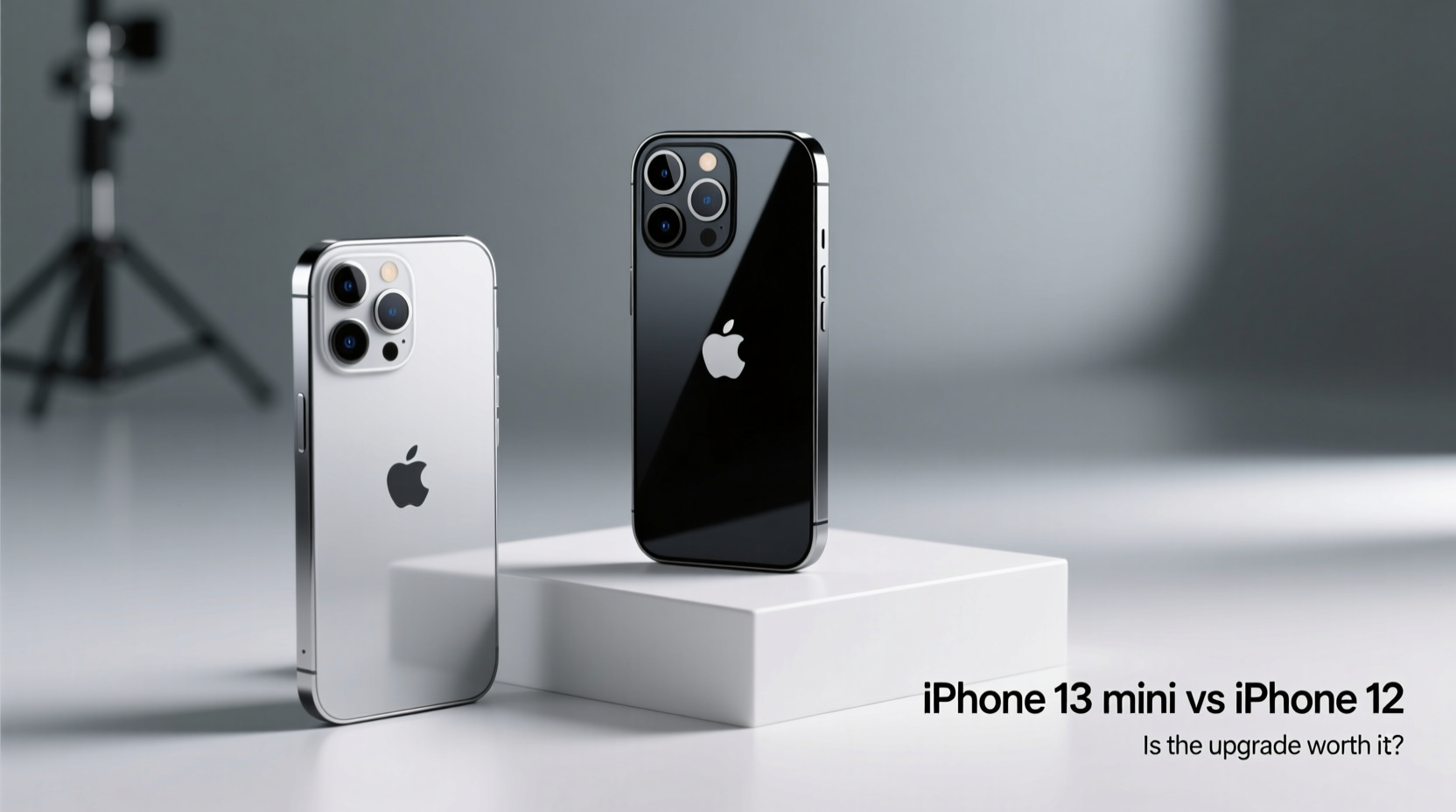
At first glance, the iPhone 13 mini and iPhone 12 appear almost indistinguishable. Both measure 131.5 x 64.2 x 7.65 mm and weigh 140 grams. They share the same flat-edge stainless steel design language introduced with the iPhone 12 series, along with Ceramic Shield front cover and IP68 water resistance. Even the color options overlap significantly.
However, subtle changes set them apart. The 13 mini’s rear camera module is slightly larger and rotated diagonally compared to the 12’s vertical dual-lens layout. This redesign accommodates improved sensors but doesn’t affect portability. For users upgrading from the 12, the feel in-hand remains consistent—ideal for those who chose the smaller iPhones specifically for comfort during extended use.
“Apple preserved the mini form factor not by shrinking components further, but by optimizing internal efficiency.” — David Liu, Mobile Hardware Analyst at TechInsight Group
Performance and Battery Life: Where the 13 Mini Pulls Ahead
The most significant upgrade comes under the hood. The iPhone 13 mini runs on Apple’s A15 Bionic chip, built on a more advanced 5nm process with faster CPU and GPU cores and a new 16-core Neural Engine. In contrast, the iPhone 12 uses the A14 Bionic. While both remain powerful enough for everyday tasks and even demanding apps, the A15 offers up to 15% better CPU performance and 30% faster graphics processing in peak scenarios.
More importantly, the A15’s efficiency improvements translate directly into longer battery life—a common critique of the original mini model. Despite having only a slightly larger battery (10–15% increase), the 13 mini delivers up to 1.5 to 2 hours more screen-on time than the 12. Real-world testing shows the 13 mini lasting through a full day of moderate use, whereas the 12 often requires midday charging for heavier users.
Tip: If you frequently run out of battery before evening, the 13 mini’s efficiency gains may be the single most compelling reason to upgrade.Camera Improvements: Subtle but Meaningful
Photography gets a quiet but impactful refresh in the 13 mini. Both phones feature dual 12MP cameras (wide and ultra-wide), but the 13 mini introduces sensor-shift optical image stabilization (OIS) on the main lens—a technology previously reserved for Pro models. This results in sharper low-light photos and smoother video capture, especially when walking or shooting in dim environments.
The ultra-wide lens also sees minor enhancements in autofocus and noise reduction. Combined with computational photography upgrades like Photographic Styles and improved Smart HDR 4, the 13 mini produces more natural skin tones, better dynamic range, and enhanced detail retention in shadows and highlights.
While casual shooters may not notice dramatic differences, enthusiasts will appreciate the consistency across lighting conditions. Night mode now activates on the ultra-wide lens too, expanding creative flexibility.
Detailed Feature Comparison
| Feature | iPhone 12 | iPhone 13 mini |
|---|---|---|
| Chipset | A14 Bionic | A15 Bionic (5nm+) |
| Battery Life (Video Playback) | 17 hours | 19 hours |
| Main Camera Stabilization | Optical (OIS) | Sensor-Shift OIS |
| Ultra-Wide Night Mode | No | Yes |
| Starting Storage | 64GB | 128GB |
| Display Brightness (HDR) | 1200 nits | 1000 nits (typical), higher peak in sunlight |
| Weight | 164g | 141g |
| Price (Launch, Base Model) | $699 | $699 |
Note: Despite the same starting price, the 13 mini includes double the base storage (128GB vs 64GB), effectively offering better long-term value.
Real-World Example: Sarah’s Upgrade Decision
Sarah has used her iPhone 12 since launch, appreciating how easily it slips into her jacket pocket. By late 2022, she noticed slower app launches and frequent warnings about low storage. She edits travel photos on her phone and often shoots video clips for social media. After researching, she upgraded to the 13 mini primarily for the doubled storage and improved camera stability.
In practice, Sarah found her photo editing workflow smoother thanks to the A15 chip, and night shots from city walks showed noticeably less blur. She also appreciated the extra battery life during weekend trips where charging wasn’t always possible. Though the size stayed the same, the experience felt meaningfully upgraded—without compromising the compact convenience she valued.
Step-by-Step: Should You Upgrade?
Follow this decision framework to evaluate your personal needs:
- Assess your current usage: Are you running out of storage or experiencing slowdowns with iOS updates?
- Evaluate battery demands: Do you regularly need to charge before bedtime? If yes, the 13 mini’s gains matter.
- Check camera priorities: If you take photos in varied lighting or record videos handheld, sensor-shift OIS adds tangible benefit.
- Consider future-proofing: The A15 chip will likely support iOS updates for one additional year over the A14.
- Weigh cost versus gain: If buying secondhand or trading in, the incremental cost may justify long-term satisfaction.
Frequently Asked Questions
Is the iPhone 13 mini noticeably thicker than the 12?
No. The 13 mini is only 0.25mm thicker than the 12, which is imperceptible in daily use. The weight difference is negligible as well.
Can I expect better cellular performance on the 13 mini?
Yes. The 13 mini includes an improved modem (Snapdragon X55 with Apple-designed enhancements) that provides better signal retention and faster data speeds in weak coverage areas.
Will cases from the iPhone 12 fit the 13 mini?
Most do, but due to the repositioned camera bump, some precision-cut cases may not align perfectly. It’s best to verify compatibility before reuse.
Action Checklist Before Upgrading
- Back up your iPhone 12 via iCloud or Finder/iTunes
- Verify available trade-in value from carriers or Apple
- Check if your favorite case brand offers 13 mini versions
- Review your current storage usage in Settings > General > iPhone Storage
- Test battery health (Settings > Battery > Battery Health); if maximum capacity is below 80%, replacement or upgrade becomes more urgent
Conclusion: Making the Right Choice for Your Lifestyle
The iPhone 13 mini isn’t a radical departure from the 12—it’s a refinement. For users deeply attached to the mini form factor, the continuity in size makes the upgrade seamless. Yet inside, the improvements in processor efficiency, camera technology, battery endurance, and base storage collectively make the 13 mini the superior device.
If you’re still satisfied with your iPhone 12 and don’t face storage or battery constraints, holding off is reasonable. But for anyone feeling the limitations of aging hardware or wanting to maximize their mobile photography, the 13 mini delivers meaningful upgrades without sacrificing the compact design that made the mini line special in the first place.
🚀 Ready to optimize your smartphone experience? Evaluate your current device using the checklist above and share your upgrade journey in the comments below.