
In the 17th century, the English colonies in North America faced a critical challenge: how to build an economy in a vast, undeveloped landscape with limited manpower. The answer emerged in the form of indentured servitude—a system that brought thousands of laborers from Europe to work in exchange for passage, food, and shelter. Though often overshadowed by later discussions of slavery, indentured servitude was essential to the survival and growth of early colonial settlements, particularly in regions like Virginia and Maryland.
This labor system wasn’t merely a convenience; it was a necessity driven by economic, demographic, and geographic realities. Understanding why indentured servants were so vital requires examining the conditions of the time, the structure of the system, and its long-term consequences.
The Labor Crisis in Early Colonies
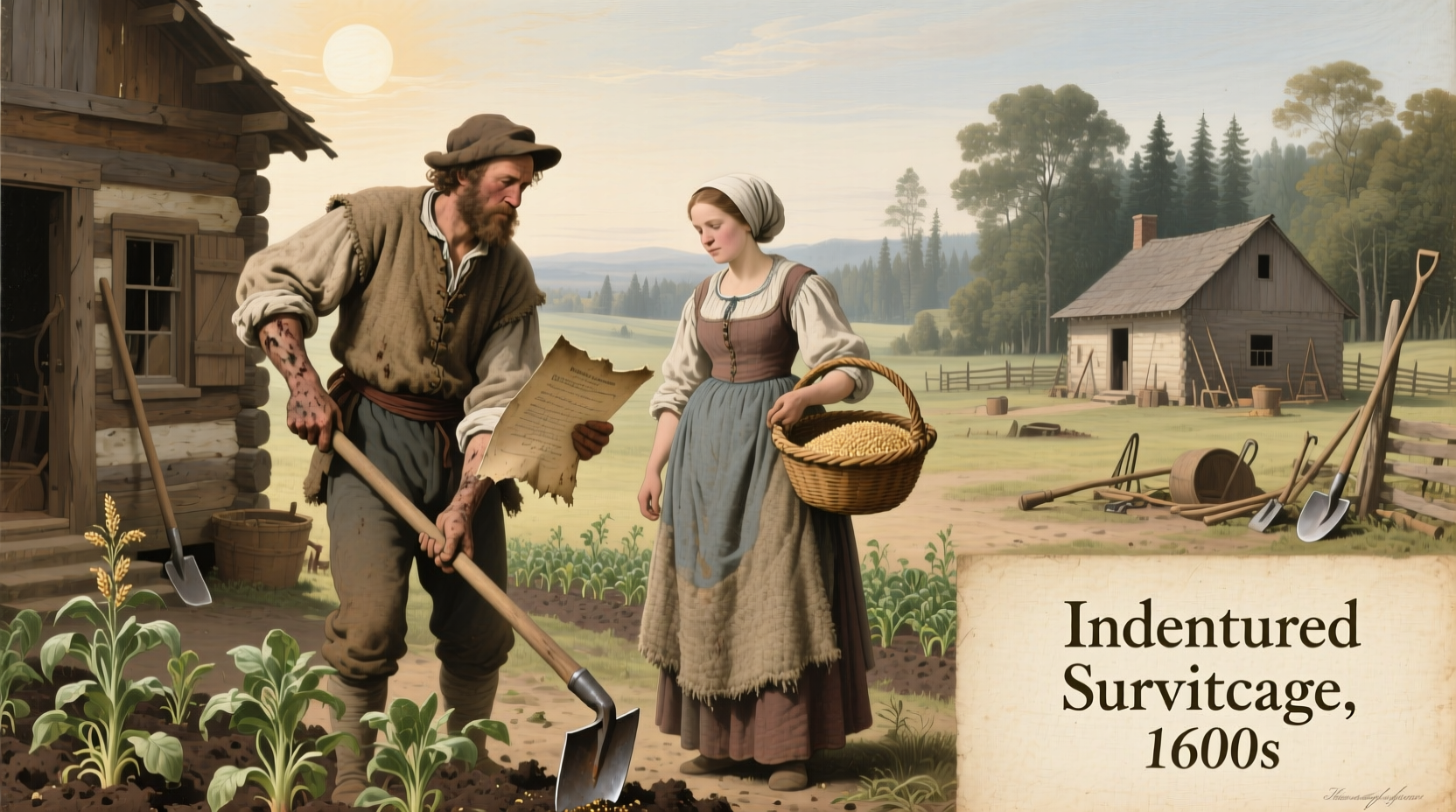
When English settlers established colonies such as Jamestown in 1607, they quickly discovered that farming, building, and defending settlements required far more labor than they could provide. Many colonists were unaccustomed to manual labor, and high mortality rates due to disease, malnutrition, and conflict drastically reduced the available workforce.
At the same time, there was little incentive for free laborers in England to make the dangerous transatlantic journey without assistance. Passage across the Atlantic cost about £5—equivalent to several months’ wages for a common laborer. For most poor but skilled or semi-skilled workers, this was an insurmountable barrier.
Enter the indenture contract: a legally binding agreement in which a laborer pledged four to seven years of service in exchange for transportation, basic provisions, and sometimes “freedom dues” upon completion—such as tools, clothing, or a small plot of land.
Tip: Indentured servitude functioned as both a labor solution and a migration strategy, enabling population growth in colonies while meeting agricultural demands.Economic Drivers Behind the Demand for Servants
Tobacco became the cash crop that transformed Virginia’s economy after 1612. Unlike subsistence farming, tobacco cultivation was labor-intensive and required constant attention—from planting and weeding to curing and packing. As demand grew in Europe, planters expanded their fields, increasing their need for reliable labor.
Slavery existed during this period, but African slaves were expensive and not yet imported on a large scale. In contrast, indentured servants were relatively affordable. A planter could purchase the contract of a servant for around £12–£15, less than half the cost of an enslaved person. This made indentured labor the dominant workforce in the Chesapeake region through much of the 1600s.
Moreover, the headright system—established in 1618—gave landowners 50 acres of land for every person they transported to the colony. Wealthy planters exploited this policy by importing dozens of servants, thereby amassing vast tracts of land while securing labor simultaneously.
Indentured Servants vs. Enslaved Africans: A Cost Comparison (c. 1670)
| Labor Type | Average Cost (in pounds) | Term of Service | Long-Term Investment |
|---|---|---|---|
| Indentured Servant | £12–£15 | 4–7 years | Moderate (freedom dues required) |
| Enslaved African | £25–£35 | Lifetime + descendants | High initial cost, lifelong return |
The Recruitment Process and Life of a Servant
Recruiters, known as “spirits,” operated in English ports and cities, offering passage to the New World to unemployed workers, debtors, and even petty criminals. Some signed voluntarily; others were coerced or kidnapped. Once aboard ship, conditions were brutal—overcrowding, poor food, and disease led to high death rates during the six- to eight-week voyage.
Upon arrival, servants were auctioned off to the highest bidder. Their lives were strictly regulated. They could not marry without permission, were subject to corporal punishment, and had few legal rights. Running away was common, though penalties included extended service or public whipping.
“Servants were the engine of the early Chesapeake economy. Without them, the tobacco boom would have been impossible.” — Dr. Susan M. Migden Socolow, Historian of Colonial Labor Systems
Despite harsh conditions, many completed their terms and received freedom dues. Some used these resources to become small farmers or artisans. However, competition for land increased over time, and by the late 1600s, fewer former servants achieved upward mobility.
Why Indentured Servitude Declined by the End of the Century
By the 1680s, the reliance on indentured servants began to wane. Several factors contributed to this shift:
- Improved economy in England: As job opportunities improved at home, fewer people were willing to risk the journey.
- Rising costs of servants: Increased demand drove up prices, making servants nearly as expensive as enslaved Africans.
- Rebellions and social unrest: Events like Bacon’s Rebellion (1676), where former servants joined forces against colonial elites, alarmed the ruling class. Planters feared a united front of poor whites and enslaved Blacks.
- Expansion of the transatlantic slave trade: As supply routes stabilized, enslaved Africans became more accessible and economically viable for lifetime labor.
Colonial legislatures responded by passing laws that entrenched racial slavery and restricted the rights of Black people, whether free or enslaved. This created a racial hierarchy that separated Black laborers from white servants, reducing the potential for cross-racial alliances.
Timeline: The Rise and Fall of Indentured Servitude in the 1600s
- 1618: Headright system introduced in Virginia, incentivizing importation of laborers.
- 1620s–1660s: Peak of indentured servitude; 75% of English immigrants arrive as servants.
- 1676: Bacon’s Rebellion highlights tensions between elite planters and disenfranchised former servants.
- 1680s: Shift toward African slavery accelerates; servant imports decline.
- 1690s: Racial slavery codified in law; indentured servitude becomes marginal.
Mini Case Study: The Smith Family of Charles City, Virginia
John Smith, a shoemaker from Bristol, signed a five-year indenture in 1652 to escape poverty. After surviving the Atlantic crossing—during which two of his shipmates died—he was sold to a tobacco planter along the James River.
For five years, John worked dawn to dusk, tending crops and repairing tools. He was whipped once for attempting to visit a neighboring plantation without permission. Upon completing his term, he received a suit of clothes, an axe, and ten bushels of corn. With help from a former fellow servant, he settled on a small plot of land granted under a secondary headright.
Though John never became wealthy, he eventually owned a modest farm and voted in local elections as a freeholder. His story reflects the promise—and limitations—of the indentured system: possible upward mobility, but within a rigid and often unforgiving structure.
Frequently Asked Questions
Could indentured servants be freed early?
Generally, no. Early release was rare and typically occurred only if the master voluntarily released the servant or if the servant performed exceptional service. Most contracts were strictly enforced by colonial courts.
Were women also indentured?
Yes. About 25% of indentured servants were women, who often worked as domestic servants or field hands. Female servants faced additional risks, including sexual exploitation and pregnancy, which could extend their terms of service.
Did indentured servants have any legal rights?
Limited ones. They could sue their masters for mistreatment or for failing to provide promised freedom dues. However, courts often sided with masters, and punishments for servants who complained were severe.
Conclusion: Why They Were Necessary—And What Replaced Them
Indentured servants were necessary because they provided a scalable, affordable labor force at a time when colonies were fragile and labor was scarce. They enabled the expansion of agriculture, particularly tobacco, and helped populate the colonies with European settlers. Without them, the economic foundation of British North America might never have taken hold.
Yet the system was inherently unstable. It relied on a continuous flow of vulnerable migrants and collapsed when conditions changed in either the Old or New World. Its decline paved the way for racialized, hereditary slavery—an even more exploitative system that would dominate the South for centuries.
💬 What lessons can we draw from the rise and fall of indentured servitude? Reflect on how economic needs shape labor systems—and how those systems, in turn, define societies. Share your thoughts in the discussion below.