An accurate illustration of a detailed onion sketch is more than a botanical drawing—it's a roadmap to understanding one of the most essential ingredients in global cuisine. While often dismissed as a simple kitchen staple, the onion’s layered complexity reveals profound implications for flavor development, texture, and technique in cooking. For chefs, culinary students, food illustrators, and home cooks alike, dissecting the onion visually offers insight into how its physical structure influences everything from knife skills to caramelization. This article explores the anatomy of the onion through the lens of a precise, educational sketch, translating visual detail into actionable culinary knowledge.
Definition & Overview
The onion (*Allium cepa*) is a biennial plant cultivated primarily for its bulb, which consists of concentric fleshy layers enclosed in dry, papery outer skins. Botanically classified as a vegetable, it belongs to the *Amaryllidaceae* family, closely related to garlic, leeks, chives, and shallots. The onion has been cultivated for over 5,000 years, with origins traced to Central Asia, and today it serves as a foundational ingredient across nearly every major world cuisine—from French mirepoix to Indian tadka, Mexican salsas to Chinese stir-fries.
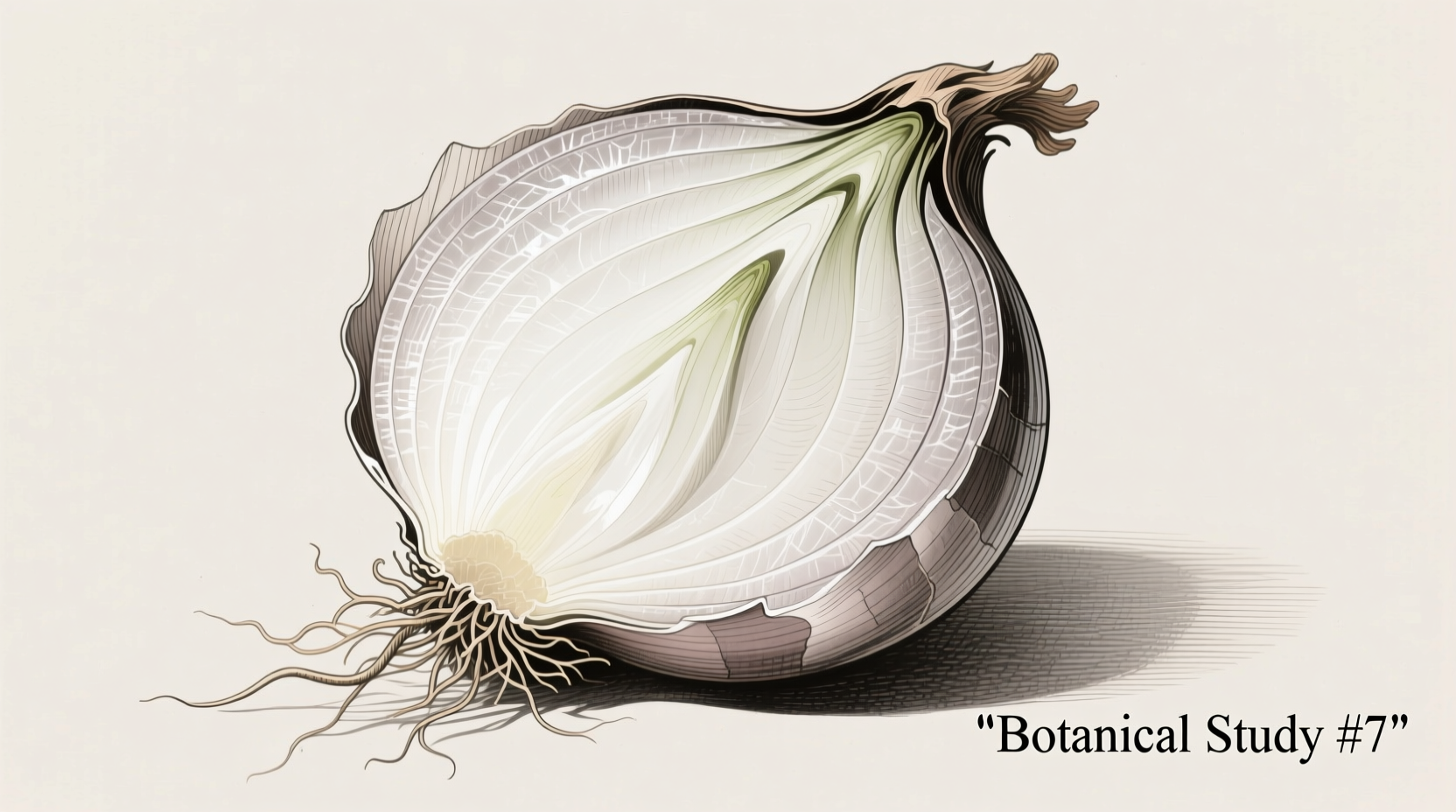
A detailed onion sketch captures not just the external appearance but also internal structures: root plate, basal stem, scale leaves (fleshy layers), neck tissue, and protective tunics. Understanding these components visually enhances comprehension of how onions grow, store, and behave under heat, cutting, and fermentation. Such illustrations are commonly used in agricultural education, culinary textbooks, and gastronomic research to teach proper handling, storage, and utilization techniques.
Key Characteristics
A comprehensive onion sketch highlights both visible and microscopic features that define the vegetable’s behavior in cooking. Below is a breakdown of the onion’s primary anatomical and functional traits:
| Feature | Description | Culinary Relevance |
|---|---|---|
| Root Plate | Dense cluster of roots at the base; origin point for new growth. | Must be trimmed before use; harbors dirt and potential bitterness. |
| Basal Stem | Flat disc connecting roots to leaf bases; becomes woody with age. | Should be removed during prep; can add unwanted texture if left intact. |
| Fleshy Scale Leaves | Concentric, juicy layers forming the edible bulb; rich in sugars and amino acids. | Source of sweetness when cooked; responsible for pungency when raw. |
| Dry Outer Tunics | Papery brown, red, or yellow coverings protecting inner layers. | Discarded before cooking; excellent for stock-making due to high sulfur content. |
| Neck Tissue | Narrow top section where leaves emerge; less dense and moister. | More prone to spoilage; should be used quickly once cut. |
| Cellular Structure | Large vacuoles storing water, sugars, and enzymes like alliinase. | Releases lachrymatory factor when cells are ruptured—causing tears. |
This structural precision in an onion sketch allows cooks to visualize why certain preparation methods—such as slicing versus dicing—affect moisture release, browning speed, and flavor intensity. It also informs best practices in peeling, storing, and repurposing scraps.
Practical Usage: Translating Anatomy into Cooking Technique
Understanding the onion’s internal layout directly impacts efficiency and results in the kitchen. A well-drawn onion sketch serves as a guide for optimal handling and transformation during cooking. Here’s how each anatomical feature translates into real-world culinary practice:
Peeling and Trimming Based on Structure
Start by removing the dry outer tunic—the first layer seen in any detailed sketch. This skin protects against pests and dehydration during storage but contributes no flavor and may carry soil residues. After peeling, trim the root end, preserving just enough to hold layers together during slicing. Over-trimming causes separation; under-trimming leaves fibrous remnants.
Chefs trained in classical techniques use the visual logic of the onion sketch to maintain structural integrity while maximizing yield. For example, leaving a small portion of the root plate intact during julienning ensures uniform strips stay connected until final cut—critical for even cooking.
Slicing Methods and Flavor Development
The direction of the cut relative to the onion’s growth rings (visible in cross-section sketches) determines flavor release and texture:
- Cuts parallel to growth rings (lengthwise): Yield longer, stringier pieces. These break down slowly and retain crunch—ideal for grilled onions or salads.
- Cuts perpendicular to growth rings (crosswise): Expose more cell walls, releasing more volatile compounds. Results in faster softening and stronger aroma—perfect for sautéing and soups.
- Chopping into small dice: Maximizes surface area, accelerating enzymatic reactions. Leads to rapid pungency but quick caramelization.
Pro Tip: To minimize tears, chill onions for 30 minutes before cutting. Cold temperatures slow enzyme activity and reduce vaporization of syn-propanethial-S-oxide, the tear-inducing compound. Alternatively, use a sharp knife to make clean cuts—crushing cells increases irritant release.
Heat Application and Layer Behavior
In a detailed onion sketch, the gradient from outer to inner layers reflects varying sugar and water content. Outer layers tend to be denser and slightly more acidic, while inner layers are sweeter and more delicate. When applying heat:
- Low-and-slow cooking: Softens connective tissues between layers, allowing gradual conversion of fructose polymers into simple sugars. Achieves deep golden-brown caramelization without burning.
- High-heat searing: Causes rapid evaporation, concentrating flavors quickly. Best for stir-fries or deglazing pans.
- Boiling or steaming: Leaches sulfur compounds into water, reducing pungency. Ideal for soups where subtlety is desired.
Professional kitchens monitor layer separation during cooking as an indicator of doneness. Uniform collapse signals complete cell wall breakdown—essential for silky purées or emulsified sauces.
Variants & Types: How Sketches Differ Across Cultivars
While a standard onion sketch typically represents the common yellow globe onion, variations exist among cultivars. Each type exhibits distinct proportions, color gradients, and layer density—details crucial for identification and application.
Yellow Onions
The most widely used variety, featuring thick, brownish-yellow skins and pale golden interiors. In a sketch, these show robust, tightly packed layers with pronounced translucence when cut. High in pyruvic acid, they deliver strong pungency when raw but develop rich umami when cooked. Ideal for long-simmered dishes like stews, braises, and French onion soup.
Red (Purple) Onions
Recognizable by their vibrant magenta flesh, red onions have thinner walls and higher water content. A detailed sketch would highlight broader, looser layers and a more open cellular matrix. Their anthocyanin pigments provide antioxidant properties and striking visual contrast in raw preparations—salsas, pickles, and salads. Less suited for prolonged cooking due to color bleed and softer texture.
White Onions
Common in Latin American cuisine, white onions appear crisper in sketches, with paper-thin tunics and bright white, moist layers. They have a sharper initial bite but mellow quickly. Often used raw in pico de gallo or blended into ceviche marinades. Store less long than yellow types due to lower flavonoid content.
Shallots
Though botanically distinct (*Allium cepa var. aggregatum*), shallots are frequently included in comparative onion sketches. They feature elongated, clustered bulbs with fine, coppery skin and pink-tinged flesh. Layers are smaller and more segmented. Known for delicate sweetness and subtle garlic notes, they excel in vinaigrettes, reductions, and fines herbes blends.
Green Onions (Scallions)
Immature onions harvested before bulb formation. A sketch emphasizes the transition zone between white base and green shaft. No concentric layers—instead, hollow tubular leaves. Used whole or chopped, adding freshness and mild onion flavor. Common in Asian dishes, garnishes, and quick-cook applications.
| Type | Layer Density | Best Use Case | Storage Life |
|---|---|---|---|
| Yellow Onion | High | Caramelizing, roasting, stocks | 2–3 months (cool, dry) |
| Red Onion | Medium | Raw applications, pickling | 1–2 months |
| White Onion | Medium-High | Salsas, tacos, grilling | 3–4 weeks |
| Shallot | Low (segmented) | Vinaigrettes, sauces, sautés | 1–2 months |
| Green Onion | None (tubular) | Garnish, stir-fries, soups | 1 week (refrigerated) |
Comparison with Similar Ingredients
Despite visual similarities, several alliums differ significantly in structure and function. A detailed onion sketch helps distinguish them from close relatives:
- Garlic vs. Onion: Garlic cloves lack concentric layers and instead consist of individual segments wrapped in parchment-like membranes. Each clove functions as a modified leaf base—not a true bulb. Higher allicin content makes garlic more pungent and antimicrobial.
- Leek vs. Onion: Leeks do not form bulbs. Instead, they develop a thickened stem from overlapping leaf sheaths. A sketch shows no central core or layers—just stacked cylindrical tubes. Milder flavor, suited for braising and soups.
- Chives vs. Onion: Entirely hollow, grass-like stems with no bulb. Used exclusively as a fresh herb. Minimal enzymatic reaction upon cutting—no tearing effect.
- Spring Onion vs. Green Onion: True spring onions have a small, developed bulb with defined layers—visible in early-stage sketches. Green onions lack this entirely.
\"The difference between a good cook and a great one lies in understanding not just what to do—but why. A simple onion sketch teaches more about flavor science than most textbooks.\" — Chef Elena Ruiz, Culinary Instructor, Institut Le Cordon Bleu Madrid
Practical Tips & FAQs
How should I store onions based on their structure?
Onions with thick, dry tunics (yellow, red, white) should be kept in a cool, dark, well-ventilated space—never sealed in plastic. Moisture trapped against the outer layers accelerates mold at the neck tissue. Cut onions should be refrigerated in airtight containers for up to five days.
Can I compost onion skins and root plates?
Yes. Though spicy, onion waste breaks down safely in compost piles. The sulfur compounds act as natural pest deterrents. Avoid adding large quantities to worm bins, however, as they may irritate vermicompost organisms.
Are there nutritional differences between layers?
Outer layers contain higher concentrations of quercetin, a flavonoid antioxidant linked to anti-inflammatory benefits. While inner layers are sweeter, retaining more vitamin C and soluble fiber, peeling too aggressively removes valuable phytonutrients. Light scrubbing after peeling preserves health benefits.
Why do some onions make better marmalades than others?
High-sugar varieties like Vidalia or Walla Walla caramelize evenly due to low pyruvic acid levels. In a sketch, these show wider, juicier inner rings. Their weak cellular structure collapses smoothly, creating a jam-like consistency ideal for condiments.
What’s the best way to draw an onion for culinary instruction?
Begin with a vertical cross-section showing symmetry. Label key parts: root plate, basal stem, fleshy scales, neck, and tunics. Use graduated shading to indicate moisture gradient—from translucent center to opaque outer ring. Include a magnified inset of cellular arrangement to explain enzyme distribution.
Classroom Application: Culinary schools use onion sketches to teach knife safety. Students identify the root plate as the anchor point, learning to keep fingers behind it during slicing. This reinforces control and reduces injury risk.
Summary & Key Takeaways
A detailed onion sketch is far more than a botanical illustration—it is a functional tool that bridges agriculture, nutrition, and gastronomy. By examining the onion’s anatomy, cooks gain insight into how structure affects taste, texture, and performance in recipes. Key points include:
- The root plate and basal stem must be properly trimmed to ensure clean flavor and consistent cooking.
- Fleshy scale layers vary in sugar and sulfur content, influencing caramelization and pungency.
- Cutting direction and size determine enzymatic activity, moisture release, and final dish texture.
- Different onion types exhibit unique structural traits, dictating their ideal culinary uses.
- Comparative sketches clarify distinctions between onions and related alliums, preventing substitution errors.
- Understanding cellular biology helps mitigate tears and optimize storage and usage.
Mastery of the onion—starting with its visual deconstruction—forms the foundation of skilled cooking. Whether you're a student, chef, illustrator, or home enthusiast, studying a detailed onion sketch equips you with timeless knowledge applicable in every kitchen. Next time you reach for an onion, consider its hidden architecture: beneath the skin lies a universe of flavor, waiting to be unlocked.
Challenge: Try sketching your own onion cross-section after dissection. Label each part and note how it behaved in your last recipe. You’ll deepen your sensory memory and technical precision simultaneously.