Planting hardneck garlic is one of the most rewarding undertakings for gardeners who value depth of flavor, culinary versatility, and long-term food sustainability. Unlike supermarket garlic, which is often softneck and bred for shelf life rather than taste, hardneck varieties offer complex, bold flavors—ranging from earthy and spicy to sweet and nutty—depending on the cultivar and growing conditions. When planted correctly, a single clove can yield an entire bulb, making it a high-return crop with minimal input. Yet, success hinges on precise timing, soil preparation, and understanding the plant’s unique growth cycle. This guide delivers a comprehensive, science-backed approach to planting hardneck garlic, tailored for home gardeners and small-scale growers seeking consistent, high-quality harvests.
Definition & Overview
Hardneck garlic (Allium sativum var. ophioscorodon) is a subspecies of cultivated garlic distinguished by a stiff central flowering stalk, known as a scape. Unlike softneck garlic, which is commonly found in grocery stores and braided into decorative strands, hardneck varieties are prized by chefs and artisanal producers for their superior flavor, larger cloves, and cold tolerance. They thrive in temperate climates with distinct seasonal shifts, particularly regions that experience sustained winter dormancy. The plant grows from individual cloves separated from a parent bulb and develops over a nine- to ten-month cycle, culminating in mature bulbs ready for harvest in early summer.
Originating in Central Asia, garlic has been cultivated for over 5,000 years, with hardneck types representing some of the oldest lineages. These include well-known cultivars such as Rocambole, Porcelain, and Purple Stripe, each adapted to specific climate zones and offering unique sensory profiles. Hardneck garlic plants typically produce fewer cloves per bulb—usually 4 to 12—compared to softnecks, but those cloves are larger, easier to peel, and more intensely flavored. Additionally, hardnecks produce edible scapes in late spring, a delicacy often used in pestos, stir-fries, and pickles.
Key Characteristics
| Characteristic | Description |
|---|---|
| Flavor Profile | Bold, complex—ranges from spicy and pungent (Porcelain) to rich and mellow (Rocambole). Develops sweetness when roasted. |
| Aroma | Sharp, sulfurous when raw; becomes nutty and savory when cooked. |
| Color & Form | Cloves wrapped in papery skin—white, purple, or striped. Central woody stem runs through the bulb. |
| Heat Level | Moderate to high when raw; mellows significantly with cooking. |
| Culinary Function | Foundational aromatic, seasoning agent, centerpiece in roasted dishes, source of edible scapes. |
| Shelf Life | 4 to 6 months when properly cured and stored in cool, dry conditions. |
| Growth Habit | Requires vernalization (cold exposure); forms scapes; dies back naturally in summer. |
Practical Usage in the Garden and Kitchen
Hardneck garlic is not only a garden crop but a cornerstone ingredient in global cuisines. In the kitchen, its large cloves make mincing and roasting effortless, while its deep flavor enhances sauces, soups, marinades, and vegetable dishes. The early-season scapes add a garlicky freshness to spring menus and help direct the plant’s energy toward bulb development.
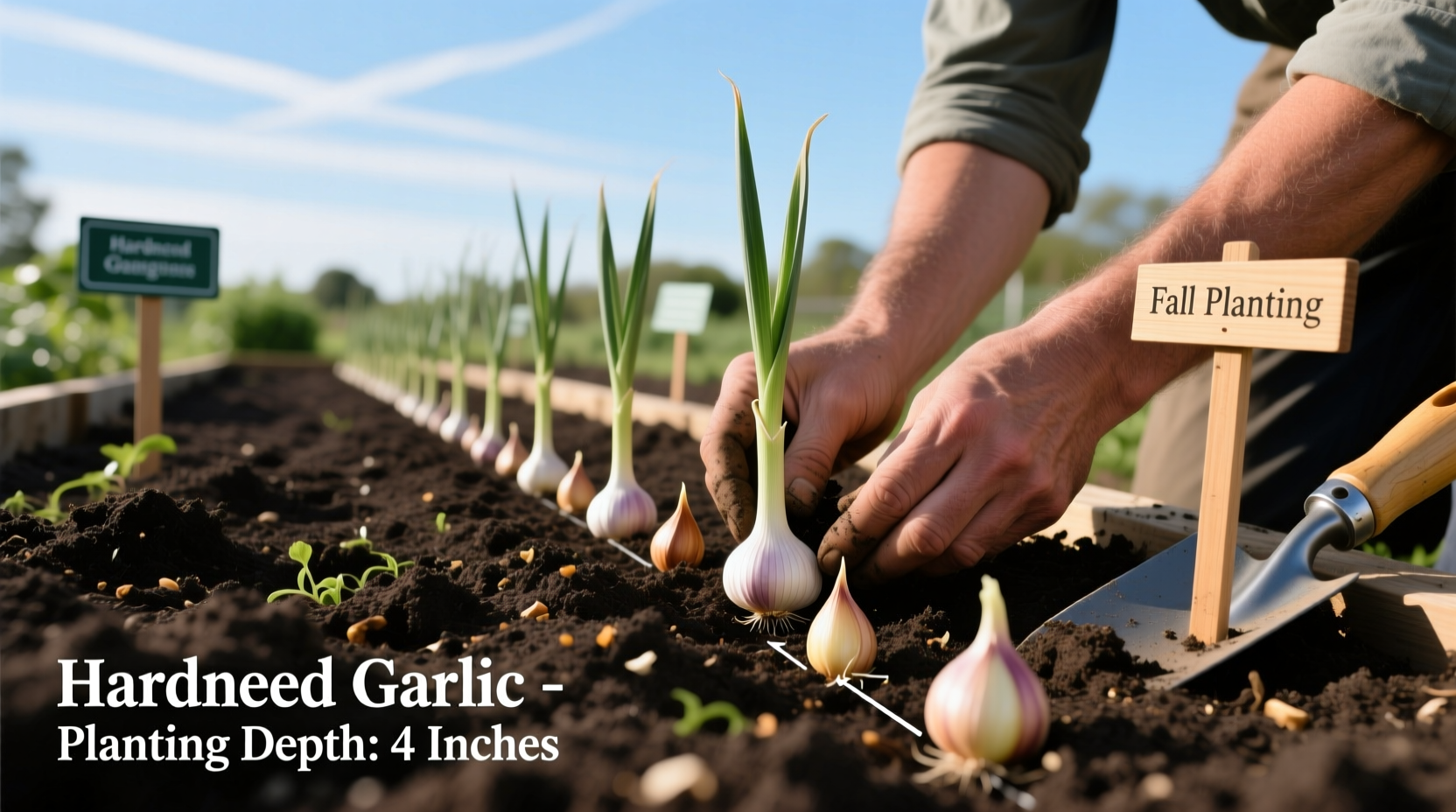
From a cultivation standpoint, planting hardneck garlic follows a clear seasonal rhythm. The process begins in the fall, typically four to six weeks before the ground freezes. This timing allows cloves to develop root systems without sprouting green shoots prematurely. The winter chill triggers vernalization—a physiological requirement for proper bulb formation. Come spring, the plants resume vigorous growth, and by late May or June, scapes emerge on most varieties. Removing these flower stalks encourages larger bulb size. Harvest occurs when the lower third of the leaves have yellowed or browned, usually in early to mid-summer.
Step-by-Step Planting Guide
- Select high-quality seed stock: Use certified disease-free garlic from reputable seed suppliers or trusted local growers. Avoid using grocery store garlic, which may be treated with sprout inhibitors or carry pathogens.
- Choose the right variety for your zone: Porcelain types excel in harsh northern winters; Rocamboles prefer moderate cold; Purple Stripes are adaptable across zones 3–7.
- Prepare the planting site: Select a location with full sun and well-drained soil. Amend heavy clay with compost or aged manure to improve structure and fertility. Aim for a pH between 6.0 and 7.0.
- Break bulbs into individual cloves: Do this no more than 24–48 hours before planting to minimize moisture loss and pathogen exposure. Discard any small, damaged, or moldy cloves.
- Plant cloves pointy-end up: Space them 6 inches apart in rows 12 inches apart. Insert cloves 2 to 3 inches deep, depending on soil type—deeper in sandy soils, shallower in clay.
- Mulch heavily after planting: Apply 4 to 6 inches of organic mulch such as straw, shredded leaves, or hay. This insulates roots, suppresses weeds, and moderates soil temperature.
- Water appropriately: Water once at planting if the soil is dry. After that, rely on natural precipitation until spring unless conditions are unusually arid.
- Monitor spring growth: As temperatures warm, green shoots will emerge. Remove mulch gradually to allow soil warming, but keep some residue between rows for weed suppression.
- Harvest and remove scapes: When curly scapes appear (typically late May to early June), cut them off just above the top leaf pair. Use them fresh or preserve them by freezing or pickling.
- Determine harvest time: Watch for leaf dieback. When three to five green leaves remain above ground, the bulbs are mature. Dig carefully with a fork to avoid bruising.
- Cure garlic properly: Hang in small bunches in a shaded, well-ventilated area for 3 to 4 weeks. Do not wash bulbs; curing preserves flavor and extends storage life.
- Trim and store: Once cured, trim roots and tops to 1 inch. Store in mesh bags or open baskets at 55–65°F (13–18°C) with 50–60% humidity.
Pro Tip: Save your largest, most symmetrical bulbs from each harvest for replanting the following fall. Over time, this practice adapts your garlic to your specific microclimate, improving vigor and yield.
Variants & Types of Hardneck Garlic
Hardneck garlic encompasses several distinct families, each with unique growth habits, flavor characteristics, and climate preferences. Understanding these types helps gardeners select the best cultivars for their region and culinary goals.
- Rocambole: Known for rich, complex flavor and easy-to-peel wrappers. Produces large, asymmetrical bulbs with 8–12 cloves. Excellent for roasting and sautéing. Best suited for zones 4–7. Examples: ‘Spanish Roja’, ‘German Red’.
- Porcelain: Features thick, white skins and massive cloves—often only 4–6 per bulb. Flavor is intense when raw, becoming buttery and sweet when cooked. Cold-hardy and ideal for northern gardens (zones 3–6). Example: ‘Romanian Red’, ‘Georgian Crystal’.
- Purple Stripe: Cloves display striking purple streaks on both skin and flesh. Medium-sized bulbs with 8–10 cloves. Flavor ranges from moderately hot to deeply savory. Adaptable across multiple zones. Subtypes include Glazed and Marbled. Example: ‘Chesnok Red’.
- Glazed Purple Stripe: A subtype with smooth, shiny wrappers and uniform cloves. Milder than other hardnecks, making it suitable for raw applications. Performs well in short-season climates.
- Marbled Purple Stripe: Less uniform in shape but highly flavorful. Requires longer cold periods and thrives in continental climates.
- Creole: Often mistaken for softneck, Creoles are technically hardnecks with reduced scapes. They have deep red-purple skins and a fiery, long-lasting heat. Better adapted to warmer zones (7–9). Example: ‘Burgundy’, ‘Ajo Rojo’.
| Type | Clove Count | Flavor Intensity | Best Zones | Storage Life |
|---|---|---|---|---|
| Rocambole | 8–12 | Rich, complex | 4–7 | 4–5 months |
| Porcelain | 4–6 | Strong, sweet when cooked | 3–6 | 5–6 months |
| Purple Stripe | 8–10 | Earthy, moderately hot | 4–7 | 5 months |
| Creole | 6–10 | Spicy, lingering heat | 7–9 | 6+ months |
Comparison with Softneck Garlic
While both are cultivars of Allium sativum, hardneck and softneck garlic differ significantly in structure, use, and growing requirements. These differences influence everything from planting decisions to kitchen utility.
| Feature | Hardneck Garlic | Softneck Garlic |
|---|---|---|
| Central Stem | Stiff, woody scape present | Flexible neck; no scape |
| Clove Size & Number | Fewer (4–12), larger cloves | More (12–20), smaller cloves |
| Flavor | Bolder, more complex | Milder, less nuanced |
| Peeling Ease | Easy—loose wrappers | Difficult—tight skins |
| Cold Requirement | High—needs vernalization | Low—suited to mild winters |
| Storage Life | 4–6 months | 8–12 months |
| Braiding Potential | No—stiff stems prevent it | Yes—ideal for braids |
| Edible Scapes | Yes—harvested in spring | No—does not produce scapes |
For gardeners in colder zones, hardneck garlic is often the only viable choice due to its cold tolerance and vernalization needs. In contrast, softneck varieties dominate commercial production because of their longer shelf life and adaptability to mechanical harvesting. However, for flavor-focused cooks and homesteaders, hardneck remains the gold standard.
Practical Tips & FAQs
When is the best time to plant hardneck garlic?
Plant in the fall, ideally 4 to 6 weeks before the first hard frost. This allows roots to establish without top growth emerging. In zone 5, for example, late October is optimal. Spring planting is possible but yields smaller bulbs due to insufficient vernalization.
Can I grow hardneck garlic in containers?
Yes, provided the container is at least 8 inches deep and has excellent drainage. Use a high-quality potting mix amended with compost. Place pots in full sun and mulch the surface. Container-grown garlic requires more consistent watering but can be brought to sheltered areas during extreme cold.
Why didn’t my garlic form bulbs?
The most common cause is planting too late in the season, preventing root development. Other factors include using low-quality seed stock, insufficient cold exposure, or overcrowding. Ensure cloves are planted at the correct depth and spacing.
Do I need to fertilize garlic?
Yes, but strategically. Apply a balanced organic fertilizer (such as 5-5-5) in early spring when active growth resumes. Side-dress with nitrogen-rich amendments like blood meal or fish emulsion in April to support leaf development, which fuels bulb formation. Stop fertilizing by early June to allow maturation.
What pests and diseases affect hardneck garlic?
Common issues include onion thrips, nematodes, and white rot. Prevent problems through crop rotation—avoid planting garlic where alliums have grown in the past three years. Inspect seed stock carefully and discard any showing signs of mold or browning. Neem oil can deter thrips; proper spacing improves airflow and reduces fungal risk.
Can I eat garlic immediately after harvest?
You can, but flavor will be sharper and moisture content higher. For best results, cure garlic for 3–4 weeks. Curing converts sugars, mellows pungency, and dramatically improves storage potential.
Is it worth saving seed garlic?
Absolutely. Over successive seasons, locally saved seed adapts to your soil and climate, resulting in stronger plants and better yields. Select the largest, healthiest bulbs for replanting to progressively improve your stock.
“Garlic remembers where it’s grown. The more you save and replant from your own harvest, the more your patch becomes uniquely yours—flavorful, resilient, and perfectly attuned to your land.”
— Elena Martinez, Organic Seed Alliance
Summary & Key Takeaways
Successfully planting hardneck garlic requires attention to timing, soil quality, and cultivar selection. Unlike generic gardening advice, true success comes from aligning agricultural practices with the plant’s biological needs—particularly its requirement for cold exposure and slow, steady development. By choosing the right variety for your climate, preparing fertile, well-drained soil, and following a disciplined planting and care routine, gardeners can produce restaurant-quality garlic with deep, nuanced flavor.
Key advantages of hardneck garlic include superior taste, ease of peeling, and the bonus of edible scapes. While its shelf life is shorter than softneck, proper curing and storage extend usability well into the next growing season. Most importantly, saving and replanting your own seed stock creates a feedback loop of improvement, turning a simple crop into a legacy of flavor and resilience.
Ready to grow your best garlic yet? Start this fall with a single row of Porcelain or Rocambole cloves. Mark your calendar for scape harvest—and prepare for a summer harvest that elevates every dish you cook.