Beauty is rarely found in isolation. It emerges at the intersection of intention, integrity, and resonance—between object and observer, purchase and purpose. In a world saturated with algorithmically optimized aesthetics and fleeting trends, “the most beautiful” is increasingly confused with “the most photographed,” “the most expensive,” or “the most viral.” This guide rejects that confusion. It offers a grounded, human-centered framework for selecting items—whether a piece of furniture, a watch, a ceramic mug, a garment, or a work of art—that earn their beauty through craftsmanship, authenticity, emotional truth, and quiet longevity.
This isn’t about taste hierarchies or prescriptive rules. It’s about cultivating discernment: the ability to pause, look closely, ask better questions, and trust your own calibrated response—not as a consumer, but as a steward of meaning.
1. Beauty Begins with Intention—Not Appearance
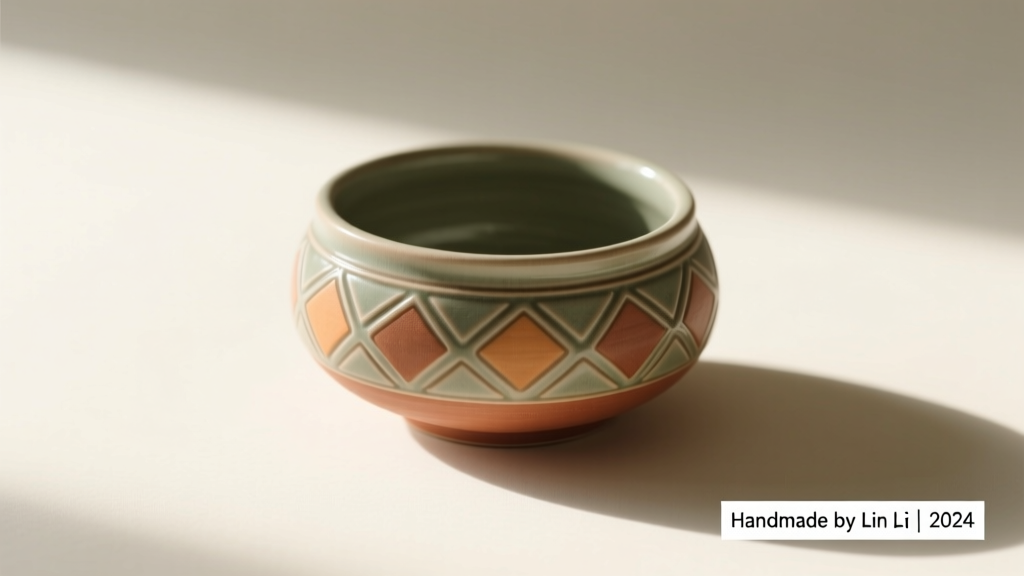
Before evaluating color, proportion, or finish, begin with why the item exists—and why you want it. True beauty gains depth when function and form serve shared values. A chair may have elegant curves, but if its seat height strains your posture after ten minutes, its beauty remains theoretical. A hand-thrown bowl may bear subtle glaze variations that a machine could never replicate—but if its weight feels alien in your hands while serving soup, its aesthetic power is diminished by dissonance.
Ask yourself these questions before browsing or clicking “add to cart”: • What ritual or daily moment will this object inhabit? • Does it support how I wish to live—or merely how I wish to appear? • Will its presence encourage slowness, care, or connection—or distraction, disposal, or comparison?
Tip: Keep a “beauty journal” for one week. Note three objects you found genuinely beautiful—not impressive, not trendy, but quietly moving. Record where you saw them, how they made you feel, and what qualities stood out (e.g., “the worn brass hinge on the library door—warm, responsive, honest”). Patterns will emerge.2. The Four Pillars of Enduring Beauty
Enduring beauty rests on four interdependent pillars—not one alone, but all four working in concert. When any pillar is weak or missing, the perception of beauty often fades quickly under real-world use.
| Pillar | What It Means | Red Flag Indicators |
|---|---|---|
| Craftsmanship | Attention to detail visible in construction, material transitions, finishing, and tolerances—even in places no one sees (e.g., interior seams, underside of a tabletop). | Glue seepage, uneven stitching, inconsistent grain alignment, brittle finishes that chip at edges, hardware that wobbles or scratches easily. |
| Material Integrity | Materials chosen for suitability—not just visual appeal—and treated honestly (e.g., solid wood vs. veneer over particleboard; natural dye vs. synthetic pigment that bleeds). | Vague descriptors (“premium fabric,” “luxury finish”), absence of origin or composition details, excessive reliance on coatings to mask base quality. |
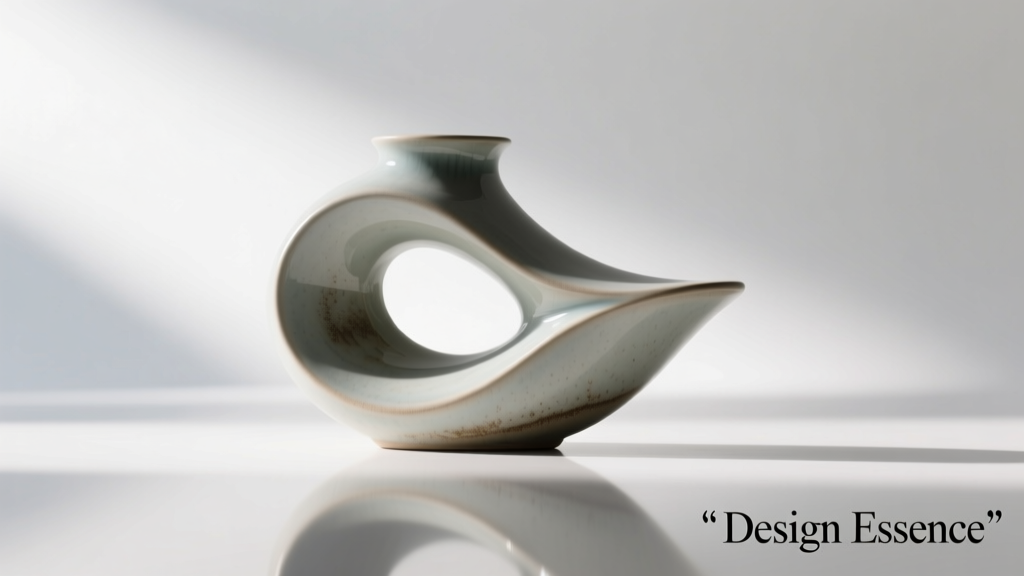
| Proportional Harmony | Balance between elements—scale, rhythm, negative space, and visual weight—that feels resolved, not forced. Often revealed in silhouette and silhouette alone. | Overly busy surfaces that compete for attention, jarring scale shifts (e.g., massive handles on a delicate frame), symmetry used rigidly rather than thoughtfully. |
| Emotional Resonance | The quiet, non-verbal sense that the object acknowledges human experience—imperfection, warmth, time, touch. It invites interaction, not just observation. | Objects that feel cold, sterile, or intimidating to use; designs that prioritize “statement” over comfort or familiarity; pieces that seem designed for photography, not living. |
When evaluating an item, assess each pillar separately. If three pillars are strong but one is compromised—say, exceptional craftsmanship and material integrity paired with awkward proportions—the object may still be beautiful *in context*, but its beauty will be conditional and fragile. Prioritize balance.
3. A Step-by-Step Sensory Evaluation Process
Beauty is perceived through the body before the mind interprets it. Engage your senses deliberately—not to judge, but to gather evidence. Follow this sequence every time you consider a significant purchase:
- Observe silently for 30 seconds. No labels, no names—just light, shadow, edge, surface. Where does your eye rest? Where does it slide away?
- Touch with intention. Run fingertips slowly over primary surfaces. Is texture consistent? Does temperature shift? Is there a satisfying resistance or give? Does the surface invite touch—or repel it?
- Hold or interact. Lift it (if portable). Sit in it. Pour water into it. Open and close it. How does weight distribute? How do mechanisms respond? Does movement feel assured or hesitant?
- Introduce time. Return after 10 minutes. Has your initial impression deepened, softened, or shifted? Does it feel more familiar—or more distant?
- Test against memory. Compare it—not to competitors, but to the most beautiful version of this object you’ve ever encountered. What does that memory tell you this one lacks—or exceeds?
This process slows consumption and accelerates discernment. It transforms selection from a transaction into a conversation—one that reveals whether an object possesses beauty, or merely decoration.
4. Real-World Case Study: The Ceramic Mug Dilemma
Sarah, a high school English teacher, spent years buying mugs based on quotes, colors, or Instagram aesthetics. Her cupboard held twelve mugs—most unused. One rainy Tuesday, she visited a local potter’s studio. She didn’t buy immediately. Instead, she sat with three mugs the potter offered: one glossy white, one matte charcoal with finger ridges, and one speckled stoneware with an off-center handle.
She followed the sensory evaluation: The white mug felt cool and slick—visually clean, but emotionally detached. The charcoal mug’s ridges were intentional, not decorative—designed to grip damp hands, yet softened by repeated washing. The speckled mug had a slight asymmetry in its rim; when filled, the liquid level sat just below the thickest part of the curve, creating a calm visual anchor.
Sarah chose the speckled mug. Not because it was “prettiest,” but because it held her attention longer, felt reassuringly substantial, and responded to use—its glaze deepening subtly with each wash. Eighteen months later, it’s her only daily mug. Students notice it. Colleagues ask about it. Its beauty isn’t static—it accrues.
“True beauty in functional objects is measured not in first-glance impact, but in accumulated moments of quiet rightness—the way a well-made spoon balances in the hand, or how a door closes with a soft, certain sigh.” — Hiroshi Tanaka, Japanese ceramicist and design educator
5. The Ethics of Beauty: Why Provenance Matters
Beauty cannot be ethically divorced from origin. An object’s story—the hands that shaped it, the conditions under which materials were sourced, the energy embedded in its making—shapes how we experience it. Knowing that a textile was block-printed by artisans paid living wages in Jaipur changes how its pattern resonates. Learning that reclaimed timber was milled within 50 miles alters how its grain reads in your living room.
Transparency isn’t a marketing perk—it’s a prerequisite for deep aesthetic engagement. When provenance is obscured, beauty becomes hollow theater. When it’s honored, beauty gains gravity and generosity.
Look for these signals of ethical beauty: • Specificity in sourcing (e.g., “oak harvested from certified low-impact forest in Vermont,” not “sustainably sourced wood”) • Named makers or workshops—not just brand names • Documentation of labor practices, even in brief form • Evidence of repairability: availability of spare parts, modular design, service networks
Tip: Before purchasing, search “[Brand Name] + ethics,” “[Brand Name] + factory tour,” or “[Brand Name] + repair policy.” If results are vague, absent, or buried, assume transparency is performative—not foundational.6. Common Misconceptions About Beauty (and Why They Sabotage Choice)
- Misconception: “Beautiful things must be expensive.” Reality: Cost reflects scarcity, markup, or branding—not inherent aesthetic value. A $22 hand-forged iron hook can hold more visual and tactile intelligence than a $2,200 mass-produced shelf.
- Misconception: “Trendy = beautiful.” Reality: Trends amplify surface qualities to capture attention quickly. Beauty endures because it satisfies deeper perceptual needs—harmony, honesty, humanity—not because it’s novel.
- Misconception: “I’ll ‘grow into’ its beauty.” Reality: If an object doesn’t resonate now—if it feels alien, intimidating, or like a costume—you’re unlikely to develop affection through prolonged exposure. Authentic beauty invites immediate, embodied recognition—even if understanding deepens over time.
- Misconception: “It has to match everything else.” Reality: Forced harmony creates visual fatigue. Beauty often thrives in thoughtful contrast—a rough-hewn stool beside a sleek table, a vibrant textile against neutral walls. Let one object be the quiet center; others can hold space around it.
7. FAQ: Clarifying the Practical Realities
How do I know if something is “beautiful to me”—not just “what I think I should like”?
Pause before rationalizing. Place your hand over your sternum and take three slow breaths. Ask: “Does my breath deepen? Does my shoulders soften? Does my gaze linger without effort?” If yes, your body is registering resonance—often more reliably than your mind’s curated preferences.
Can mass-produced items be truly beautiful?
Yes—but only when design intention, material honesty, and manufacturing precision align. Examples include Le Creuset enameled cast iron (where color, thickness, and thermal performance are inseparable), or Muji’s aluminum desk lamps (where minimalism serves function without austerity). The key isn’t scale—it’s whether the maker prioritized wholeness over efficiency alone.
What if I love something, but it’s clearly poorly made?
Honor the attraction—but don’t ignore the warning. That love may point to an unmet need (e.g., desire for warmth, texture, or uniqueness) that a better-made alternative could fulfill. Use the feeling as data—not destiny. Search for pieces that deliver the same emotional quality with superior integrity.
Conclusion: Beauty as Practice, Not Purchase
Choosing the most beautiful is not a destination—it’s a discipline. It asks you to show up with patience, curiosity, and courage: courage to walk away from glittering distractions, courage to trust your quietest responses over loudest opinions, courage to invest in objects that ask for participation rather than passive admiration.
Every time you choose craftsmanship over gloss, integrity over illusion, resonance over replication, you reinforce a worldview where beauty is not consumed, but cultivated. Not owned, but honored. Not displayed, but lived with.
Your home, your wardrobe, your workspace—they’re not backdrops for your life. They’re extensions of your attention. Choose accordingly. Start small: the next time you reach for a new notebook, a pair of scissors, or a teacup, apply just one step from the sensory evaluation. Notice what shifts. Then share what you discover—not as advice, but as invitation.
💬 Your discernment matters. Share one object you’ve chosen recently—not for its price or prestige, but for its quiet, undeniable beauty. What made it resonate? Your reflection might be the exact insight someone else needs to trust their own eyes.