
In the expansive universe of Dragon Ball Super, fans have long observed a curious phenomenon: despite the passage of time, Goten and Trunks remain perpetually youthful. While characters like Goku, Vegeta, and Gohan visibly mature and face new challenges as adults, the younger Saiyan duo seem frozen in adolescence. This isn't a production oversight—it's a deliberate narrative choice rooted in storytelling logic, character roles, and the unique pacing of the Dragon Ball timeline. Understanding why Goten and Trunks appear so young requires an exploration of canon timelines, power scaling, thematic purpose, and real-world anime production constraints.
The Canon Timeline and In-Universe Chronology
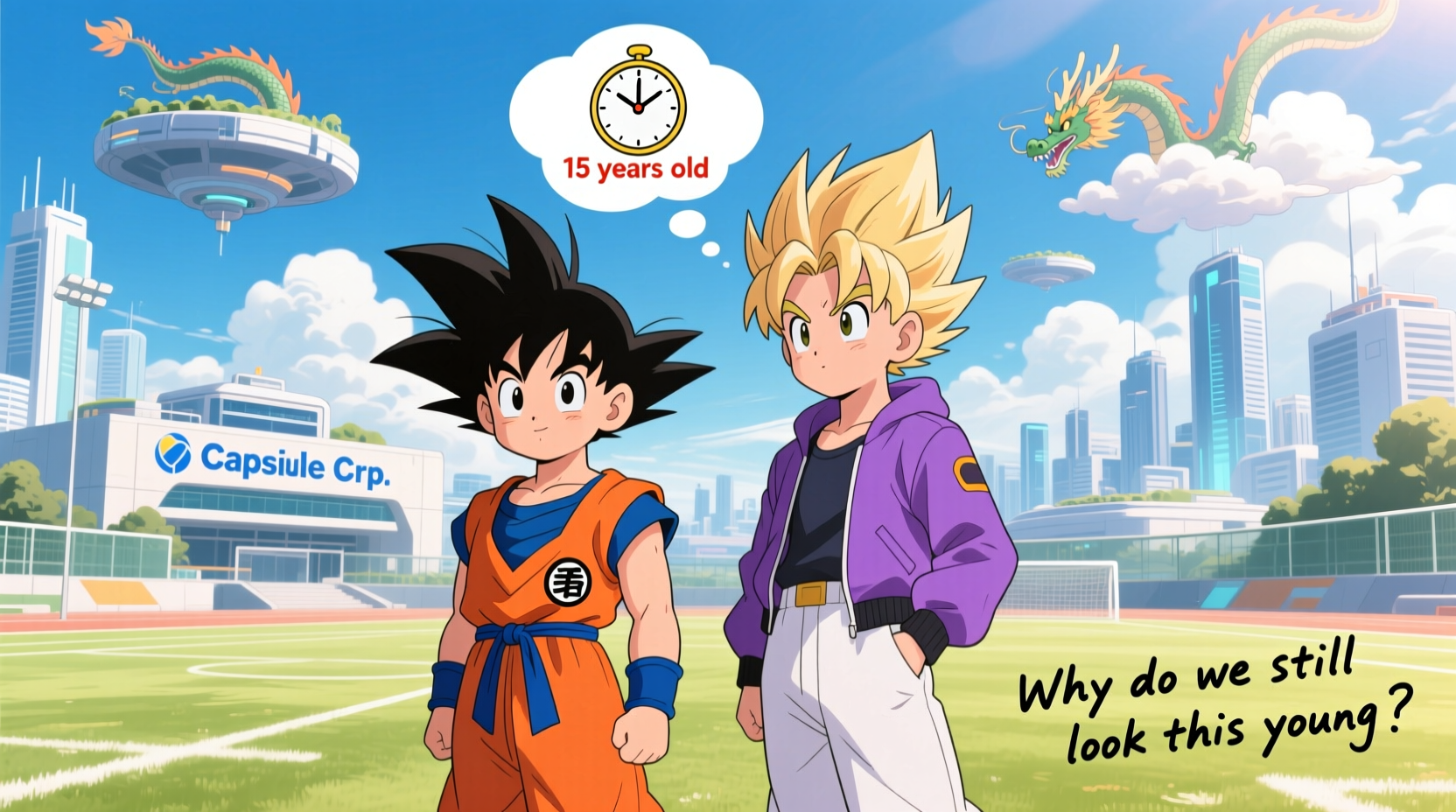
To grasp their age, one must first understand the timeline of events in Dragon Ball Super. The series picks up after the defeat of Kid Buu in the original Dragon Ball Z saga. At that point:
- Goten is approximately 7 years old.
- Trunks is around 8 years old.
Dragon Ball Super begins about five years later, placing Goten at 12 and Trunks at 13—still children by any standard. The story then spans several arcs over a few in-universe years, including the Resurrection F, Golden Frieza, Universe 6, and Tournament of Power sagas. By the end of the manga’s main storyline, roughly seven to eight years have passed since the end of DBZ, meaning Goten would be about 15 and Trunks 16.
Yet visually, both characters retain their youthful appearances. This is partly due to artistic consistency; Akira Toriyama maintains a stylized look for younger characters to distinguish them from adult fighters. But more importantly, their physical stasis reflects their narrative function—they are not meant to be central warriors in this era.
Narrative Role: Why They’re Not Aging Into Prominence
Goten and Trunks served a crucial role in the latter half of Dragon Ball Z: they represented the next generation of Saiyans, bridging the gap between the original heroes and a potential future. However, in Super, that future never fully materializes. Instead, the spotlight remains on Goku and Vegeta, who continue evolving through godly transformations and multiversal battles.
As Toriyama explained in a 2017 interview:
“Goten and Trunks were fun when they were kids—flying around, fusing into Gotenks, causing chaos. But the story needed deeper stakes. The gods, the multiverse, the concept of destruction… these aren’t playground themes. So the focus shifted.” — Akira Toriyama, Shonen Jump Interview
Their lack of aging into major combatants underscores a broader theme: legacy without succession. Unlike Gohan, who trains seriously and achieves elite power levels, Goten and Trunks lack the discipline and drive to reach true mastery. Their fusion form, Gotenks, was once considered a powerhouse—but even that fails against serious threats like Super Buu. In Super, their absence from high-stakes fights signals that they are no longer viable contenders in a world where gods of destruction wield universe-ending power.
Tip: When analyzing character development in long-running anime, consider not just chronological age but narrative relevance—visual youth often mirrors reduced story importance.Power Scaling and Training Habits
One of the most practical reasons Goten and Trunks remain “young” in capability—even if not strictly in age—is their lack of consistent training. Compare their development to other characters:
| Character | Training Regimen | Power Growth in DBS | Visible Aging? |
|---|---|---|---|
| Goku | Daily intense sparring, Ultra Instinct training | Massive (god-tier) | Yes – matured appearance |
| Vegeta | Relentless solo training, divine ki mastery | Extreme (reaches beyond God) | Yes – facial lines, older demeanor |
| Gohan | On/off training, peaks during crises | Moderate resurgence (Beast form) | Yes – wears glasses, scholarly look |
| Goten & Trunks | Minimal formal training, mostly play-fighting | Negligible growth | No – retain childlike looks |
The data shows a clear pattern: sustained effort leads to visible maturity and power advancement. Goten and Trunks, however, live relatively normal lives. Trunks attends school and occasionally helps Bulma at Capsule Corp, while Goten stays close to Chi-Chi and avoids combat. Without rigorous training, their bodies don’t undergo the physical stress that typically accompanies warrior development in the Dragon Ball world—muscle growth, battle scars, or even the subtle aging seen in seasoned fighters.
A Realistic Scenario: What If They Trained Seriously?
Consider a hypothetical scenario: what if, after the Tournament of Power, Goten and Trunks decided to train under Piccolo or Whis?
In this case, we’d likely see rapid changes. Under Whis’s guidance, even base-level Saiyans can learn godly ki control. With proper discipline, they could achieve Super Saiyan Blue or even tap into autonomous forms. Their physiques would become leaner, more defined, and their facial features might sharpen—mirroring how Gohan transformed during the Cell Games arc.
But because this doesn’t happen, they remain stylistically \"young.\" It’s not that they haven’t aged chronologically; it’s that their lifestyle hasn’t triggered the kind of physical and emotional evolution that defines adulthood in the Dragon Ball universe.
Production and Artistic Considerations
From a production standpoint, keeping Goten and Trunks visually young serves multiple purposes:
- Brand Recognition: Fans associate their childlike designs with fun, lighthearted moments. Changing their look drastically could alienate audiences expecting nostalgic cameos.
- Animation Efficiency: Simpler character models require less animation work, which matters in a franchise with hundreds of characters and complex fight sequences.
- Tonal Balance: Their presence adds comic relief in otherwise intense arcs, such as when they attempt to sneak into the Tournament of Power or play video games during global crises.
Moreover, Japanese anime often stylizes age. Characters in long-running series like One Piece or Naruto may age slowly despite decades passing in-universe. This suspension of realism allows writers to maintain emotional continuity and audience attachment.
Frequently Asked Questions
How old are Goten and Trunks in Dragon Ball Super?
Chronologically, Goten is around 15 and Trunks is 16 by the end of the main Dragon Ball Super manga. However, they are rarely depicted as teenagers in behavior or design, staying closer to their earlier child personas.
Can Goten and Trunks beat Android 17 or 18 now?
Unlikely. Despite being Saiyans, their lack of training puts them far below fighters like Android 17, who regularly spar with Goku and Vegeta at godly levels. Without significant power-ups or transformations, they wouldn’t stand a chance in a serious fight.
Will Goten and Trunks ever return as major fighters?
Possibilities exist, especially in future continuations like Dragon Ball DAIMA or movies. However, unless they undergo dramatic training arcs, their roles will likely remain comedic or symbolic rather than central to combat narratives.
Actionable Checklist: Could Goten and Trunks Catch Up?
If they wanted to become top-tier warriors, here’s what they’d need:
- Commit to full-time training under a mentor like Piccolo, Tien, or even Merus.
- Master godly ki to access Super Saiyan Blue or divine techniques.
- Participate in high-pressure battles to trigger latent potential, similar to how Gohan unlocked his Beast form.
- Develop individual identities beyond fusion—relying on Gotenks limits their growth as standalone fighters.
- Embrace responsibility, moving away from childish antics toward warrior discipline.
Conclusion: Youthfulness as a Narrative Choice
The reason Goten and Trunks remain so young in Dragon Ball Super isn’t a flaw—it’s a reflection of their place in the story. They symbolize innocence, nostalgia, and the fleeting nature of childhood heroism. While the world evolves around them, they stay anchored in a simpler time, reminding viewers of the early days of Dragon Ball Z when fusion was magic and saving the world felt like a game.
That doesn’t mean they can’t grow. With the right motivation and training, they could still rise to prominence. But until then, their youthful appearance serves a purpose: preserving a bridge between generations, and honoring the fact that not every hero needs to carry the weight of the universe.
💬 What do you think—should Goten and Trunks get a serious comeback arc? Share your thoughts and theories with the community!