Gift giving is a meaningful way to support loved ones financially, whether helping with college tuition, a home down payment, or simply sharing wealth. However, large gifts can trigger federal gift tax implications. Understanding the gift tax percent, annual exclusions, lifetime exemptions, and reporting thresholds is essential to avoid unexpected tax liabilities. The rules are nuanced but manageable with proper planning.
What Is the Gift Tax?
The federal gift tax applies to the transfer of property or money from one individual to another when nothing—or less than full value—is received in return. The person giving the gift (the donor) is generally responsible for paying the tax, not the recipient. Importantly, most gifts fall under exclusion limits and never result in actual tax owed.
The Internal Revenue Service (IRS) allows individuals to give a certain amount each year to any number of people without reporting the gift or using part of their lifetime exemption. Beyond that, gifts may require filing Form 709 and could reduce the donor’s available lifetime exemption.
“Strategic gifting can reduce future estate taxes while supporting family members during your lifetime.” — Laura Simmons, CPA and Estate Planning Advisor
Annual Gift Tax Exclusion: How Much Can You Give Each Year?
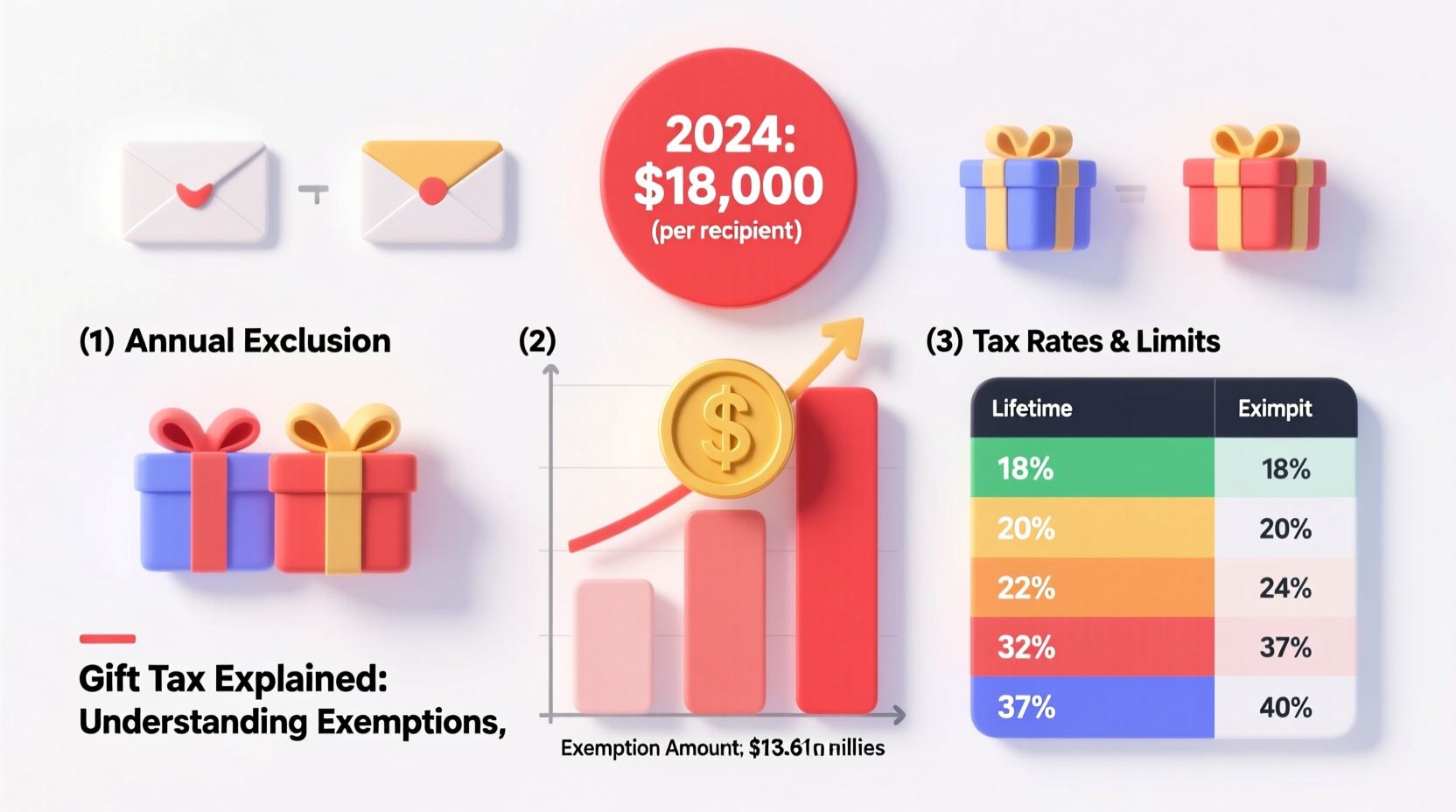
For 2024, the annual gift tax exclusion is $18,000 per recipient. This means you can give up to $18,000 to as many individuals as you like without any tax consequences or reporting requirements.
If you're married, you and your spouse can together gift up to $36,000 to a single recipient annually using gift splitting—provided both agree to treat the gift as made half by each.
Tip: Use the annual exclusion strategically each year. Delaying gifts doesn’t allow you to “carry over” unused amounts—the exclusion resets every January.Certain types of gifts are excluded entirely from these limits, including:
- Tuition payments made directly to an educational institution
- Medical expenses paid directly to a healthcare provider
- Spousal gifts (if the spouse is a U.S. citizen)
- Charitable donations
Lifetime Gift and Estate Tax Exemption
Beyond the annual exclusion, the IRS provides a unified lifetime exemption that covers both gifts made during life and assets transferred at death. For 2024, this exemption is **$13.61 million per individual** ($27.22 million for married couples).
This means you could, in theory, give away $13.61 million over your lifetime above the annual exclusion without owing any gift tax—though such gifts must be reported on Form 709. Once you exceed this threshold, the gift tax rate applies to additional taxable gifts.
The lifetime exemption is indexed for inflation and adjusted annually. However, current law (under the Tax Cuts and Jobs Act) is set to expire in 2026, potentially reducing the exemption back toward $5–6 million unless extended by Congress.
Current Gift Tax Rates (2024)
The federal gift tax uses a progressive rate structure, similar to income tax. The top rate is 40%, applied only to gifts exceeding the lifetime exemption.
| Taxable Amount Over | Tax Rate |
|---|---|
| $0 | 18% |
| $10,000 | 20% |
| $20,000 | 22% |
| $40,000 | 24% |
| $60,000 | 26% |
| $80,000 | 28% |
| $100,000 | 30% |
| $150,000 | 32% |
| $250,000 | 34% |
| $500,000 | 37% |
| $1,000,000+ | 40% |
Note: These rates apply only after the annual exclusion and lifetime exemption have been exhausted. Most individuals will never pay gift tax due to the high exemption threshold.
When Do You Need to File Form 709?
Filing IRS Form 709, United States Gift (and Generation-Skipping Transfer) Tax Return, is required in specific situations—even if no tax is owed. Common triggers include:
- Giving more than $18,000 to a single person in one year
- Making a gift of a future interest (e.g., placing assets in a trust with delayed access)
- Using gift splitting with your spouse
- Giving tax-exempt transfers (like medical or tuition payments) alongside reportable gifts
Filing Form 709 allows the IRS to track how much of your lifetime exemption you’ve used. Even if you don’t owe tax, failing to file when required can lead to penalties and complications in estate administration later.
Step-by-Step Guide to Gifting Without Tax Trouble
- Determine the value of the gift—cash, property, or asset—and confirm it exceeds the $18,000 annual limit.
- Check marital status: If married, consider gift splitting to double the exclusion to $36,000 per recipient.
- Exclude direct payments for tuition or medical bills—they don’t count toward the limit.
- Track cumulative gifts over time, especially if planning large transfers.
- File Form 709 by April 15 of the following year if required, even if no tax is due.
- Consult a tax advisor before making large or complex gifts involving trusts or real estate.
Real Example: Supporting a Child’s Home Purchase
Sarah wants to help her daughter buy her first home. She plans to give $75,000 toward the down payment. Since this exceeds the $18,000 annual exclusion, Sarah must report the excess $57,000 on Form 709.
She won’t owe any gift tax because she has plenty of lifetime exemption remaining. However, the $57,000 reduces her available exemption from $13.61 million to $13.553 million. If Sarah makes similar gifts in the future, she’ll need to keep track of how much exemption she’s used.
Alternatively, Sarah could spread the gift over four years: $18,000 in 2024, 2025, 2026, and $21,000 in 2027. But since the 2027 exclusion hasn’t been announced yet, caution is advised. A better option might be to use the full $75,000 now and accept the reduction in lifetime exemption, given its size.
Common Misconceptions About Gift Tax
Several myths persist about how gift tax works:
- Myth: Recipients must pay gift tax.
Truth: The donor pays any applicable tax, not the recipient. - Myth: All large gifts are taxed immediately.
Truth: Only gifts exceeding the lifetime exemption are subject to tax. - Myth: Gifts to family always require reporting.
Truth: Gifts under $18,000 per year do not. - Myth: You can’t give more than $18,000 to anyone.
Truth: You can give more—you just need to file a return and use part of your lifetime exemption.
Gift Tax Planning Checklist
✅ Action Steps for Smart Gifting
- Confirm the 2024 annual exclusion is $18,000 per recipient
- Use gift splitting with your spouse to double the exclusion
- Pay tuition or medical bills directly to avoid counting against limits
- Keep records of all gifts, including dates, values, and recipients
- File Form 709 if giving more than $18,000 to one person
- Monitor your lifetime exemption usage over time
- Consult a CPA or estate attorney before large or complex gifts
Frequently Asked Questions
Do I have to pay gift tax if I give my child $20,000?
No, you won’t owe tax, but you must file Form 709 to report the $2,000 that exceeds the $18,000 annual exclusion. That $2,000 will reduce your lifetime exemption, but no tax is due.
Can I give $18,000 to multiple family members every year?
Yes. You can give $18,000 to your child, another $18,000 to your sibling, and another to a friend—all in the same year—with no tax or reporting required.
What happens to the gift tax exemption after 2026?
Current law sunsets in 2026, potentially lowering the exemption to around $5–6 million (adjusted for inflation). Lawmakers may extend or modify it, so long-term planners should monitor legislative changes.
Final Thoughts: Make Gifting Work for Your Financial Plan
Understanding the gift tax percent, exemptions, rates, and limits empowers you to transfer wealth wisely. With smart timing and awareness of the rules, you can support loved ones today while preserving your estate for tomorrow. The $18,000 annual exclusion and $13.61 million lifetime exemption offer significant flexibility—but they require attention to detail.
Whether you’re funding education, helping with homeownership, or simply sharing prosperity, informed gifting enhances both generosity and financial security. Start tracking your gifts, consult a professional when needed, and make the most of the opportunities the tax code provides.
💬 Have questions about gifting strategies or Form 709? Share your thoughts or experiences in the comments—your insight could help others navigate their own giving journey.