Gifting money or assets can be a powerful way to support loved ones, reduce future estate taxes, or transfer wealth efficiently. As we approach 2025, understanding the federal gift tax rules—and how to stay within tax-free limits—is more important than ever. With inflation adjustments expected to increase key thresholds, now is the time to plan ahead. This guide breaks down the current and projected gift tax exclusions, outlines strategic gifting techniques, and helps you avoid common pitfalls.
Annual Gift Tax Exclusion in 2025
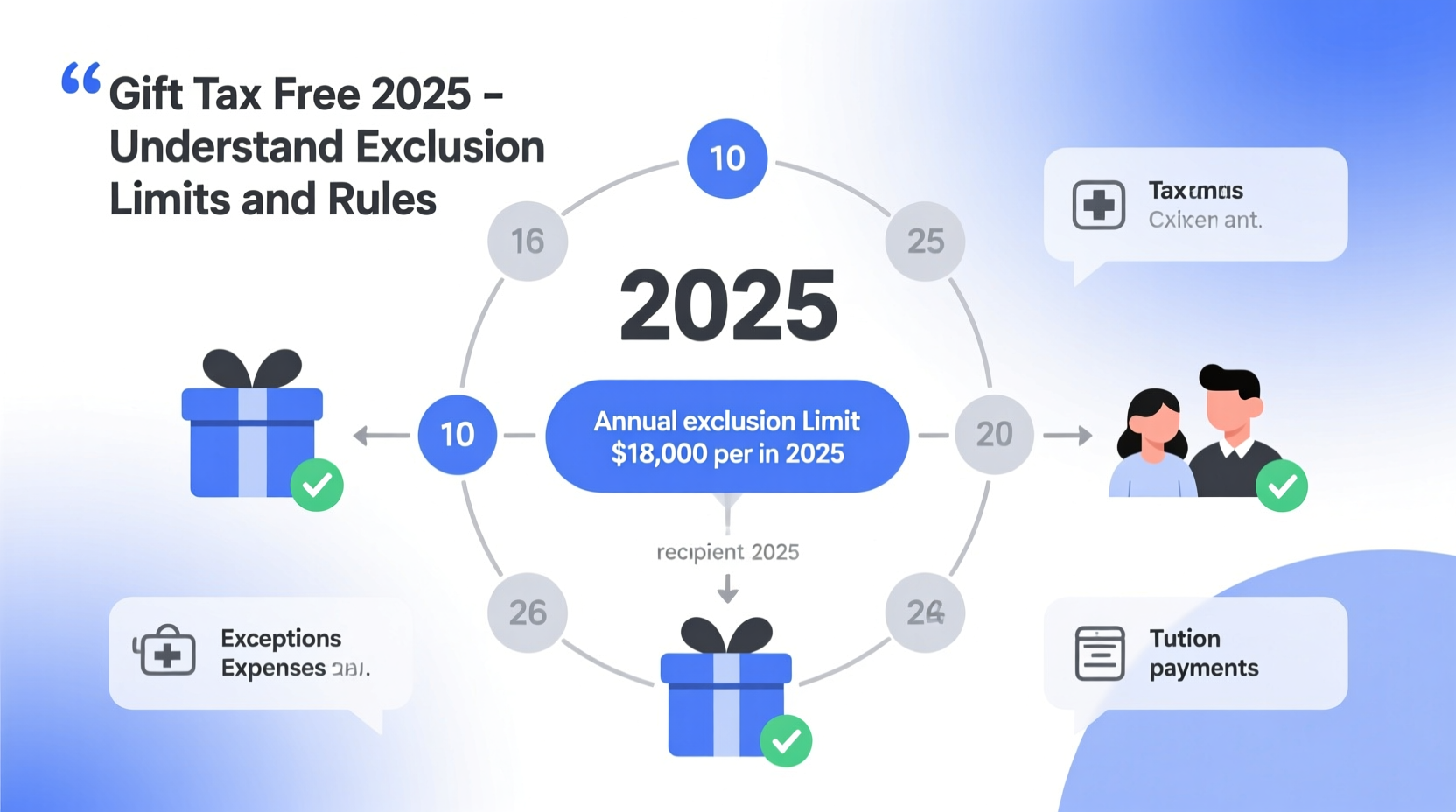
The IRS allows individuals to give a certain amount each year to any number of recipients without triggering gift tax or using part of their lifetime exemption. For 2024, this annual exclusion stands at $18,000 per recipient. Given ongoing inflation indexing, the IRS is expected to raise this amount to **$19,000** in 2025.
This means you can give up to $19,000 in cash or assets to as many people as you’d like—children, friends, or even non-relatives—without filing a gift tax return or paying any tax. Married couples can combine their exclusions, allowing them to gift up to $38,000 per recipient annually if they elect to split gifts.
Tip: Maximize your annual exclusion by making early-year gifts. This ensures compliance and gives recipients more time to benefit from invested funds.Lifetime Gift and Estate Tax Exemption for 2025
Beyond the annual exclusion, the federal government provides a generous lifetime exemption that covers both large gifts made during life and assets transferred at death. In 2024, this unified credit stands at $13.61 million per individual ($27.22 million for married couples). Due to inflation adjustments, the IRS is projected to increase this to approximately **$14.2 million** in 2025.
Any taxable gift exceeding the annual exclusion reduces this lifetime exemption. For example, if you gift $50,000 to your child in 2025, $31,000 ($50,000 – $19,000) counts against your lifetime exemption. While no tax is due immediately, the reduction must be reported on Form 709, the U.S. Gift (and Generation-Skipping Transfer) Tax Return.
“Strategic gifting today can significantly reduce future estate tax liability, especially with exemption sunsetting scheduled for 2026.” — Laura Simmons, CPA and Estate Planning Advisor
Special Exceptions and Tax-Free Gifting Opportunities
Not all gifts count toward the annual or lifetime limits. The IRS permits several types of transfers that are entirely excluded from gift tax, regardless of amount:
- Direct payments for tuition: Paying a school directly for someone’s tuition is not considered a taxable gift.
- Medical expense payments: Covering qualified medical bills paid directly to healthcare providers is fully exempt.
- Spousal gifts: Unlimited amounts can be transferred between spouses who are U.S. citizens.
- Political and charitable contributions: Gifts to qualifying nonprofits or political organizations are not subject to gift tax.
These exceptions offer powerful tools for reducing taxable estates while supporting family members’ education and health needs.
Step-by-Step Guide to Making Tax-Smart Gifts in 2025
To make the most of the 2025 gift tax rules, follow this practical timeline and checklist:
- January: Assess your gifting goals. Determine who you want to support and how much you plan to give. Consider whether gifts will be recurring or one-time.
- February: Review asset types. Decide whether to gift cash, securities, real estate, or business interests. Be mindful of capital gains implications for appreciated assets.
- March: Leverage direct payments. Pay tuition or medical bills directly to institutions to avoid using your annual or lifetime exemption.
- April: Split gifts with spouse (if applicable). File a gift tax return to elect gift splitting, doubling the effective annual exclusion per recipient.
- May: Document all gifts. Keep detailed records of transfers, including dates, values, and method of payment. This supports compliance if the IRS reviews your returns.
- June: Monitor lifetime exemption usage. Track how much of your unified credit has been used, especially if making large gifts over the annual limit.
Do’s and Don’ts of Gift Tax Planning
| Do’s | Don’ts |
|---|---|
| Use the full annual exclusion every year | Forget to file Form 709 when required |
| Pay tuition or medical bills directly | Assume all gifts to children are automatically tax-free |
| Coordinate gifting with your estate plan | Gift highly appreciated assets without consulting a tax advisor |
| Consider setting up a 529 plan for education gifts | Overlook state-specific inheritance or gift tax rules |
Real Example: Smart Gifting Before the Exemption Sunset
Consider the case of Robert and Maria, a married couple with two adult children and a combined net worth of $22 million. They’re aware that the current high federal estate tax exemption is set to expire in 2026, reverting to an estimated $7 million per person (adjusted for inflation). To lock in today’s higher limits, they plan to make substantial gifts in 2025.
In January 2025, they each gift $19,000 to each of their two children—totaling $76,000—using their annual exclusions. Separately, they transfer $10 million in appreciating real estate holdings into an irrevocable trust for their heirs. Because the 2025 lifetime exemption is projected at $14.2 million per person, this transfer uses only a portion of their available exemption and incurs no immediate tax.
By acting before 2026, they protect $10 million from future estate taxation—even if rates increase and exemptions shrink. Their proactive planning illustrates how timely gifting can preserve wealth across generations.
Frequently Asked Questions
Do I have to report a gift under $19,000?
No. Gifts within the annual exclusion limit do not need to be reported to the IRS. You only file Form 709 if you exceed the annual exclusion or make certain types of gifts (like future interests).
Can I carry forward unused annual exclusions?
No. The annual exclusion does not roll over. If you don’t use it in 2025, you lose it. This makes consistent annual gifting a smart strategy for long-term wealth transfer.
What happens to the lifetime exemption after 2025?
The Tax Cuts and Jobs Act of 2017 doubles the exemption through 2025. Unless Congress acts, it is scheduled to revert to approximately $7 million per person (adjusted for inflation) in 2026. This creates a strong incentive to utilize the higher exemption before it decreases.
Tip: If you're considering large gifts, consult an estate attorney and CPA. Proper structuring can maximize tax benefits and prevent unintended consequences.Action Plan: Prepare Your 2025 Gifting Strategy Now
The 2025 gift tax rules present a valuable window for wealth transfer. With a projected $19,000 annual exclusion and a $14.2 million lifetime exemption, individuals have unprecedented opportunities to reduce future tax burdens. Whether you're funding education, helping with home purchases, or preserving generational wealth, smart gifting requires foresight and precision.
Start by reviewing your financial picture and discussing goals with your family and advisors. Use the annual exclusion consistently, take advantage of tax-free direct payments, and consider larger lifetime gifts before the exemption sunsets. Every dollar gifted wisely today strengthens your legacy tomorrow.
💬 Ready to optimize your gifting strategy? Share this guide with a trusted advisor or family member and begin planning your 2025 gifts with confidence.