Gift card scams are among the most insidious forms of financial fraud today. Scammers often pose as government agents, tech support staff, or even family members in distress, demanding payment via gift cards for supposed debts, fines, or emergencies. Once the codes are shared, the money is usually gone in minutes. Unlike credit card transactions, gift cards are treated like cash—non-refundable and irreversible. However, that doesn’t mean all hope is lost. With swift action and the right knowledge, there are steps you can take to increase the chances of recovering your funds or at least preventing further losses.
Understanding How Gift Card Scams Work
Scammers exploit trust and urgency. They pressure victims into acting immediately, often using fear-based tactics such as threats of arrest, account suspension, or harm to loved ones. Because gift cards are untraceable and widely available, they’re a preferred tool for fraudsters. Common scenarios include:
- A caller claiming to be from the IRS demands back taxes paid via Apple iTunes or Google Play cards.
- An email says your computer has malware and instructs you to buy gift cards for “tech support fees.”
- A message from a “grandchild” in trouble asks for Walmart or Amazon gift cards to get out of jail.
The moment you reveal the card number and PIN, the scammer redeems it—often through online marketplaces or cryptocurrency exchanges. The transaction is nearly instantaneous, making recovery difficult but not impossible if acted upon quickly.
Tip: Legitimate organizations will never demand payment via gift cards. If someone does, it’s a scam.Immediate Steps to Take After a Gift Card Scam
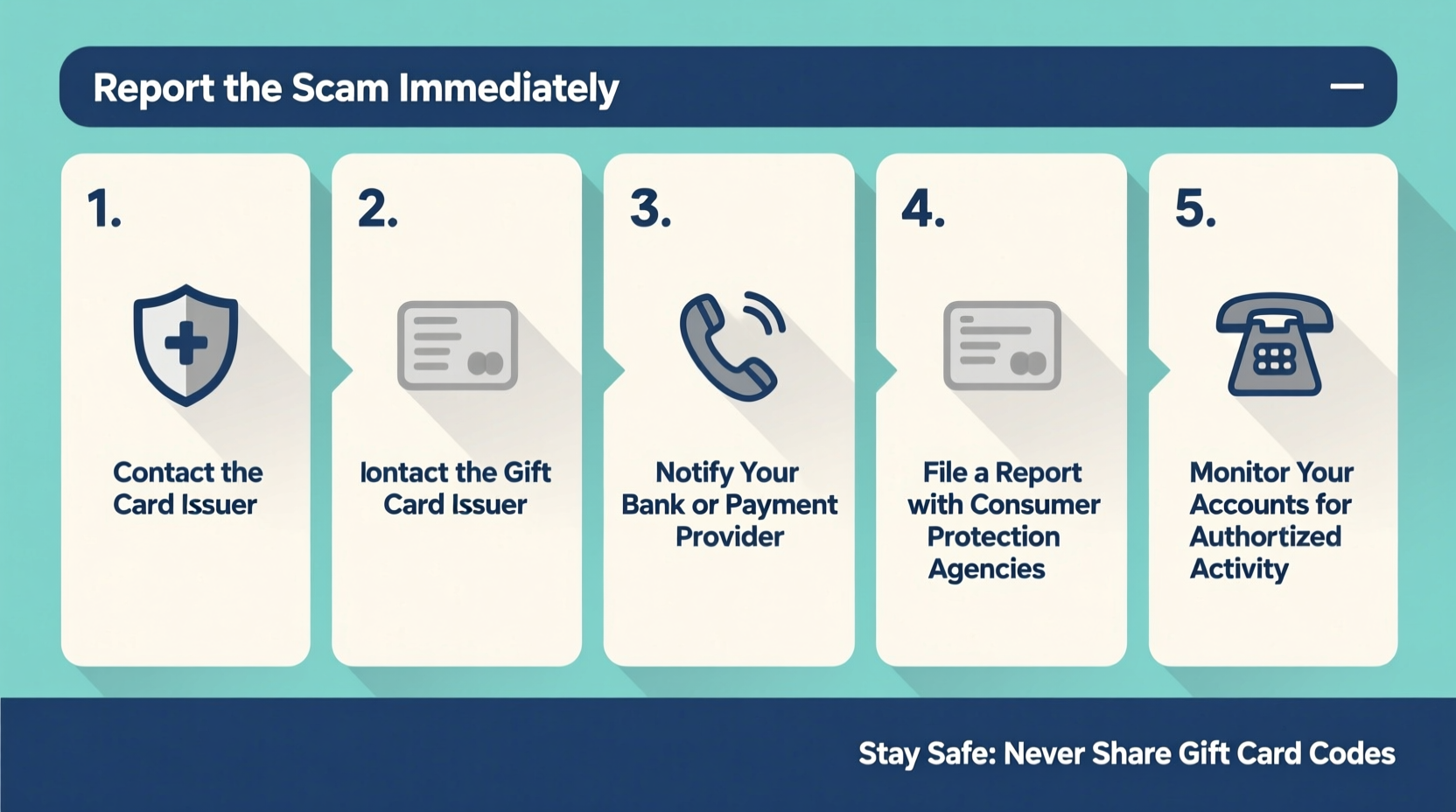
Time is critical. The faster you act, the better your chances of stopping the transfer or recovering funds. Follow this timeline within the first 24–48 hours:
- Contact the gift card issuer immediately. Call customer service and provide the card number, purchase location, and time. Some companies may freeze remaining balances or assist with investigations.
- Report the scam to the Federal Trade Commission (FTC). File a report at reportfraud.ftc.gov. This helps track patterns and supports law enforcement efforts.
- Alert your bank or credit card company if you used a card to buy the gift cards. They may flag suspicious activity or help dispute the purchase under certain conditions.
- File a police report. While local police may not investigate individually, having an official record supports insurance claims or disputes.
- Notify platforms where the cards were redeemed, such as Amazon, Steam, or Apple, especially if large amounts were involved. They may cooperate with authorities.
“Once a gift card is used, it’s like handing over cash. But if reported early, some issuers have internal processes to trace or block redemption.” — Sarah Lin, Senior Fraud Analyst at Consumer Protection Group
Can You Actually Recover the Money?
Full recovery is rare, but partial reimbursement or investigative follow-up is possible under specific circumstances. Success depends on how fast you respond, which company issued the card, and whether the scam was part of a larger pattern.
For example, Amazon has been known to refund victims in select cases when contacted promptly and provided with evidence. Similarly, Apple Support may assist if the scam involved iTunes cards and was reported within hours.
However, most retailers—including Walmart, Target, and Google—state clearly that gift cards are non-refundable once activated. Still, reporting the incident creates a paper trail that could aid future enforcement actions.
| Gift Card Issuer | Recovery Possible? | Contact Method | Notes |
|---|---|---|---|
| Amazon | Sometimes | 1-888-280-4331 / Report via website | More responsive to timely reports with scam details |
| Apple (iTunes) | Rarely, but worth trying | 1-800-275-2273 | Provide receipt and proof of fraud |
| Google Play | Unlikely | Support form only | No direct phone line; limited recourse |
| Walmart | No | 1-800-925-6278 | Will not refund but records incident |
| Target | No | 1-800-440-0680 | Does not reverse gift card transactions |
Mini Case Study: Recovering $600 from an Amazon Gift Card Scam
In 2022, a retiree in Florida received a call from someone claiming to be her grandson, saying he’d been arrested and needed $600 in Amazon gift cards for bail. She purchased the cards at a local pharmacy and read the codes aloud over the phone. Within 30 minutes, she realized it was a scam.
She immediately called Amazon Customer Service, explained the situation, and provided the card numbers and time of purchase. Though skeptical at first, Amazon flagged the accounts where the cards were being redeemed. Two days later, she received an email stating that $480 had been recovered because the remaining balance hadn’t been fully spent. Amazon also referred the case to their fraud unit, which contributed to a broader investigation that led to multiple arrests.
This case underscores the importance of speed and detailed reporting—even when recovery seems unlikely.
Prevention and Protection Strategies
While knowing how to respond after a scam is crucial, prevention remains the strongest defense. Educate vulnerable family members, especially seniors, about how these scams operate. Use these best practices to reduce risk:
- Never give out gift card numbers to anyone who calls or messages you unexpectedly.
- Set up fraud alerts with your bank for unusual purchases.
- Use prepaid debit cards instead of gift cards for controlled spending.
- Keep receipts and register gift cards if the option is available.
- Talk openly about scams during family gatherings—awareness saves money.
Frequently Asked Questions
Can the police help me get my money back from a gift card scam?
Local police typically cannot retrieve funds, but filing a report creates an official record useful for credit disputes or insurance claims. In some cases, coordinated efforts between law enforcement and federal agencies have led to restitution, especially in large-scale operations.
What should I do if I paid with a credit card to buy the gift cards?
Contact your credit card issuer immediately. You may be able to dispute the gift card purchase as fraudulent if you can prove it was made under duress or deception. While success varies, some banks have reversed charges when presented with FTC reports and police documentation.
Are there any laws protecting victims of gift card scams?
Currently, no federal law mandates refunds for gift card fraud. However, the Consumer Financial Protection Bureau (CFPB) and FTC advocate for stronger consumer protections. Some states are considering legislation to require retailers to offer limited fraud safeguards for high-value card purchases.
Conclusion: Act Fast, Stay Informed, and Spread Awareness
Falling victim to a gift card scam is distressing, but taking immediate, informed action can make a meaningful difference. Contact the issuer, report to the FTC, involve your financial institution, and document everything. Even if full recovery isn’t possible, your report contributes to national fraud databases that help dismantle criminal networks.
Equally important is sharing what happened. Talk to friends, family, and community groups about your experience. Awareness is the most powerful tool against scams that prey on trust and urgency. Protect yourself and others by staying vigilant—and never letting shame silence your voice.
💬 Have you or someone you know experienced a gift card scam? Share your story in the comments to help educate others and strengthen community resilience.