Facial mists have become a staple in skincare routines across the globe. From influencers spritzing them mid-vlog to dermatologists recommending them post-procedure, their popularity is undeniable. But beneath the refreshing sensation lies a critical question: do facial mists actually hydrate the skin, or are they merely providing a fleeting burst of coolness with no lasting benefit?
The answer isn’t as simple as yes or no. The effectiveness of a facial mist depends heavily on its formulation, how it’s used, and the condition of your skin. Some mists deliver genuine hydration by supporting the skin barrier and locking in moisture, while others offer only momentary relief—like a splash of water on a hot day. Understanding the difference can help you make smarter choices and avoid wasting time (and money) on products that don’t deliver real results.
How Hydration Works in Skin
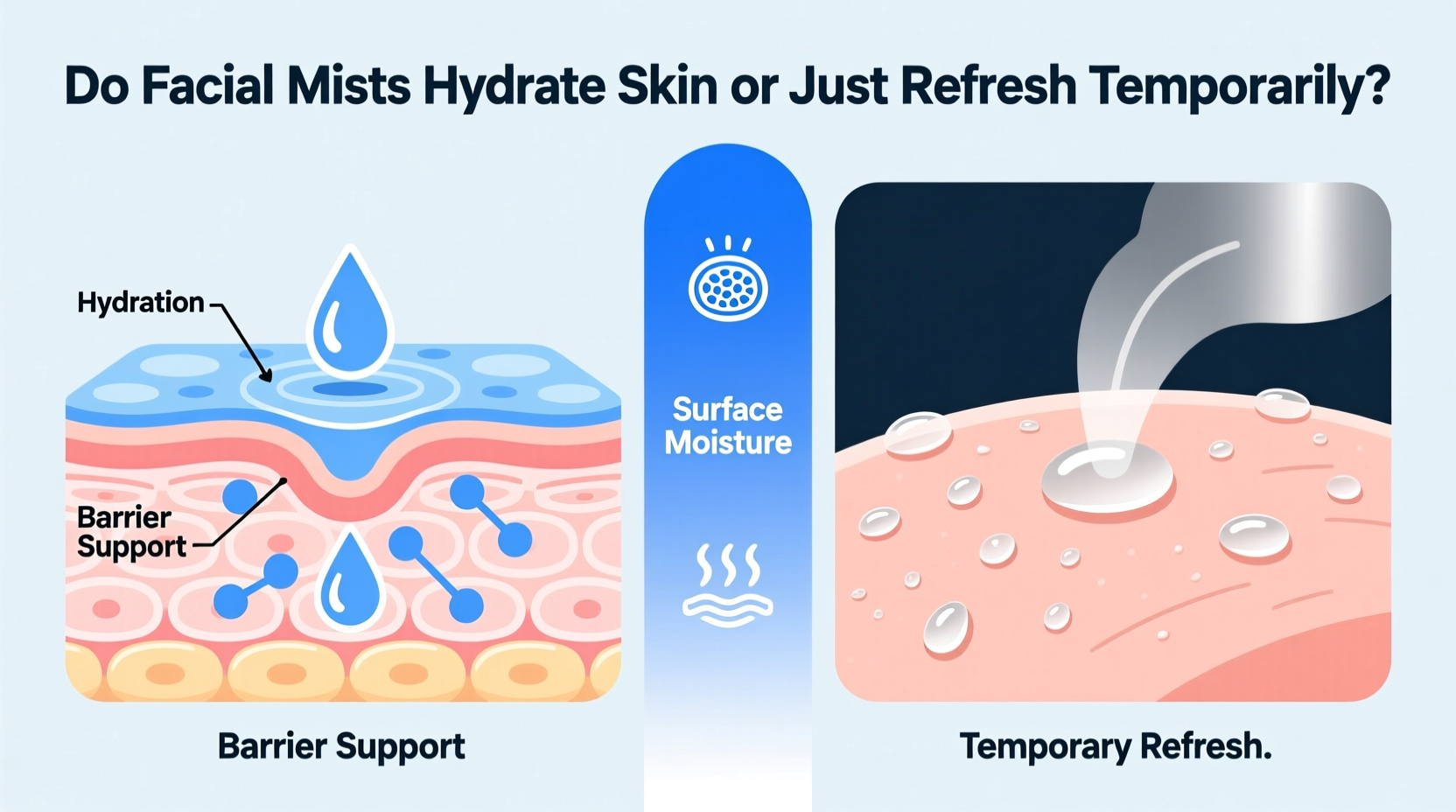
To evaluate whether facial mists hydrate, it's essential to understand what hydration means in the context of skin health. Hydration refers to the water content within the epidermis, particularly the stratum corneum—the outermost layer of skin. When this layer is well-hydrated, the skin appears plump, smooth, and resilient. Dehydrated skin, on the other hand, looks dull, feels tight, and may flake or show fine lines more prominently.
True hydration involves three types of ingredients working together:
- Humectants – attract water from the environment or deeper layers of the skin (e.g., glycerin, hyaluronic acid, panthenol).
- Occlusives – form a protective barrier to prevent water loss (e.g., squalane, ceramides, oils).
- Emollients – soften and smooth the skin by filling in gaps between skin cells (e.g., fatty acids, cholesterol).
Facial mists typically contain humectants and water, but rarely include occlusives unless formulated as a hybrid mist-serum. This means that while they can draw water into the skin, they often lack the ability to seal it in—unless followed by a moisturizer.
Tip: Always follow your facial mist with a moisturizer or facial oil to lock in hydration and prevent transepidermal water loss.What Happens When You Spray a Facial Mist?
The immediate sensation of a facial mist—cool, refreshing, slightly dewy—is real. But what occurs at the microscopic level determines whether that feeling translates into actual hydration.
When you spray a mist, tiny droplets land on the skin’s surface. If the formula contains humectants like hyaluronic acid, these molecules begin pulling water toward the upper layers of the epidermis. However, if the air is dry (especially indoors with heating or air conditioning), the water in the mist can evaporate quickly—sometimes taking your skin’s natural moisture with it, especially if there’s no occlusive layer to prevent loss.
This phenomenon is known as \"backflow evaporation.\" Dermatologist Dr. Lindsey Zubritsky explains:
“Hyaluronic acid in a mist can be a double-edged sword. In humid environments, it pulls moisture effectively. In dry climates, without proper sealing, it may dehydrate the skin further by drawing water up and letting it evaporate.” — Dr. Lindsey Zubritsky, Board-Certified Dermatologist
Therefore, the environment and application method significantly influence whether a mist hydrates or merely refreshes.
Types of Facial Mists and Their Real Benefits
Not all facial mists are created equal. They fall into several categories based on function and formulation:
| Type | Key Ingredients | Hydration Level | Best For |
|---|---|---|---|
| Thermal Spring Water Mists | Mineral-rich water (e.g., Avène, La Roche-Posay) | Low hydration, high soothing effect | Sensitive, irritated, or post-procedure skin |
| Hyaluronic Acid Mists | Hyaluronic acid, glycerin, water | Moderate to high (if sealed) | Dry or dehydrated skin needing moisture boost |
| Tonifying Mists | Witch hazel, alcohol, plant extracts | Minimal hydration; may be drying | Oily skin (use cautiously) |
| Setting/Makeup Mists | Polymers, film-formers, light humectants | Very low hydration | Makeup longevity, not skincare |
| Nourishing Hybrid Mists | Humectants + light oils, ceramides | High (when used correctly) | All skin types seeking real hydration |
The most effective mists for hydration combine multiple humectants with ingredients that support the skin barrier. Look for terms like “multi-weight hyaluronic acid,” “glycerin,” “panthenol,” or “ferment lysates” on the label. Avoid mists with high alcohol content, synthetic fragrances, or harsh astringents if your goal is hydration.
Maximizing Hydration: A Step-by-Step Guide
To ensure your facial mist contributes to real hydration—not just a temporary refresh—follow this strategic routine:
- Cleanse gently. Start with a mild cleanser to remove impurities without stripping natural oils.
- Apply mist to damp skin. After cleansing, while your face is still slightly wet, spritz 3–5 times. This primes the skin to absorb active ingredients.
- Layer immediately with serum. While the mist is still wet, apply a hydrating serum containing hyaluronic acid or polyglutamic acid to amplify moisture retention.
- Seal with moisturizer. Lock everything in with a cream or balm that contains occlusive agents like shea butter, ceramides, or squalane.
- Re-mist strategically. During the day, reapply mist over makeup or dry patches, but always follow with a drop of facial oil if your environment is dry.
This method turns a simple mist into a powerful hydration booster by leveraging the principle of “damp layering”—a technique widely endorsed by skincare chemists and aestheticians.
Tip: Keep your facial mist in the refrigerator during summer months for an extra cooling effect—ideal for reducing puffiness and calming inflammation.Real-World Example: Office Worker in a Dry Climate
Consider Maria, a 34-year-old marketing executive who works in a climate-controlled office in Denver, Colorado—a city known for its low humidity. She noticed her skin felt tight and looked dull by midday, despite using a daily moisturizer.
She began incorporating a hyaluronic acid-based facial mist into her routine: applying it after cleansing in the morning, then again at her desk around 2 p.m. Initially, she felt refreshed but saw no long-term improvement. Her skin still felt parched by evening.
After consulting a dermatologist, she adjusted her routine. Instead of misting over dry skin, she started spritzing after washing her face and immediately applied a serum and richer moisturizer. She also kept a travel-sized facial oil at her desk to apply after re-misting during the day.
Within two weeks, her skin appeared more supple, and the midday tightness disappeared. The key wasn’t the mist alone—it was how she used it. By sealing in the moisture, she transformed a superficial step into a functional part of her hydration strategy.
Common Myths About Facial Mists
Despite their popularity, several misconceptions persist about what facial mists can and cannot do:
- Myth: All mists hydrate equally. Reality: Only those with effective humectants and proper usage provide real hydration.
- Myth: Misting throughout the day replaces moisturizer. Reality: Without occlusives, frequent misting in dry air can worsen dehydration.
- Myth: Natural = better. Reality: Plant extracts can be irritating; fragrance-free, clinically tested formulas are often safer and more effective.
- Myth: More sprays = more hydration. Reality: Over-spraying without sealing leads to evaporation and potential barrier disruption.
Understanding these myths helps separate marketing claims from measurable skincare benefits.
Checklist: Choosing a Truly Hydrating Facial Mist
Before purchasing a facial mist, use this checklist to ensure it delivers real hydration:
- ✅ Contains proven humectants (e.g., glycerin, hyaluronic acid, betaine)
- ✅ Free from drying alcohols (e.g., denatured alcohol, ethanol) and synthetic fragrances
- ✅ Includes skin-supportive ingredients (e.g., panthenol, allantoin, ceramides)
- ✅ Packaged in an opaque, air-tight container to preserve ingredient integrity
- ✅ Designed for multiple uses (not just setting makeup)
- ✅ pH-balanced (ideally between 4.5 and 5.5 to support skin barrier)
Avoid mists that list “water” as the first ingredient with little else of value. These are essentially glorified water sprays with minimal skincare benefit.
Frequently Asked Questions
Can I use a facial mist instead of a toner?
It depends on the product. Traditional toners often exfoliate or balance pH, while most mists are designed for hydration or soothing. Some modern mists blur the line by including mild acids or probiotics. Check the ingredients—if it lacks exfoliants like AHAs or BHAs and doesn’t adjust pH, it likely won’t replace a functional toner. However, it can complement one nicely in a layered routine.
Is it bad to let facial mist dry on my skin?
In dry environments, allowing a humectant-rich mist to dry without sealing can lead to moisture loss. The humectants pull water to the surface, and if the air is arid, that moisture evaporates, potentially leaving skin drier than before. Always follow misting with a moisturizer or oil, especially in winter or air-conditioned spaces.
How many times a day should I use a facial mist?
There’s no strict limit, but frequency should match your environment and routine. Using it 2–3 times daily—morning, post-cleansing, and midday—is generally safe. If you’re re-misting during the day over makeup, consider a lightweight formula and follow with oil if needed. Overuse without proper layering may disrupt the skin barrier over time.
Conclusion: Refreshment vs. Real Hydration
Facial mists can hydrate the skin—but only when chosen wisely and used correctly. On their own, most mists offer temporary refreshment. They feel good, provide a sensory boost, and may soothe irritation, but they rarely deliver lasting hydration without support from other products.
The most effective approach treats the mist as a bridge in your skincare routine, not a finish line. When paired with humectant serums and occlusive moisturizers, it enhances penetration and boosts moisture retention. In dry climates, skipping the sealant step risks backfire—turning a well-intentioned habit into a source of dehydration.
Ultimately, the best facial mists are those formulated with purpose: to deliver active ingredients, support the skin barrier, and integrate seamlessly into a holistic routine. Choose quality over branding, read labels carefully, and never underestimate the power of a good moisturizer after every spritz.
🚀 Ready to upgrade your skincare routine? Reassess your facial mist tonight—check the ingredients, test the method, and see if it’s truly hydrating or just refreshing. Share your experience or favorite product in the comments below!