
When you click \"Buy Now\" on a website, the method of payment you choose can have long-term consequences if something goes wrong. A stolen credit card number is one thing—but what if your entire bank account is drained overnight? The debate between debit card and credit card safety in online shopping isn’t just about convenience; it’s about financial security. While both cards look similar and work nearly the same way at checkout, their protections differ drastically when fraud occurs. Understanding these differences helps you make smarter choices that safeguard your money.
How Fraud Happens Online
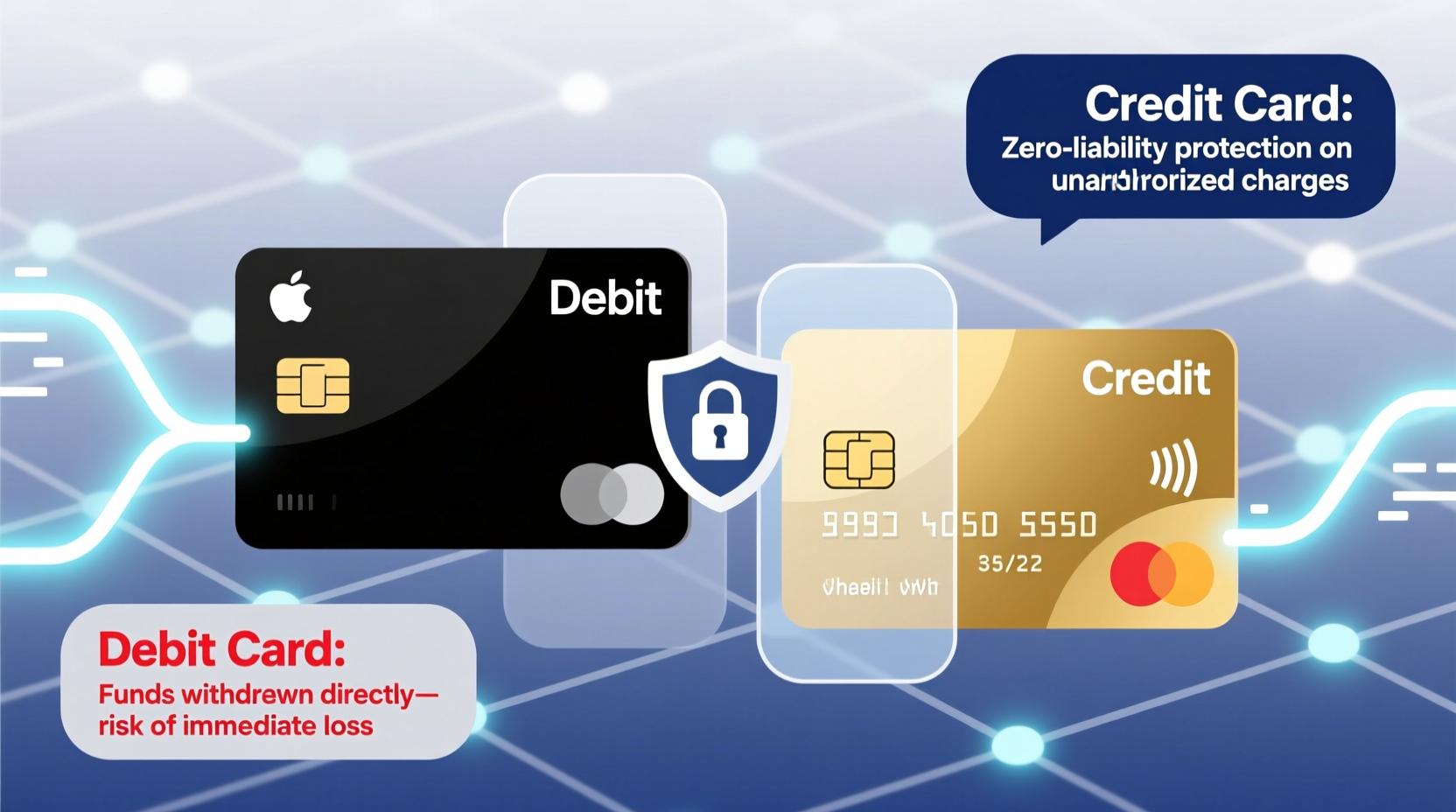
Cybercriminals use phishing, data breaches, and malware to steal payment information. Once they have your card details—number, expiration date, CVV—they can make unauthorized purchases or even sell the data on dark web marketplaces. The real danger isn’t just the theft itself, but how quickly the damage spreads and how difficult it is to reverse.
With a credit card, you’re spending borrowed money from the issuer. With a debit card, you're spending funds directly from your checking account. This fundamental difference shapes everything from fraud detection to recovery time.
“Credit cards offer stronger consumer protections because federal law limits liability and gives you time to dispute charges before money leaves your account.” — Sarah Lin, Consumer Finance Analyst at the National Consumer Law Center
Liability Protection: The Legal Difference
The most critical distinction between debit and credit cards lies in federal liability protections.
- Credit Cards: Governed by the Fair Credit Billing Act (FCBA), your maximum liability for unauthorized charges is $50. Most major issuers go further and offer $0 fraud liability guarantees.
- Debit Cards: Protected under the Electronic Fund Transfer Act (EFTA), but your liability depends on how fast you report the fraud:
- If reported within 2 business days: Maximum liability is $50.
- If reported after 2 days but within 60 days: Liability increases to $500.
- If reported after 60 days: You could lose all the stolen funds with no recourse.
Because debit card fraud pulls money directly from your account, you may face overdraft fees, missed bill payments, or bounced checks while waiting for reimbursement—which can take up to 10 business days during investigation.
Tip: Always monitor your accounts daily when using a debit card online. Quick reporting is essential to minimize losses.Comparing Security Features: Debit vs Credit
Both card types use encryption, tokenization, and two-factor authentication to secure transactions. However, the aftermath of a breach reveals where credit cards clearly outperform debit cards.
| Feature | Credit Card | Debit Card |
|---|---|---|
| Funds Access | Borrowed from issuer | Directly from bank account |
| Max Fraud Liability | $0 (with most issuers) | Up to full balance if not reported in time |
| Reimbursement Time | Immediate provisional credit | Up to 10 business days pending investigation |
| Impact on Credit Score | Potential impact if disputes affect utilization | No direct impact |
| Rewards & Cashback | Common | Rare |
| Spending Control | Requires discipline | Limited to available balance |
While credit cards offer superior protection, they require responsible usage. High balances and missed payments can lead to debt accumulation and credit score damage. Debit cards eliminate this risk by restricting spending to what you already have—but at the cost of weaker fraud safeguards.
Real-World Example: Maria’s Online Shopping Experience
Maria bought a laptop from an unfamiliar electronics site using her debit card. Two days later, she noticed three unapproved charges totaling $1,200 on her bank statement. She called her bank immediately and reported the fraud.
The bank froze her account and launched an investigation. However, since the money was gone, her rent payment bounced, triggering a $35 overdraft fee and a late payment mark on her record. It took nine business days for the bank to return the funds. During that week, she had to borrow money from a friend to cover groceries.
Her friend James had a similar experience—but used a credit card. He spotted fraudulent charges on his statement, reported them, and the issuer removed the charges instantly, issuing a provisional refund within 24 hours. His personal funds were never touched, and his credit score remained unaffected.
This scenario illustrates why access to your actual money makes debit cards riskier—even when protections eventually kick in.
Best Practices for Safer Online Purchases
You don’t need to avoid debit cards entirely, but knowing how to use them safely reduces exposure. Here’s a step-by-step guide to minimizing risk regardless of your payment method.
- Use credit cards for all online transactions – Especially on new or lesser-known websites. The added layer of separation between your money and the merchant is worth the slight inconvenience.
- Enable transaction alerts – Set up text or email notifications for every purchase so you can spot suspicious activity immediately.
- Check statements weekly – Don’t wait for monthly statements. Log into your accounts regularly to scan for unrecognized charges.
- Use virtual card numbers – Some banks and digital wallets (like Citi Virtual Account Numbers or Capital One Eno) let you generate one-time-use card numbers for online shopping.
- Avoid saving card details on websites – Stored credentials increase risk if the platform suffers a data breach.
- Stick to HTTPS sites – Ensure the URL begins with “https://” and has a padlock icon before entering any payment info.
- Consider a dedicated low-balance debit card – If you must use debit, link it to a separate account with minimal funds to limit potential loss.
When Debit Might Be Acceptable (And How to Mitigate Risk)
There are situations where using a debit card online may be unavoidable or preferable:
- Automatic bill payments (e.g., utilities, subscriptions).
- Prepaid gift card purchases where credit cards aren't accepted.
- Users avoiding debt due to past financial issues.
In these cases, reduce exposure with additional precautions:
“We recommend keeping only a small buffer amount in accounts linked to debit cards used online. Treat it like cash in a wallet—don’t carry more than you’re willing to lose.” — Mark Tran, Senior Advisor at the Consumer Financial Protection Bureau (CFPB)
Debit Card Safety Checklist
- ✅ Link to a separate, low-balance account
- ✅ Enable real-time transaction alerts
- ✅ Avoid storing card details on retail sites
- ✅ Shop only on trusted, encrypted websites (look for HTTPS)
- ✅ Review statements at least twice per week
- ✅ Report suspicious activity within 24–48 hours
- ✅ Use multi-factor authentication on your banking app
FAQ: Common Questions About Card Safety
Can hackers really steal my card info just by me shopping online?
Not simply from browsing or legitimate purchases. Theft usually occurs through data breaches, fake websites mimicking real stores, or malware on your device. Always verify the website's legitimacy and keep antivirus software updated.
Are contactless payments (Apple Pay, Google Pay) safer than cards?
Yes. Digital wallets use tokenization, meaning your actual card number is never shared with the merchant. Even if intercepted, the token is useless elsewhere. They also require biometric authentication (face ID, fingerprint), adding another security layer.
What should I do if my card is compromised?
Act immediately:
- Contact your bank or card issuer.
- Dispute the charges in writing or via their secure portal.
- Freeze or cancel the affected card.
- Monitor other accounts for signs of identity theft.
- Consider placing a fraud alert with one of the three major credit bureaus (Experian, Equifax, TransUnion).
Final Verdict: Which Is Better for Online Shopping?
Credit cards are objectively safer for online shopping. Their robust legal protections, faster resolution processes, and separation from your personal bank account create a critical buffer against financial harm. While debit cards help control spending, their vulnerability to irreversible short-term damage makes them a higher-risk option in digital environments.
That said, safety doesn’t depend solely on the type of card—it hinges on your habits. Whether you use credit or debit, vigilance, prompt reporting, and smart digital hygiene are non-negotiable.
If you currently rely on debit for online purchases, consider switching to a no-fee credit card and paying the balance in full each month. You’ll gain peace of mind, stronger fraud defenses, and possibly rewards—all without accumulating debt.
🚀 Take action today: Review your last three online purchases. Were they made with a debit card? Switch to a credit card for future transactions and enable transaction alerts on all accounts. Small changes now can prevent major headaches later.