
The cottagecore aesthetic has swept across social media platforms with idyllic images of wildflower meadows, hand-knit sweaters, sourdough baking, and sun-dappled cottages nestled in quiet woods. It evokes a longing for simplicity, self-sufficiency, and harmony with nature—values that resonate deeply in an age of climate anxiety and digital overload. But beneath the romantic visuals lies a critical question: Is cottagecore truly sustainable, or is it merely a nostalgic fantasy repackaged for modern consumption?
As more people embrace this lifestyle visually through fashion, home decor, and curated online personas, the line between genuine ecological practice and aestheticized escapism grows thinner. The answer isn’t binary. While some elements of cottagecore align closely with sustainability principles, others risk reinforcing consumerism under the guise of rural charm.
The Roots of Cottagecore: Romanticism Meets Modern Longing
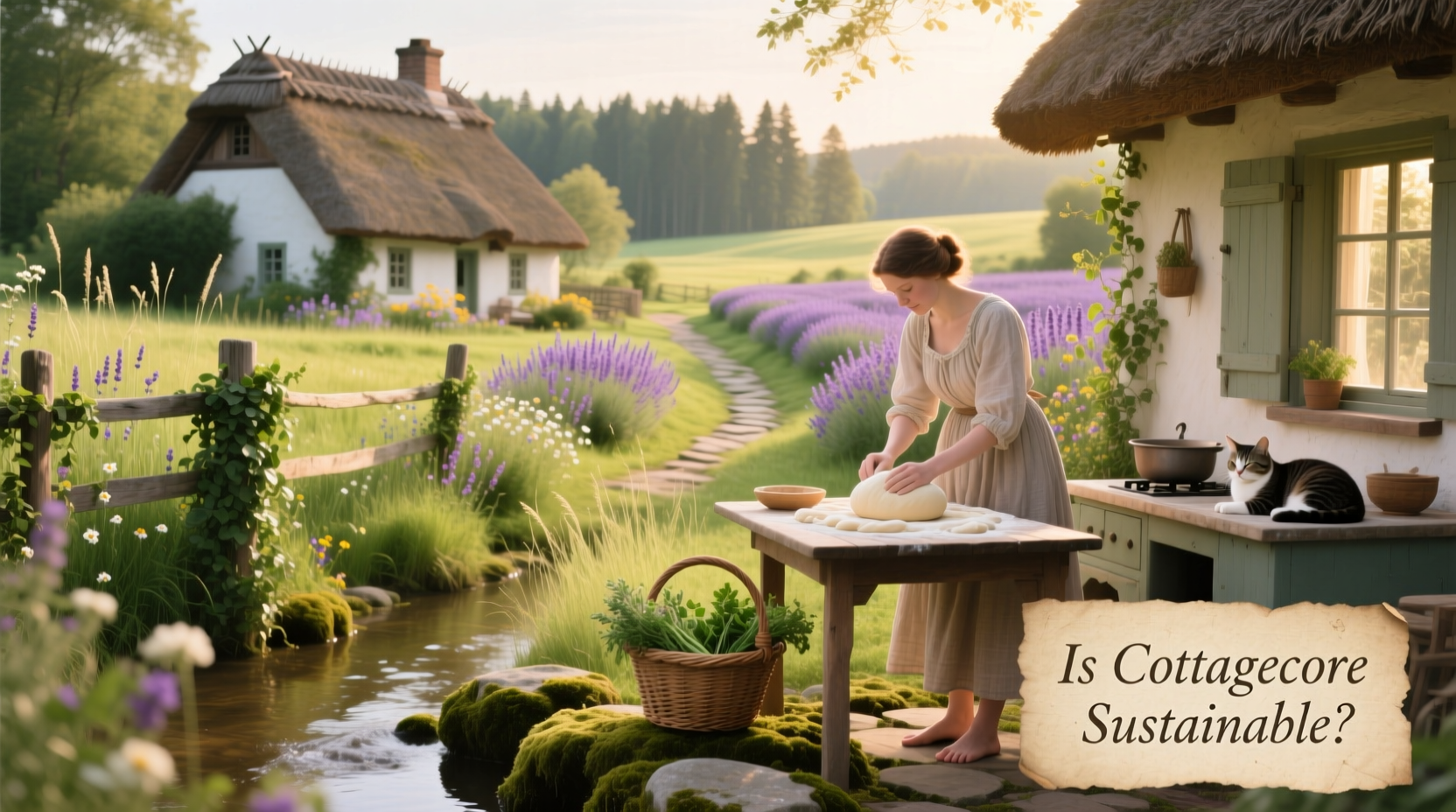
Cottagecore emerged as a digital-era movement, gaining momentum during periods of societal stress—most notably the early months of the 2020 pandemic. With cities locked down and daily routines disrupted, many turned to visions of pastoral life as emotional refuge. Platforms like Instagram, TikTok, and Pinterest became virtual farmscapes where users shared photos of herb gardens, linen dresses, and slow mornings with tea.
But the ideal isn’t new. Its roots trace back to 18th-century Romanticism, when poets like William Wordsworth and artists such as John Constable elevated rural life as morally superior to industrial urbanism. This historical precedent reveals a recurring human tendency: when progress feels alienating, we retreat into mythologized pasts.
Today’s cottagecore inherits that tradition but amplifies it through mass media. Unlike Romantic poets who often lived close to nature, many modern adherents experience it secondhand—through filters, flat lays, and seasonal hauls from fast-fashion brands capitalizing on the “rustic” look.
“Cottagecore offers emotional sustainability—the comfort of imagining a slower, kinder world—but without structural change, it remains decorative rather than transformative.” — Dr. Lena Moreau, Cultural Anthropologist, University of Edinburgh
Sustainable Elements Embedded in the Aesthetic
Despite its commodified expressions, cottagecore contains authentic seeds of sustainability. When practiced beyond aesthetics, several core activities promote environmentally sound behaviors:
- Home gardening and food growing: Growing vegetables, herbs, or even small fruit trees reduces reliance on industrial agriculture and lowers carbon footprints associated with transport and packaging.
- Mending and handmade crafts: Knitting, sewing, and repairing clothes oppose throwaway culture and extend garment lifespans—key tenets of circular fashion.
- Reduced consumption habits: Many cottagecore enthusiasts adopt minimalism, choosing quality over quantity and favoring secondhand or locally made goods.
- Seasonal living: Embracing seasonal foods, natural light cycles, and weather-appropriate routines fosters attunement to ecological rhythms instead of artificial convenience.
- Low-tech lifestyles: Limiting screen time, using analog tools (like typewriters or candlelight), and walking instead of driving reduce energy use and digital pollution.
The Greenwashing Risk: When Aesthetics Overshadow Action
Where cottagecore falters is in its commercialization. Major retailers have released \"cottagecore collections\" featuring synthetic lace dresses, mass-produced wicker baskets, and imported ceramic mugs—all marketed as rustic while relying on exploitative labor and high-emission supply chains.
This contradiction turns sustainability into a visual code. Wearing a $30 “vintage-inspired” dress made in Bangladesh does not equate to living sustainably, no matter how many daisies are printed on it. Similarly, buying pre-packaged “foraging kits” or plastic-wrapped “artisan” bread from boutique grocers undermines the very ideals of self-reliance and low waste.
The danger lies in what sociologists call performative sustainability—adopting the appearance of eco-consciousness without altering underlying consumption patterns. In this context, cottagecore becomes another trend cycle, discarded when the next aesthetic rises.
Case Study: The Rise and Fall of a Cottagecore Influencer
Take the example of @WildThymeDiaries, a popular TikTok creator with over 500,000 followers. Over 18 months, she built a brand around homemade soap, backyard chickens, and thrifted floral dresses. Her content inspired thousands to start compost bins and grow tomatoes.
However, an investigation by an independent blog revealed inconsistencies: her “homesteading” home was a rental in suburban Atlanta; her chickens were borrowed for filming; and her “handmade” candles were sourced from Amazon. Once exposed, her audience dwindled rapidly—not because they rejected cottagecore, but because they valued authenticity.
This case illustrates a crucial point: credibility in sustainable living comes from consistency between image and action. When the gap widens, trust erodes—and with it, the potential for real behavioral change.
Measuring Sustainability: A Practical Checklist
To determine whether your engagement with cottagecore is genuinely sustainable, consider the following checklist. If most apply, you're likely practicing values over visuals.
- Do I grow any of my own food, even in small quantities?
- Have I reduced my dependence on single-use plastics?
- Do I repair or repurpose clothing instead of buying new?
- Am I sourcing products locally or secondhand whenever possible?
- Have I decreased my digital or energy consumption as part of this lifestyle?
- Do I prioritize experiences (like hiking, cooking, reading) over purchases?
- Am I supporting regenerative farming or community-supported agriculture (CSA)?
- Is my version of cottagecore accessible without significant financial privilege?
Failing some items doesn’t make someone a failure—it highlights areas for growth. The goal isn’t perfection but intentionality.
Cottagecore vs. Eco-Friendly Living: A Comparative Table
| Aspect | Cottagecore (Authentic Practice) | Cottagecore (Trend-Based Consumption) |
|---|---|---|
| Fashion | Thrifted, mended, or handmade garments using natural fibers | Fast-fashion dresses labeled “cottagecore,” often polyester-based |
| Food | Homegrown, seasonal, preserved, or locally sourced | Instagrammable avocado toast from chain cafes |
| Housing | Energy-efficient homes, off-grid options, or retrofitted older buildings | Renting picturesque cottages for photo shoots only |
| Values | Simplicity, resilience, interdependence with nature | Nostalgia, escapism, individualistic well-being |
| Longevity | Practices can continue indefinitely with minor adjustments | Likely to fade as trends shift; replaced by next aesthetic |
Building a Sustainable Cottagecore Practice: A Step-by-Step Guide
Adopting cottagecore as a lasting ethic—not just a phase—requires deliberate steps. Here’s how to transition from aesthetic appreciation to meaningful action:
- Evaluate your current habits. Track one week of consumption: food, clothing, energy, and digital usage. Identify areas where you rely on convenience over care.
- Start a micro-garden. Use containers or a small plot to grow leafy greens, herbs, or strawberries. Even balcony gardening connects you to soil and seasonality.
- Declutter and repair. Audit your wardrobe. Mend torn seams, dye stained fabrics, or transform old linens into cleaning rags. Reduce textile waste.
- Shop secondhand first. Before purchasing new “cottage-style” décor or clothing, check thrift stores, online marketplaces, or community swaps.
- Learn one traditional skill per quarter. Examples: sourdough baking, fermenting vegetables, basic carpentry, or wool felting. These skills build self-reliance.
- Support local ecology. Join a CSA, visit farmers’ markets, or volunteer with land restoration projects. Sustainability thrives in community.
- Reflect monthly. Ask: Am I consuming less? Feeling more connected? Sharing resources? Adjust based on answers, not algorithms.
FAQ: Common Questions About Cottagecore and Sustainability
Can cottagecore be sustainable in cities?
Absolutely. Urban dwellers can practice cottagecore values through community gardens, rooftop beekeeping, zero-waste cooking, and slow fashion. The essence isn’t location—it’s intention. Growing basil on a fire escape or hosting clothing repair workshops embodies the spirit more authentically than owning a country cottage ever could.
Isn’t cottagecore elitist? Not everyone can afford to live this way.
It can be, if limited to expensive organic groceries or remote homesteading. But at its best, cottagecore democratizes resourcefulness. Mending clothes, cooking from scratch, and sharing surplus are historically working-class practices. The key is centering accessibility—advocating for policies that support urban green spaces, affordable housing, and public land access ensures the lifestyle isn’t reserved for the privileged few.
Will cottagecore last, or will it fade like other trends?
As a visual trend, it may decline. But as a cultural response to disconnection and environmental crisis, its core ideas—slowing down, valuing craftsmanship, respecting nature—are timeless. Movements like permaculture, degrowth, and rewilding already incorporate similar principles with scientific and ethical rigor. If cottagecore evolves into these frameworks, it transcends trend status.
Conclusion: From Fantasy to Foundation
The cottagecore aesthetic stands at a crossroads. It can remain a fleeting internet fad—a digital daydream sold in polyester and hashtags—or it can become a gateway to deeper ecological awareness. The difference lies in action.
True sustainability isn’t about looking like you live in harmony with nature. It’s about making choices every day that reflect that harmony: eating seasonally, wasting less, repairing instead of replacing, and advocating for systemic change. When cottagecore inspires those behaviors, it fulfills its promise.
The romanticized cottage may be imaginary, but the values behind it—care, patience, reciprocity with the earth—are urgently real. Let the aesthetic be the invitation, not the destination.
🚀 Ready to move beyond the filter? Pick one sustainable practice from this article and commit to it for the next 30 days. Share your journey—not for likes, but for legacy.