Chinese equities declined sharply today, with major indexes like the Shanghai Composite and Shenzhen Component posting notable losses. Investors reacted to a confluence of domestic economic concerns, regulatory uncertainty, and external market pressures. While volatility is not uncommon in China’s markets, today’s downturn reflects deeper structural and cyclical challenges affecting investor sentiment. This article breaks down the primary drivers behind the sell-off, analyzes sector-specific impacts, and provides context for both short-term traders and long-term investors navigating this turbulent period.
Economic Data Disappoints Amid Recovery Hopes
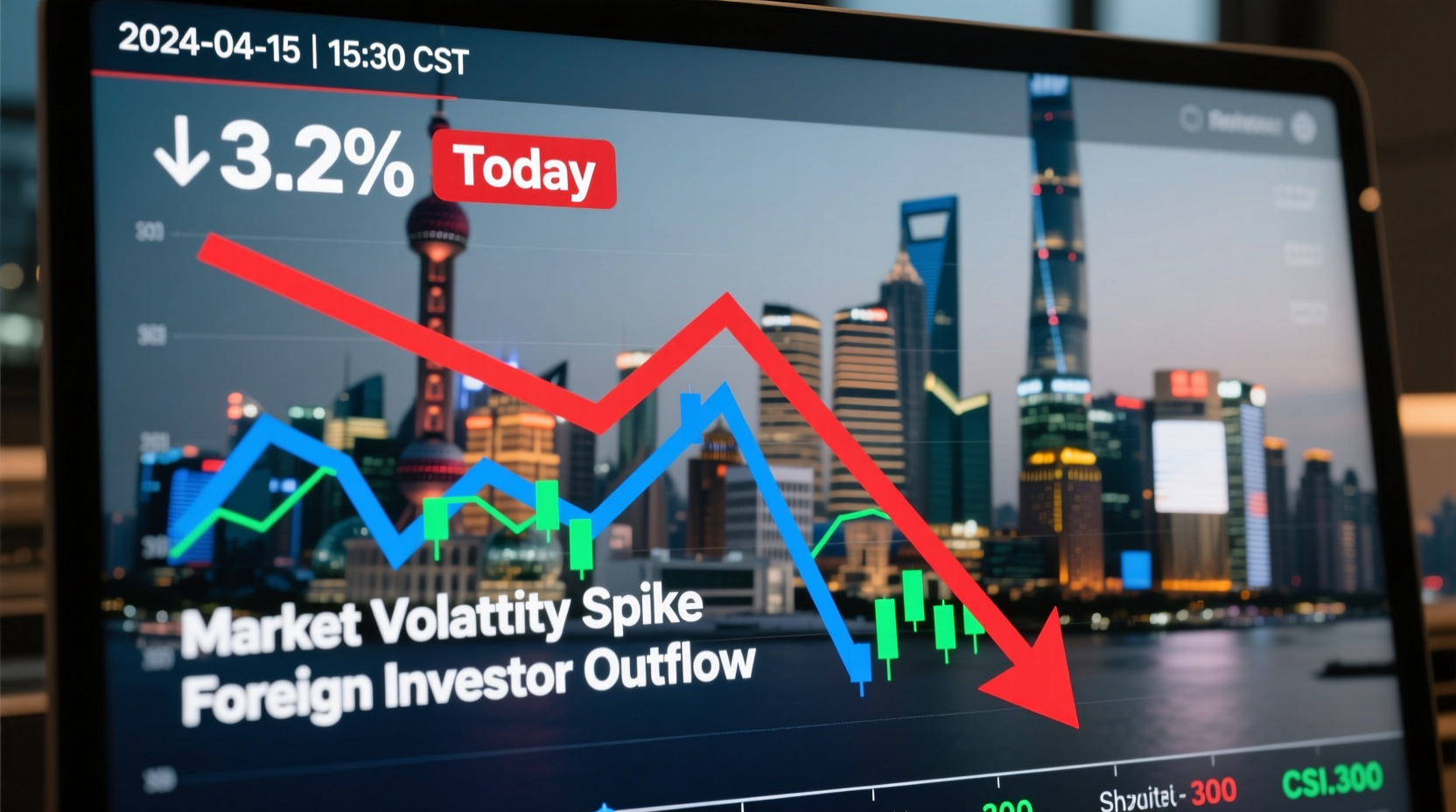
The immediate trigger for today’s market decline was weaker-than-expected economic data released earlier in the day. Industrial production growth slowed to 4.5% year-on-year in July, below the forecasted 5.2%. Retail sales also underperformed, rising only 2.7% compared to an expected 3.5%. These figures signal that China’s post-pandemic recovery remains fragile despite government efforts to stimulate demand.
Property investment—a critical component of China’s economy—fell 8.5% year-on-year, extending a multi-year slump. The ongoing crisis in the real estate sector continues to weigh on construction, banking, and materials stocks. Analysts note that consumer confidence remains subdued, limiting the effectiveness of fiscal stimulus.
Tip: Monitor monthly PMI (Purchasing Managers' Index) and retail sales data closely—these are leading indicators of economic momentum in China.Regulatory Uncertainty Returns to Focus
Market participants are growing uneasy about renewed regulatory scrutiny across key sectors. Today, rumors circulated that Beijing may impose stricter oversight on tech firms’ AI development projects, particularly those involving generative AI and data handling. Although no official announcement was made, the mere speculation was enough to trigger a selloff in tech-heavy indexes.
The Hang Seng Tech Index dropped over 3%, with Alibaba, Tencent, and JD.com all seeing double-digit percentage declines in intraday trading. Regulatory risk has been a persistent theme since 2021, when a sweeping crackdown began on education, fintech, and internet platforms. While enforcement eased in 2023, recent comments from senior officials suggest a return to tighter control over strategic industries.
“Investors are pricing in the risk of unpredictable regulation. Even without formal policy changes, the tone from Beijing can shift market sentiment overnight.” — Dr. Lin Mei, Senior Economist at Asia Pacific Institute for Financial Studies
Global Pressures Amplify Domestic Weaknesses
External factors have compounded the downward pressure on Chinese equities. The U.S. Federal Reserve’s hawkish stance has strengthened the dollar and pushed Treasury yields higher, making emerging market assets less attractive. As capital flows back to the U.S., Chinese stocks face increased selling from foreign institutional investors.
Additionally, escalating trade tensions between the U.S. and China over semiconductor exports and electric vehicles have heightened geopolitical risk. The Biden administration’s recent restrictions on advanced chip exports to China spooked tech investors, many of whom view such moves as part of a broader decoupling trend.
European regulators’ investigations into Chinese EV manufacturers for receiving unfair state subsidies have also cast doubt on export-driven growth strategies. Companies like BYD and NIO saw share prices fall amid fears of retaliatory tariffs or market access limitations in Europe.
Sector-by-Sector Impact of the Sell-Off
Not all sectors were affected equally. A closer look reveals distinct patterns in today’s market movement:
| Sector | Performance Today | Key Drivers |
|---|---|---|
| Technology | -3.2% | AI regulation fears, U.S. chip export bans |
| Real Estate | -4.1% | Continued property investment decline, developer defaults |
| Financials | -2.3% | Loan quality concerns, low interest margins |
| Consumer Discretionary | -1.8% | Weak retail sales, low consumer confidence |
| Renewables | -0.9% | Profit-taking after recent rally, grid integration issues |
The real estate sector bore the brunt of the decline, reflecting ongoing solvency concerns among developers. Evergrande’s unresolved debt restructuring and recent downgrades of Country Garden’s credit rating have eroded trust in the sector’s stability.
Mini Case Study: How One Fund Adjusted Its China Exposure
Consider the case of Horizon Global Emerging Markets Fund, which reduced its China allocation from 28% to 17% over the past six months. In a recent investor letter, portfolio manager Rajiv Patel explained the decision: “We saw increasing divergence between policy intent and economic outcomes. Infrastructure spending was up, but private investment remained weak. Consumer behavior didn’t respond to stimulus as expected. We shifted toward Indian and Southeast Asian equities where growth visibility was clearer.”
The fund’s move highlights a broader trend: even bullish investors are becoming more selective about China exposure. Active management and stock-picking are now more critical than passive index tracking in this environment.
Actionable Checklist for Investors
For individuals holding or considering Chinese equities, here’s a practical checklist to assess your position:
- ✅ Review your portfolio’s sector concentration in China—avoid overexposure to real estate or unprofitable tech startups.
- ✅ Evaluate whether holdings are state-backed (more stable) or private-sector-led (higher regulatory risk).
- ✅ Diversify geographically—consider balancing China positions with other emerging markets.
- ✅ Stay updated on NPC (National People's Congress) policy signals and PBOC (People's Bank of China) monetary moves.
- ✅ Set stop-loss levels or use options hedging if holding volatile mid-cap stocks.
What’s Next? A Timeline of Key Upcoming Events
Market direction in the coming weeks will depend on several pivotal developments. Here’s a timeline of what to watch:
- August 15: Monthly loan prime rate (LPR) announcement by PBOC—potential for further rate cuts to boost lending.
- August 27: Release of July fixed asset investment and urban unemployment data.
- September 5: GAC meeting (Government Affairs Council)—possible new stimulus measures for consumption and SMEs.
- September 20: U.S. Federal Reserve FOMC meeting—rate decision could impact capital flows to China.
- October 2024: Third Plenum discussions—long-term reform agenda may shape investor confidence.
Historically, policy announcements ahead of major political events have led to temporary market stabilization through targeted liquidity injections or infrastructure spending pledges.
Frequently Asked Questions
Why are Chinese stocks falling when the government is trying to stimulate the economy?
While Beijing has announced various stimulus measures, including tax cuts and infrastructure funding, their impact has been limited by weak private sector confidence and local government debt constraints. Investors are skeptical that short-term fixes can overcome deep-rooted structural issues like aging demographics and overreliance on real estate.
Should I sell my Chinese ETFs now?
This depends on your risk tolerance and investment horizon. For long-term investors, current valuations may present buying opportunities in resilient sectors like clean energy and advanced manufacturing. However, short-term traders should prepare for continued volatility and consider hedging strategies.
Are foreign investors pulling out of China completely?
Not entirely. While foreign ownership of Chinese equities has declined, many global funds maintain exposure through selective investments in companies with strong governance, international revenue streams, and innovation capacity. The exit is more pronounced from speculative or heavily regulated sectors.
Conclusion: Navigating Uncertainty with Discipline
The decline in Chinese stocks today is not an isolated event but part of a broader recalibration of expectations. Economic headwinds, regulatory ambiguity, and global tensions have combined to test investor resolve. Yet within the turbulence lie opportunities for those who approach the market with research, discipline, and diversification.
Understanding the underlying causes—not just reacting to daily price swings—is essential. Whether you’re managing a personal portfolio or advising clients, staying informed, maintaining balanced exposure, and preparing for multiple scenarios will be key to weathering this phase.
🚀 Stay proactive. Reassess your China strategy, follow high-conviction sectors, and engage with reliable sources for timely updates. Share your thoughts or questions in the comments—your insight could help others navigate these complex markets.