
Financial independence isn’t just about accumulating wealth—it’s about preserving it, growing it across generations, and creating systems that empower your family long after you’re gone. A \"family bank\" is not a licensed financial institution but a structured approach to managing, protecting, and deploying capital within a family ecosystem. It combines disciplined saving, strategic investing, estate planning, and financial education into a unified system. When done right, it becomes a powerful tool for intergenerational wealth transfer, risk mitigation, and legacy creation.
Understanding the Family Bank Concept
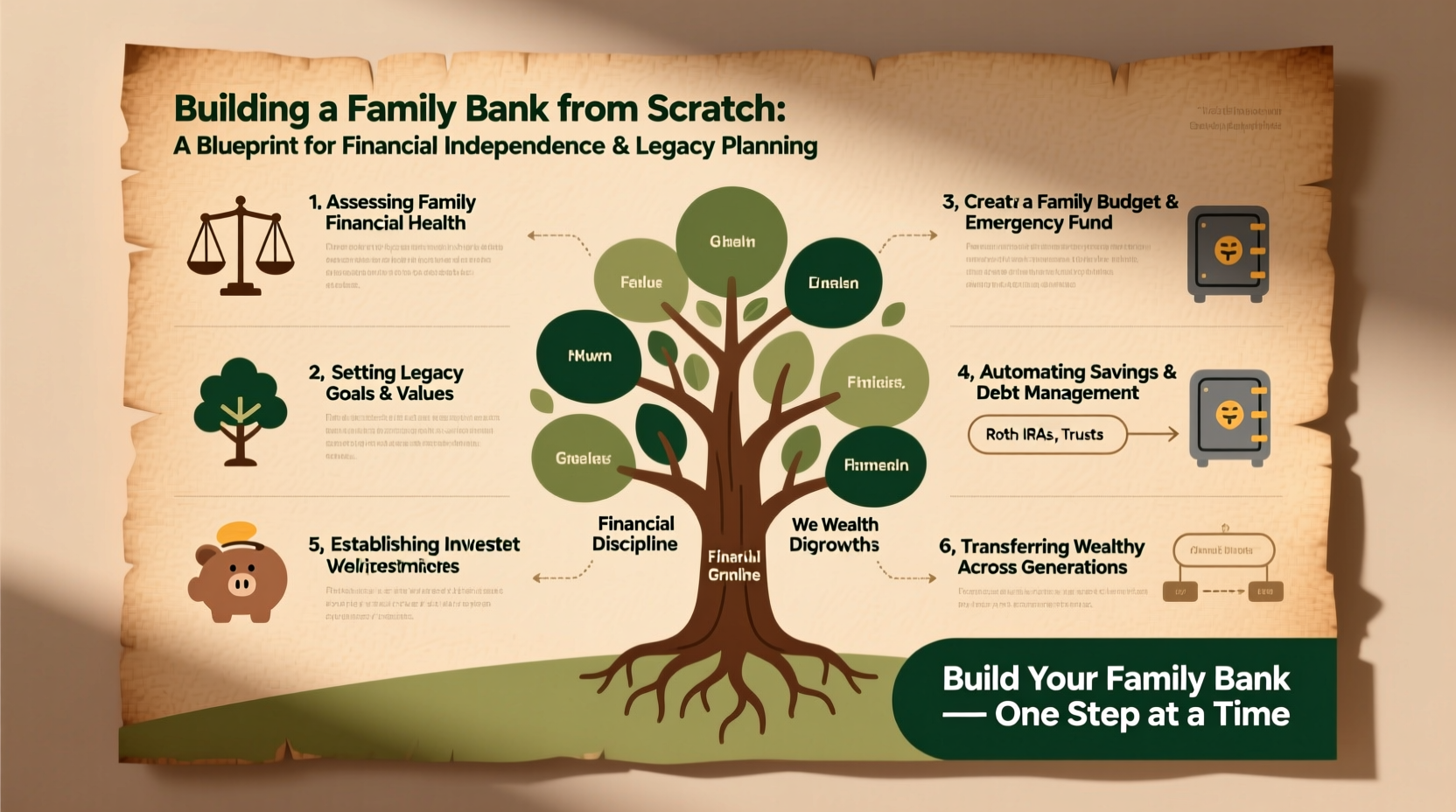
A family bank operates on principles similar to those of traditional banks: pooling capital, lending or allocating funds strategically, earning returns, and reinvesting profits. The key difference? Ownership and control remain within the family. Instead of relying solely on external financial institutions, families use their collective resources to fund education, real estate ventures, business startups, emergency needs, or retirement goals.
This model shifts the mindset from passive consumption to active stewardship. Rather than spending every dollar earned, a portion is consistently diverted into the family bank. Over time, compound growth transforms modest contributions into significant assets.
“True wealth isn’t measured by what you spend, but by what you build and pass on.” — Robert Kiyosaki, author of *Rich Dad Poor Dad*
Step-by-Step Guide to Building Your Family Bank
Step 1: Define Your Vision and Core Values
Before any money moves, clarify the purpose of your family bank. Is it to fund college educations? Support entrepreneurial ventures? Provide safety nets during crises? Or ensure dignified retirements?
Hold a family meeting (even if small) to align on values like responsibility, accountability, delayed gratification, and mutual support. Document these as guiding principles.
Step 2: Establish a Legal Structure
To protect assets and formalize operations, choose a legal entity such as:
- LLC (Limited Liability Company): Offers flexibility and liability protection.
- Family Limited Partnership (FLP): Allows older generations to retain control while gifting limited partnership shares to younger members.
- Trusts: Irrevocable or revocable trusts can hold assets and dictate distribution terms.
Consult an estate attorney to select the best structure based on tax implications, state laws, and succession plans.
Tip: Start simple. You don’t need millions to begin. Even $500/month invested wisely can grow into six figures over a decade.Step 3: Fund the Bank Systematically
Set up automatic transfers from personal accounts into the family bank account. Contributions can come from:
- Monthly income allocations (e.g., 10% of each member’s paycheck)
- Bonuses or windfalls
- Dividends or rental income redirected into the pool
- Inheritance proceeds
Treat contributions like non-negotiable bills. Consistency matters more than size.
Step 4: Create Investment and Lending Policies
Develop clear rules for how money will be used. For example:
- Loans must have a written proposal and repayment schedule.
- Interest rates could mirror market benchmarks (e.g., prime rate + 1%).
- Investments are limited to pre-approved asset classes (real estate, index funds, private equity).
These policies prevent favoritism, reduce conflict, and instill financial discipline.
Step 5: Educate the Next Generation
Legacy planning fails when heirs aren’t prepared. Introduce children early to budgeting, investing, and decision-making. Assign roles: teens might track expenses; young adults could research investment options.
Consider holding quarterly “board meetings” where family members review performance, vote on loan requests, and discuss financial goals.
Checklist: Launch Your Family Bank in 7 Actions
- Host a family vision session to define goals and values.
- Choose a legal structure with professional guidance.
- Open a dedicated bank account under the entity name.
- Set up recurring contributions from all participating members.
- Draft a family constitution outlining governance and rules.
- Identify initial investments or internal loan opportunities.
- Schedule regular reviews (quarterly or annually).
Real Example: The Thompson Family Bank
The Thompsons, a multi-generational family in Colorado, started their family bank in 2015 with $25,000 pooled from three siblings. They formed an LLC and contributed $1,000 per month collectively. By 2020, they had accumulated $90,000 and lent $40,000 at 5% interest to one sibling launching a landscaping business. That loan was repaid over five years with interest, which was reinvested.
In 2023, the family bank purchased a duplex using a combination of its capital and a mortgage. Rental income now covers payments and adds $800/month to the fund. Their net worth within the bank exceeds $180,000—proving that patience and process yield results.
Do’s and Don’ts of Family Banking
| Do’s | Don’ts |
|---|---|
| Keep transparent records of all transactions. | Co-mingle personal and family bank funds. |
| Require written proposals for loans or investments. | Lend money without clear terms or collateral. |
| Review performance annually with all stakeholders. | Let one person make decisions unilaterally. |
| Educate younger members progressively. | Wait until a crisis to discuss finances. |
Frequently Asked Questions
Can a family bank really compete with traditional banks?
Not in scale, but yes in impact. While you won’t offer FDIC-insured savings accounts, your family bank offers something banks can’t: trust, shared values, flexible terms, and alignment with long-term goals. It’s not about competition—it’s about complementing traditional finance with familial empowerment.
What happens if a family member defaults on a loan?
Clear agreements prevent most issues. Include provisions in your family constitution for mediation, partial forgiveness, or repayment restructuring. If necessary, secure loans with assets like vehicles or future inheritance shares. The goal is restoration, not punishment.
Is this only for wealthy families?
No. Families at all income levels benefit. A janitor contributing $100/month and a doctor contributing $1,000/month can both participate meaningfully. What matters is consistency, shared commitment, and long-term thinking—not starting size.
Building a Legacy Beyond Money
A family bank is more than a financial vehicle—it’s a cultural institution. It teaches responsibility, fosters unity, and replaces entitlement with ownership. Children who grow up understanding compound interest, creditworthiness, and risk assessment are far less likely to face financial hardship.
Moreover, the act of pooling resources reinforces interdependence. In an age of individualism, the family bank stands as a quiet rebellion—a declaration that we are stronger together.
Tip: Use free tools like Google Sheets or Notion to track contributions, loans, and investment returns. Transparency builds trust.Conclusion: Start Small, Think Generations
You don’t need a fortune to begin. You need clarity, commitment, and a plan. Whether you start with $500 or $50,000, the act of intentionally building a financial foundation for your family changes trajectories. One day, your grandchildren may look back and say, “It all started when Grandma and Uncle Joe decided to stop just earning—and began building.”
🚀 Ready to take the first step? This week, gather your closest family members and host a 30-minute conversation about what kind of financial legacy you want to leave. Write down one action you’ll take in the next 30 days to move toward your family bank. The future starts now.