For collectors, hobbyists, and enthusiasts, the decision between investing in diecast models or sticking with building block alternatives isn’t just about price—it’s about purpose, passion, and long-term satisfaction. Diecast models often cost significantly more than their building block counterparts, sometimes by a factor of five or ten. But is that premium justified? The answer depends on what you value: interactivity and creativity, or authenticity and display quality.
This comparison goes beyond surface appeal. It touches on material integrity, resale potential, emotional attachment, and how each model fits into your lifestyle—whether as a plaything, a collector’s item, or a decorative centerpiece.
Understanding the Core Differences
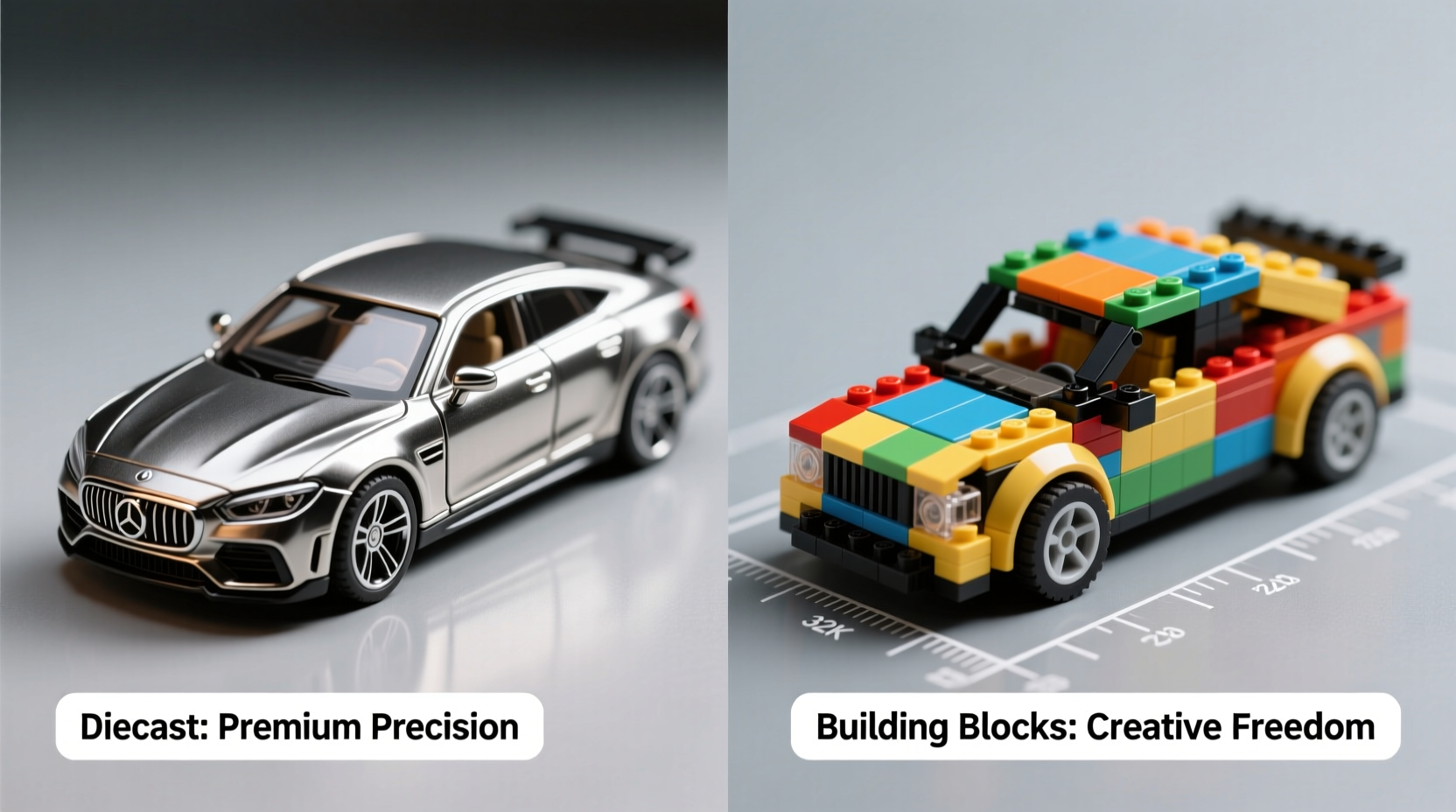
At first glance, both diecast and building block models represent vehicles—cars, trucks, aircraft, construction equipment—but they do so in fundamentally different ways.
Diecast models are typically made from molten metal (usually zinc alloy) poured into precision molds, then cooled and detailed with paint, rubber tires, and interior components. They are static representations designed for display, often scaled down at 1:18, 1:24, or 1:64 ratios. These models prioritize realism, weight, and finish, mimicking real-world vehicles down to the dashboard stitching.
Building block models, such as those made from interlocking plastic bricks, are modular, customizable, and often inspired by popular vehicle designs. While some are officially licensed replicas, many are fan-made interpretations. Their strength lies in reusability, educational value, and hands-on engagement.
Tip: If you're buying for a child who loves to build and rebuild, building blocks offer better long-term play value. For adult collectors seeking shelf presence, diecast wins on realism.Material Quality and Realism Comparison
The most immediate difference is in tactile experience. Pick up a high-end diecast model from brands like AutoArt, Minichamps, or Bburago, and you’ll feel its heft—a deliberate design choice to simulate the solidity of real metal. This weight contributes to perceived value and stability on display.
In contrast, building block models, even large-scale ones, remain lightweight due to their plastic composition. While modern kits include printed dashboards, opening doors, and suspension systems, the visual fidelity rarely matches the photo-realistic finishes of premium diecast pieces.
| Feature | Diecast Models | Building Block Models |
|---|---|---|
| Material | Metal body, rubber tires, plastic details | Plastic bricks only |
| Weight | Heavy, substantial feel | Light, hollow structure |
| Detail Level | Factory-accurate interiors, badges, lighting | Simplified; limited by brick geometry |
| Finish | Painted with clear coat, chrome plating | Plastic color; stickers or prints |
| Lifespan (with care) | Decades without degradation | Years; bricks may yellow or loosen |
As noted by collector and curator James Rutherford, “A well-made diecast model captures the soul of the original car—the curves, the gloss, the presence. You can’t replicate that with snap-together parts.”
“A diecast model isn’t just a toy. It’s a miniature sculpture of automotive history.” — James Rutherford, Curator at the National Model Vehicle Archive
Total Cost of Ownership: Upfront vs. Long-Term Value
Diecast models usually carry a higher initial price tag. A 1:18 scale Ferrari F40 from Corgi might cost $150–$200, while a similar-looking building block version could be under $50. However, long-term value shifts the equation.
Many limited-edition diecast models appreciate over time, especially if produced in small runs, tied to historic events, or representing rare vehicles. For example, a 1980s Matchbox Lesney Superfast series car in mint condition now sells for hundreds of dollars, whereas vintage building block sets, while collectible, don’t consistently rise in value unless sealed and unopened.
Additionally, diecast models require minimal maintenance—occasional dusting and UV protection—while building block sets may degrade: bricks lose clutch power, stickers peel, and boxes deteriorate. Replacing lost pieces adds hidden costs.
Mini Case Study: The Porsche 911 Collector
Mark T., an IT manager and lifelong car enthusiast, started collecting Porsche 911s in 2010. He initially bought building block versions because they were affordable and fun to assemble. After completing several, he displayed them—but noticed fading within two years due to sunlight exposure. One model’s roof detached during cleaning.
He shifted to diecast, purchasing a 1:43 scale Sonderklasse Edition 911 from Minichamps for $120. Ten years later, it remains pristine, and its market value has increased to $180. Mark now owns 17 diecast Porsches, stored in a climate-controlled cabinet. “The building blocks were satisfying for a weekend,” he says. “But the diecast pieces feel like heirlooms.”
When Building Blocks Make More Sense
Despite the advantages of diecast, building block models serve unique purposes that justify their place in any collection.
- Educational use: Ideal for teaching children engineering concepts, symmetry, and patience.
- Customization: Users can modify colors, add functions (like motors), or redesign entire vehicles.
- Reusability: Bricks can be disassembled and repurposed into new builds.
- Creative engagement: Offers hours of active participation versus passive display.
For families or educators, this flexibility outweighs the premium finish of diecast. Moreover, official building block sets with licensed designs (e.g., Technic supercars) have improved dramatically in accuracy and mechanical function, blurring the line between toy and model.
Tip: Combine both types: use building blocks for interactive learning and diecast for curated display collections.Checklist: Choosing the Right Model Type for You
- ✅ Define your primary goal: display, education, or play?
- ✅ Consider the user: adult collector, child, or student?
- ✅ Evaluate budget: one-time purchase vs. ongoing investment?
- ✅ Assess storage conditions: UV exposure, humidity, space?
- ✅ Think long-term: do you want appreciation potential or reuse options?
- ✅ Research availability: limited editions vs. widely available kits?
Frequently Asked Questions
Can diecast models be damaged easily?
Yes, despite their durability, diecast models can chip if dropped, and paint is vulnerable to scratches. Clear-coated finishes help, but they should be handled carefully and kept out of direct sunlight to prevent fading.
Are building block models less “serious” for collectors?
Not necessarily. Some adult collectors specialize in rare or retired building block vehicle sets, particularly those with intricate mechanics or historical significance. However, they are generally not valued as highly in traditional collector markets.
Do diecast models come with certificates of authenticity?
High-end manufacturers often include certificates, especially for limited editions. This documentation enhances resale value and verifies production numbers, making them more desirable to serious collectors.
Conclusion: Worth It Depends on What You Value
The question isn’t whether diecast models are objectively better—it’s whether their qualities align with your goals. If you seek museum-grade accuracy, lasting value, and a sense of ownership over a finely crafted object, the extra cost is almost always justified. Diecast models age gracefully, command attention on shelves, and can become family heirlooms.
On the other hand, if creativity, interaction, and adaptability matter more, building block models offer unmatched versatility. They invite touch, change, and imagination. For many, the joy isn’t in perfection—it’s in the process.
Ultimately, the best approach may be balance. Use building blocks to explore, experiment, and engage. Invest in diecast to preserve, honor, and display. Together, they represent two sides of the same passion: a love for design, engineering, and the machines that move us forward.
🚀 Ready to start your collection? Begin by identifying one vehicle that means something to you—then choose the format that honors its legacy. Share your journey with fellow enthusiasts and see where precision or possibility takes you next.