Alcohol in anime is rarely just about intoxication. It’s a quiet language—of respect, transition, vulnerability, and cultural continuity. Whether it’s a steaming cup of warm sake passed between weary salarymen in Shirobako, a defiant toast at a rooftop bar in Paradise Kiss, or the meticulously rendered fermentation tanks of a rural brewery in Mushishi, alcoholic beverages function as narrative anchors, social lubricants, and cultural signposts. Unlike Western media, where drinking often signals rebellion or excess, anime typically treats alcohol with ritualistic gravity—rooted in real-world Japanese customs like otsukimi (moon-viewing sake), shinnenkai (New Year parties), or nomikai (after-work drinking gatherings). This article examines how anime transforms alcohol from background prop into expressive device: how sake ceremonies deepen character bonds, why fictional breweries serve as metaphors for legacy and renewal, and what authenticity—or deliberate stylization—tells us about storytelling priorities.
The Ritual Grammar of Sake in Anime
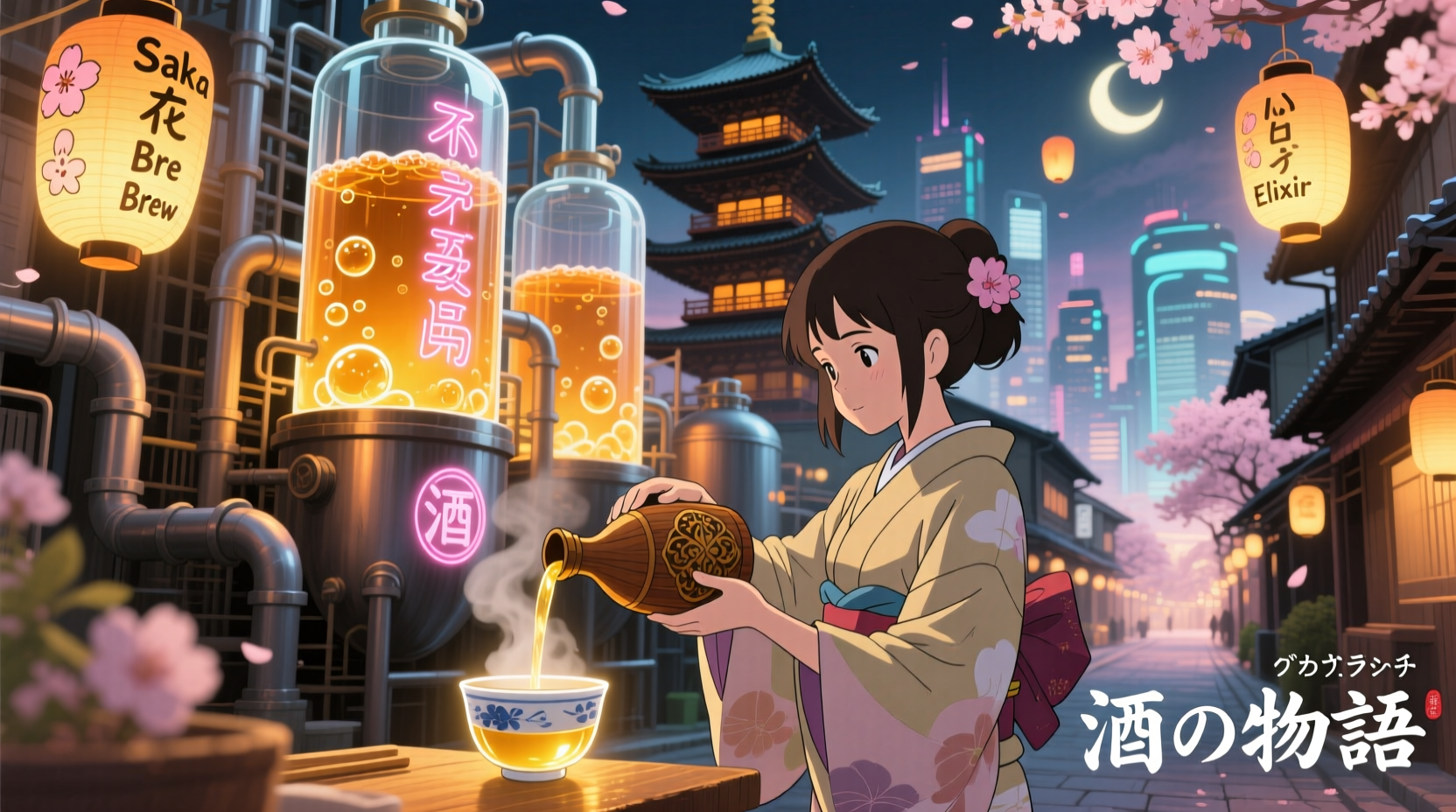
Sake appears in anime not as a generic “alcoholic drink,” but as a vessel for unspoken communication. Its presentation follows precise visual grammar: the small, square masu cup, the ceramic ochoko, the wooden kiribako box holding chilled bottles, the careful tilt of the bottle to pour for another before oneself. These details are rarely accidental. In Barakamon, protagonist Seishū Handa’s first genuine connection with island elders occurs over shared sake poured into mismatched cups—a visual shorthand for acceptance into community. The act of pouring for others (osake wo tsuguru) signals deference; refusing a refill may indicate emotional withdrawal, while accepting a second round often marks a turning point in trust.
This ritualism mirrors real Japanese etiquette. According to Dr. Aiko Tanaka, cultural anthropologist at Waseda University, “Sake in anime isn’t dramatized for its effects—it’s dramatized for its timing. The moment someone lifts the cup, the scene shifts from exposition to intimacy. That pause before the first sip? That’s where subtext lives.”
“Anime doesn’t show people getting drunk to be funny or chaotic. It shows them choosing when to lower their guard—and that choice is always culturally legible.” — Dr. Aiko Tanaka, Cultural Anthropologist, Waseda University
In Golden Kamuy, sake serves dual functions: as historical artifact (characters debate Edo-period brewing methods while tasting wild-grape-infused variants) and as diplomatic tool (Ainu leader Asirpa shares fermented salmon roe liquor with Japanese soldiers to establish temporary truce). Here, alcohol becomes intercultural infrastructure—not a solvent of difference, but a medium for translation.
Fictional Breweries: World-Building Through Fermentation
Few anime dedicate entire arcs to brewing—but those that do treat the process with near-sacred precision. Mushishi’s two-episode arc “The Light That Burns the Night” centers on a remote village whose sake brewery produces a luminous, bioluminescent brew using a rare mushi (spirit) symbiont. The fermentation tanks hum softly; the rice is polished to 45% retention; the master brewer measures ambient humidity with a hand-carved hygrometer. Though fantastical, every detail aligns with real toji (master brewer) practices: seasonal timing, water quality obsession, and the belief that sake reflects terroir—land, climate, and human intention.
Similarly, March Comes in Like a Lion features recurring scenes at “Kamogawa Brewery,” a fictional Kyoto-based operation run by Rei Kiriyama’s estranged uncle. The brewery isn’t backdrop—it’s psychological architecture. When Rei visits during winter, he watches workers steam rice under heavy cloth, then cool it on wooden trays while chanting rhythmic work songs (min’yō). These sequences aren’t filler; they model patience, repetition, and quiet resilience—qualities Rei must internalize to heal. The brewery’s physical space—the damp stone floor, the scent of koji mold, the low thrum of temperature-controlled rooms—becomes a sensory counterpoint to Rei’s mental chaos.
Tip: When analyzing an anime brewery scene, ask: What stage of brewing is shown? (Rice polishing? Koji inoculation? Fermentation?) Each stage carries symbolic weight—preparation, transformation, maturation—that mirrors character development.Alcohol as Narrative Catalyst: From Nomikai to Breakdown
The nomikai—the post-work drinking party—is one of anime’s most reliable narrative engines. But its function goes beyond comic relief. In Shirobako, the animation studio’s year-end nomikai unfolds across three episodes, each revealing layered tensions: junior staff nervously toasting seniors, veterans masking burnout with laughter, producers negotiating deadlines over lukewarm beer. The setting—a cramped izakaya with paper lanterns and worn tatami—becomes a pressure-release valve where hierarchy softens, confessions surface, and alliances form. Crucially, no one gets wildly intoxicated; instead, lowered inhibitions allow honesty that daytime professionalism forbids.
This reflects real workplace dynamics. A 2022 survey by Japan’s Ministry of Health found that 73% of employees aged 25–44 consider nomikai essential for team cohesion—even as younger cohorts increasingly opt for non-alcoholic alternatives. Anime captures this tension: Aggretsuko’s Retsuko vents through death metal karaoke after office drinks, her rage channeled, not unleashed. Her beer isn’t fuel for chaos—it’s permission to feel what her job requires her to suppress.
Contrast this with Monster, where alcohol signals moral fracture. Johan’s adoptive father, Director Heinrich, hosts lavish wine tastings while orchestrating atrocities. His cellar isn’t a place of communion but of curated control—each vintage selected to impress, intimidate, or manipulate. Here, alcohol isn’t relational; it’s transactional power made liquid.
Authenticity vs. Stylization: What Anime Gets Right (and Wrong)
Anime’s portrayal of alcohol balances reverence with creative license. To assess accuracy, consider three dimensions: technical process, social context, and physiological realism.
| Aspect | Accurate Depictions | Common Liberties |
|---|---|---|
| Production | • Accurate rice polishing ratios (e.g., Darwin’s Game’s brief brewery flashback) • Correct koji mold growth timelines shown in Mushishi |
• Instant fermentation (e.g., Nichijou’s gag where sake bubbles appear in seconds) • Human-sized sake barrels used as furniture without structural concern |
| Social Use | • Pouring for others before self • Age-based drinking norms (e.g., high schoolers discreetly sipping chu-hi in K-On!) |
• Teen characters openly ordering whiskey neat in public bars • Excessive vomiting or blackout scenes (rare in mainstream anime outside satire) |
| Effects | • Subtle facial flushing, relaxed posture, softer speech patterns • Gradual shift from formality to familiarity |
• Cartoonish spinning eyes or exaggerated stumbling (mostly in comedy like Gintama) • Instant mood shifts (e.g., “one sip = sudden confession”) |
These liberties aren’t failures—they’re stylistic choices. Gintama uses absurd drunkenness to parody corporate culture; its characters pass out mid-sentence not to depict alcoholism, but to lampoon how Japanese workplaces valorize endurance over well-being. The exaggeration makes the critique sharper.
Real-World Resonance: How Anime Shapes Perception
A mini case study illustrates anime’s cultural ripple effect. In 2021, the historic Iwatsuru Sake Brewery in Niigata reported a 40% sales increase among customers aged 18–34 after its appearance in Laid-Back Camp (episode 12). The episode featured main character Rin visiting the real brewery, learning about yamahai fermentation, and sampling unpasteurized nama-zake. Staff noted that visitors didn’t just buy bottles—they asked detailed questions about rice varieties and seasonal brewing cycles. “They came because Rin did,” said brewery tour guide Yuki Sato. “But they stayed because they understood why she cared.”
This phenomenon—dubbed “anime tourism” or seichi junrei—extends to alcohol culture. In Kyoto, the Fushimi district saw a 28% rise in sake-tasting workshop bookings after March Comes in Like a Lion aired its brewery arc. Local shops began offering “Rei Kiriyama Sets”: chilled sake served in simple ceramic cups, accompanied by pickled vegetables—exactly as depicted. Anime doesn’t just reflect culture; it curates engagement with it.
Practical Guide: Reading Alcohol Scenes Like a Cultural Analyst
To move beyond passive viewing, use this step-by-step framework when alcohol appears in anime:
- Identify the beverage type: Is it sake (rice-based, often warm/cold), shōchū (distilled, usually served with water/ice), beer (everyday, social), or something fictional? Each carries distinct class, regional, and generational associations.
- Map the setting: Izakaya (casual, communal), home (intimate, familial), office (hierarchical, performative), shrine festival (ritual, celebratory). Location dictates behavioral rules.
- Track the pour: Who pours for whom? Does someone refuse a refill? Is a cup refilled before emptying? These gestures reveal power dynamics and emotional states.
- Note the temperature: Warm sake suggests comfort or tradition; chilled sake implies refinement or modernity; room-temperature beer signals informality.
- Listen to the silence: What isn’t said while glasses clink? The pause before the first sip often holds more narrative weight than dialogue.
FAQ
Why do so many anime characters drink sake instead of beer or whiskey?
Sake carries unique cultural resonance in Japan—it��s tied to Shinto rituals, seasonal celebrations (like cherry blossom viewing), and artisanal heritage. Its production involves collaboration, patience, and environmental sensitivity—qualities anime frequently links to character growth. Beer signifies everyday sociability; whiskey suggests Western influence or individualism. Sake, by contrast, embodies collective memory and quiet craftsmanship.
Is it realistic for high school students to drink in anime?
Legally, no—Japan’s drinking age is 20. But anime often depicts teens sipping low-alcohol chu-hi (shōchū-based cocktails) or diluted sake at supervised family events (e.g., New Year’s). These scenes acknowledge real adolescent curiosity while avoiding glorification—characters usually express nervousness or receive gentle correction, reinforcing social boundaries.
Do fictional breweries ever become real businesses?
Rarely as direct spin-offs, but they inspire real-world collaborations. After Mushishi’s bioluminescent sake arc, the real-life Dewasansan Brewery created a limited-edition “Mushi Light” sake using natural yeast strains, with proceeds funding mycological research. The label featured Ginko’s silhouette—proof that fictional world-building can catalyze tangible cultural investment.
Conclusion
Alcohol in anime is never merely liquid. It’s condensed history in a ceramic cup, silent negotiation in a shared pour, inherited wisdom bubbling in a fermentation tank. When we watch a character lift sake to the moon, or trace the condensation on a cold beer bottle after a long day, we’re witnessing a language older than dialogue—rooted in rice, water, time, and human need for connection. This isn’t escapism; it’s cultural literacy in motion. Next time you see a brewery exterior fade into focus, or hear the delicate *clink* of ochoko meeting masu, pause. Notice the steam rising from the rice, the way light catches the amber liquid, the slight hesitation before the first sip. These details weren’t added for realism alone—they were chosen to tell you something true about resilience, respect, or release. Anime invites us not just to watch stories, but to taste their texture. So raise your glass—not to intoxication, but to attention. To the quiet mastery behind every frame. To the centuries of craft distilled into a single, perfect scene.
💬 Have you noticed a sake scene that changed how you see a character—or even tried a new brew because of anime? Share your observations in the comments. Let’s map the cultural currents flowing from screen to sake cup.