
Investing in the stock market offers substantial rewards, but it also carries inherent risks. Market volatility can erode gains quickly, especially during economic downturns or geopolitical shocks. One of the most effective tools investors use to hedge against downside risk is the put option. When used strategically, put options allow you to lock in selling prices, limit losses, and maintain control over your portfolio—even in turbulent markets.
Unlike speculative trading, which seeks profit from price swings, using put options for risk management focuses on protection. This guide walks through the process of buying put options with precision, clarity, and a focus on long-term portfolio safety.
Understanding Put Options: The Basics
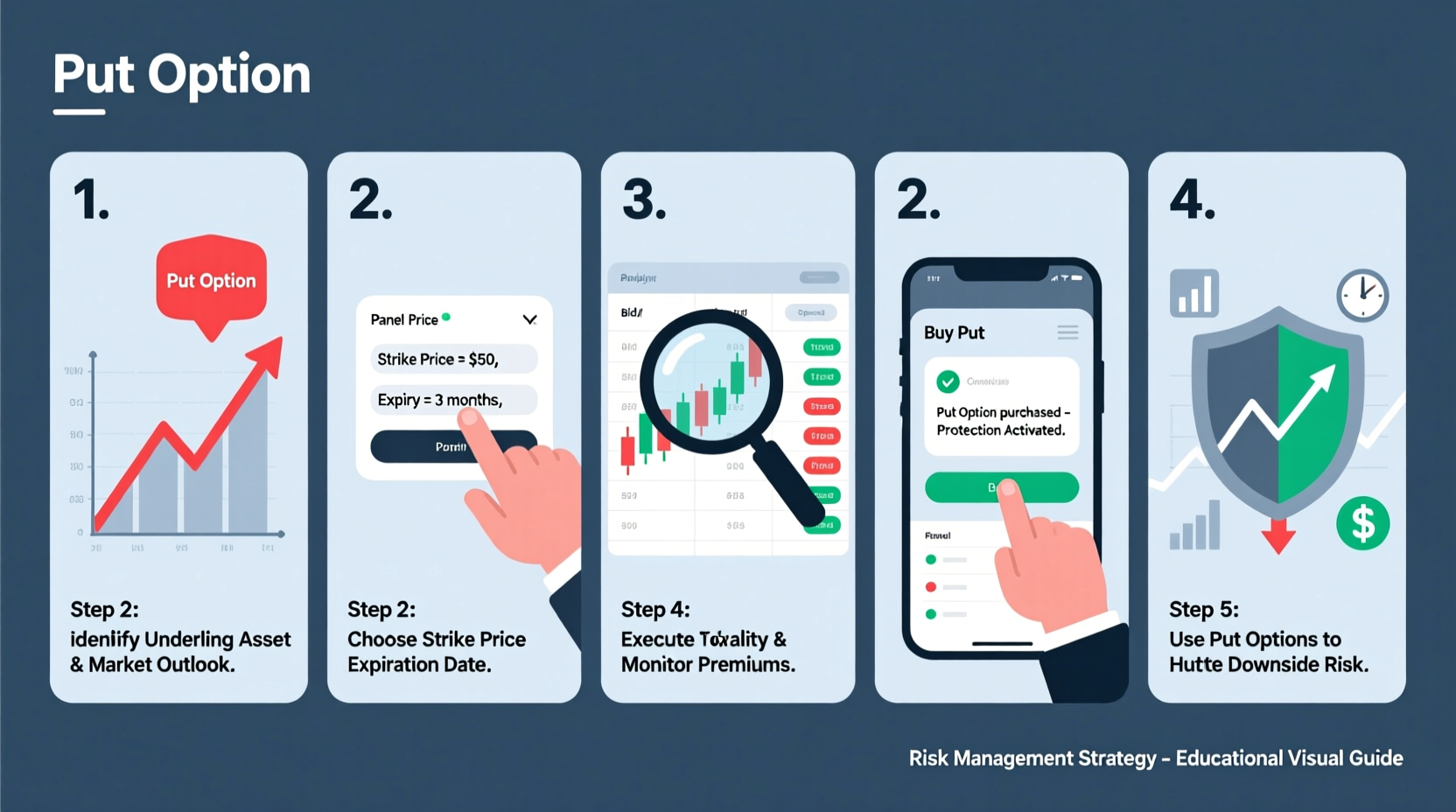
A put option gives the buyer the right—but not the obligation—to sell a specific asset (usually shares of stock) at a predetermined price (the strike price) before a set expiration date. You pay a premium for this right. If the stock price falls below the strike price, the put increases in value, allowing you to either sell at the higher strike price or profit from the option’s appreciation.
This makes put options ideal for downside protection. For example, if you own 100 shares of a company trading at $150 and are concerned about a potential drop, you can buy a put option with a $145 strike price. If the stock falls to $130, your put option becomes more valuable, offsetting some or all of the loss in your stock position.
“Put options are like insurance policies for your portfolio. You pay a small premium today to avoid catastrophic losses tomorrow.” — Dr. Laura Simmons, Financial Risk Analyst, CFA Institute
The Strategic Purpose of Puts in Risk Management
Many investors associate options with high-risk speculation, but their original design was for hedging. Institutional investors, pension funds, and experienced traders routinely use puts to manage exposure without selling assets outright. This is particularly useful when:
- You believe in a company’s long-term prospects but expect short-term weakness.
- You hold concentrated positions and want to reduce tail risk.
- You’re approaching retirement and need to preserve capital.
- Macroeconomic indicators suggest increased market volatility.
By purchasing puts, you retain ownership of your stocks while gaining protection. This avoids triggering taxable events that would occur with a full sale, and keeps you positioned for recovery when the market rebounds.
Tip: Use puts as temporary hedges during earnings season, Fed announcements, or election cycles—periods historically linked to heightened volatility.Step-by-Step Guide to Buying Put Options
Buying a put option for risk management isn’t complicated, but it requires careful planning. Follow these six steps to execute effectively:
- Evaluate Your Portfolio’s Exposure
Determine which holdings are most vulnerable to downside moves. Focus on high-beta stocks, sectors under pressure, or positions that represent a large percentage of your portfolio. - Decide on Protection Duration
Choose an expiration date that aligns with your risk window. Short-term hedges (30–60 days) are cheaper but require renewal. Longer-dated puts (90+ days) cost more but provide extended coverage. - Select the Strike Price
At-the-money (ATM) puts (strike near current stock price) offer strong protection but are expensive. Out-of-the-money (OTM) puts (lower strike) are cheaper but only activate if the stock drops significantly. A common strategy is buying OTM puts 5–10% below the current price. - Calculate Position Size
One put contract covers 100 shares. If you own 200 shares, buy two contracts. Avoid over-hedging, which unnecessarily drains capital through premiums. - Place the Trade
Log into your brokerage platform, navigate to options, select the underlying stock, choose “puts,” filter by expiration and strike, and place a limit order to avoid overpaying for the premium. - Monitor and Adjust
Track the option’s delta and time decay (theta). If the threat passes, consider selling the put to recoup part of the premium. If risk increases, roll the put forward or down to a lower strike.
Real-World Example: Protecting a Tech Stock Position
Consider an investor who owns 100 shares of a major tech company at $200 per share. The stock has risen sharply over the past year, but upcoming regulatory hearings have raised concerns. Instead of selling and realizing capital gains, the investor buys one put option:
- Stock: XYZ Corp @ $200
- Put Option: Strike $180, Expiration in 45 days
- Premium Paid: $5.00 per share ($500 total)
Two weeks later, negative testimony leads to a sell-off. The stock drops to $165. Without the put, the investor would face a $3,500 paper loss. With the put:
- The intrinsic value of the put is now $15 ($180 – $165)
- Total put value: ~$1,500 (before time decay)
- Net loss reduced by $1,000 after accounting for the $500 premium
The investor maintains long-term conviction while minimizing damage. They can sell the put for a gain, hold it for further protection, or even exercise it if desired.
Do’s and Don’ts of Using Put Options
| Do’s | Don’ts |
|---|---|
| Use puts selectively on high-risk positions | Buy puts on every holding—this is costly and inefficient |
| Set clear objectives: e.g., “protect against a 15% drop” | Treat puts as speculative tools to bet on crashes |
| Review hedges monthly and adjust as needed | Forget about expired options and repeat unnecessary purchases |
| Compare implied volatility to historical levels before buying | Buy puts during panic spikes when premiums are inflated |
Frequently Asked Questions
Can I lose more than the premium I pay for a put?
No. When you buy a put option, your maximum loss is limited to the premium paid. This is one of the key advantages—it defines your risk upfront.
What happens if my put expires worthless?
If the stock stays above the strike price at expiration, the put expires with no value. You lose the premium, but your stock position remains intact. Think of it as paying for insurance that wasn’t needed.
Are there tax implications when I buy or sell a put?
Premiums paid are not tax-deductible. Gains from selling puts are typically treated as capital gains. Consult a tax advisor, as rules vary based on holding period and account type (e.g., taxable vs. IRA).
Final Checklist Before Buying a Put
Checklist:- Identified the asset needing protection
- Assessed the likelihood and timing of downside risk
- Chosen appropriate expiration (not too short, not too far out)
- Selected a strike price aligned with risk tolerance
- Calculated total cost and impact on portfolio liquidity
- Placed a limit order to avoid overpaying on premium
- Scheduled a review date before expiration
Conclusion: Take Control of Your Investment Risk
Market downturns are inevitable. What separates disciplined investors from reactive ones is preparation. Buying put options is not about fear—it’s about prudence. It allows you to stay invested in assets you believe in while shielding yourself from unpredictable drops.
Like any financial tool, puts must be used wisely. Overuse erodes returns; underuse leaves you exposed. But when applied with intention, they become a cornerstone of intelligent risk management. Start small, protect a single position, and refine your approach over time.
🚀 Ready to protect your portfolio? Review your top three holdings today and assess whether a put option could serve as a strategic safeguard. Share your experience or questions in the comments—let’s build smarter, safer investing habits together.