
Determining your car’s actual worth isn’t just about checking a single website or relying on memory. Whether you're preparing to sell, trade in, or simply want to understand your vehicle’s financial standing, an accurate valuation helps you avoid overpaying or underselling. Market fluctuations, regional demand, condition variances, and hidden mechanical issues all influence what your car is truly worth. This guide breaks down the process into clear, actionable steps backed by industry standards and real-world data.
Understanding the Difference Between Book Value and Real Market Value
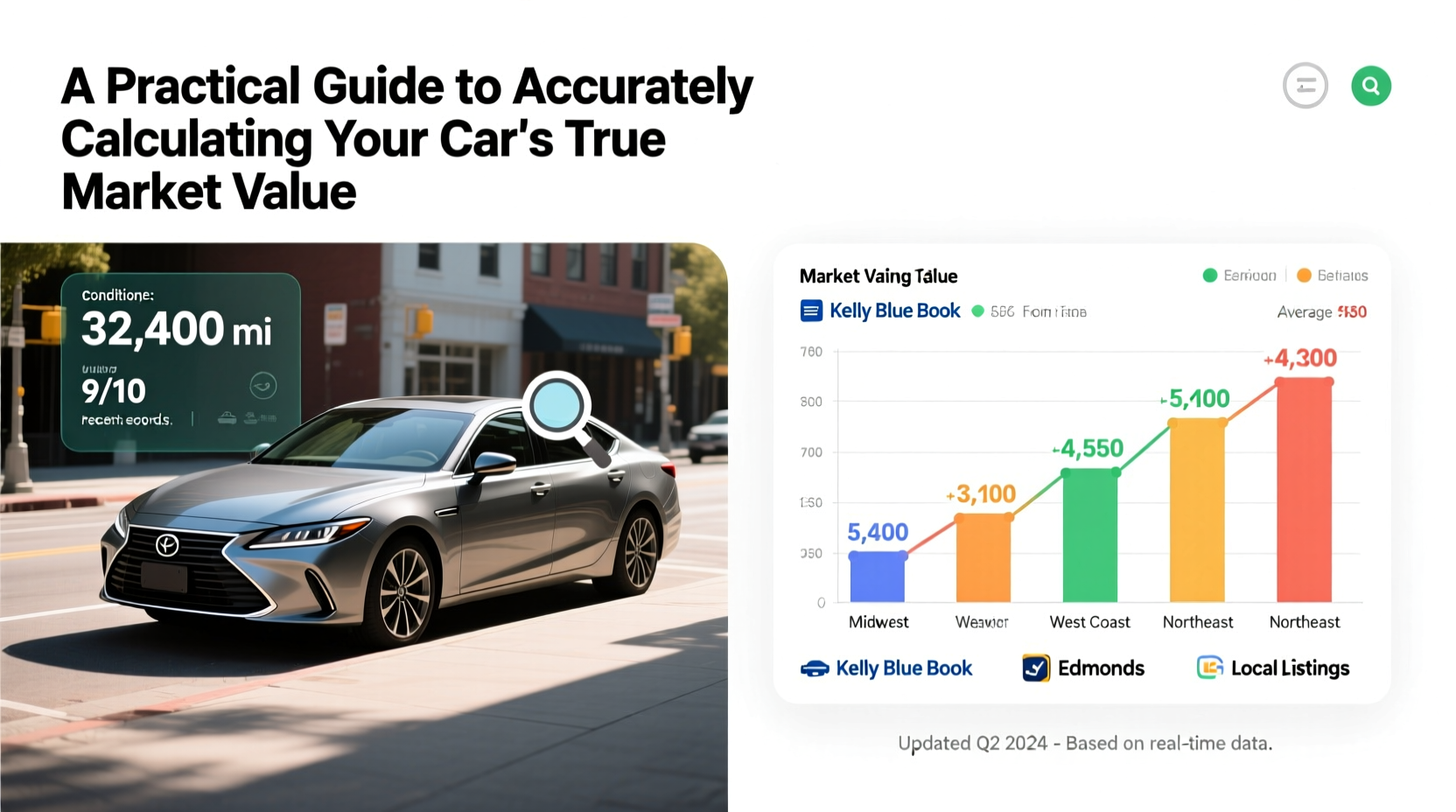
Many people assume that a car��s “book value” — such as those listed on Kelley Blue Book (KBB) or Edmunds — reflects what they’ll actually receive when selling. In reality, book values are estimates based on averages and ideal conditions. The real market value is what a willing buyer will pay for your specific car, right now, in its current condition, location, and configuration.
Book values serve as a starting point, but several factors can cause deviations:
- Geographic demand: Trucks may sell faster in rural areas; hybrids command higher prices in cities.
- Vehicle history: Accidents, title branding, or inconsistent maintenance records reduce value.
- Trim level and options: A fully loaded model with navigation, leather, and sunroof can be worth thousands more than a base trim.
- Mileage outliers: Cars significantly above or below average annual mileage (typically 12,000 miles/year) lose value faster.
“Book values are helpful benchmarks, but the real test is what buyers are offering in your local market.” — David Lin, Senior Analyst at AutoValuation Insights
Step-by-Step Guide to Calculating Your Car’s True Market Value
To arrive at an accurate estimate, follow this structured approach. Each step builds upon the last, ensuring no critical detail is overlooked.
- Gather your vehicle details: Note the year, make, model, trim, engine size, transmission, drivetrain, VIN, and total mileage.
- Assess the car’s condition honestly: Use standardized categories—Excellent, Good, Fair, Poor—based on paint, interior wear, mechanical performance, and tire tread.
- Check multiple pricing guides: Enter your data into KBB, Edmunds, NADA, and Consumer Reports. Record each estimated retail, private-party, and trade-in value.
- Search active local listings: Visit platforms like Autotrader, CarGurus, and Facebook Marketplace. Filter for similar vehicles in your area and note asking prices.
- Analyze recent sales: Use tools like Hagerty’s Price Guide (for classics) or Black Book (used by dealers) to see what comparable cars have actually sold for.
- Adjust for condition and features: Add or subtract value based on modifications, service history, accident reports, and optional equipment not included in standard valuations.
- Determine your final range: Combine all data to establish a realistic low, mid, and high estimate based on how quickly you need to sell.
Key Factors That Impact Your Car’s Valuation
Even with identical specs, two cars of the same model and age can differ drastically in value. Here’s what matters most:
| Factor | Impact on Value | How to Evaluate |
|---|---|---|
| Maintenance Records | + | Full service history increases trust and resale price by up to 10%. |
| Accident History | - | Use Carfax or VINCheck; structural damage reduces value by 20–30%. |
| Aftermarket Modifications | +/- | Performance upgrades may appeal to niche buyers; non-factory audio systems often lower perceived value. |
| Tire Tread & Age | +/- | Tires with less than 4/32\" tread or older than 6 years reduce value. |
| Interior Condition | - | Stains, burns, or cracked dashboards can cut $500–$1,500 from offers. |
Real Example: Valuing a 2018 Honda CR-V
Sarah in Denver wanted to sell her 2018 CR-V EX-L with 68,000 miles. It had minor rear bumper scratches, full service records, and factory warranty expired. She started with KBB: $17,990 (private party, good condition). But she didn’t stop there.
She searched CarGurus and found five similar models nearby priced between $17,500 and $19,200. One had low mileage but no service history; another was priced high but included roof racks and new tires. She adjusted her expectation downward by $300 for the bumper damage but added $400 for having new winter tires mounted on steel rims.
Her final asking price: $18,200. She received three offers within a week and sold it for $18,000 — well above the average trade-in offer of $16,300 from local dealerships.
Essential Checklist Before Pricing Your Vehicle
Before listing or negotiating, complete this checklist to ensure accuracy and maximize returns:
- ✅ Obtain a vehicle history report (Carfax or NMVTIS)
- ✅ Collect and organize all maintenance and repair receipts
- ✅ Clean the car thoroughly inside and out
- ✅ Fix minor cosmetic issues (e.g., replace burnt bulbs, repair small dents)
- ✅ Take high-quality photos from multiple angles
- ✅ Verify tire condition and fluid levels
- ✅ Test drive to confirm smooth operation
- ✅ Compare at least three valuation sources
- ✅ Review at least ten local listings for similar vehicles
- ✅ Set a competitive price within 5% of the market median
Frequently Asked Questions
Does my car lose value the moment I drive it off the lot?
Yes, but not as dramatically as once believed. Modern data shows depreciation starts immediately, with an average loss of 10–15% within the first month and around 20% by the end of the first year. After that, depreciation slows to roughly 10% per year.
Should I rely solely on KBB or Edmunds?
No single source should be used in isolation. These tools provide useful baselines, but they don’t account for hyper-local demand, seasonal trends, or emotional buyer reactions to presentation. Cross-reference with live market data for best results.
Can I increase my car’s value before selling?
Certain improvements yield strong returns. Replacing worn tires, detailing the interior, and fixing check-engine lights typically return 200–300% of their cost in increased sale price. Avoid expensive repairs unless they affect safety or drivability.
Final Thoughts: Knowledge Is Your Best Negotiating Tool
Knowing your car’s true market value transforms you from a hopeful seller into an informed participant in the transaction. You’ll avoid leaving money on the table with dealers and prevent prolonged listing periods from overpricing. More importantly, you gain confidence — whether you’re trading in, selling privately, or simply tracking your asset’s worth over time.
🚀 Ready to find your car’s real value? Start by entering your VIN into three pricing guides today, then compare results with local listings. Within an hour, you’ll have a precise, data-backed estimate that puts you ahead of 90% of sellers.