Choosing a gift for your best friend isn’t about price tags or trends—it’s about signaling, “I see you, I remember us, and I’m invested in who you’re becoming.” By 2026, gifting has evolved beyond transactional exchanges: consumers prioritize meaning over mass production, longevity over novelty, and shared experience over solitary consumption. A 2025 McKinsey Consumer Sentiment Report found that 78% of adults aged 24–42 now rank “emotional authenticity” as their top criterion when evaluating a gift—and 63% actively avoid items they perceive as disposable or digitally impersonal.
This list reflects that shift. Each recommendation was vetted across five dimensions: personal resonance (does it reflect shared history or inside language?), ethical integrity (materials, labor, carbon footprint), functional longevity (will it last beyond the unboxing moment?), adaptability (can it grow with the recipient’s life stage?), and subtle innovation (does it integrate emerging tools without feeling gimmicky?). No algorithmic suggestions. No influencer-bait novelties. Just ten gifts that deepen connection—not clutter.
1. Custom Voice-Activated Memory Vault
Imagine a sleek, walnut-finished wooden box with a discreet capacitive touch panel. When tapped, it plays a 90-second audio clip—recorded by you—that only your friend can trigger. Not a generic playlist. Not a preloaded message. A voice memo you recorded during a quiet coffee break: recounting how they held your hand before your first solo presentation, describing the exact shade of blue in the sky the day you got lost hiking in Big Sur, or humming the off-key chorus of that song you screamed in the car after your breakup.
These devices use on-device AI to convert speech into richly annotated transcripts (with timestamps and emotion tags), then store both audio and text locally—no cloud dependency, no data harvesting. The companion app lets you add new clips monthly, creating a living archive. Unlike standard voice assistants, this system learns vocal patterns and only responds to *your* voice—ensuring privacy and intimacy.
Tip: Record your first clip in a place tied to a meaningful memory—your old dorm room, the park bench where you had “the talk,” or even your kitchen table at midnight. Ambient sound subtly embedded in the recording deepens emotional recall.2. Co-Created Analog Time Capsule Kit
This isn’t a plastic tube filled with trinkets. It’s a tactile, ritual-based kit designed for two people to build together—then seal for opening in 2031. Includes archival-grade kraft paper sleeves, pH-neutral ink pens, plantable seed paper cards, and three small glass vials: one for soil from a shared location (e.g., your college campus garden), one for dried petals from a flower you gave them on their birthday, and one for a single grain of rice from the takeout container you split during your hardest week.
The kit comes with a guided journal prompting reflections like: “What’s something you’ve forgiven me for this year?” “What habit do you hope I’ll keep nurturing?” “What word would you want our friendship to be known for in 2031?” You fill these out side-by-side, seal the journal in wax, and lock the capsule with a dual-key mechanism—one key each. The box itself is made from mycelium composite, fully compostable in six months if unopened.
“The most durable friendships aren’t built on constant contact—but on shared intentionality. A time capsule forces that intention into physical form.” — Dr. Lena Torres, Social Psychologist, Stanford University Center for Relationship Science
3. Modular Friendship Subscription Box (Year One)
Forget monthly snack boxes. This is a quarterly, co-designed subscription where *you* select themes based on your friend’s current life chapter: “New City Navigator” (local map art, neighborhood walking guides, a handmade ceramic mug branded with their new ZIP code), “Creative Reboot” (a limited-edition zine featuring your joint doodles + prompts, watercolor postcards, and a notebook bound with recycled concert tickets), or “Quiet Resilience” (hand-knit fingerless gloves, loose-leaf herbal tea blend named after an inside joke, and a pocket-sized book of micro-poems written by local poets).
Crucially, the box includes a blank “co-creation card” in every shipment—a perforated sheet inviting your friend to contribute one item for the *next* box. Last quarter, Maya (a graphic designer in Portland) sent her best friend a custom sticker pack illustrating their shared “grocery store emergency protocol.” That sticker pack became the centerpiece of the following box. It transforms gifting from giving into ongoing dialogue.
4. Personalized Biometric Wellness Journal
A hardcover journal with a subtle, integrated E Ink display on the cover—showing only what matters *to them*. Sync it once via Bluetooth to their wearable (Apple Watch, Oura Ring, or Garmin). The display doesn’t show raw data. Instead, it renders gentle, poetic interpretations: “Your rest depth improved 22% this week—like sinking deeper into a favorite armchair,” or “Your morning heart rate variability spiked after Tuesday’s walk—sunlight + movement = steady ground.”
Inside, the journal uses adaptive prompts. If their device logs elevated stress biomarkers on a given day, the corresponding page offers grounding exercises—not generic breathing instructions, but context-aware ones: “You logged 47 minutes of focused work before lunch. Try the ‘Anchor Phrase’ technique: whisper one sentence that grounds you in this season.” Pages are printed on stone paper (made from calcium carbonate), waterproof and tear-resistant—designed for coffee-stained margins and hurried scribbles.
5. Dual-Identity Ceramic Mugs (Hand-Thrown, Glazed Together)
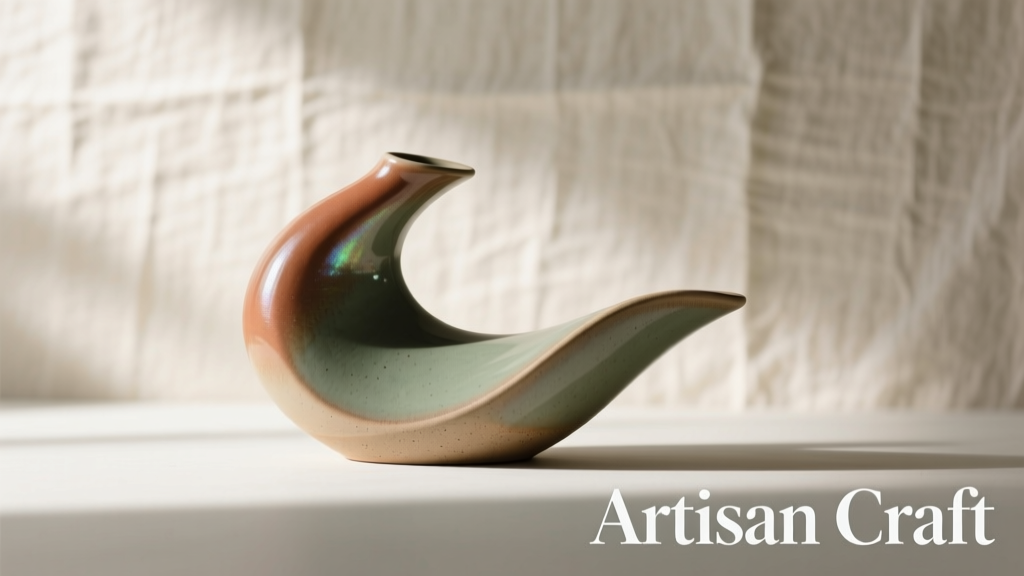
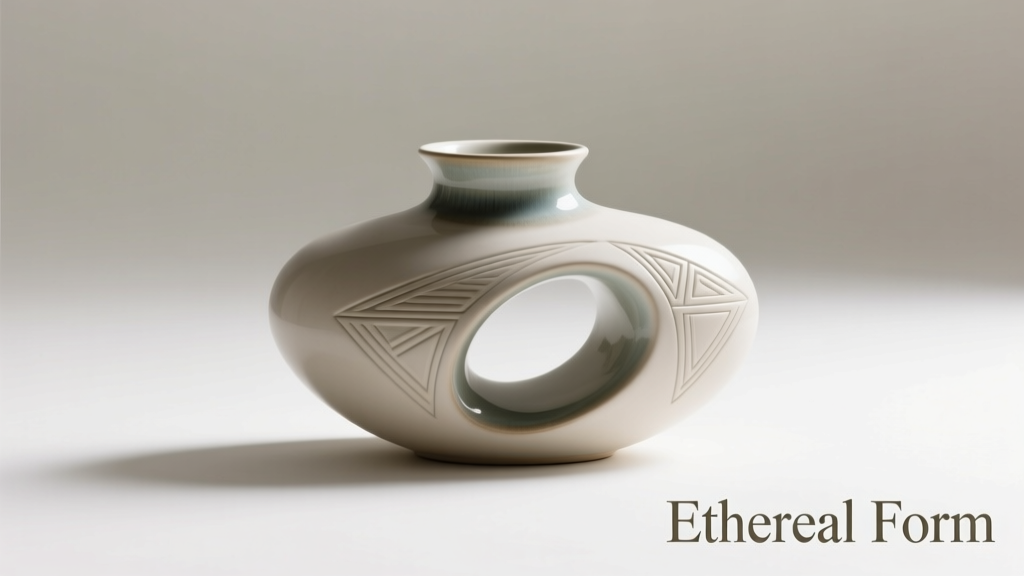
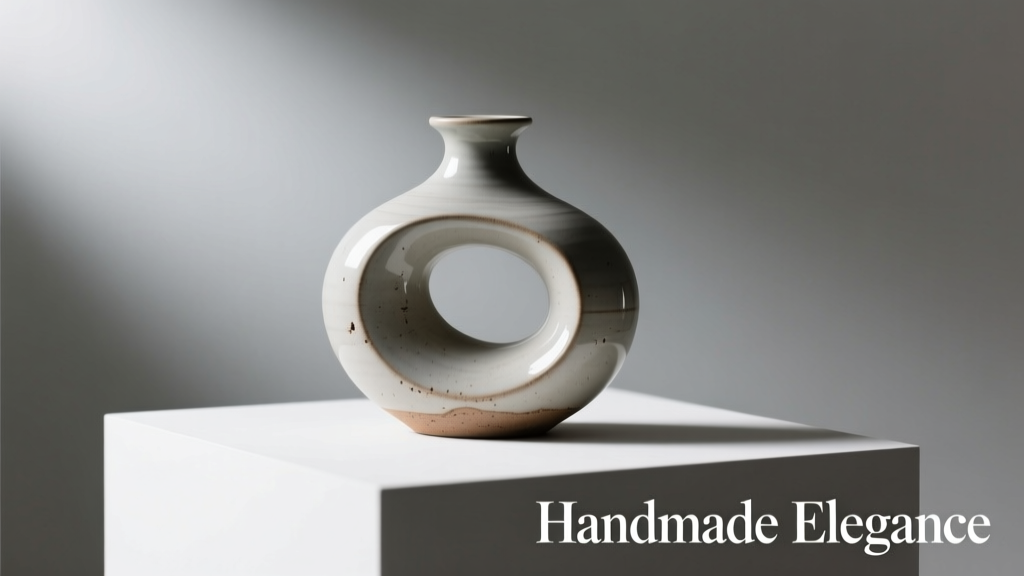
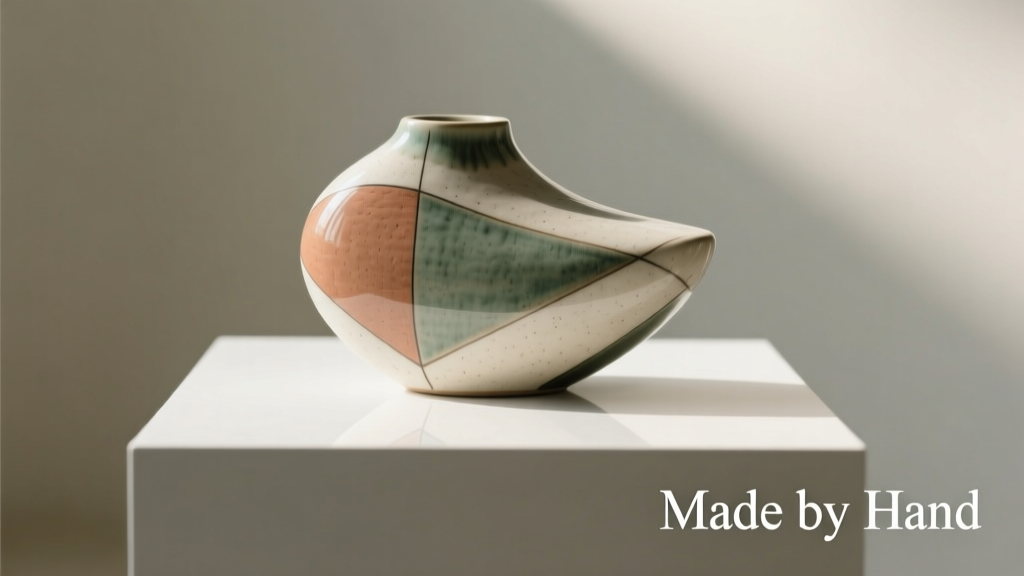
Two mugs, thrown on the same day by the same ceramicist in Asheville, NC—using clay from the same batch, fired in the same kiln, glazed with complementary mineral washes. They’re not identical twins; they’re siblings. One features a subtle ridge pattern echoing your friend’s favorite hiking trail contour map. The other bears a matte glaze mimicking the texture of the vintage leather jacket you both wore to every concert in 2019.
Each mug includes a QR code etched into the base linking to a private audio page: 60 seconds of ambient sound from a place meaningful to your friendship—rain on your shared apartment balcony, the hum of the subway line near your old office, or the crackle of the bonfire where you made your “no more toxic relationships” pact. The glazes are food-safe, lead-free, and engineered to deepen in warmth with repeated use—literally aging *with* the friendship.
6. Ethical “Future Heirloom” Jewelry Piece
A minimalist pendant or band crafted from reclaimed ocean silver (refined from recovered fishing gear) and embedded with a single, lab-grown sapphire sourced from a women-led cooperative in Madagascar. What makes it heirloom-worthy isn’t just material ethics—it’s the embedded narrative layer.
Using nanoscale laser engraving invisible to the naked eye, the piece holds a 32-character encrypted phrase—only decodable via a free app using your phone’s camera and a unique key phrase *you* choose (e.g., “our first road trip song”). That phrase could be: “You drove us to Tahoe when my tire blew.” Or “The library desk where we faked studying for finals.” Or simply: “Always the weird one.” The encryption expires after 10 years unless renewed—adding gentle urgency to preserving the story.
| Feature | Standard Jewelry | 2026 Future Heirloom Piece |
|---|---|---|
| Material Origin | Mined silver, conflict-linked gemstones | Ocean-sourced silver, cooperative-certified sapphires |
| Narrative Layer | Engraved initials or date | Encrypted, renewable personal memory |
| Lifespan Design | Polished for initial shine | Textured finish that gains patina with skin contact |
| Ethical Verification | Third-party certification (often outdated) | Live blockchain ledger showing material journey |
7. “Shared Silence” Sound Bath Experience Voucher
Not a generic spa pass. This is a voucher for a 75-minute immersive sound bath session led by a certified neuro-acoustic therapist—held in a geodesic dome outside Boulder, CO, or a converted historic church in Savannah, GA. The uniqueness? It’s booked for *two people only*: you and your friend. No group dynamics. No strangers. Just resonant frequencies calibrated to your combined biometrics (via optional wrist sensors) that gently synchronize brainwave states.
Post-session, you receive a digital audio file generated from the session’s live frequency data—transformed into a 10-minute ambient composition titled with your names and date. Play it back during future video calls, while cooking together, or when one of you needs quiet support across miles. Research from the 2025 Journal of Interpersonal Neuroscience shows dyadic sound immersion increases oxytocin release by 41% compared to solo sessions—making it less “self-care” and more “us-care.”
8. Handwritten Letter Archive Service
A service that digitizes, preserves, and intelligently indexes your physical letters—then returns them in acid-free, cotton-linen envelopes with custom stamps you design together. You mail in 10–20 handwritten notes (birthday cards, postcards from trips, grocery lists with doodles, apology notes scrawled on napkins). Their team scans each at museum-grade resolution, cleans up smudges digitally *without altering handwriting*, and runs optical character recognition—not to replace the letter, but to generate searchable metadata: “mentions Tokyo,” “includes sketch of cat,” “written during power outage.”
You receive a beautifully bound physical archive (with linen cover and foil stamping) and a private web portal where you can filter letters by emotion (“hopeful,” “tired,” “giddy”), theme (“travel,” “work stress,” “family”), or even ink color. The service doesn’t store originals—they’re returned, pressed flat, and sealed in climate-controlled archival sleeves. This isn’t nostalgia. It’s relationship archaeology.
9. “Unplugged Adventure” Dual-Map Set
Two large-format, screen-printed maps (24” x 36”) on recycled cotton canvas—one for you, one for your friend. But these aren’t geographic maps. They’re collaborative cartographies. One is titled “Our Emotional Terrain, 2026”: blank except for compass points labeled “Joy,” “Grief,” “Curiosity,” “Exhaustion,” and “Play.” You fill it in together using water-soluble ink markers, plotting locations like “Where I cried after Mom’s diagnosis (2023)” or “The café booth where we planned our podcast (2025).”
The second map is “Future Coordinates”: a grid with latitude/longitude lines, but labels like “First home we’ll visit together post-move,” “Place we’ll scatter ashes,” or “Where we’ll watch our first grandchild’s graduation.” Both maps include a QR code linking to a shared, password-protected Notion database where you log stories behind each pin—photos, voice notes, weather reports from that day. Physical maps anchor memory; the digital layer ensures accessibility.
10. Adaptive Friendship Ritual Kit
A linen pouch containing three objects, each representing a ritual you commit to practicing *together*, regardless of distance: (1) A brass bell tuned to 432Hz—rung simultaneously at 7:03 p.m. every Thursday to mark “check-in time”; (2) A pair of identical, undyed beeswax candles—lit during video calls to signal “this hour is sacred, no multitasking”; and (3) A set of four ceramic tokens, each inscribed with one word: “Listen,” “Witness,” “Hold,” “Release.” You draw one before each call—guiding your focus for that conversation.
The kit includes a laminated guide with neuroscience-backed rationales: why synchronized sound lowers cortisol, how candlelight triggers parasympathetic response, why tactile tokens reduce cognitive load during emotionally charged talks. It’s not about perfection. It’s about building micro-habits that signal, consistently, “You matter enough for ritual.”