
The history of the NFL is as much defined by impenetrable defenses as it is by explosive offenses. While touchdowns make headlines, it’s often the unsung heroes on the defensive side who win championships and etch their names into legend. Some units didn’t just stop opponents—they dismantled them, instilled fear, and altered how the game was played. These are the squads that set new standards for toughness, coordination, and relentless execution.
From the steel curtain of Pittsburgh to the speed-blitzing terrors of modern eras, this list highlights ten of the most dominant, influential, and historically significant NFL defenses. Each one not only achieved elite statistical success but also shifted offensive strategies league-wide, inspired future generations, and became synonymous with excellence.
The 1976 Oakland Raiders: Precision and Physicality
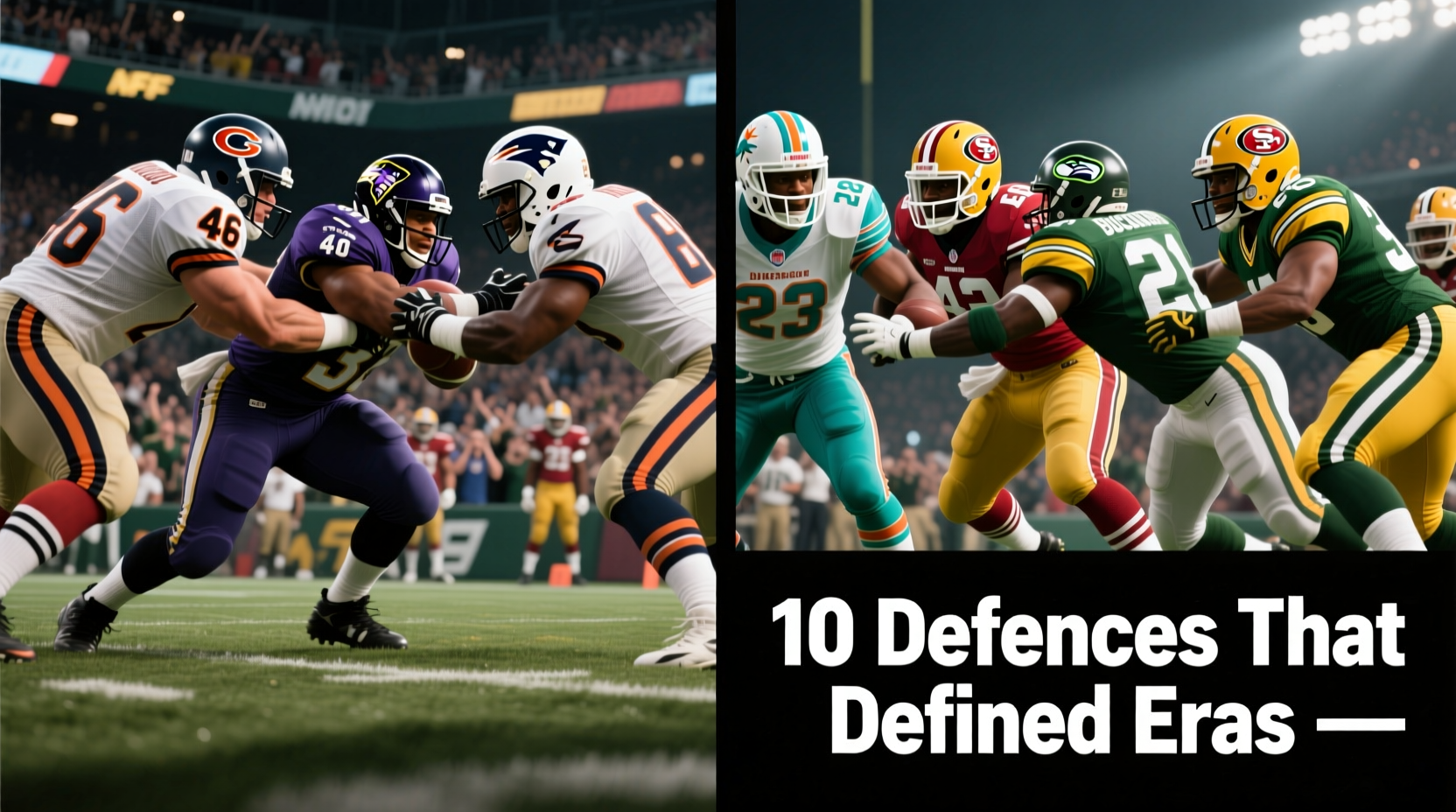
The 1976 Raiders defense allowed just 181 points—the fewest in the league that season—and anchored a Super Bowl XI championship run. Led by Hall of Famers Willie Brown, Gene Upshaw, and cornerback George Atkinson, this unit combined physical man-to-man coverage with ferocious pass rush from linebackers Phil Villapiano and Ted Hendricks.
What made this defense special was its adaptability. They stifled both power-running teams and vertical passing attacks, holding opponents to under 10 points per game during the playoffs. Their ability to control tempo and force turnovers at critical moments set the tone for Oakland’s dominant postseason.
Tip: Great defenses don’t just react—they anticipate. The 1976 Raiders studied tendencies obsessively, giving them a split-second edge that turned close plays into takeaways.The 1985 Chicago Bears: The Ultimate Force of Nature
No conversation about NFL defenses begins without mentioning the 1985 Chicago Bears. Under coordinator Buddy Ryan, they ran the now-legendary 46 Defense—a blitz-heavy scheme designed to overwhelm quarterbacks before they could think.
With Mike Singletary at middle linebacker, Dan Hampton and Richard Dent up front, and Wilber Marshall terrorizing backs in space, the Bears led the league in scoring defense (12.4 points per game) and recorded 64 sacks. They shut out the Giants and Rams in the playoffs by a combined 45–0.
“They weren’t just playing defense. They were punishing people.” — John Madden, Hall of Fame Coach and Broadcaster
Though they lost Super Bowl XX’s luster due to their overwhelming dominance, the ’85 Bears redefined what a defense could be—aggressive, fast, and unrelenting.
The 2000 Baltimore Ravens: Statistical Supremacy
The 2000 Ravens hold the record for the lowest points-per-game average in modern NFL history: 10.3. That defense wasn’t just good—it was statistically historic. With Ray Lewis winning Defensive Player of the Year, and a supporting cast including Rod Woodson, Chris McAlister, and Peter Boulware, they suffocated every opponent.
In the playoffs, they allowed just 20 total points across four games, culminating in a 34–7 Super Bowl XXXV victory over the Giants. Opposing quarterbacks posted a dismal 58.4 passer rating against them.
| Stat | Value |
|---|---|
| Average Points Allowed | 10.3 |
| Total Yards Allowed | 2,367 (lowest since 1981) |
| Sacks | 49 |
| Turnovers Forced | 36 |
This defense didn’t just win a title—it rewrote the record books.
The 1971 Minnesota Vikings: The Purple People Eaters
Carl Eller, Alan Page, Jim Marshall, and Gary Larsen formed one of the most feared defensive lines in NFL history. The “Purple People Eaters” held opponents to just 12.7 points per game in 1971, leading the Vikings to an 11–3 record and a trip to Super Bowl IV.
Alan Page became the first defensive player to win NFL MVP in 1971, a testament to his impact. The line’s consistency and durability—Marshall holds the record for most consecutive starts by a defensive player (282)—gave the unit unmatched chemistry.
Their legacy isn’t just in stats but in cultural impact. They popularized the idea of a dominant defensive front controlling the entire game.
The 2013 Seattle Seahawks: The Legion of Boom Era
The Seahawks’ defense blended elite man coverage with hard-hitting safety play. Cornerbacks Richard Sherman and Brandon Browner, along with safeties Earl Thomas and Kam Chancellor (later Kam Chancellor), created a secondary so tight it seemed impenetrable.
In 2013, they allowed just 15 points per game and forced 39 turnovers. Their 43–8 Super Bowl XLVIII win over the Broncos showcased their peak: pressuring Peyton Manning into three interceptions and shutting down Denver’s record-setting offense.
- Allowed fewest passing yards per game since 1989
- Ranked top 3 in third-down efficiency
- Forced turnovers in 13 of 16 regular-season games
The Legion of Boom didn’t just defend—they demoralized.
Other Defenses That Shaped History
While the above units stand out, several others deserve mention for their influence and dominance:
- 1978 Pittsburgh Steelers – A mature Steel Curtain unit with Jack Lambert, Mel Blount, and Joe Greene dominating in all phases.
- 1991 Philadelphia Eagles – Coordinator Bud Carson’s aggressive 4–3 overwhelmed teams; led league in takeaways and sacks.
- 2002 Tampa Bay Buccaneers – Coordinated by Monte Kiffin, their Cover 2 scheme maximized Warren Sapp, Derrick Brooks, and John Lynch. Shut down Rich Gannon in Super Bowl XXXVII.
- 1974 Los Angeles Rams – The “Fearsome Foursome” (though past prime) still anchored a defense that allowed just 12.8 ppg.
- 2015 Denver Broncos – Von Miller, DeMarcus Ware, and Aqib Talib carried a unit that derailed Cam Newton and the Panthers in Super Bowl 50.
How These Defenses Changed the Game
Each of these units influenced offensive evolution. The 46 Defense prompted wider use of quick passes and screen plays. The Legion of Boom pushed offenses toward shorter routes and mobile quarterbacks. The Ravens’ 2000 blueprint emphasized hybrid defenders capable of covering and rushing.
Modern defensive coordinators still study these units. Their schemes weren’t gimmicks—they were built on discipline, talent, and relentless preparation.
Tip: The best defenses share a common trait: communication. Pre-snap adjustments, audibles, and trust between players turn good units into great ones.Mini Case Study: The 2002 Buccaneers vs. the Raiders’ High-Powered Offense
Going into Super Bowl XXXVII, the Raiders boasted one of the most efficient offenses in the league, led by MVP quarterback Rich Gannon. Few expected Tampa Bay’s defense to contain them.
But Monte Kiffin’s game plan exploited tendencies. They disguised coverages, rushed with precision, and used zone traps to bait throws. Result? Five turnovers, three interceptions off Gannon, and a 48–21 blowout.
This wasn’t luck—it was months of film study, situational drills, and perfect role execution. It remains one of the most complete defensive performances in Super Bowl history.
Checklist: Traits of Legendary NFL Defenses
Based on historical analysis, here are the key characteristics shared by the greatest units:
- ✅ Dominant pass rush (consistent pressure without blitzing)
- ✅ Elite secondary play (tight coverage, ball awareness)
- ✅ Linebacker intelligence (play recognition, leadership)
- ✅ Turnover creation (forced fumbles, interceptions)
- ✅ Coaching innovation (adaptive schemes, situational mastery)
- ✅ Chemistry and continuity (players together for multiple seasons)
- ✅ Championship results (deep playoff runs or titles)
Frequently Asked Questions
Which NFL defense has the best statistical season?
The 2000 Baltimore Ravens are widely regarded as having the best statistical season, allowing only 10.3 points per game and setting records for fewest yards allowed in a 16-game season.
Why is the 1985 Bears defense considered legendary?
Beyond their 15–1 record and Super Bowl win, their cultural impact, the 46 Defense scheme, and sheer intimidation factor made them iconic. They forced 54 turnovers and changed how teams approached offensive line protection.
Can a dominant defense win a title in today’s pass-heavy NFL?
Absolutely. The 2015 Broncos proved it by winning Super Bowl 50 behind a top-tier defense despite a below-average offense. Speed, versatility, and smart scheming still neutralize even the best passing attacks.
Conclusion: Legacy Beyond the Field
The greatest NFL defenses did more than win games—they transformed football culture. They gave fans iconic nicknames, inspired video games, and became benchmarks for excellence. Whether through brute force, tactical brilliance, or raw speed, these units remind us that stopping the opposition can be just as thrilling as scoring.
🚀 Now it’s your turn: Which of these defenses do you think was the most impactful? Share your thoughts, debate the rankings, and keep the legacy of great defense alive in the conversation.