Choosing the right vessel for aging homemade spirits isn’t just about tradition or aesthetics—it’s a decisive factor in flavor development, chemical stability, oxygen management, and long-term viability. While oak barrels have defined whiskey, rum, and brandy for centuries, stainless steel aging vessels are gaining traction among home distillers seeking precision, repeatability, and regulatory compliance. Yet many hobbyists remain uncertain: Can stainless steel truly replicate—or even improve upon—the complexity of wood? Is charred oak always superior, or does it introduce unwanted variables for small-batch producers? This article cuts through marketing claims and anecdotal advice to deliver a grounded, chemistry-aware comparison rooted in distillation science, real-world experimentation, and food-safety standards.
How Aging Actually Works: Chemistry Before Craft
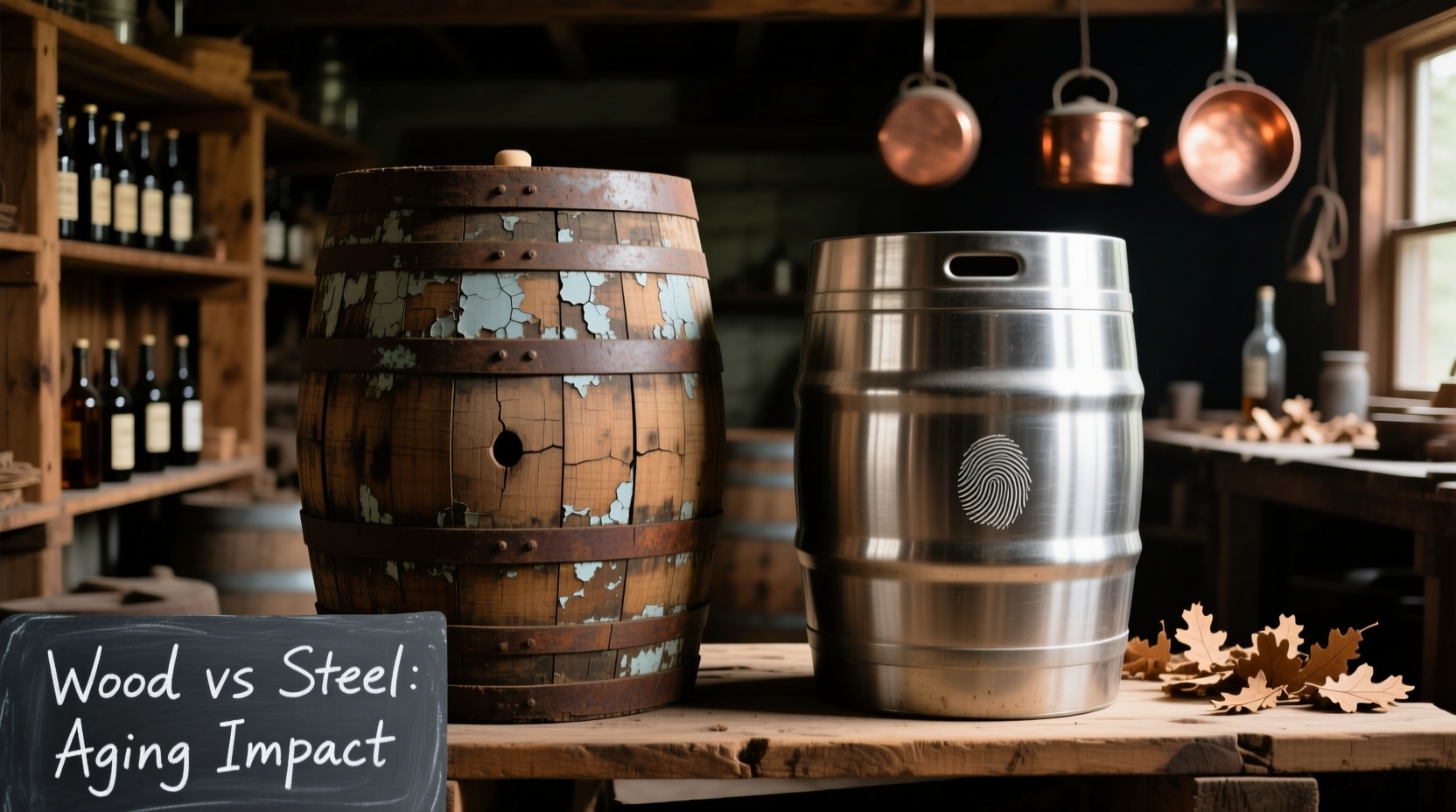
Aging spirits isn’t passive storage—it’s an active suite of chemical reactions. Three primary mechanisms drive transformation: extraction, oxidation, and esterification. Wooden barrels facilitate all three simultaneously: lignin breaks down into vanillin; hemicellulose yields caramelized sugars; tannins polymerize and soften; and controlled oxygen ingress through porous staves promotes aldehyde-to-acid conversion and ester formation (responsible for fruity, floral notes). Stainless steel, by contrast, is inert. It enables no extraction and negligible oxygen transfer unless deliberately introduced via sparging or headspace management. Its role is one of stabilization—not transformation. That distinction is critical: stainless steel doesn’t “age” spirits in the traditional sense. Instead, it supports *controlled maturation*, where the distiller directs reaction pathways rather than relying on wood’s variable influence.
This fundamental difference reshapes expectations. A 6-month bourbon aged in a new 5-gallon charred oak barrel will develop robust vanilla, clove, and toasted oak notes—but may also extract excessive tannins or harsh lignin derivatives if over-exposed. The same spirit aged 6 months in stainless steel with micro-oxygenation and added oak alternatives (e.g., medium-toast French oak spirals) can achieve comparable depth while minimizing bitterness and allowing precise calibration of wood contact time.
Wooden Barrels: Tradition, Complexity, and Hidden Trade-Offs
Traditional wooden barrels—typically American white oak, French oak, or Mizunara—are prized for their ability to impart layered flavor compounds, soften ethanol burn through evaporation (“angel’s share”), and encourage slow oxidative maturation. But their advantages come with operational constraints that disproportionately affect home-scale production.
- Flavor contribution: Toast level (light, medium, heavy) and char grade (1–4) directly determine phenolic intensity, sweetness, and smokiness. A #3 char adds aggressive charcoal filtration and smoky notes; a light toast emphasizes coconut and spice.
- Oxygen management: Oak’s porosity allows ~1–3% annual oxygen ingress—ideal for gradual esterification but risky for high-proof spirits (>60% ABV), which accelerate wood degradation and leach undesirable furfural or acetic acid.
- Maintenance burden: Wooden barrels require humidified storage when empty to prevent stave shrinkage and leakage. They demand quarterly rinsing with hot water (never soap), periodic sulfite treatments to inhibit acetobacter, and inspection for mold or souring.
- Variability: Grain tightness, cooperage quality, and prior use (first-fill vs. refill) create batch-to-batch inconsistency—even within the same cooperage lot.
Stainless Steel Barrels: Precision, Safety, and Strategic Flexibility
Stainless steel aging tanks—usually 304 or 316 grade—are non-reactive, impermeable, and fully sanitizable. Their value lies not in replicating wood, but in enabling intentional, repeatable maturation protocols. When paired with oak adjuncts (spirals, staves, chips, or cubes), they offer granular control over wood contact surface area, time, and temperature—variables nearly impossible to isolate in a full barrel.
Key technical advantages include:
- Zero leaching risk: No risk of heavy metals, chlorinated compounds, or microbial harborage—critical for meeting FDA and TTB guidelines for commercial resale.
- Exact oxygen dosing: Via calibrated air stones or dissolved oxygen meters, allowing targeted oxidation windows (e.g., 2 ppm O₂ for 72 hours at 18°C to boost ethyl acetate formation).
- Thermal stability: Jacketed tanks maintain ±0.5°C consistency—preventing thermal shock that fractures oak or accelerates ester hydrolysis.
- Scalability & hygiene: A single 20-gallon stainless tank can cycle five different spirit batches per year with full CIP (clean-in-place) sanitation between runs.
However, stainless steel demands active intervention. Without deliberate wood integration or oxygenation, spirits remain chemically static—spiritually “young” regardless of calendar time. Its strength is methodological rigor, not passive magic.
Direct Comparison: Performance, Cost, and Practicality
| Factor | Wooden Barrel (5-gallon, new charred oak) | Stainless Steel Tank (5-gallon, food-grade 304) |
|---|---|---|
| Initial Cost | $180–$260 (cooperage, charring, bung, stand) | $420–$750 (tank, lid, airlock, optional heating/cooling jacket) |
| Lifespan | 2–4 years (first-fill only for premium results; refills diminish impact) | 20+ years (with proper passivation and cleaning) |
| Flavor Development Speed | Rapid initial extraction (peaks at 3–6 months); risk of over-extraction beyond 8 months | Slower baseline; requires adjuncts/oxygen to initiate reactions—full complexity achievable in 4–12 months with optimization |
| Maintenance Effort | High: Humidity control, sulfite rinses, leak checks, char monitoring | Low: Sanitize with phosphoric/nitric acid solution; rinse; dry. No humidity concerns. |
| Regulatory Compliance | Acceptable for personal use; problematic for commercial licensing due to microbial unpredictability | FDA/TTB-compliant out-of-the-box; audit-ready documentation possible |
| Ideal For | Distillers prioritizing traditional character, low-tech workflow, and single-batch authenticity | Distillers focused on repeatability, blending control, experimental aging (e.g., wine-finished rye), or future commercial scaling |
Mini Case Study: The Portland Home Distiller’s Pivot
In 2022, Maya R., a Portland-based home distiller, produced award-winning apple brandy using 3-gallon new American oak barrels. Her batches were rich and complex—but inconsistent. One spring, a warm spell caused two barrels to leak, introducing acetobacter that soured 12 liters. She switched to a 5-gallon stainless tank with medium-toast French oak spirals and a programmable oxygen controller. Over six months, she ran three controlled trials: (1) static aging, (2) weekly 15-minute O₂ pulses, and (3) continuous low-dose micro-aeration. Trial #3 yielded the most balanced profile—bright apple esters preserved, tannins softened, and subtle almond notes emerging—without any off-flavors. Crucially, she repeated the protocol across four batches with <2.3% variance in total ester concentration (measured via GC-MS at a local lab). “Wood gave me romance,” she told Distiller’s Quarterly. “Stainless gave me reliability—and the freedom to stop guessing.”
Expert Insight: What Master Distillers Actually Say
“Oak is irreplaceable for foundational character—but stainless is the scalpel we use to refine it. At our craft facility, we age 80% of our base spirit in stainless with oak inserts, then finish only the final 20% in first-fill barrels for signature depth. It’s not ‘either/or’—it’s strategic layering.” — Carlos Mendez, Head Distiller, Cascadia Spirits Co., Oregon
“If you’re aging under 10 gallons and don’t have climate control, wood introduces more risk than reward. I’ve seen too many home distillers lose entire batches to volatile acidity because their garage hit 32°C for three days. Stainless removes that variable—and lets you focus on what you *can* control: cut points, yeast strain, and oxygen timing.” — Dr. Lena Park, PhD Food Microbiology, former TTB Technical Advisor
Step-by-Step: Building Your First Stainless Steel Aging Protocol
- Select your vessel: Choose 304 or 316 stainless steel with tri-clamp fittings, pressure-rated lid (up to 3 psi), and a ½-inch NPT port for air injection.
- Passivate the tank: Soak interior with 10% nitric acid solution for 30 minutes, then rinse thoroughly with deionized water. Repeat annually.
- Prepare oak adjuncts: Toast French oak spirals at 180°C for 25 minutes (medium toast), then steam-sterilize for 15 minutes. Use 15–20 g/L for balanced extraction.
- Initiate aging: Fill tank to 90% capacity (leaving 10% headspace). Seal, purge headspace with CO₂, then inject 2 ppm dissolved oxygen using a calibrated air stone (run for 45 minutes at 0.5 L/min flow).
- Monitor and adjust: Sample weekly. If esters are low after 4 weeks, add second O₂ pulse (1.5 ppm). If tannins dominate, remove oak adjuncts and cold-crash at 2°C for 72 hours to precipitate.
- Finish and bottle: After 8–12 weeks, filter through 0.45-micron membrane, adjust proof with distilled water, and conduct sensory evaluation against benchmark samples.
FAQ
Can I combine wood and stainless in one aging process?
Yes—and this is increasingly standard practice. Many award-winning craft distillers use stainless tanks for primary aging (controlling oxidation and ester balance), then transfer to small oak casks for 2–4 weeks of finishing. This leverages stainless’ precision and wood’s aromatic intensity without over-extraction.
Do stainless steel barrels need to be “seasoned” like wood?
No. Stainless steel requires passivation—not seasoning. Passivation removes free iron particles from the surface using nitric or citric acid, forming a protective chromium oxide layer. Seasoning (oiling/heating) is unnecessary and counterproductive.
Is it safe to age high-proof spirits (>65% ABV) in wood?
Not recommended for home use. High alcohol rapidly extracts lignin breakdown products (like syringaldehyde) that taste medicinal or astringent. It also accelerates evaporation of desirable volatile esters. Dilute to 55–62% ABV before wood contact for optimal flavor kinetics.
Conclusion
The choice between wooden and stainless steel aging barrels isn’t about nostalgia versus modernity—it’s about aligning your tools with your goals. If you seek the visceral, unpredictable beauty of fire-charred oak and embrace the ritual of barrel care, wood remains unmatched. But if you value consistency, food safety, experimental flexibility, and the ability to diagnose and refine each variable—temperature, oxygen, wood surface area, time—you’ll find stainless steel not as a compromise, but as a catalyst. Neither vessel ages spirits alone; it’s your understanding of chemistry, your attention to detail, and your willingness to measure what matters that transforms raw distillate into something memorable. Start small: run one batch in oak, one in stainless with identical oak adjuncts, and taste side-by-side at 4, 8, and 12 weeks. Let your palate—and your hydrometer—guide the next decision.
💬 Your experience matters. Have you compared wooden and stainless aging? Share your ABV timelines, tasting notes, or unexpected discoveries in the comments—we’re building a real-world knowledge base, one batch at a time.