When designing a dining or coffee table with a luxurious marble top, the choice of base material is critical—not just for aesthetics, but for structural integrity. Many assume that pairing marble with marble creates the ultimate in durability and elegance, while others argue that wood offers superior support through flexibility and shock absorption. The truth lies in understanding how each material interacts with the weight, balance, and environmental conditions affecting the table. Stability isn’t just about mass; it’s about distribution, connection, and long-term resilience.
The Physics of Table Stability
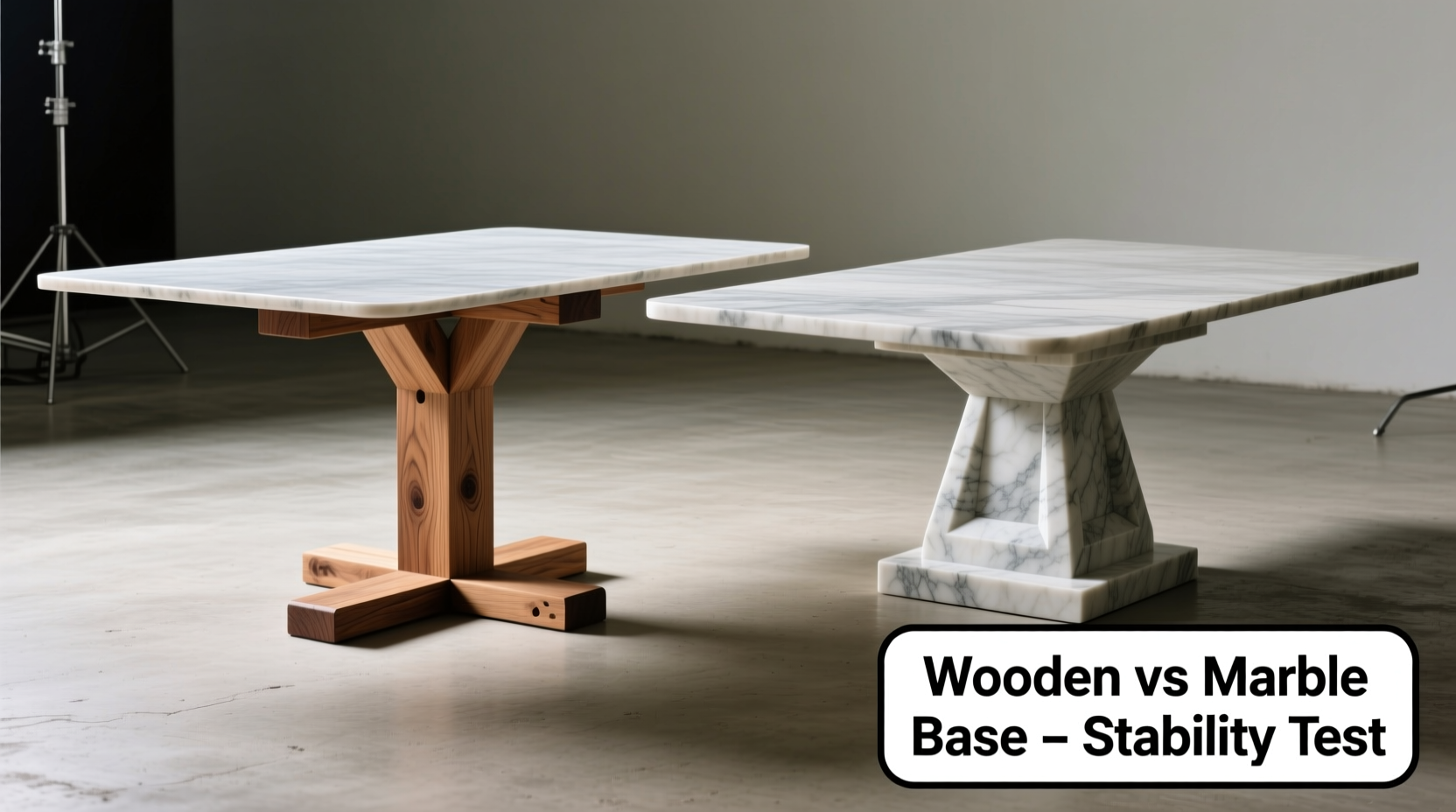
Stability in furniture depends on several factors: center of gravity, footprint size, material rigidity, and joint integrity. A marble top, typically weighing between 150 to 300 pounds depending on thickness and dimensions, demands a base that can evenly distribute this load without flexing, cracking, or shifting over time. While heavy materials like marble may seem inherently stable due to their mass, they are also brittle and unforgiving when subjected to stress points or uneven support.
Wood, by contrast, has natural tensile strength and elasticity. It can absorb minor vibrations and slight shifts in floor level—common in older homes or multi-story buildings—without transferring damaging forces to the stone above. This makes wooden bases particularly effective in dynamic environments where perfect alignment cannot be guaranteed.
“Marble doesn’t forgive poor support. Even a 1mm gap under one corner can lead to hairline cracks over months.” — Daniel Reyes, Structural Furniture Engineer
Marble Base: Strengths and Hidden Risks
A marble base exudes opulence. Its seamless appearance—especially in monolithic designs—creates a sculptural centerpiece. However, its performance as a support structure reveals significant trade-offs.
Marble is compressive-strong, meaning it resists being crushed under vertical loads. But it lacks tensile strength—the ability to resist stretching or bending forces. When used as a leg or pedestal, especially if slender or intricately carved, marble becomes vulnerable to lateral impacts (like bumping) or torsional stress from an unlevel floor.
Additionally, attaching a marble top to a marble base requires precision engineering. Any misalignment during installation places uneven pressure on the surface, increasing the risk of microfractures. Adhesives and metal fasteners must accommodate thermal expansion differences, which vary significantly between stone sections exposed to sunlight or HVAC drafts.
Tip: If using a marble base, insist on professional installation with laser-leveling and flexible mounting hardware to prevent stress fractures.Wooden Base: The Underestimated Stabilizer
High-quality hardwood bases—such as walnut, oak, or teak—are not only visually warm but functionally superior in many practical applications. Their fibrous structure allows them to act as natural dampeners, absorbing small movements that would otherwise strain a rigid stone interface.
Well-constructed wooden frames use mortise-and-tenon or steel-reinforced joinery to create a rigid yet slightly resilient platform. When properly designed, these bases provide broad, even support across the entire underside of the marble slab. Plywood substrates or MDF cores wrapped in solid wood are less ideal, as they may warp or delaminate over time, compromising stability.
Another advantage: wood allows for adjustable feet. These tiny mechanisms let installers fine-tune the table’s level after placement, compensating for imperfect flooring—a feature rarely feasible with solid stone legs.
Real Example: A Dining Table in a Historic Home
In a 19th-century Brooklyn brownstone, a client chose a 7-foot Carrara marble dining table. The original plan called for a matching marble pedestal base. However, the home’s pine floors had settled unevenly over decades. After consulting with a restoration specialist, the design was changed to a black walnut trestle base with hidden steel reinforcements and threaded leveling glides.
Two years later, the table remains crack-free despite seasonal humidity shifts and frequent use. The owner reports no wobbling, even when six people sit at opposite ends. In contrast, a neighbor’s all-marble table developed a radial crack near the edge after six months—attributed to a single point of unsupported pressure caused by floor sag.
Comparative Analysis: Wooden vs Marble Base
| Factor | Wooden Base | Marble Base |
|---|---|---|
| Load Distribution | Excellent – wide frame spreads weight evenly | Fair – limited contact points unless fully supported |
| Impact Resistance | High – absorbs shocks and lateral forces | Low – prone to chipping or cracking on impact |
| Floor Adaptability | High – adjustable feet compensate for unevenness | Low – requires perfectly level surface |
| Long-Term Durability | Very high – with proper finish and care | Conditional – dependent on flawless installation |
| Aesthetic Flexibility | High – complements both modern and traditional interiors | High – but can feel cold or overly formal |
| Installation Complexity | Moderate – standard carpentry skills often sufficient | High – requires stonework expertise and lifting equipment |
Choosing the Right Base: A Step-by-Step Guide
Selecting the optimal base for your marble-top table should follow a logical evaluation process:
- Assess Your Floor Condition: Use a spirit level to check for dips or slopes. If the floor varies by more than 2mm over 3 feet, prioritize a wooden base with adjustable supports.
- Evaluate Usage Frequency: High-traffic areas benefit from wood’s resilience against bumps and chair movement.
- Determine Table Size: Larger tops (over 6 feet) require broader support zones. Wooden frames can span greater distances safely.
- Consider Environmental Factors: Rooms with large windows or HVAC vents experience temperature fluctuations. Wood handles expansion/contraction better than stone-on-stone joints.
- Review Design Goals: For minimalist luxury, marble-on-marble works—but only if budget includes expert fabrication and installation.
Expert Tips for Maximizing Stability
- Always use padded felt or rubber gaskets between the marble and any base to prevent direct abrasion.
- Avoid cantilevered marble edges exceeding 12 inches without additional bracing.
- For wooden bases, select kiln-dried hardwoods with moisture content below 8% to minimize warping.
- Use stainless steel or brass mounting plates instead of adhesives alone for secure attachment.
FAQ
Can I mix marble and wood in the same table design?
Yes—and it's often the best approach. Combining a marble top with a wooden base merges aesthetic contrast with functional synergy. Just ensure the wood is structurally sound and properly finished to handle indoor climate variations.
Will a wooden base sag under a heavy marble top?
Not if constructed correctly. Solid hardwood beams, cross-bracing, and proper joinery eliminate deflection. Avoid particleboard or softwoods like pine for large installations.
Is a marble base more durable than wood?
In terms of scratch resistance and heat tolerance, yes. But overall system durability favors wood because it prevents damage to the more expensive marble top by managing stress effectively.
Final Recommendation
While a marble base offers undeniable grandeur, a well-crafted wooden base is generally more stable and forgiving for supporting a marble tabletop. Its ability to adapt to real-world conditions—uneven floors, everyday impacts, and environmental changes—makes it the smarter long-term investment. That said, if design mandates an all-stone look, work exclusively with experienced fabricators who specialize in structural stone furniture and include engineered mounting systems.
Ultimately, stability isn’t just about what the base is made of—it’s about how intelligently it supports the delicate beauty above it.
💬 Have experience with marble tables? Share your story or lessons learned in the comments below—your insight could help someone avoid costly mistakes.