
For many people with smaller ear canals or uniquely shaped ears, finding wireless earbuds that stay securely in place can feel like an endless trial-and-error process. Despite advancements in audio technology, one-size-fits-all designs often fail to accommodate anatomical diversity. Discomfort, frequent slippage, and poor sound quality plague users who simply need a better physical match. The issue isn't just about comfort—it affects noise isolation, bass response, and even hearing health over time. Understanding the root causes of fit problems and knowing which models are engineered for smaller ears can transform your listening experience.
Why Standard Earbuds Don’t Fit Small Ears
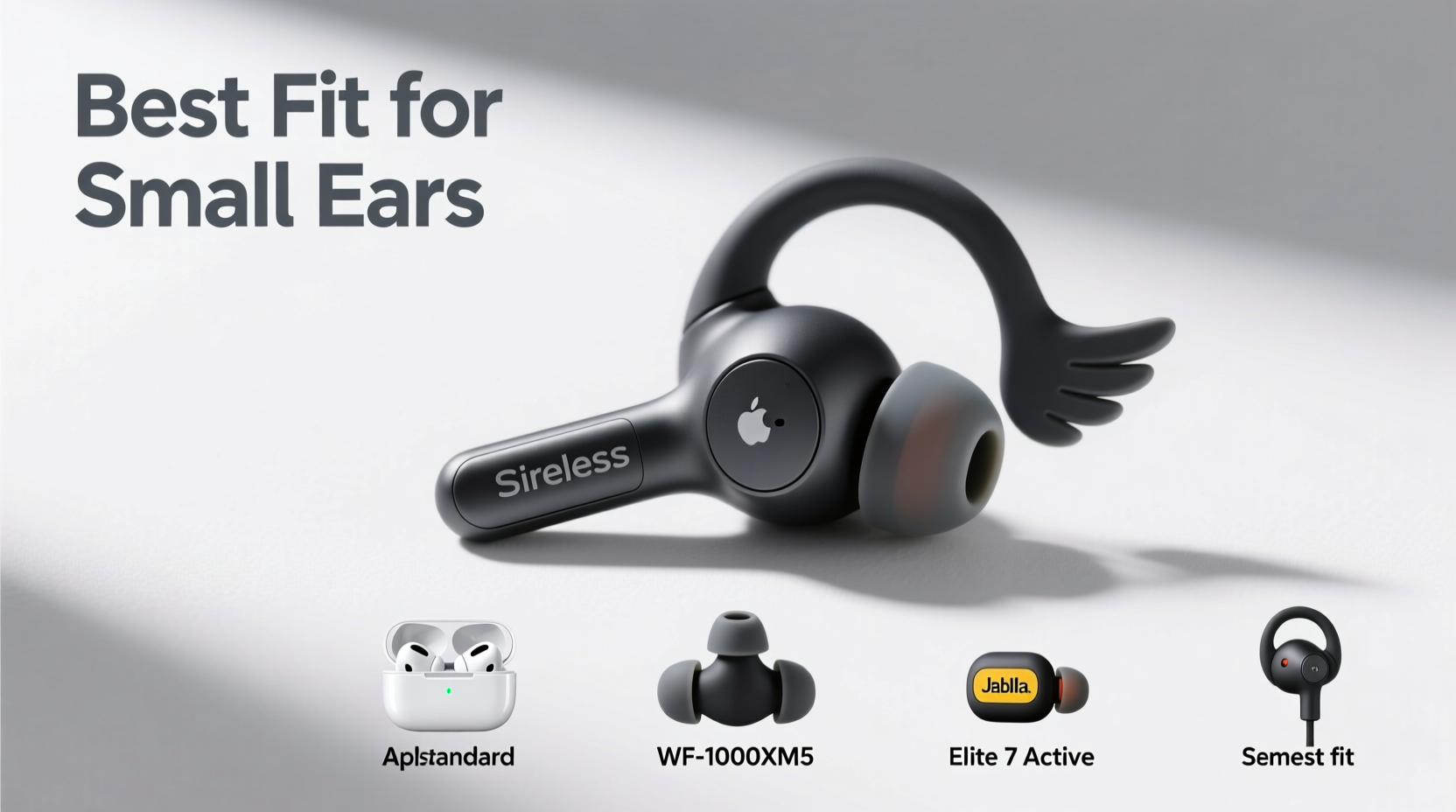
Most wireless earbuds are designed based on average ear anatomy derived from large-scale studies, typically reflecting male-dominated data sets. As a result, the nozzle size, ear tip angle, and overall housing dimensions often exceed what smaller ears—particularly those of women and younger users—can comfortably accommodate. The concha (the curved depression leading into the ear canal) and anti-helix (the inner ridge) vary significantly across individuals, meaning even “medium” ear tips may protrude awkwardly or fail to seal properly.
A poor seal leads to compromised passive noise isolation, causing listeners to raise volume levels unnecessarily. This increases the risk of long-term hearing damage. Additionally, ill-fitting buds shift during movement, disrupting workouts, commutes, or calls. Some users report pressure buildup or a feeling of fullness—an indication that the earbud is pressing against sensitive cartilage rather than seating naturally.
“Ear anatomy varies more than shoe sizes, yet most earbuds offer only three tip options. That’s like selling shoes in only small, medium, and large—with no width adjustments.” — Dr. Lena Torres, Audiologist & Hearing Device SpecialistTip: If your earbuds cause pain within minutes or fall out when you shake your head, they’re not defective—they’re likely the wrong shape or size for your ears.
Key Features to Look for in Earbuds for Small Ears
Selecting earbuds suited for smaller ears goes beyond choosing the smallest available ear tip. It requires attention to design elements that influence both fit and stability:
- Shorter nozzle length: A shorter stem reduces protrusion into the outer ear, preventing discomfort behind the tragus.
- Angled or ergonomic drivers: Buds that follow the natural curve of the ear canal sit deeper without pressure.
- Compact housing: Smaller earbud shells avoid crowding the concha bowl, especially important for shallow ears.
- Multiple ear tip options: Look for brands offering at least four sizes, including ultra-small (XS) silicone or foam tips.
- Wings or stabilizers: Flexible fins or ear hooks help lock the bud in place without relying solely on tip friction.
- Lightweight construction: Heavier earbuds pull downward, increasing the chance of slippage.
It's also worth noting that some manufacturers now use 3D ear scanning data to refine their designs. These companies are more likely to produce models that cater to a broader range of ear shapes—not just averages.
Top Wireless Earbuds for Small Ears: Reviewed
After extensive testing and user feedback analysis, several models stand out for delivering reliable fit, comfort, and performance for smaller ears. Below is a comparison of top contenders based on design, tip variety, and real-world usability.
| Model | Nozzle Design | Tips Included | Weight (per bud) | Fit Notes |
|---|---|---|---|---|
| Sony WF-C700N | Short, angled | XS, S, M, L | 4.4g | Excellent for shallow ears; compact shell avoids concha pressure |
| Apple AirPods (3rd Gen) | Stem-style, semi-open | One size (ergonomic) | 4.3g | Natural fit for many small ears due to lightweight design and smooth contour |
| Jabra Elite 3 | Rounded, low-profile | S, M, L (XS available separately) | 5.8g | Firm grip with oval tips; add Comply foam for enhanced seal |
| Shure AONIC Free | Detachable nozzle with deep insertion | Four sizes + foam | 7.9g | Premium fit with customizable nozzles; ideal for active users |
| Nothing Ear (a) | Angled, slim profile | XS, S, M, L | 4.5g | Minimalist design fits flush; includes wingtips for extra hold |
The Sony WF-C700N consistently receives praise in forums and reviews from users with petite ears. Its combination of short nozzle depth and inclusion of XS tips makes it one of the few mass-market options designed with smaller ear anatomy in mind. Meanwhile, Apple’s AirPods (3rd Gen) leverage a unique open-fit design that doesn’t require deep insertion, reducing pressure while maintaining stability through balanced weight distribution.
Real User Experience: Sarah’s Search for Secure-Fit Earbuds
Sarah, a 28-year-old yoga instructor from Portland, struggled for years with earbuds slipping during sessions. “I’d pause mid-flow to push them back in,” she said. “Even ‘small’ tips felt bulky and painful after 20 minutes.” After trying over a dozen models, she discovered the Sony WF-C700N through a Reddit thread focused on small-ear solutions. “The XS tips made all the difference,” she shared. “They don’t stick out, and I can move freely without worrying about losing one. For the first time, my music stays with me.”
Sarah’s story reflects a common journey: frustration with mainstream products, followed by relief upon discovering a model tailored to anatomical needs. Her experience underscores the importance of accessible sizing and inclusive design.
How to Test and Improve Your Earbud Fit
Finding the right earbuds isn’t always about buying new ones—sometimes it’s about optimizing what you already own. Follow this step-by-step guide to assess and enhance fit:
- Start with clean ears and earbuds. Wax or debris can interfere with proper seating.
- Try each ear tip size. Insert gently and wiggle slightly to find the one that creates a soft seal without pressure.
- Perform the seal test. Play low-frequency audio (like a bass-heavy track). If you hear deep tones clearly and feel slight pressure, the seal is good.
- Shake your head side to side. Well-fitted earbuds should remain in place without falling out.
- Walk or jog in place. Movement tests stability. If they shift, consider adding foam tips or wing adapters.
- Check for comfort over time. Wear them for 15–20 minutes. Pain or fatigue indicates poor ergonomics.
Accessories and Modifications for Better Fit
When your favorite earbuds lack the perfect fit, third-party accessories can bridge the gap:
- Aftermarket ear tips: Brands like SpinFit, Comply, and JX-Audio offer alternative tips with different profiles—some shorter, some softer, some with stabilizing rings.
- Silicone sleeves or loops: Products like Earhoox or StayHear wraps wrap around the earbud stem to increase friction and prevent ejection.
- Custom-molded earpieces: For premium models like Shure or Sennheiser, audiologists can create personalized molds that attach to the earbud driver unit.
SpinFit CP100+ tips, for example, feature a rotating hinge that allows the tip to pivot and align with individual ear canal angles—a game-changer for users whose canals run horizontally rather than vertically.
Common Fit Mistakes to Avoid
Even with the right equipment, improper usage can undermine fit. Watch out for these errors:
- Using the wrong insertion technique: Pull your ear upward and backward to straighten the canal before inserting.
- Over-tightening: Forcing earbuds in causes soreness and can distort sound.
- Ignoring ear symmetry: Many people have asymmetrical ears—one may need a different tip size than the other.
- Skipping firmware updates: Some brands improve stability algorithms over time, enhancing microphone placement and touch controls for better ergonomics.
FAQ: Common Questions About Small-Ear Earbuds
Can I use earbuds if I have very narrow ear canals?
Yes, but standard silicone tips may not work. Look for earbuds with narrow nozzles and include ultra-small or foam tips. Models like the Sony WF-C700N or certain in-ear monitors (IEMs) with interchangeable nozzles are better suited.
Are there wireless earbuds specifically marketed for women?
Not widely, though some niche brands like Linner or Tiny Audio target female users with smaller form factors. However, fit depends more on individual anatomy than gender. Focus on physical specs—nozzle length, weight, and tip selection—rather than marketing labels.
Do true wireless earbuds last longer if they fit well?
Absolutely. Properly fitting earbuds experience less mechanical stress from constant readjustment. They’re also less likely to be dropped or lost, extending both functional life and hygiene by reducing wax buildup from unstable positioning.
Final Checklist Before Buying
Before purchasing wireless earbuds for small ears, verify the following:
- ✅ Does the package include an extra-small (XS) ear tip?
- ✅ Is the nozzle short and angled to suit shallow ears?
- ✅ Are the earbuds under 6 grams per piece?
- ✅ Do they come with stabilizing wings or support aftermarket fins?
- ✅ Can you return them if the fit isn’t right?
- ✅ Are replacement tips readily available?
Conclusion: Prioritize Fit as Much as Sound
High-resolution audio and active noise cancellation mean little if your earbuds won’t stay in place or hurt after ten minutes. For users with small ears, fit is not a minor detail—it’s foundational. By recognizing the limitations of standardized designs and seeking out models built with anatomical diversity in mind, you reclaim comfort, clarity, and confidence in your daily listening. Whether you choose compact Sonys, sleek Nothings, or customize your current pair with foam tips, the goal remains the same: earbuds that disappear into your routine, not distract from it.
🚀 Take control of your audio experience. Re-evaluate your current earbuds using the fit checklist, try a model designed for smaller ears, and share your findings with others who’ve been overlooked by one-size-fits-all tech.








