When it comes to outerwear, few pieces are as iconic or versatile as the velvet and denim jacket. One exudes luxury and evening elegance; the other stands for rugged durability and timeless casual style. But when subjected to repeated laundering—something every garment eventually faces—their performance diverges sharply. Understanding how each fabric reacts over time isn’t just about maintaining appearance; it’s about long-term value, sustainability, and smart wardrobe investment.
This article examines the structural integrity, color retention, texture evolution, and maintenance demands of both fabrics under regular washing conditions. By analyzing real-world wear patterns, expert insights, and material science, we’ll determine which jacket truly withstands the test of time—and why that matters for your closet choices.
Fabric Composition and Structure
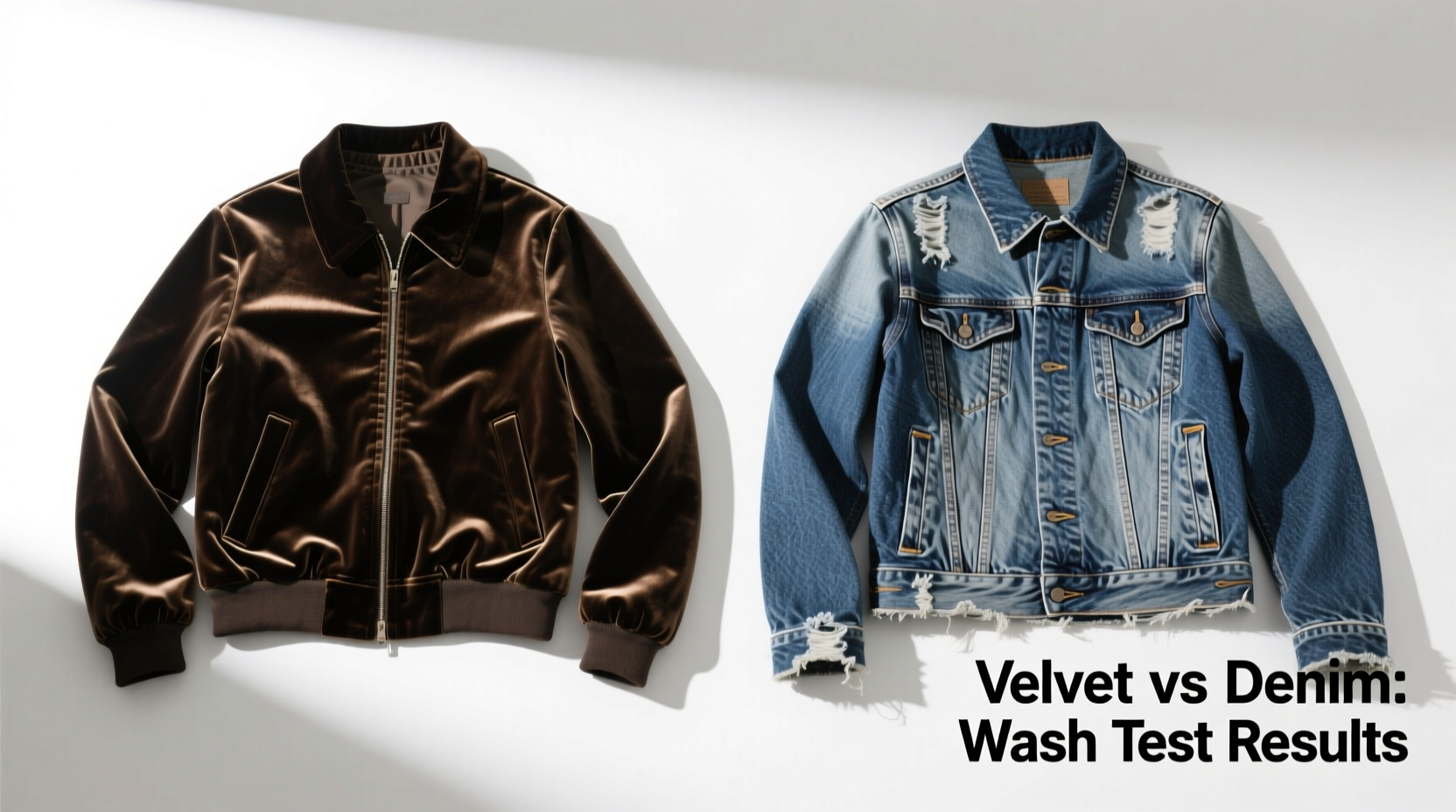
The foundation of a garment’s longevity lies in its fiber makeup and weave structure. Velvet and denim originate from fundamentally different textile philosophies—one built on softness and sheen, the other on strength and resilience.
Velvet is typically made from silk, cotton, rayon, or polyester. It features a dense pile woven into a base fabric, creating a plush, light-reflective surface. The pile consists of thousands of upright fibers that give velvet its signature tactile richness. However, this same construction makes it vulnerable to mechanical stress. When washed, especially in machines, agitation can crush or flatten the pile, leading to permanent matting and loss of luster.
Denim, by contrast, is usually composed of tightly woven cotton (sometimes blended with elastane). Its diagonal twill weave not only gives it visual texture but also enhances tensile strength. Denim fibers interlock densely, making them resistant to abrasion and distortion during washing. While raw denim stiffens initially, it gradually molds to the wearer’s shape without compromising structural integrity—even after dozens of washes.
Tip: Always check garment labels before washing. Many velvet jackets require dry cleaning due to their delicate pile and backing materials.Durability After Repeated Washing
To assess long-term durability, consider three key factors: dimensional stability, pilling/fuzzing, and seam integrity. A side-by-side comparison reveals significant differences.
| Factor | Velvet Jacket | Denim Jacket |
|---|---|---|
| Shape Retention | Poor – prone to warping and shrinkage, especially if wet-stretched | Excellent – maintains form even after 30+ washes |
| Texture Change | Significant – pile flattens, becomes patchy or shiny | Minimal – develops natural fade, remains consistent |
| Color Fastness | Moderate to poor – dyes may bleed or dull quickly | Good – fades evenly, retains core hue |
| Seam Strength | Fair – stitching can loosen due to fabric distortion | Strong – reinforced seams resist unraveling |
| Recommended Wash Frequency | Rarely – ideally spot-cleaned or professionally cleaned | Every 5–10 wears depending on use |
Over ten standard home wash cycles, a typical cotton-polyester velvet jacket often shows visible signs of degradation: crushed nap, uneven coloring, and slight puckering at stress points like elbows and shoulders. In contrast, a mid-weight denim jacket might only begin to show character—softened fabric, subtle whiskering, and personalized creases—without any functional decline.
“Denim is engineered for endurance. Even vintage 1950s pairs survive today because cotton twill resists breakdown far better than piled textiles.” — Dr. Lena Torres, Textile Scientist at MIT Materials Lab
Care Requirements and Real-World Maintenance
Maintenance directly influences lifespan. How easy—or difficult—is it to preserve each jacket type?
Velvet demands meticulous care. Most manufacturers advise against machine washing unless explicitly stated. Hand-washing risks water spots and misshaping; tumble drying is almost always prohibited. Instead, professional dry cleaning is recommended, adding recurring cost and environmental impact. Even air-drying must be done flat and away from direct heat or sunlight to prevent fiber damage.
Denim, while not indestructible, tolerates a wide range of handling. Cold-water machine washing on gentle cycles preserves color and prevents excessive stiffness. Line drying avoids shrinkage and maintains fiber alignment. Some enthusiasts advocate minimal washing to enhance personal fading patterns, but even frequent launderers report little structural compromise over years of use.
Step-by-Step: How to Wash a Denim Jacket Safely
- Turn the jacket inside out to protect surface dye and reduce friction.
- Use cold water (below 30°C / 86°F) and a mild detergent formulated for darks.
- Select the “gentle” or “delicate” cycle on your washing machine.
- Avoid bleach, fabric softeners, and dryer sheets—they degrade cotton fibers and cause stiffness.
- Hang to dry in a shaded, well-ventilated area. Do not wring or twist.
- If ironing is needed, use low heat with a pressing cloth to avoid shine marks.
Real-World Example: Two Jackets, Five Years Later
Consider Sarah, a graphic designer who purchased two statement jackets in 2019: a deep emerald velvet blazer-style jacket and a classic indigo Levi’s trucker jacket.
The velvet piece was worn weekly during fall and winter months, primarily for client meetings and events. Despite careful hand-wiping after spills, she had it professionally cleaned twice a year. After five years, the collar shows noticeable pile reversal, the cuffs have dulled, and one shoulder bears a faint watermark from accidental moisture exposure. While still wearable, it no longer commands attention the way it once did.
The denim jacket saw heavier daily use—commuting, weekend errands, layering through seasons. She washed it approximately once every two months using a cold machine cycle. Today, it fits better than ever, with faded elbows and chest creases that reflect her posture. No holes, no fraying seams, and the buttons remain intact. Friends regularly ask where she bought “that perfect vintage-looking denim.”
This case illustrates a broader trend: garments designed for repeated laundering outperform those requiring special handling—even when both are cared for diligently.
Expert Insights on Fabric Longevity
Industry professionals emphasize that longevity isn’t solely about fiber origin—it’s about design intent.
“Velvet is inherently decorative. It’s meant to impress in controlled environments—not endure daily friction and repeated hydration cycles.” — Marcus Bell, Menswear Archivist at the Fashion Institute of Technology
Bell notes that historical velvet garments in museum collections often show deterioration not from age, but from improper cleaning attempts. “We see flattened nap, dye migration, and adhesive failure in bonded linings—all results of water exposure,” he explains.
Conversely, denim’s reputation for toughness stems from its origins as workwear. Originally worn by laborers and miners, it was built to survive dirt, sweat, and rough handling. Modern production has refined comfort and fit, but retained core durability traits.
“The strongest clothes aren’t necessarily the most expensive—they’re the ones engineered to handle real life.” — Naomi Chen, Sustainable Style Consultant
Frequently Asked Questions
Can I machine-wash a velvet jacket if the label says 'dry clean only'?
It’s strongly discouraged. Even if the outer fabric survives, internal layers like interfacing or lining may delaminate or shrink, ruining the jacket’s structure. If you must wash at home, use a mesh bag, cold water, and zero spin—but expect some risk of damage.
Does denim get weaker with every wash?
Technically, yes—but so minimally that it’s negligible for most wearers. Each wash removes microscopic fibers, but high-quality denim can endure 50+ washes before showing weakness. Proper technique (cold water, inside-out, no harsh chemicals) maximizes lifespan.
Why does my velvet jacket look shiny after cleaning?
This \"shine\" occurs when the pile fibers are bent in inconsistent directions. Light reflects unevenly, creating glossy patches. It’s irreversible without steaming by a specialist—a temporary fix at best. Prevention through reduced washing is key.
Action Plan: Choosing and Caring for Your Jacket
If longevity under repeated laundering is your priority, denim clearly outperforms velvet. But personal style, occasion, and climate also matter. Use this checklist to make an informed decision:
- ✅ Assess your usage: Will the jacket face daily wear or occasional outings?
- ✅ Review washing habits: Are you willing to hand-wash or pay for dry cleaning?
- ✅ Prioritize function: Need weather resistance and durability? Denim wins.
- ✅ Value aesthetics: Seeking opulence and seasonal flair? Velvet has unmatched presence.
- ✅ Consider sustainability: Fewer washes mean lower environmental footprint—denim supports this more easily.
For those committed to velvet, limit washing to emergencies only. Use a soft brush to lift dust, store on padded hangers, and rotate wear to allow recovery time between uses. For denim lovers, embrace gradual aging as part of the charm—avoid over-washing, and never toss it in the dryer on high heat.
Final Verdict: Which Holds Up Better?
After multiple washes, the denim jacket demonstrably holds up better than its velvet counterpart. Its tightly woven cotton construction resists deformation, retains color effectively, and strengthens its character with age. While velvet offers unmatched visual depth and tactile luxury, it sacrifices resilience for beauty. Every wash accelerates wear, alters texture, and diminishes overall quality.
This doesn’t mean velvet lacks value—it simply serves a different purpose. Think of it like fine dinnerware: exquisite for special occasions, but ill-suited for daily dishwasher cycles. Denim, meanwhile, is the cast-iron skillet of wardrobes: rugged, adaptable, and built to improve with use.
Ultimately, choosing between them depends on your lifestyle. If you want a jacket that ages gracefully through years of real-world use—including frequent laundering—denim is the superior choice. If you seek seasonal glamour and are prepared to invest in specialized care, velvet remains a compelling option.
💬 What’s your go-to jacket for everyday wear? Have you noticed major changes after washing? Share your experience and help others build smarter, longer-lasting wardrobes!








