Choosing a sofa that can withstand the daily chaos of children and pets is more than a matter of style—it’s about long-term functionality, comfort, and peace of mind. Two popular upholstery options often considered for family-friendly living rooms are velvet and microfiber. While both offer softness and visual appeal, their performance under real-world conditions varies significantly. Understanding how each fabric responds to spills, stains, claw marks, and constant use is essential when investing in a centerpiece that will endure years of wear.
This guide breaks down the practical differences between velvet and microfiber sofas, focusing on durability, maintenance, safety, comfort, and overall suitability for active households. Whether you’re drawn to the luxurious drape of velvet or the rugged resilience of microfiber, this comparison equips you with the insights needed to make an informed decision.
Durability: How Well Do They Withstand Daily Wear?
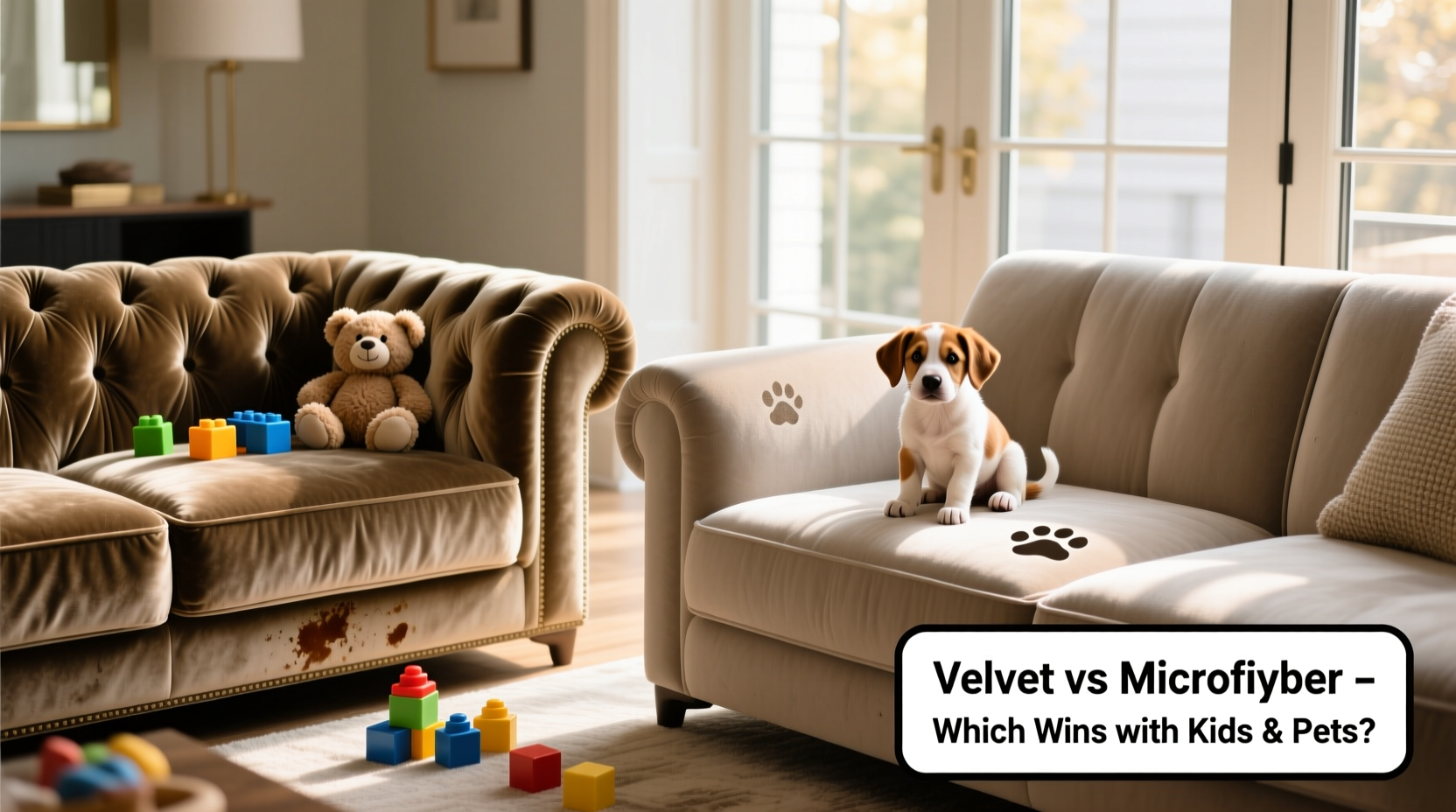
Durability is one of the most critical factors when selecting furniture for homes with kids and pets. Both velvet and microfiber are textiles, but they differ fundamentally in fiber composition, weave density, and resistance to abrasion.
Modern velvet is typically made from synthetic fibers like polyester or nylon, though cotton and silk blends still exist. High-quality synthetic velvet is tightly woven, offering decent resistance to pilling and fraying. However, its plush pile—those short, upright fibers that give velvet its signature sheen—can be vulnerable to crushing, especially in high-contact areas like seat cushions and armrests. Over time, frequent sitting or pet movement may leave visible compression patterns or flattened patches.
Microfiber, by contrast, is engineered for strength. Made from ultra-fine strands of polyester and polyamide (nylon), it mimics the softness of natural fabrics while delivering exceptional tensile strength. Most microfiber sofas are constructed with tightly woven, non-porous surfaces that resist tearing, scratching, and abrasion. This makes them particularly resilient against pet claws and energetic toddlers who treat furniture as a climbing gym.
Tip: Look for microfiber sofas labeled “heavy-duty” or “performance-grade”—these are tested for 30,000+ double rubs, indicating excellent durability.In homes where pets jump on and off the sofa daily or children bounce during playtime, microfiber generally outperforms velvet in maintaining structural integrity. Velvet may require rotation of cushions or professional steaming to restore texture, whereas microfiber holds its shape and surface consistency with minimal intervention.
Cleanability and Stain Resistance: Real-Life Spill Scenarios
No household with kids and pets is immune to spills—juice, mud, food smears, or pet accidents happen. How quickly and easily you can clean the sofa determines not only hygiene but also longevity.
Microfiber excels in stain resistance. Its synthetic fibers are inherently water-repellent and often treated with protective coatings that cause liquids to bead up rather than soak in. Most spills can be wiped away with a damp cloth and mild detergent. Many manufacturers design microfiber upholstery to meet commercial standards for stain resistance, including protection against oil, wine, and common household chemicals.
Velvet presents a more complex cleaning challenge. While some modern velvets are treated for moisture resistance, the fabric's nap (the direction of the fibers) tends to trap liquids and particles. A spilled drink may initially sit on the surface, but if not addressed immediately, it can wick into the backing and cause permanent staining or odor buildup. Cleaning requires careful attention: rubbing too hard can damage the pile, while using excessive water risks warping the foam underneath.
“With velvet, timing is everything. Blot, don’t scrub—and always test any cleaner on a hidden area first.” — Laura Nguyen, Textile Care Specialist
For families seeking low-maintenance solutions, microfiber offers greater forgiveness. It’s often machine-washable in removable covers and compatible with steam cleaners. Velvet, even in synthetic forms, usually demands spot-cleaning only and may require professional cleaning every few years to maintain appearance.
Comfort and Sensory Experience
Comfort extends beyond cushion firmness—it includes temperature regulation, tactile feel, and sensory response, especially important for children and pets sensitive to textures.
Velvet is renowned for its soft, smooth hand-feel. It has a cool-to-the-touch quality in summer and retains warmth in winter, making it seasonally adaptive. The fabric drapes elegantly and feels inviting, often encouraging lounging and napping. For pets who enjoy curling up on soft surfaces, velvet can be highly appealing—though that same appeal increases the likelihood of fur adhesion and embedded odors.
Microfiber, while soft, has a flatter, more uniform texture. It doesn’t have the same depth of touch as velvet but avoids clinging to pet hair or static buildup. Some premium microfibers incorporate chenille or suede-like finishes to enhance plushness without sacrificing durability. Unlike velvet, microfiber doesn’t show footprints or handprints, so it maintains a consistently neat appearance even after hours of use.
Families with young children should consider sensitivity factors. Velvet’s dense pile may irritate children with allergies due to dust mite accumulation, whereas microfiber’s tightly sealed surface resists allergens more effectively. Additionally, microfiber is less likely to retain pet dander and saliva residue, contributing to better indoor air quality.
Comparison Table: Velvet vs Microfiber at a Glance
| Feature | Velvet | Microfiber |
|---|---|---|
| Durability | Moderate; prone to crushing and pilling over time | High; resistant to tearing, scratching, and abrasion |
| Stain Resistance | Low to moderate; absorbs liquids if not treated | High; repels spills and resists deep staining |
| Cleanability | Spot-clean only; risk of water damage | Wipeable, often machine-washable; steam-safe |
| Pet-Friendliness | Attractive to pets but traps fur and odors | Resists claws, fur, and dander; easy to deodorize |
| Allergen Resistance | Low; traps dust, dander, and moisture | High; non-porous and hypoallergenic |
| Aesthetic Longevity | May show wear patterns and fading in sunlight | Holds color and texture well over time |
| Initial Cost | $$–$$$ (varies by material quality) | $–$$ (generally more affordable) |
Real-World Scenario: The Patel Family’s Furniture Test
The Patel family, living in suburban Chicago, replaced their leather sectional with two different sofas over five years while raising twin toddlers and a golden retriever named Max. First, they chose a deep-blue velvet loveseat for its elegance and softness. Within six months, Max had scratched one armrest during play, leaving a visible snag. Juice spills from snack time seeped into the fabric, and despite immediate blotting, faint rings remained. After a year, the center cushion showed noticeable flattening and a matted appearance from daily use.
They then switched to a charcoal-gray microfiber sofa advertised as “pet-proof.” Spills from milk and crayons were wiped clean within minutes. Max’s shedding was easily managed with a lint roller, and claw marks never penetrated the surface. Even after three years of heavy use, the sofa looked nearly new, requiring only quarterly steam cleaning. The Patels noted that while the microfiber lacked the luxury feel of velvet, its reliability and ease of care made it the clear winner for their lifestyle.
This case illustrates a broader trend: aesthetic appeal often gives way to practicality in homes where function must lead form.
Maintenance Checklist for Families
- ✅ Vacuum weekly with an upholstery attachment to remove pet hair and crumbs
- ✅ Blot spills immediately with a clean, absorbent cloth—never rub
- ✅ Use manufacturer-approved cleaners only; avoid vinegar or bleach-based solutions
- ✅ Rotate cushions monthly to prevent uneven wear
- ✅ Apply fabric protector spray every 6 months (especially on microfiber)
- ✅ Keep pet nails trimmed to minimize scratching risk
- ✅ Establish house rules (e.g., no eating on the sofa) to reduce accident frequency
Expert Insight: What Designers Recommend
Interior designers working with family homes increasingly lean toward performance fabrics—even when clients request traditional luxury materials.
“Parents want beautiful spaces, but they also want to live in them without fear. Microfiber gives them permission to relax. You can have style *and* sanity.” — Derek Simmons, Interior Designer & Founder of HomeLogic Studio
Simmons notes that advancements in textile engineering have closed the aesthetic gap between microfiber and natural fabrics. Today’s microfiber sofas come in rich colors, textured weaves, and even velvet-like finishes, allowing families to achieve a high-end look without compromising durability.
That said, he acknowledges velvet’s role in lower-traffic areas. “I’ll specify velvet in a formal living room or adult lounge—but never in a playroom or primary family space,” he adds.
FAQ: Common Questions Answered
Can I have a velvet sofa if I have cats?
You can, but proceed with caution. Cats love soft, climbable surfaces, and velvet’s texture may attract scratching. If you choose velvet, opt for synthetic, tightly woven versions and provide alternative scratching posts. Be prepared for more frequent cleaning and potential snags.
Does microfiber look cheap?
Not anymore. Modern microfiber is available in designer-grade finishes that mimic linen, wool, and even top-grain leather. Look for fabrics labeled “performance velvet” or “supplex” for a luxurious appearance without the fragility.
Which fabric lasts longer overall?
Microfiber typically lasts 7–10 years in active households, compared to 5–7 years for velvet, assuming similar usage. Microfiber’s resistance to fading, staining, and physical wear gives it a longer functional lifespan, especially when exposed to sunlight and repeated cleaning.
Final Recommendation: Balancing Beauty and Practicality
When evaluating a velvet sofa versus microfiber for homes with kids and pets, the decision ultimately hinges on priorities. If your primary goal is enduring beauty and tactile luxury—and your household routines allow for careful upkeep—velvet can work in low-impact settings. However, for most families navigating the unpredictable rhythms of child and pet life, microfiber emerges as the superior choice.
It combines resilience, easy maintenance, and evolving aesthetics to meet both emotional and practical needs. Advances in fabric technology mean you no longer have to sacrifice style for strength. The best sofa for your home isn’t just the one that looks good in photos—it’s the one that stands up to real life, day after day, spill after spill, paw print after paw print.
🚀 Ready to upgrade your living room? Start by testing fabric samples at home—spill water, rub with a pet toy, and see how they hold up. Your future self will thank you when the next juice box incident happens.








