Choosing a wedding band is more than a symbolic gesture—it’s a decision about what you’ll wear every day for the rest of your life. With so many materials available, two modern favorites stand out: titanium and ceramic. Both are lightweight, modern-looking, and marketed as durable. But when it comes to lasting decades under daily wear—exposure to water, chemicals, impacts, and time—one material may outperform the other in key areas. Understanding their real-world performance helps ensure your ring not only looks good on day one but remains resilient through years of use.
Durability Compared: Hardness, Impact Resistance, and Structural Integrity
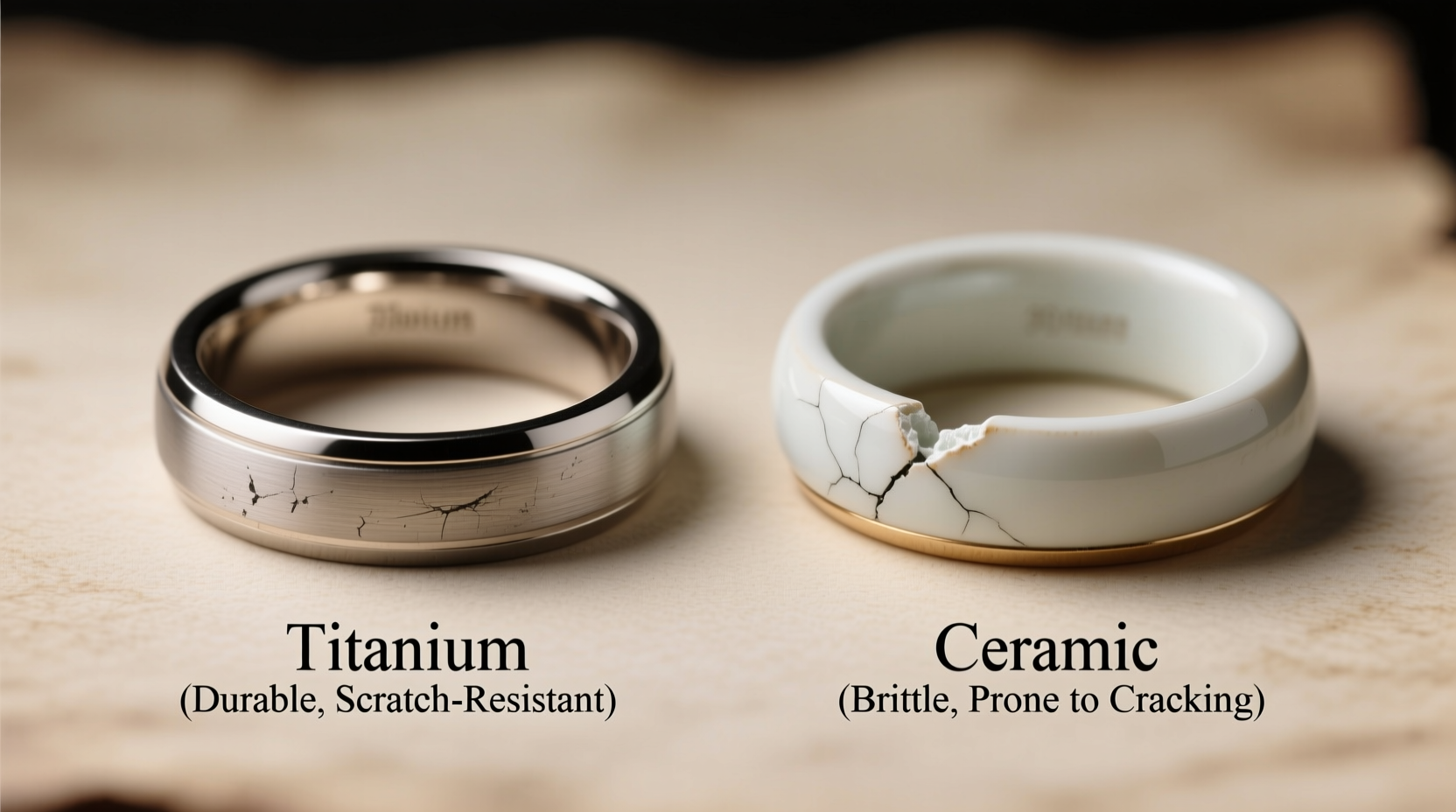
The core question isn’t just which ring survives a drop or resists scratches—it’s which maintains its integrity over 20, 30, or even 50 years of continuous wear. To assess this, we examine three mechanical properties: hardness (resistance to scratching), toughness (resistance to cracking or shattering), and structural stability (how the material reacts to stress over time).
Titanium is a metal alloy known for its strength-to-weight ratio. Most wedding bands use Grade 5 titanium (Ti-6Al-4V), which includes aluminum and vanadium for enhanced durability. It scores around 6 on the Mohs hardness scale—softer than sapphire or diamond, but harder than gold or silver. More importantly, titanium is highly ductile, meaning it bends rather than breaks under pressure. This makes it excellent at withstanding accidental knocks, such as bumping against a doorframe or dropping a tool at work.
Ceramic rings, typically made from zirconia (zirconium dioxide), are among the hardest materials used in jewelry. They score between 8 and 8.5 on the Mohs scale, making them extremely resistant to surface scratches—even from keys or sand. However, hardness doesn't equate to toughness. Ceramic is brittle by nature. While it won’t scratch easily, it can crack or shatter if struck at the right angle, especially if worn during high-impact activities like construction, martial arts, or heavy lifting.
Tip: If your job involves manual labor or frequent impact, avoid ceramic rings despite their scratch resistance—they’re prone to sudden fracture.Long-Term Wear Performance: Appearance Over Time
Aesthetic longevity matters just as much as physical durability. A ring that stays shiny and unblemished after decades signals quality and care. Here, ceramic has an initial advantage: it retains its polished finish almost indefinitely. Unlike metals that develop patina or micro-scratches, high-quality ceramic maintains a glass-like luster without polishing.
Titanium behaves differently. While it doesn’t tarnish or corrode like silver, it does accumulate fine surface marks over time. These aren’t deep gouges but light swirls from everyday contact—brushing against desks, countertops, or tools. The good news is titanium can be professionally refinished or polished back to its original state relatively easily, often at low cost.
Ceramic, once scratched deeply or chipped, cannot be repaired. There’s no practical way to polish or reshape a shattered ceramic band. Replacement becomes the only option. Titanium, in contrast, can endure multiple refinishing cycles over a lifetime.
“Ceramic rings look pristine until they don’t. One hard impact can end their lifespan abruptly. Titanium may show wear, but it adapts to life.” — Daniel Reeves, Jewelry Engineer and Materials Specialist
Environmental and Chemical Resistance
Both titanium and ceramic excel in resisting corrosion and chemical degradation—a major reason both are popular for active lifestyles or industrial environments.
Titanium is famously inert. It resists saltwater, chlorine, sweat, and most household cleaners. Surgeons use titanium implants because the body doesn’t reject it; similarly, titanium rings won’t react with skin chemistry, making them ideal for people with sensitive skin or allergies to nickel or cobalt.
Ceramic is also chemically stable. Zirconia doesn’t oxidize, discolor, or degrade when exposed to UV light, pool chemicals, or cleaning agents. However, unlike titanium, it doesn’t flex under thermal stress. Extreme temperature changes—such as moving from a cold outdoor environment into a hot shower—can theoretically contribute to microfractures over very long periods, though this is rare in normal use.
| Factor | Titanium | Ceramic |
|---|---|---|
| Scratch Resistance | Moderate (6 Mohs) | Excellent (8–8.5 Mohs) |
| Impact Resistance | High (ductile, bends) | Low (brittle, may shatter) |
| Corrosion Resistance | Exceptional | Excellent |
| Repairability | Yes (polishable) | No (must replace) |
| Hypoallergenic | Yes (Grade 5) | Yes |
| Weight | Light | Very Light |
| Lifespan Potential | Decades (with maintenance) | Years to decades (if undamaged) |
Comfort and Lifestyle Fit
Comfort influences how likely you are to keep wearing the ring consistently. Both materials are lightweight—ceramic slightly more so—which reduces finger fatigue. Neither causes skin irritation, a critical factor for lifelong wear.
Titanium offers greater design flexibility. It can be brushed, polished, engraved, or combined with wood, carbon fiber, or gold inlays. Its malleability allows resizing in some cases (though limited due to its strength). Ceramic, by contrast, is rigid in form. Once manufactured, it cannot be resized, re-engraved, or altered. If your finger size changes over time, titanium provides more adaptability.
For people with active lifestyles—athletes, mechanics, healthcare workers—titanium’s ability to absorb shocks without damage gives it a functional edge. Emergency responders often prefer titanium because it can be safely removed with standard tools if needed, whereas ceramic may fragment unpredictably under ring cutters.
Tip: Try a ring sizer before purchasing ceramic—once it’s made, adjustments are impossible.Real-World Longevity: A Mini Case Study
Consider Mark, a 32-year-old electrician who chose a black ceramic wedding band for its sleek look and scratch resistance. For five years, it remained flawless—no marks from tools or daily work. Then, during a routine job, he caught his hand on a steel beam. The ring cracked cleanly across the band and split open. He replaced it with a titanium model, same style, same color (via PVD coating). Ten years later, the titanium shows light surface wear but remains intact. He had it polished twice—at year 7 and year 10—and says it still feels secure.
Mark’s experience reflects a broader trend: ceramic performs exceptionally well in controlled conditions but fails catastrophically when subjected to unexpected force. Titanium, while showing gradual wear, endures through decades of unpredictable use.
Step-by-Step Guide: Choosing the Right Ring for Lifelong Wear
- Assess Your Daily Activities: Do you work with your hands? Play sports? Handle machinery? High-impact lifestyles favor titanium.
- Evaluate Allergy Concerns: Confirm the titanium is surgical-grade (Grade 5) and free of nickel. Ceramic is naturally hypoallergenic.
- Check Resizing Needs: If you anticipate weight changes or swelling, choose titanium for potential future adjustments.
- Test Comfort Over Time: Wear sample rings for a full day. Note any pinching, sliding, or pressure points.
- Review Repair and Maintenance Options: Ask the jeweler about refinishing services for titanium or replacement policies for ceramic.
- Consider Emotional Value: Will you pass this ring down? Titanium’s durability and repairability make it a better heirloom candidate.
Expert Insight: What Industry Professionals Recommend
Jewelers who specialize in men’s wedding bands often see patterns in returns and repairs. Ceramic rings come back more frequently due to breakage, especially among customers under 40 with physically demanding jobs.
“We sell more ceramic rings because they look amazing in photos and feel futuristic. But titanium has a higher retention rate. People don’t take them off, and they last.” — Lena Torres, Owner of Forge & Band Co., specializing in durable wedding jewelry
Materials scientists also emphasize that longevity isn’t just about hardness. “Toughness—the ability to absorb energy without failing—is often more important than scratch resistance in wearable items,” notes Dr. Alan Zhou, materials researcher at MIT. “Titanium wins in real-world durability because it combines strength, flexibility, and corrosion resistance.”
Frequently Asked Questions
Can ceramic rings be resized?
No. Ceramic is a sintered material—hardened under extreme heat and pressure—and cannot be cut or stretched without breaking. Resizing is impossible. You must purchase the correct size from the start.
Does titanium scratch more easily than ceramic?
Yes, titanium scratches more readily than ceramic due to its lower hardness. However, scratches on titanium are usually superficial and can be polished out. Ceramic avoids scratches but risks catastrophic failure from impacts.
Which is better for an active lifestyle?
Titanium is generally better for active individuals. It withstands drops, impacts, and daily abuse far better than ceramic. Firefighters, military personnel, and tradespeople overwhelmingly choose titanium for safety and reliability.
Final Verdict: Which Holds Up Better Over Decades?
When evaluating which material holds up better over decades of wear, the answer depends on how you define “holds up.”
If your priority is maintaining a perfect, mirror-like finish with zero scratches, ceramic wins—until it doesn’t. Its Achilles’ heel is brittleness. A single hard impact can end its usable life. For people seeking a “forever ring” that evolves with them, titanium is the superior choice. It may show signs of use, but those marks reflect a life lived. More importantly, titanium survives accidents, adapts to bodily changes, and can be restored when needed.
Over 30 years, a titanium ring might require one or two professional polishes, but it will remain structurally sound. A ceramic ring may look flawless for a decade—but if it breaks in year 11, its story ends there.
For true long-term resilience, repairability, and adaptability, titanium outperforms ceramic in nearly every real-world scenario. It’s not just about surviving—it’s about enduring.
Action Checklist: Making Your Decision
- ☐ Assess your occupation and hobbies for impact risk
- ☐ Confirm hypoallergenic needs with your dermatologist if necessary
- ☐ Try on both materials to compare weight and feel
- ☐ Verify resizing options (titanium only)
- ☐ Inquire about refinishing or warranty policies
- ☐ Choose titanium for maximum longevity and safety
Conclusion: Choose Wisely, Wear Forever
Your wedding band should be as enduring as the commitment it represents. While ceramic offers undeniable visual appeal and scratch resistance, titanium delivers unmatched resilience, safety, and long-term value. It bends but doesn’t break—much like a strong relationship. When decades of daily wear are the benchmark, titanium emerges as the more reliable partner.
💬 Have experience with titanium or ceramic rings? Share your story in the comments—your insight could help someone choose wisely for life.








