When choosing a bangle, especially one meant to be worn daily or for special occasions, material matters. Two popular choices—titanium and stainless steel—both promise strength and style, but they differ significantly in performance, feel, and price. While stainless steel bangles are widely available and affordable, titanium versions often come with a premium tag. But does that extra cost deliver real value? The answer depends on your priorities: longevity, comfort, skin sensitivity, or budget.
Durability and Longevity Compared
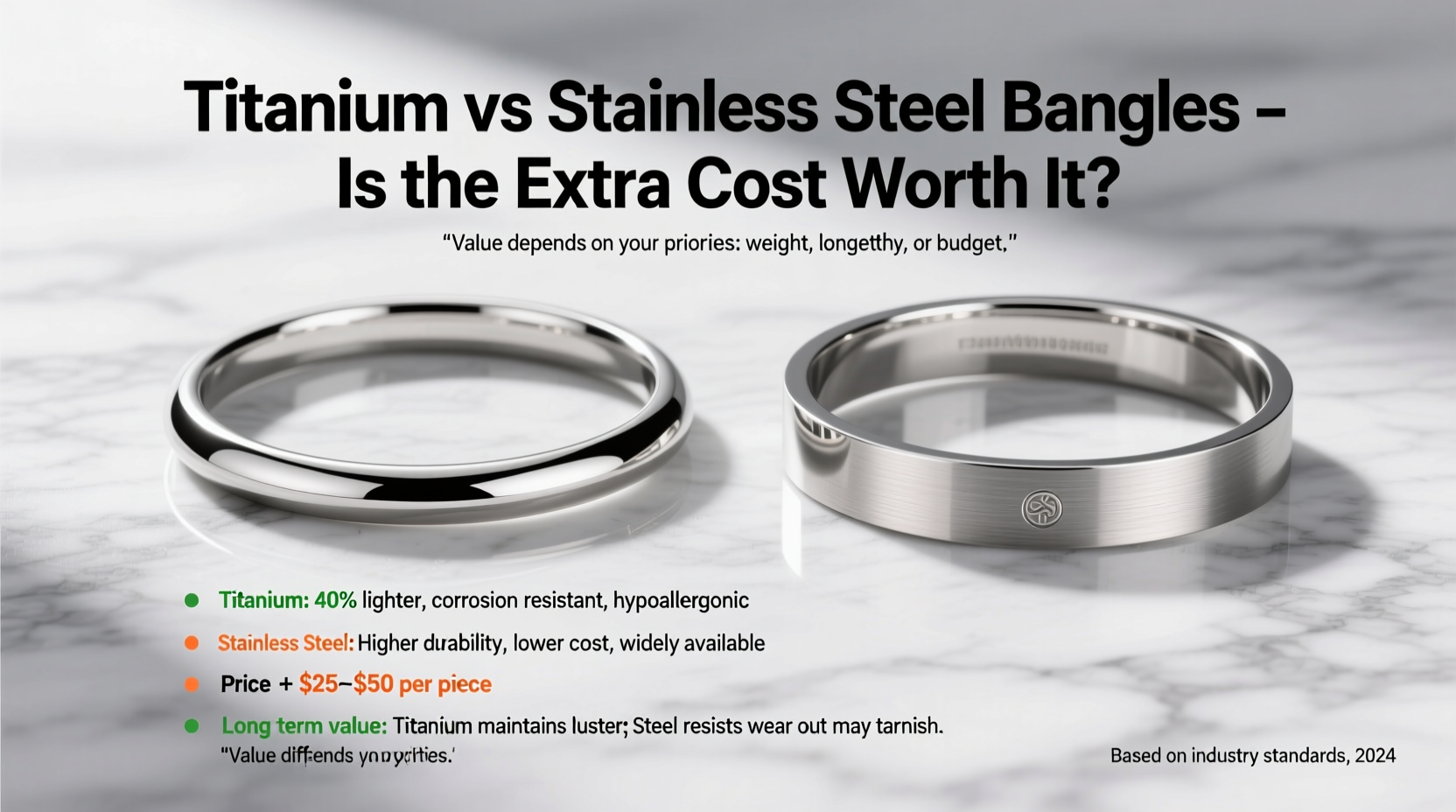
Both titanium and stainless steel are known for their resilience, but their resistance to wear follows different paths.
Stainless steel is an alloy primarily composed of iron, chromium, and nickel. It resists rust and tarnish well under normal conditions, making it ideal for everyday jewelry. However, over time, it can develop fine scratches and may lose its polish if not maintained. In harsh environments—like saltwater or chlorinated pools—it can corrode slightly, especially if the protective chromium layer is compromised.
Titanium, on the other hand, is naturally corrosion-resistant—even in seawater and acidic conditions. It’s also about 45% lighter than steel while maintaining exceptional strength-to-density ratio. This means titanium bangles resist dents, scratches, and environmental damage far better than most stainless steel variants. Medical-grade titanium (Grade 5) used in high-end jewelry is especially durable and stable.
Tip: If you live near the coast or swim frequently, titanium’s superior corrosion resistance makes it a smarter long-term investment.Comfort and Wearability
Weight plays a major role in comfort, especially for accessories worn all day. Titanium weighs significantly less than stainless steel—about half as much for the same volume. For people who find metal jewelry heavy or cumbersome, this difference is immediately noticeable.
A titanium bangle feels almost weightless on the wrist, reducing fatigue and increasing wearability. Stainless steel, while not excessively heavy, has a denser, more substantial feel that some prefer for its “premium” sensation. However, prolonged use can lead to discomfort, particularly for those with sensitive joints or smaller wrists.
Additionally, titanium is thermally neutral. It doesn’t heat up quickly in sunlight or feel icy when first put on, unlike stainless steel, which conducts temperature more readily. This subtle quality enhances daily comfort, especially in extreme climates.
Allergies and Skin Sensitivity
Skin reactivity is a critical factor many overlook until irritation occurs. Stainless steel contains nickel—a common allergen. Even high-quality 316L surgical steel includes trace amounts of nickel, which can trigger reactions in sensitive individuals, leading to redness, itching, or rashes.
Titanium is biocompatible and hypoallergenic. It’s widely used in medical implants because the body rarely rejects it. For anyone with sensitive skin or a history of metal allergies, titanium is the safer choice. There’s virtually no risk of reaction, even with continuous wear.
“Patients with metal sensitivities often report immediate relief when switching from steel to titanium jewelry.” — Dr. Lena Patel, Dermatologist & Contact Allergy Specialist
Cost Analysis: Upfront vs. Long-Term Value
Stainless steel bangles typically range from $15 to $50, depending on design and finish. They’re accessible, easy to replace, and widely available. Their affordability makes them ideal for fashion-forward pieces that change with trends.
Titanium bangles, by contrast, usually start at $70 and can exceed $200 for designer or custom models. The higher cost stems from titanium’s extraction complexity, machining difficulty, and lower global supply compared to steel.
But cost shouldn’t be viewed only at purchase. Consider lifespan: A titanium bangle can last decades without tarnishing, warping, or needing refinishing. Stainless steel may require polishing or eventually show signs of wear within 5–7 years of daily use. Over time, replacing multiple steel bangles could surpass the initial investment in a single titanium piece.
| Feature | Stainless Steel | Titanium |
|---|---|---|
| Average Price | $15 – $50 | $70 – $200+ |
| Weight | Heavy | Light |
| Scratch Resistance | Moderate | High |
| Corrosion Resistance | Good (but vulnerable to chlorides) | Excellent |
| Hypoallergenic | No (contains nickel) | Yes |
| Lifespan (daily wear) | 5–7 years | 15+ years |
| Maintenance | Polishing needed periodically | Nearly maintenance-free |
Real-World Example: Choosing for Active Lifestyles
Consider Mark, a marine biologist who wears his bangle every day, often while diving or handling lab equipment. He initially bought a polished stainless steel bangle for $35. Within a year, it developed micro-scratches and began showing faint rust spots after repeated exposure to salt spray. He replaced it twice over five years, spending $110 total and still dealing with discomfort due to its weight.
Eventually, he switched to a Grade 5 titanium bangle costing $140. After three years of constant wear—including underwater expeditions—the bangle looks nearly new. No corrosion, no allergic reaction, and he forgets it’s even on his wrist. Though the upfront cost was higher, the long-term savings and comfort made it worthwhile.
Care and Maintenance Requirements
One of the underrated advantages of titanium is how little it demands in upkeep. A quick rinse with soapy water and a soft cloth are usually enough to keep it looking pristine. It doesn’t tarnish, so there’s no need for chemical polishes or frequent buffing.
Stainless steel requires more attention. To maintain shine, periodic polishing with a jewelry cloth is recommended. Avoid exposing it to bleach, chlorine, or strong acids, which can break down the passive oxide layer and lead to pitting. For those unwilling to commit to regular care, stainless steel can degrade faster than expected.
Maintenance Checklist for Metal Bangles
- Remove before swimming, showering, or applying lotions
- Clean monthly with mild soap and water
- Use a microfiber cloth to restore shine
- Avoid contact with household cleaners or perfumes
- Store separately to prevent scratching
When Stainless Steel Makes Sense
Titanium isn’t always the best choice. If you’re buying a bangle for occasional wear—such as a wedding accessory, gift, or seasonal fashion statement—stainless steel offers excellent value. Its lustrous finish mimics silver or platinum at a fraction of the cost, and modern coatings like PVD (Physical Vapor Deposition) can enhance scratch and fade resistance.
For budget-conscious shoppers or those experimenting with styles, stainless steel allows flexibility. You can own multiple designs without financial strain. And if one gets damaged or lost, replacement is inexpensive.
Frequently Asked Questions
Can I resize a titanium bangle?
No—titanium is extremely hard to cut and reshape without industrial tools. Most titanium bangles are sold in fixed sizes, so accurate measurement is essential before purchase.
Does stainless steel turn green or black?
Unlike copper alloys, stainless steel doesn’t typically discolor skin. However, trapped moisture and body chemistry can sometimes cause minor residue, especially if the steel is low quality or plated.
Is titanium magnetic?
No, pure titanium is non-magnetic. Some titanium alloys may show slight magnetism, but generally, titanium bangles won’t interfere with medical devices or set off metal detectors.
Final Verdict: Is the Extra Cost Worth It?
The value of titanium over stainless steel hinges on usage. For everyday wear, active lifestyles, sensitive skin, or long-term heirloom potential, titanium justifies its higher price. Its durability, comfort, and hypoallergenic nature offer tangible benefits that accumulate over time.
However, if you're seeking affordability, variety, or temporary elegance, stainless steel remains a practical and stylish option. It performs well under moderate conditions and suits changing tastes.
In essence, titanium isn’t just a luxury upgrade—it’s a functional investment. You’re not paying for prestige alone, but for a material engineered to endure, adapt, and disappear into your daily life without hassle.
🚀 Ready to make a lasting choice? Evaluate your lifestyle, skin sensitivity, and how often you’ll wear the bangle. Choose steel for flexibility, titanium for permanence. Your next bangle should reflect not just your style—but your life.