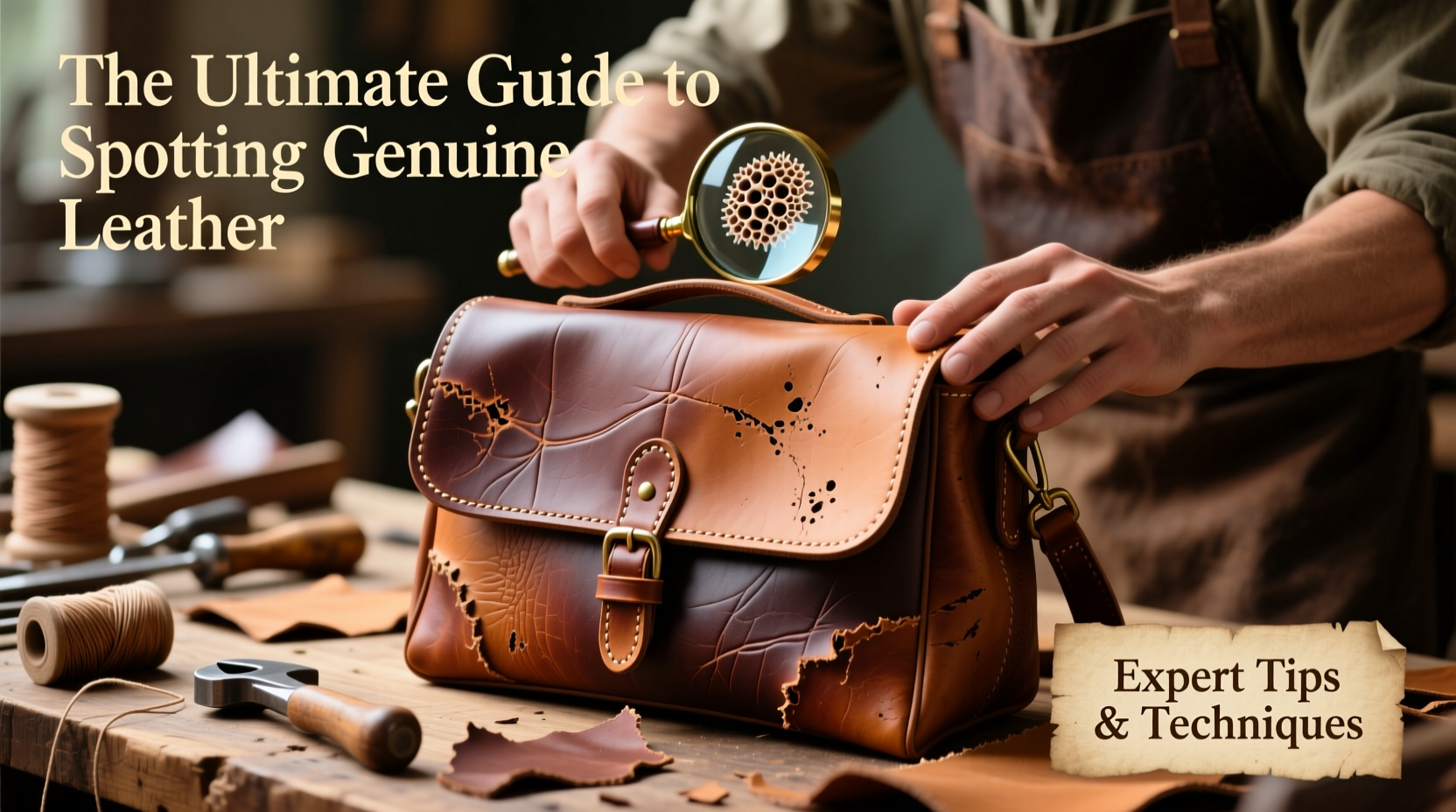
Handmade leather bags carry a quiet authority—timeless in design, rich in texture, and built to last. But not all bags labeled “leather” are created equal. With the rise of synthetic imitations and misleading marketing, distinguishing genuine leather has become both an art and a necessity. For discerning buyers, collectors, and conscious consumers, knowing how to verify authenticity ensures you're investing in quality, not illusion.
Genuine leather is not just about luxury; it's about longevity, breathability, and natural variation. Unlike mass-produced alternatives, each hide tells a story through its grain, scars, and patina. This guide equips you with proven methods—visual, tactile, olfactory, and structural—to confidently identify true leather in handmade bags.
Understanding Leather: What Makes It Genuine?
Genuine leather refers to any product made from animal hides that have undergone tanning processes to preserve durability and softness. However, within this category lies a spectrum—from full-grain and top-grain to corrected grain and bonded leather—each varying in quality and longevity.
Full-grain leather, the highest grade, retains the original surface of the hide, including natural marks and grain patterns. It develops a rich patina over time and resists wear better than other types. Top-grain is sanded and refinished for a smoother look but sacrifices some natural strength. Bonded leather, often marketed deceptively as “genuine,” consists of shredded leather fibers glued together with polyurethane—a far cry from authentic material.
In handmade bags, craftsmanship often aligns with material integrity. Artisans who use full-grain or vegetable-tanned leather typically take pride in transparency. Still, labels can be misleading. Always verify beyond branding.
“Real leather ages like fine wine—it gets better with time, not worse.” — Luca Moretti, Master Leather Artisan, Florence
Step-by-Step Guide to Identifying Genuine Leather
Determining authenticity requires more than a glance. Follow these five steps when inspecting a handmade bag:
- Examine the Surface Under Natural Light: Hold the bag near a window. Genuine leather shows irregular grain patterns—no two areas look exactly alike. Uniform textures suggest printed synthetics.
- Feel the Texture and Weight: Real leather feels soft yet firm, with slight variations across the surface. It’s heavier than faux leather due to its density. If the material feels overly smooth, plastic-like, or unnaturally light, proceed with caution.
- Smell the Material: Bring the bag close and inhale gently near a seam or interior panel. Genuine leather emits a rich, earthy aroma—often described as warm or slightly sweet. Faux leather smells chemical, rubbery, or artificial.
- Check the Edges and Backside: Inspect cut edges and lining flaps. On genuine leather, the edge fibers appear fibrous and matte, sometimes dyed. The reverse side (flesh side) should show a porous, suede-like finish. Synthetic materials often have a woven backing coated in plastic.
- Apply a Water Test (With Caution): Dab a small drop of water on an inconspicuous area. On absorbent leathers like vegetable-tanned, the spot will darken and slowly evaporate. On PU or PVC, water beads up and remains unchanged.
Visual and Structural Clues in Handmade Bags
Beyond the hide itself, construction details reveal whether a bag respects traditional leathercraft principles. Handmade pieces emphasize precision and natural materials.
- Stitching Style: Look for saddle stitching—two needles and a single thread looped through each stitch. When one thread breaks, the rest remain intact. Machine stitching uses continuous thread and unravels easily.
- Edge Finishing: High-end artisans paint and buff edges until smooth. Poorly sealed or rough-cut edges indicate cost-cutting.
- Lining Quality: While linings aren’t always leather, premium bags avoid cheap polyester. Cotton twill, canvas, or even silk linings complement genuine leather interiors.
- Metal Hardware: Authentic leather bags pair with solid brass, stainless steel, or nickel finishes—not hollow, lightweight zinc alloys that chip easily.
| Feature | Genuine Leather Indicator | Fake Leather Red Flag |
|---|---|---|
| Surface Grain | Irregular, unique pattern across panels | Perfectly repeating texture (like wallpaper) |
| Reverse Side | Fibrous, suede-like, unfinished feel | Woven fabric backing with plastic coating |
| Weight | Substantial, dense hand-feel | Surprisingly light or flimsy |
| Smell | Earthy, warm, natural scent | Chemical, plastic, or odorless |
| Aging Over Time | Develops patina, darkens slightly | Crazing, peeling, or fading after months |
Mini Case Study: A Buyer’s Close Call
Sophie, a designer accessory collector in Portland, nearly purchased a \"handmade Italian leather tote\" from an online boutique. Priced suspiciously low at $120, the photos looked convincing. But upon closer inspection during a video call with the seller, she noticed something odd—the grain repeated identically across the front and back panels.
She asked for a close-up of the interior edge. The camera revealed a gray mesh backing beneath a glossy surface. No natural fiber breakage, no suede underside. She requested a smell test via live audio—nothing distinctive came through. Within minutes, Sophie concluded it was high-quality faux leather, possibly microfiber-based, but not genuine hide.
She walked away and later found a similar-sized bag from a verified artisan using full-grain vegetable-tanned leather—for $380. Three years later, hers has deepened in color, developed character, and remains structurally sound. The imitation? Likely discarded by now.
Expert Checklist: Verify Before You Buy
Use this checklist when evaluating a handmade leather bag—online or in person:
- ✅ Grain pattern varies naturally across the surface
- ✅ Slight imperfections present (scars, insect bites, wrinkles)
- ✅ Warm, organic smell detectable upon close inspection
- ✅ Material feels cool to the touch initially, warms with handling
- ✅ Edges are burnished or painted, not raw or frayed
- ✅ Stitching is tight, consistent, preferably saddle-stitched
- ✅ Seller provides origin details (tannery, animal type, tanning method)
- ✅ Price reflects labor and material cost—extremely low prices raise suspicion
Frequently Asked Questions
Is “genuine leather” the same as full-grain leather?
No. “Genuine leather” is a broad term that includes lower grades like corrected grain and bonded leather. Full-grain is the highest quality tier, retaining the entire grain layer. All full-grain is genuine, but not all genuine leather is full-grain.
Can I trust online sellers claiming their bags are handmade with real leather?
Some can be trusted—but verify independently. Look for detailed product descriptions, close-up photos of grain and stitching, customer reviews mentioning aging, and transparent return policies. Reputable artisans often share behind-the-scenes videos or workshop info.
Does genuine leather need special care?
Yes. While durable, genuine leather benefits from occasional conditioning with natural oils (like neatsfoot or beeswax) and protection from prolonged sun exposure or moisture. Store in breathable cotton bags, never plastic, to prevent mold and drying.
Conclusion: Trust Your Senses, Invest in Integrity
Identifying genuine leather isn't reserved for experts—it's a skill sharpened by attention and experience. In a market flooded with convincing fakes, your eyes, hands, nose, and instincts are powerful tools. A truly handmade leather bag isn't just an accessory; it's a companion shaped by time, use, and care.
Next time you consider a purchase, slow down. Touch deeply. Look closely. Breathe in. Ask questions. Demand transparency. When you choose authenticity, you support craftsmanship, sustainability, and timeless design.
💬 Have you ever been fooled by fake leather—or triumphantly spotted the real thing? Share your story below and help others learn from your experience.








