Garlic powder is a staple in kitchens around the world, prized for its concentrated flavor, long shelf life, and convenience. But what exactly goes into transforming pungent fresh garlic cloves into that fine, golden-brown powder sitting in your spice rack? Understanding the process behind making garlic powder reveals more than just food science—it uncovers how texture, temperature, and timing influence flavor intensity, aroma retention, and culinary performance. For home cooks and professional chefs alike, knowing this process empowers smarter use of one of the most essential pantry ingredients.
While it may seem like a simple dehydration of garlic, the transformation involves precise steps to preserve volatile compounds, prevent spoilage, and maintain consistency. Whether you're considering making your own at home or simply want to understand what distinguishes high-quality commercial garlic powder, this guide breaks down every stage with technical accuracy and practical insight.
Definition & Overview
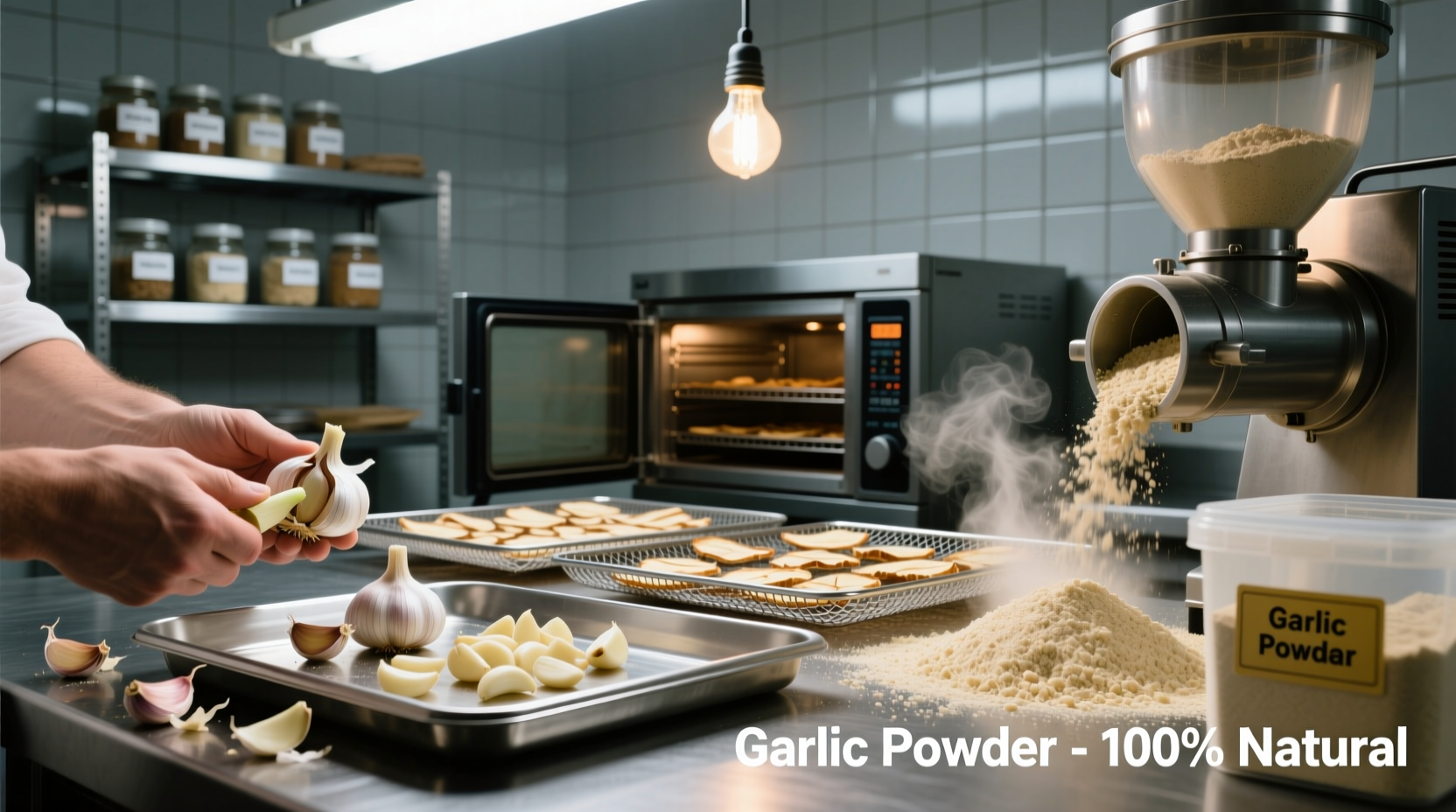
Garlic powder is a dehydrated form of fresh garlic (Allium sativum) ground into a fine or medium-fine powder. It belongs to the category of dried spices and is used as a flavoring agent in dry rubs, seasoning blends, soups, sauces, marinades, and processed foods. Unlike granulated garlic, which has a coarser texture, garlic powder dissolves more readily and disperses evenly throughout dishes.
The origins of garlic powder trace back to mid-20th century food processing innovations, when advances in dehydration technology allowed for mass production of shelf-stable vegetable powders. Garlic, with its strong aroma and widespread culinary use, was a natural candidate. Today, major producers include China, India, and the United States, where large-scale operations supply both retail brands and food manufacturers.
Flavor-wise, garlic powder delivers a milder, less sharp version of raw garlic. The drying process reduces allicin—the compound responsible for garlic’s bite—but develops deeper, slightly sweet, umami-rich notes through controlled heat exposure. This makes it ideal for applications where immediate pungency isn’t desired but sustained background flavor is key.
Key Characteristics
| Characteristic | Description |
|---|---|
| Flavor Profile | Mellow, savory, slightly sweet, with subdued pungency compared to fresh garlic. |
| Aroma | Potent but less volatile than fresh; earthy, roasted-onion-like scent when crushed. |
| Color | Light tan to pale golden brown; darker shades indicate over-drying or caramelization. |
| Texture | Fine, free-flowing powder; should not clump under proper storage. |
| Heat Level | Low; contributes depth rather than spiciness. |
| Culinary Function | Base seasoning, flavor enhancer, textural component in dry mixes. |
| Shelf Life | 2–3 years when stored properly; loses potency gradually after 18 months. |
The Industrial Process Behind Garlic Powder Production
Commercial garlic powder manufacturing follows a tightly controlled sequence designed to maximize yield, safety, and sensory quality. Each step is engineered to minimize microbial risk while preserving as much of garlic’s signature character as possible.
Step 1: Selection and Sorting
Only mature, firm, disease-free garlic bulbs are selected. These are typically harvested in late summer, cured for several weeks to reduce moisture content, and then sorted by size and quality. Larger cloves are preferred because they offer higher yields and easier peeling.
Step 2: Cleaning and Peeling
Bulbs undergo mechanical cleaning to remove dirt and outer skins. They then pass through automated peelers—often using tumbling drums with abrasive surfaces or compressed air systems—that separate cloves from papery husks without damaging the flesh.
Step 3: Slicing or Mincing
Cloves are sliced uniformly into thin pieces (about 1–3 mm thick). Uniformity ensures even drying. Some processors mince instead of slice, especially if aiming for ultra-fine powder, though slicing remains standard due to better structural integrity during drying.
Step 4: Blanching (Optional)
In some processes, slices are briefly blanched in hot water or steam. This step serves multiple purposes: it inactivates enzymes that cause browning, reduces microbial load, and can mellow the final flavor. However, excessive blanching diminishes volatile sulfur compounds, so many premium producers skip this stage.
Step 5: Drying
This is the most critical phase. The goal is to reduce moisture content from ~60% in fresh garlic to below 6% to prevent mold and extend shelf life. Two primary methods are used:
- Hot Air Drying (Most Common): Slices are conveyed through heated tunnels at 60–70°C (140–160°F) for 4–8 hours. Faster and cost-effective, but prolonged heat exposure can degrade flavor compounds.
- Freeze Drying (Premium): Involves freezing garlic and sublimating ice under vacuum. Preserves more volatile aromatics and results in brighter color and fresher taste, though significantly more expensive.
Dried flakes must be cooled before grinding to avoid caking due to residual heat.
Step 6: Grinding and Sieving
Dried garlic flakes are milled using hammer mills or pin grinders into a consistent particle size. The powder passes through mesh screens (typically 40–80 mesh) to ensure uniform fineness. Oversized particles are recirculated for regrinding.
Step 7: Quality Control and Packaging
Final batches are tested for moisture content, microbial contamination (e.g., Salmonella, E. coli), color, and aroma. Once approved, the powder is packaged in moisture-proof, light-resistant containers—often foil-lined bags or rigid jars—with oxygen absorbers to prolong freshness.
Pro Tip: Look for garlic powder labeled “freeze-dried” or “cold-milled” if maximum flavor fidelity is important. These indicate gentler processing and better retention of aromatic compounds.
How to Make Garlic Powder at Home
Homemade garlic powder offers superior freshness and control over ingredients—no anti-caking agents, no unknown additives. While small-scale, it's surprisingly effective and economical if you grow or buy garlic in bulk.
- Peel and Slice: Use a paring knife or silicone peeler to remove skins. Slice cloves as thinly and evenly as possible—ideally 1/8 inch thick—using a mandoline for consistency.
- Dry: Choose one method:
- Oven Method: Place slices on parchment-lined trays. Bake at the lowest setting (ideally 150°F / 65°C) with the door slightly ajar for 6–10 hours until brittle.
- Dehydrator Method: Set to 135°F (57°C) for 8–12 hours. Check periodically; fully dried garlic snaps cleanly.
- Grind: Break dried slices into smaller chunks and pulse in a spice grinder or high-speed blender until powdery. Avoid overfilling; work in small batches.
- Sift: Pass through a fine mesh sieve. Re-dry and re-grind any soft or dark pieces.
- Store: Transfer to an airtight glass jar away from heat and light. Label with date. Use within 12 months for peak flavor.
Yield: Approximately 1 cup of fresh garlic (about 10 cloves) produces roughly 1 tablespoon of finished powder.
“The difference between store-bought and homemade garlic powder is night and day. When I make my own, the aroma fills the kitchen like toasted nuts—deep, warm, alive. You lose that magic in mass production.” — Chef Elena Ruiz, Culinary Instructor
Variants & Types of Garlic Powder
Not all garlic powders are created equal. Variations exist based on processing, origin, and formulation:
- Standard Garlic Powder: Made from hot-air dried garlic. Most common in supermarkets. Affordable, widely available, moderate flavor.
- Organic Garlic Powder: Produced from organically grown garlic without synthetic pesticides. Often uses gentler drying methods.
- Freeze-Dried Garlic Powder: Higher-end product retaining more volatile oils and fresher taste. More expensive but favored in specialty cooking.
- Garlic Salt: Blend of garlic powder and table salt (typically 3:1 ratio). Not a substitute for pure garlic powder due to sodium content.
- Granulated Garlic: Coarser than powder, made from larger dried flakes. Dissolves slower; better for rubs and pickling brines.
- Smoked Garlic Powder: Made from smoked garlic cloves. Adds barbecue-like depth to stews, beans, and spice blends.
| Type | Best Used For | Flavor Intensity |
|---|---|---|
| Standard | Everyday cooking, soups, sauces | Medium |
| Organic | Health-conscious recipes, clean-label diets | Medium-high |
| Freeze-Dried | Gourmet dishes, finishing blends | High |
| Smoked | BBQ rubs, chili, roasted vegetables | Medium-strong, smoky |
| Garlic Salt | Quick seasoning, meats, fries | Low (due to dilution) |
Comparison with Similar Ingredients
Garlic powder is often confused with other garlic-based products. Understanding the differences ensures correct usage and prevents recipe imbalances.
| Ingredient | Form | Flavor Strength | Substitution Ratio |
|---|---|---|---|
| Garlic Powder | Fine powder | Moderate | 1 tsp = 1 clove minced garlic (approx.) |
| Granulated Garlic | Coarse granules | Slightly milder | 1½ tsp ≈ 1 tsp powder |
| Minced Garlic (Jarred) | Wet, preserved in oil/acid | Stronger, tangier | ½ tsp jarred = 1 clove fresh |
| Garlic Salt | Powdered blend with salt | Weaker per volume | Use sparingly; adjust salt elsewhere |
| Onion Powder | Fine powder | Different profile (sweet, pungent) | Not interchangeable; complementary only |
Key takeaway: Garlic powder cannot be directly swapped with fresh garlic without adjusting liquid content and cooking time. Its concentrated nature means overuse leads to bitterness or off-flavors.
Practical Tips & FAQs
How much garlic powder equals one fresh clove?
As a general rule, ⅛ to ¼ teaspoon of garlic powder replaces one medium fresh clove. Start low—especially in delicate dishes—and adjust to taste.
Does garlic powder go bad?
It doesn’t spoil if kept dry, but loses potency over time. Discard if it smells flat, musty, or shows signs of moisture or clumping. Properly stored, it lasts 24–36 months.
Can I use garlic powder in place of fresh garlic?
Yes, but with caveats. Garlic powder lacks the bright, sharp bite of raw garlic and won’t caramelize like fresh. Best used in cooked dishes, dressings, or dry rubs. Never substitute 1:1 in salsas or aioli.
Why does my garlic powder clump?
Moisture absorption is the culprit. Always use a dry spoon and seal the container tightly. Avoid storing near the stove or dishwasher. Adding a few grains of uncooked rice to the jar can help absorb ambient humidity.
Is garlic powder healthy?
While less potent than fresh garlic, it still contains beneficial sulfur compounds like diallyl disulfide and allyl methyl sulfide, linked to cardiovascular and immune support. However, it lacks allicin unless rehydrated, as allicin forms only when alliin contacts alliinase—an enzyme destroyed during drying.
What are anti-caking agents in commercial garlic powder?
Many brands add silicon dioxide or calcium silicate to prevent clumping. These are safe in small amounts but absent in high-quality or homemade versions. Read labels if avoiding additives.
Storage Checklist:
- Store in an airtight container
- Keep in a cool, dark cabinet (not above the stove)
- Label with purchase/make date
- Do not refrigerate (condensation causes clumping)
- Buy in small quantities if infrequently used
Summary & Key Takeaways
The journey from pungent garlic clove to versatile garlic powder is a careful balance of science and craft. Whether produced industrially or at home, the process hinges on moisture removal, temperature control, and particle refinement—all aimed at capturing garlic’s essence in stable, usable form.
Understanding this process allows cooks to make informed choices: selecting freeze-dried over standard powder for greater aroma, avoiding substitutions that compromise dish balance, or confidently making their own for unmatched freshness.
Garlic powder is more than a convenience—it’s a testament to how thoughtful food engineering enhances everyday cooking. By respecting its origins and limitations, we elevate our seasonings from mere shortcuts to intentional tools of flavor design.
Ready to upgrade your spice game? Try making a small batch of homemade garlic powder this week—and taste the difference precision makes.








