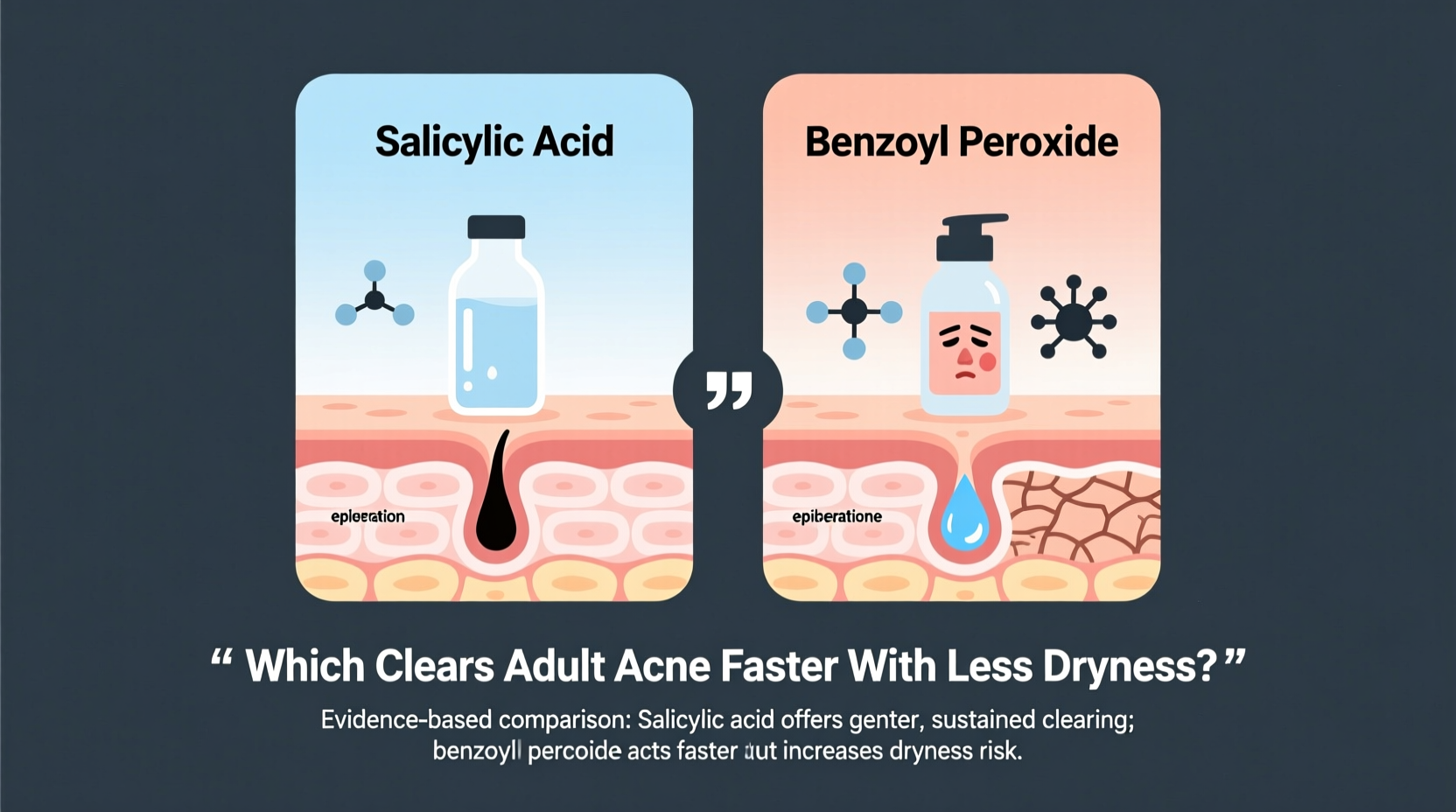
Adult acne is a persistent, often frustrating condition that affects millions—even those who thought they’d left breakouts behind in their teens. Unlike teenage acne, adult acne tends to be more inflammatory, hormonally influenced, and sensitive to irritation. When choosing between salicylic acid and benzoyl peroxide, two of the most widely used over-the-counter acne fighters, the decision isn’t just about effectiveness—it’s also about tolerability. For adults dealing with mature, often drier skin, minimizing irritation while achieving clear skin is paramount. This guide breaks down how each ingredient works, compares their speed and side effects, and offers a science-backed path to clearer skin without excessive dryness.
How Salicylic Acid Works on Adult Acne
Salicylic acid is a beta-hydroxy acid (BHA) known for its ability to exfoliate inside pores. It’s oil-soluble, allowing it to penetrate sebum and dissolve the buildup of dead skin cells that clog follicles—often the starting point of comedonal acne (blackheads and whiteheads). Because adult acne frequently presents as deep, stubborn clogs along the jawline and chin, salicylic acid’s pore-clearing action makes it particularly effective for these areas.
It also has mild anti-inflammatory properties, helping reduce redness and swelling associated with early-stage pimples. However, it does not kill acne-causing bacteria (like Cutibacterium acnes) directly, which limits its power against inflamed, pus-filled lesions.
One of salicylic acid’s biggest advantages for adult users is its gentler profile. While it can cause dryness or flaking, especially at higher concentrations (2%), it's generally better tolerated than benzoyl peroxide. People with combination or dry skin types—common among adults—often find they can use salicylic acid daily without significant irritation, especially when introduced gradually.
Tip: Start with a low concentration (0.5%–1%) salicylic acid cleanser every other day, then build up to daily use if your skin tolerates it well.How Benzoyl Peroxide Clears Acne—and Why It Can Be Harsh
Benzoyl peroxide (BP) is a potent antimicrobial agent that kills C. acnes bacteria on contact. It also helps shed dead skin cells and reduces inflammation, making it highly effective against inflammatory acne—those red, painful bumps that plague many adults, especially around the lower face.
Studies show that benzoyl peroxide can reduce acne lesions by 40–60% within four weeks of consistent use. Its fast-acting nature makes it a go-to for sudden flare-ups. However, this power comes at a cost: BP is notoriously drying and irritating. It generates free radicals to destroy bacteria, but this oxidative process can compromise the skin barrier, leading to peeling, tightness, and even redness or stinging—especially in adults whose skin naturally produces less oil and repairs more slowly.
Another downside: benzoyl peroxide bleaches fabrics. Pillowcases, towels, and clothing can become stained after contact with even small amounts of residual product—a nuisance many users overlook until it happens.
“Benzoyl peroxide is excellent for killing acne bacteria quickly, but we often see adult patients discontinue it due to irritation. The key is using the lowest effective concentration.” — Dr. Lena Torres, Board-Certified Dermatologist
Direct Comparison: Speed, Efficacy, and Dryness
When deciding between salicylic acid and benzoyl peroxide, three factors matter most: how fast it works, how well it clears different types of acne, and how gentle it is on mature skin.
| Factor | Salicylic Acid | Benzoyl Peroxide |
|---|---|---|
| Best for acne type | Blackheads, whiteheads, mild inflammatory | Inflammatory papules, pustules, cystic |
| Speed of results | Slower (3–6 weeks) | Faster (2–4 weeks) |
| Dryness/irritation risk | Moderate (manageable with moisturizer) | High (especially at 5–10%) |
| Kills acne bacteria? | No | Yes |
| Suitable for sensitive skin? | Often yes | Rarely (unless low dose) |
| Stains fabrics? | No | Yes |
While benzoyl peroxide delivers faster visible improvement—particularly for red, infected pimples—it often does so at the expense of comfort. Salicylic acid may take longer to show dramatic changes, but it supports long-term clarity by preventing clogged pores before they become full-blown breakouts. For adults prone to hormonal fluctuations and reactive skin, this preventive approach can be more sustainable.
Real-World Example: Two Women, Two Approaches
Amy, 34, struggled with recurring jawline acne triggered by her menstrual cycle. She tried a 5% benzoyl peroxide spot treatment recommended by a friend. Within three days, her active breakouts began shrinking—but so did her confidence. Her skin became red, flaky, and tight. After a week, she stopped using it altogether, fearing damage to her skin barrier.
She switched to a gentle 1% salicylic acid wash used every evening. At first, no immediate change occurred. But by week four, her pre-breakout bumps were less frequent, and existing clogs softened and cleared. By week eight, her monthly flare-ups were milder and easier to manage. Though slower, the results lasted—and her skin felt healthier overall.
Meanwhile, Jess, 29, dealt with sudden, painful cysts under her chin. She needed something aggressive. After consulting a dermatology nurse, she started with a 2.5% benzoyl peroxide gel applied only to affected areas at night, paired with a rich ceramide moisturizer. Despite initial tingling, she didn’t experience severe dryness. Within 10 days, her cyst reduced in size and pain. She now uses it intermittently during flare-ups and maintains clarity with weekly salicylic acid exfoliation.
Their stories illustrate a key truth: the “best” ingredient depends on your acne pattern and skin resilience. There’s no universal winner—only what works best for your unique situation.
Smart Combination Strategy: Use Both Wisely
You don’t have to choose one or the other. Many dermatologists recommend combining salicylic acid and benzoyl peroxide strategically—just not at the same time. Using them together in a single application can lead to over-exfoliation, increased sensitivity, and compromised barrier function.
A safer approach is to alternate them based on need:
- Use salicylic acid daily (e.g., in a cleanser or toner) to keep pores clear and prevent new breakouts.
- Reserve benzoyl peroxide for active inflammatory lesions—apply as a targeted spot treatment at night.
- Always follow with a non-comedogenic moisturizer to buffer dryness.
This dual-method strategy leverages the strengths of both ingredients while minimizing their weaknesses. It’s especially effective for adult acne that includes both clogged pores and occasional inflammatory flare-ups.
Step-by-Step Guide to Introducing Either Ingredient Safely
Starting too aggressively is the most common reason people abandon effective acne treatments. Follow this timeline to minimize irritation and maximize results:
- Week 1: Choose one product (either 0.5%–1% salicylic acid or 2.5% benzoyl peroxide). Apply to clean, dry skin every other night for 10 minutes, then rinse off. This builds tolerance.
- Week 2: Apply the same product nightly, leaving it on for 30 minutes before rinsing. Monitor for redness or stinging.
- Week 3: If no irritation occurs, leave the product on overnight. Add a pea-sized amount of fragrance-free moisturizer immediately after.
- Week 4: Assess results. If improvement is minimal and skin remains calm, consider increasing frequency or concentration—but only one variable at a time.
- Ongoing: Re-evaluate every 6–8 weeks. If acne improves, scale back to maintenance (e.g., every other night or 2–3 times per week).
This gradual introduction allows your skin to adapt, reducing the risk of rebound breakouts caused by over-drying.
Tip: Always patch-test new products behind the ear or on the jawline for 48 hours before full-face application.FAQ: Common Questions Answered
Can I use salicylic acid and benzoyl peroxide on the same day?
Yes, but not simultaneously. Use salicylic acid in the morning (e.g., in a cleanser) and benzoyl peroxide at night (as a spot treatment). This avoids ingredient conflict and gives your skin time to recover between applications.
Which is better for hormonal acne?
Hormonal acne often involves deep, tender cysts along the lower face. Benzoyl peroxide is more effective at reducing these inflammatory lesions quickly. However, because hormonal triggers persist, pairing BP with salicylic acid for daily maintenance offers a balanced, long-term solution.
Does salicylic acid thin the skin?
No, salicylic acid does not thin the skin. It exfoliates the topmost layers and clears pores, but regular use at appropriate concentrations can actually improve skin texture and resilience over time. Overuse or combining with multiple harsh actives, however, may impair the barrier.
Checklist: Choosing the Right Treatment for You
Answer these questions to determine your best starting point:
- ✅ Is your acne mostly blackheads and whiteheads? → Try salicylic acid.
- ✅ Are your breakouts red, swollen, and painful? → Start with benzoyl peroxide (2.5%).
- ✅ Do you have dry or sensitive skin? → Begin with salicylic acid or diluted BP; always moisturize.
- ✅ Have you used retinoids or other exfoliants? → Avoid combining with strong acids or BP unless guided by a pro.
- ✅ Are you pregnant or nursing? → Salicylic acid (topical) is generally considered safe; consult your doctor before using BP.
Final Recommendation: Prioritize Skin Health Over Speed
While benzoyl peroxide technically clears inflammatory acne faster, it often does so at the expense of skin comfort—especially for adults. Salicylic acid may work more slowly, but its gentler action supports long-term clarity with fewer side effects. The goal isn’t just to clear acne quickly; it’s to do so without damaging your skin barrier, triggering sensitivity, or creating dependency on harsh treatments.
The most effective approach combines patience, consistency, and smart layering. Begin with the gentler option (likely salicylic acid), monitor your skin’s response, and escalate only if needed. Pair any active ingredient with a simple, nourishing routine: a mild cleanser, antioxidant serum (like vitamin C), moisturizer, and daily sunscreen.
“For adult acne, I always say: treat the skin, not just the spots. A healthy barrier heals faster and resists future breakouts better than aggressively treated, compromised skin.” — Dr. Rajiv Mehta, Clinical Dermatologist
Conclusion
Choosing between salicylic acid and benzoyl peroxide isn’t about picking the strongest weapon—it’s about selecting the right tool for your skin’s needs. If you value gentler care and long-term prevention, salicylic acid is likely your best bet. If you’re facing sudden, angry breakouts and need fast relief, benzoyl peroxide—used wisely—can deliver. The smartest move? Understand your acne pattern, start slow, and never sacrifice skin health for short-term gains.
💬 Have experience with either ingredient? Share your story in the comments—your insight could help someone finally find their clear skin solution.








