When it comes to long-lasting, salon-quality manicures at home, two options dominate the conversation: press-on nails and dip powder. Both promise durability, vibrant color, and a professional finish—without weekly salon visits. But which one truly lasts longer? And more importantly, which is gentler on your natural nails? Understanding the differences in application, wear time, removal, and long-term nail health is essential for making an informed choice.
Durability Showdown: How Long Each Manicure Actually Lasts
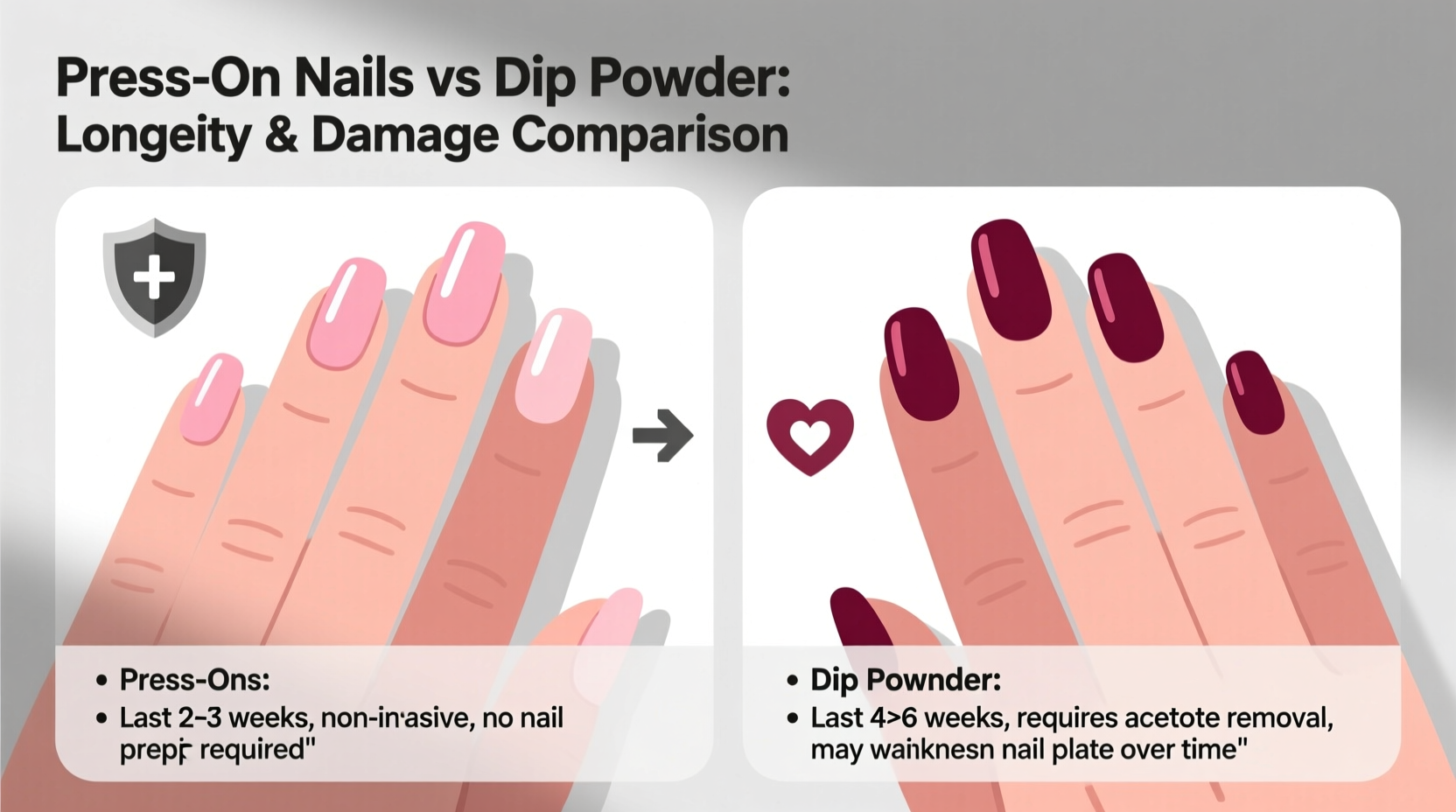
The lifespan of a manicure depends on adhesion quality, daily wear, and lifestyle factors like hand usage and exposure to water or chemicals. However, under optimal conditions, each option has a predictable performance window.
Press-on nails typically last between 5 to 10 days. High-quality sets with proper adhesive tabs or glue can stay intact for up to two weeks for individuals with low manual activity. However, frequent hand washing, typing, or household chores often lead to premature lifting, especially at the corners.
Dip powder, on the other hand, bonds directly to the natural nail and cures without UV light. When applied correctly, it can last 3 to 4 weeks with minimal chipping or fading. Its resilience comes from the acrylic-resin base that hardens upon contact with a liquid activator, forming a durable shield over the nail plate.
Tip: For press-ons, file your natural nails slightly before application to improve adhesion and longevity.Nail Health Impact: What’s Less Damaging?
Longevity matters, but so does what happens beneath the polish. Repeated use of harsh treatments can weaken nails, leading to thinning, peeling, or sensitivity.
Press-on nails are generally considered lower-risk when applied and removed properly. Since they sit on top of the nail without chemical bonding, there's no need for filing down the natural surface. The main risk comes from improper removal—peeling them off instead of soaking in acetone can pull layers of the nail with them.
Dip powder requires more preparation. Most applications involve buffing the nail surface to create a \"tooth\" for better adhesion. This micro-filing removes the top protective layer of keratin, making nails temporarily more porous and prone to dehydration. Over time, repeated buffing and prolonged exposure to cyanoacrylate (the primary ingredient in dip systems) may contribute to brittleness.
“While dip powder offers impressive durability, the cumulative effect of repeated application and removal cycles can compromise nail integrity—especially if aftercare is neglected.” — Dr. Lena Torres, Board-Certified Dermatologist & Nail Health Specialist
Comparison Table: Press-On Nails vs Dip Powder
| Feature | Press-On Nails | Dip Powder |
|---|---|---|
| Average Lifespan | 5–10 days (up to 14 with care) | 3–4 weeks |
| Application Time | 10–20 minutes | 30–45 minutes |
| Natural Nail Prep | Cleaning & shaping only | Buffing & dehydrating |
| Removal Process | Soak in acetone (10–15 min) | Filing + soak (20–30 min) |
| Damaging Potential | Low (if not peeled) | Moderate to high (with frequent use) |
| Cost per Use | $8–$25 (reusable sets) | $15–$40 (kit amortized) |
| Skill Level Required | Beginner-friendly | Moderate to advanced |
Step-by-Step Application & Removal Guide
To make fair comparisons, it’s important to understand how each system works from start to finish.
Applying Press-On Nails
- Clean nails with alcohol wipe to remove oils.
- Shape and push back cuticles; lightly buff for grip (optional).
- Select correct size for each finger.
- Apply adhesive tab or nail glue to back of press-on.
- Press firmly onto natural nail for 15–20 seconds.
- Seal edges with top coat for extra hold (optional).
Removing Press-Ons Safely
- Clip nails short if needed to reduce leverage.
- Soak cotton pad in acetone and wrap each nail in foil.
- Wait 10–15 minutes until adhesive softens.
- Gently slide off—do not pry or peel.
- Moisturize hands and nails immediately after.
Applying Dip Powder
- Push back cuticles and lightly buff nail surface.
- Dehydrate nails with prep solution.
- Apply base coat and dip into pigment powder.
- Brush off excess, then apply activator.
- Repeat for desired opacity.
- Finish with top coat and seal edges.
Removing Dip Powder
- Lightly file down the top layer to break the seal.
- Soak nails in acetone for 15–20 minutes.
- Use a wooden stick to gently push away softened powder.
- Avoid aggressive scraping to prevent thinning.
- Rehydrate with cuticle oil and hand cream.
Real-World Example: A Week in the Life of Two Manicures
Sarah, a graphic designer who types all day and washes her hands frequently, tried both methods over consecutive months. She applied a premium press-on set on a Friday evening. By Tuesday, one corner lifted after dishwashing. She re-adhered it with glue, but by Sunday, three nails had detached completely.
The following month, she used a dip powder kit at home. Despite similar hand use, her manicure remained intact for 21 days. Only minor tip wear appeared near the end. However, she noticed increased nail sensitivity afterward and required two weeks of oil treatments to restore flexibility.
Sarah concluded: “Dip lasted longer, but my nails paid the price. Press-ons were easier and safer, but didn’t survive my routine.” Her experience highlights the trade-off between durability and nail wellness.
FAQ: Common Questions Answered
Can you reuse press-on nails?
Yes, most high-quality press-ons can be reused 3–5 times if removed carefully and cleaned properly. Replace adhesive tabs or use fresh glue for best results.
Is dip powder the same as acrylic?
No, though both contain acrylic resins. Dip powder uses a brush-and-dip method with a liquid activator, while traditional acrylics mix powder and liquid monomer to form a malleable putty. Dip is generally thinner and less pungent, but still chemically similar.
Which is better for weak or damaged nails?
Press-on nails are preferable for compromised nails since they don’t require buffing or chemical bonding. They act as a protective overlay, allowing natural nails to grow undisturbed underneath.
Final Verdict: Balancing Longevity and Nail Wellness
If your priority is endurance, dip powder wins—hands down. With proper technique, it delivers a chip-resistant finish that outlasts almost every other at-home option. But this durability comes at a cost: potential weakening of the nail plate over time, especially with frequent use and improper removal.
Press-on nails, while shorter-lived, offer a safer, reversible alternative. Advances in adhesive technology and flexible materials have made them more realistic and resilient than ever. For those rotating manicures, traveling, or healing damaged nails, press-ons provide a low-commitment, low-damage solution.
The smartest approach? Rotate. Use dip powder when you need a long-wearing look for a special occasion or vacation. Switch to press-ons during recovery periods to give your nails a break. Combine both with consistent cuticle care, moisturizing, and biotin support for optimal nail health.
💬 Have you tried both? Share your experience below! Your insights could help others choose the right manicure for their lifestyle and nail goals.








