Stainless steel refrigerators are a staple in modern kitchens—sleek, durable, and easy to clean. But when it comes to decorating them with holiday ornaments, family photos, or seasonal art, many homeowners face a dilemma: how to hang items securely without damaging the surface? The two most common solutions—magnetic hangers and suction cup hooks—each have strengths and limitations. While magnets offer instant attachment and no residue, suction cups claim superior weight capacity under ideal conditions. This article examines both options in depth, helping you decide which system best suits your decorative needs, especially when dealing with heavier ornaments.
How Magnetic Hangers Work on Stainless Steel Fridges
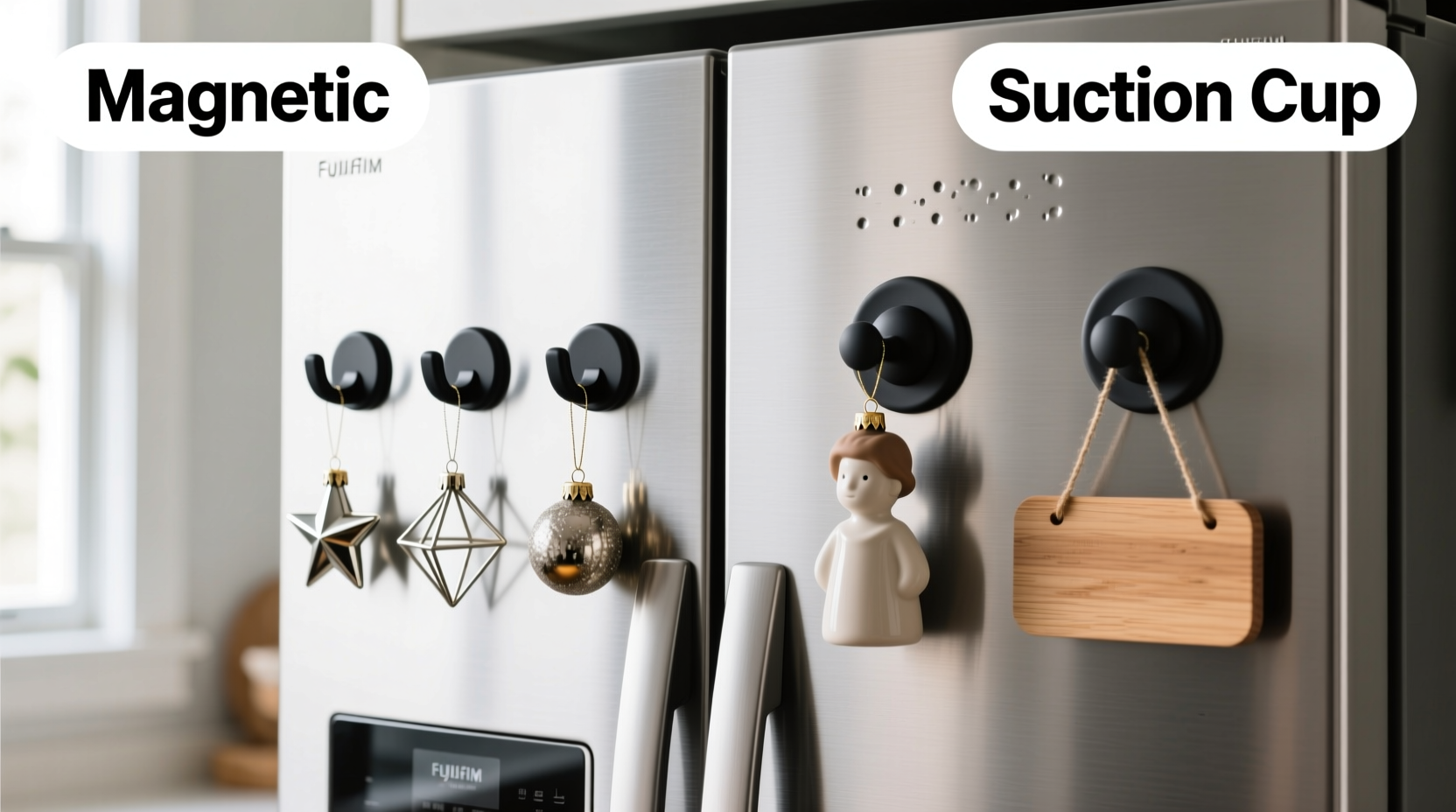
Magnets adhere directly to ferromagnetic surfaces, meaning they bond with metals that contain iron. Most stainless steel refrigerators use a grade of steel that retains enough magnetic properties to support light-to-moderate hanging loads. The strength of adhesion depends on several factors: the magnet’s grade (commonly neodymium), surface contact area, and whether the fridge door has an outer coating that reduces direct metal exposure.
High-quality magnetic hangers often feature rubberized coatings to prevent scratching and increase grip. They come in various forms—strips, discs, clips, and multi-hook systems—designed specifically for vertical fridge use. Because they rely on inherent material attraction, their performance is consistent across different climates and temperatures, making them reliable year-round.
However, not all stainless steel is created equal. Some premium appliances use austenitic stainless steel (like 304 grade), which is less magnetic due to its higher nickel content. In these cases, even strong magnets may fail to hold more than a few ounces. Always test a small magnet on an inconspicuous spot before investing in a full set of magnetic hangers.
Tip: Use a rare-earth magnet to test your fridge’s magnetic responsiveness. If it sticks firmly, magnetic hangers will likely work well.The Reality of Suction Cup Performance on Smooth Surfaces
Suction cup hangers depend entirely on creating a vacuum seal between the cup and the fridge’s surface. When pressed correctly onto a perfectly smooth, non-porous area, they can generate impressive holding power—sometimes supporting up to 5 pounds per cup under laboratory conditions. That makes them appealing for heavier decorations like ceramic figurines, glass ornaments, or framed artwork.
But real-world performance rarely matches lab results. Dust, grease, temperature shifts, and minor surface imperfections compromise the seal. Even a fingerprint can reduce adhesion by 30%. Once the vacuum breaks, the cup detaches suddenly, often dropping whatever was hung from it. This unpredictability makes suction cups risky for valuable or fragile items.
Additionally, repeated application and removal can leave behind sticky residue, particularly if the silicone degrades over time. Some users report micro-scratches where dirt gets trapped beneath the cup edge, acting like sandpaper during daily vibrations from the fridge compressor.
“Suction cups perform best in controlled environments. Kitchens—with fluctuating humidity, frequent cleaning, and airborne oils—are among the worst places for long-term reliability.” — Dr. Alan Zhou, Materials Engineer at Appliance Safety Labs
Comparing Strength, Durability, and Safety
To make an informed decision, consider three key metrics: load capacity, longevity, and risk of damage. The table below summarizes how magnetic and suction cup hangers compare across these dimensions.
| Feature | Magnetic Hangers | Suction Cup Hangers |
|---|---|---|
| Max Load (per unit) | 2–4 lbs (neodymium) | Up to 5 lbs (ideal conditions) |
| Real-World Holding Power | Consistent; unaffected by humidity | Unpredictable; declines over days/weeks |
| Surface Compatibility | Requires magnetic-grade steel | Works on any smooth, non-porous surface |
| Risk of Damage | Very low (with coated magnets) | Moderate (residue, micro-scratches) |
| Durability Over Time | Years (no wear mechanism) | Months (silicone dries out) |
| Ease of Relocation | Instant; no prep needed | Requires cleaning and resealing |
While suction cups technically support heavier weights in theory, their inconsistency undermines practical utility. Magnets, though limited by the fridge’s material composition, deliver predictable performance day after day. For families with children or pets, the last thing needed is a hook failing unexpectedly and shattering a keepsake ornament on the kitchen floor.
When Suction Cups Might Be the Better Choice
Despite their drawbacks, suction cup hangers do have niche applications where they outperform magnets. Consider using them when:
- Your fridge is made of non-magnetic stainless steel (e.g., high-end models with 304-grade finishes).
- You need to hang wide, flat items like posters or large photo collages that span areas unsuitable for magnets.
- The decoration is lightweight but bulky, and you require broad surface distribution rather than point attachment.
- You’re renting and prohibited from placing anything magnetic on appliances (rare, but some leases restrict modifications).
In such cases, optimizing suction cup performance becomes critical. Success hinges on meticulous preparation and maintenance.
Step-by-Step: Maximizing Suction Cup Adhesion
- Clean the surface thoroughly with isopropyl alcohol and a lint-free cloth. Remove all traces of grease, dust, or cleaner residue.
- Wet the rim slightly before application. A drop of water helps create an initial seal, improving vacuum formation.
- Press firmly for 30 seconds, applying even pressure to expel air from beneath the cup.
- Avoid immediate loading. Wait at least 1 hour before hanging anything to allow the seal to stabilize.
- Inspect weekly for lifting edges. Re-seat any loosening cups promptly.
- Replace cups every 3–6 months, as silicone loses elasticity over time, reducing effectiveness.
Real-World Example: Holiday Decorating Gone Wrong
Sarah from Portland decided to go all out for Christmas, hanging her grandmother’s hand-blown glass snow globe collection on her new stainless steel fridge using heavy-duty suction cups rated for 4 pounds each. She cleaned the surface carefully and followed instructions precisely. For two weeks, everything stayed put. Then, one morning, as the oven heated up nearby, a sudden shift in ambient humidity caused three of the five cups to release within minutes. Two snow globes shattered on impact.
She switched to magnetic hangers the next weekend, pairing them with fabric-lined wire baskets to distribute weight. Though the total load per magnet was similar, the setup remained secure through January. “I didn’t realize how much environmental changes affect suction,” she said. “Magnets don’t care if it’s humid or dry—they just hold.”
This case illustrates a common oversight: assuming product ratings reflect everyday conditions. In dynamic household environments, consistency matters more than peak performance.
Best Practices for Hanging Heavier Ornaments Safely
If you're determined to display heavier pieces—anything over 2 pounds—strategy and hardware selection become crucial. Neither option works well in isolation for significant weight. Instead, combine methods and follow proven guidelines.
Checklist: Secure Heavy Ornament Hanging
- ✅ Confirm your fridge door is magnetic using a strong neodymium magnet.
- ✅ Choose wide-base magnetic strips instead of single-point hooks to distribute load.
- ✅ Use secondary support like clear fishing line anchored to overhead cabinets for extra-heavy items.
- ✅ Avoid placing decorations near door edges where flexing weakens adhesion.
- ✅ Limit hanging height to eye level or lower to reduce leverage forces.
- ✅ Rotate displays frequently to prevent prolonged stress on one area.
For truly valuable or sentimental items, consider alternative display methods altogether—such as a nearby shelving unit or wall-mounted shadow box. Sometimes, preserving memories means keeping them off the fridge entirely.
Frequently Asked Questions
Can I use both magnetic and suction cup hangers together?
Yes, but cautiously. Combining them on the same item can create uneven stress points. If one fails prematurely, the other may be overloaded. It's safer to use one primary method and reserve the second as a backup tether—for example, attaching a safety cord from the ornament to a fixed point above.
Do magnetic hangers damage stainless steel finishes?
Not if they’re properly designed. Magnets with soft, non-abrasive coatings (like silicone or rubber) won’t scratch. However, cheap magnets with rough edges or embedded debris can cause micro-scratches over time. Always inspect and clean magnets before reuse.
Why do my suction cups keep falling even on a clean fridge?
Beyond contamination, thermal expansion plays a role. Fridges expand and contract slightly with temperature cycles, disrupting vacuum seals. Additionally, low-quality cups use brittle silicone that cracks or warps. Invest in medical-grade silicone suction hooks for better resilience.
Expert Recommendation: Prioritize Reliability Over Rating
“When choosing between magnetic and suction systems, focus on real-world reliability, not maximum load claims. A magnet rated for 3 pounds that holds consistently is safer than a 5-pound suction cup that fails intermittently.” — Lena Peterson, Home Safety Consultant, National Kitchen Institute
Peterson emphasizes behavioral factors too: people forget to maintain suction cups. They don’t re-clean them, ignore early signs of detachment, or overload based on packaging claims. Magnets, by contrast, demand almost zero upkeep. That simplicity translates into greater safety, especially in homes with active households.
Final Verdict: Which Should You Choose?
For most users, **magnetic hangers are the superior choice**—provided your fridge has sufficient magnetic properties. Their durability, ease of use, and consistent performance make them ideal for everyday decor and seasonal displays alike. Advances in magnet technology mean today’s neodymium-based hangers can securely carry moderately heavy items like small wreaths, lanterns, or wooden signs without issue.
Suction cups retain value only in specific scenarios: non-magnetic surfaces, temporary installations, or when aesthetics demand invisible mounting. Even then, treat them as short-term solutions requiring active monitoring. Never rely on them for irreplaceable or fragile items.
If you must hang heavier pieces, consider hybrid approaches. For instance, mount a thin magnetic metal strip across the upper portion of the fridge, then attach lightweight brackets or wires to it. This expands your hanging options while staying within safe load limits.
Take Action Today for Safer, Smarter Fridge Decor
Your refrigerator is more than an appliance—it’s a canvas for family expression. But decoration shouldn’t come at the cost of safety or surface integrity. Start by testing your fridge’s magnetic compatibility. Then assess what you typically hang: are those items light enough for magnets, or do they require special engineering?
Upgrade to high-quality, coated magnetic hangers for routine use. Reserve suction cups for temporary, low-risk applications, and always inspect them regularly. Most importantly, never assume that because something sticks today, it will stay secure tomorrow.
💬 Have a favorite ornament-hanging hack? Share your experience below and help others decorate safely and beautifully!








