Tissue boxes may seem like a minor detail in home decor, but the container that holds them has become a statement piece. From sleek leather to minimalist plastic, manufacturers now offer tissue box covers in a range of materials and price points. While some models cost under $10, others exceed $50—often for what appears to be the same basic function. This raises an important question: when you choose a leather tissue box over a plastic one, are you investing in quality, or simply paying more for style?
The answer isn’t as straightforward as it seems. Material choice affects durability, maintenance, environmental footprint, and even hygiene. To help you make an informed decision, we’ll compare leather and plastic tissue boxes across key categories, examine real-world use cases, and provide practical guidance on choosing wisely.
Material Comparison: Leather vs Plastic
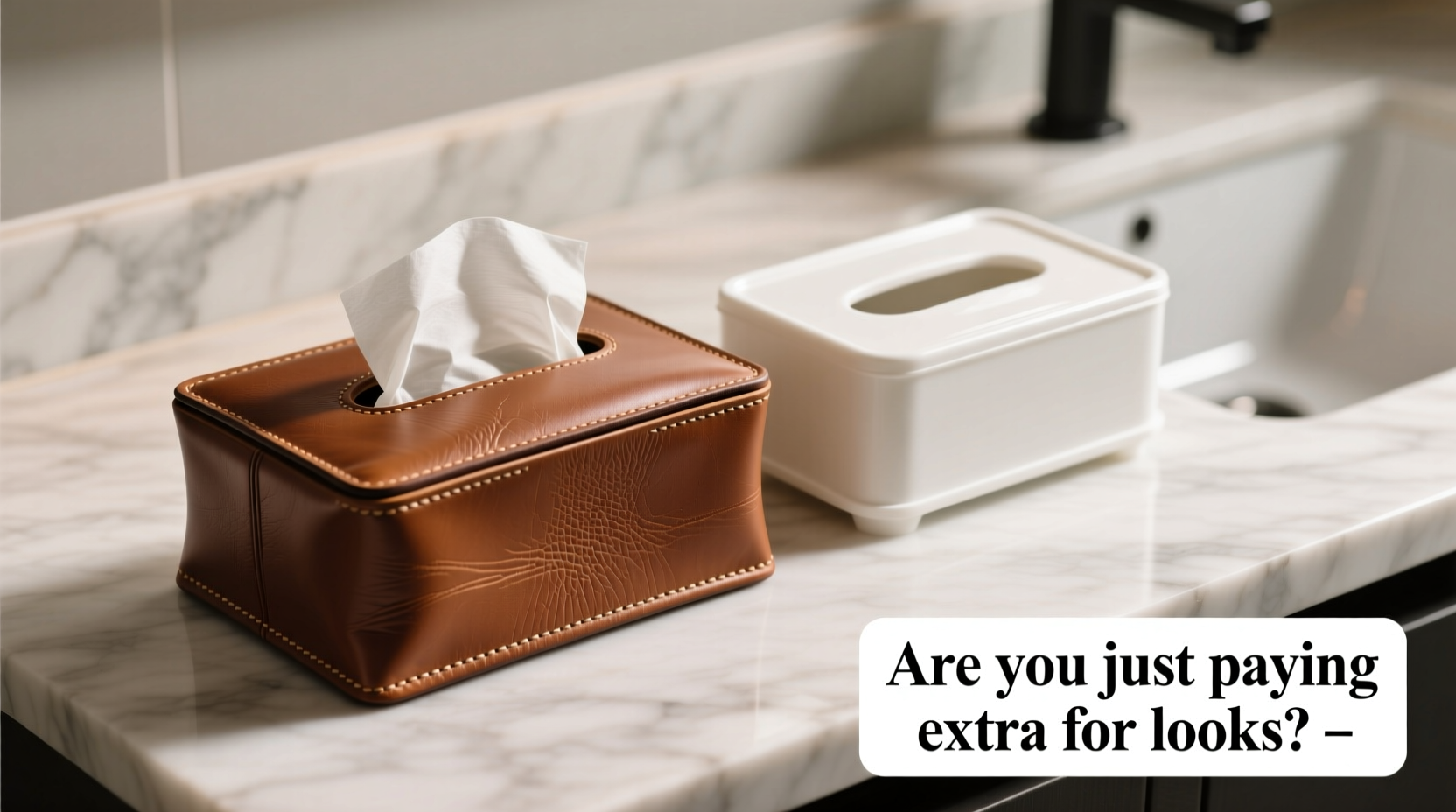
At first glance, leather and plastic represent opposite ends of the design spectrum—luxury versus utility. But beyond appearances, each material brings distinct advantages and drawbacks.
- Leather (genuine or faux): Offers a premium feel, ages gracefully, and resists minor scuffs. Genuine leather develops a patina over time, enhancing its character. However, it’s sensitive to moisture and requires occasional conditioning.
- Plastic (ABS, polycarbonate, or recycled polymers): Lightweight, easy to clean, and highly durable against drops and impacts. Most are water-resistant and won’t degrade from household humidity. On the downside, cheaper plastics can look flimsy or accumulate static dust.
The tactile experience is where leather shines. Its softness and weight convey sophistication, making it a favorite in living rooms, hotel lobbies, and upscale offices. Plastic, meanwhile, excels in high-traffic or moisture-prone areas like bathrooms or children’s rooms, where spills and knocks are common.
Tip: If you live in a humid climate, avoid untreated leather tissue boxes—they’re prone to mold and warping without proper care.Cost vs. Long-Term Value
A genuine leather tissue box typically costs between $35 and $80, while most plastic versions sell for $8 to $25. That’s a 300–500% markup. But does leather deliver proportional value?
Longevity is a major factor. A well-maintained leather box can last 5–10 years, especially if kept out of direct sunlight and conditioned twice a year. In contrast, many plastic models begin to yellow or crack after 2–3 years due to UV exposure or low-grade polymer composition. However, high-quality engineered plastics (like those used in electronics casings) can rival leather in lifespan at a fraction of the cost.
“Design shouldn’t come at the expense of function. A tissue box cover must endure daily use—materials should support that.” — Lena Patel, Interior Product Designer at Forma Living
Consider replacement frequency. If a $12 plastic box needs replacing every three years, you’ll spend $40 over a decade. A $60 leather model lasting eight years averages $7.50 per year—potentially more economical long-term, assuming care is consistent.
Environmental and Ethical Considerations
Sustainability plays a growing role in consumer decisions. Here’s how the two materials stack up:
| Factor | Leather | Plastic |
|---|---|---|
| Production Impact | High water/land use; tanning chemicals (unless vegetable-tanned) | Petroleum-based; emits CO₂ during manufacturing |
| Biodegradability | Genuine leather: yes (over decades); Faux: no | No (takes 100+ years to decompose) |
| Recyclability | Limited; mixed materials complicate recycling | Some types recyclable; often not accepted curbside |
| Eco-Friendly Options | Vegetable-tanned, recycled, or bio-leather | Recycled PET or bioplastics |
While neither material is inherently “green,” responsible sourcing matters. Look for certifications like OEKO-TEX or Global Recycled Standard. Brands using recycled ocean plastic or chrome-free leather significantly reduce ecological harm.
Real-World Use Case: Office vs. Home
Consider Sarah, an office manager at a boutique design firm. She purchased six leather tissue box covers for client meeting rooms at $55 each, aiming for a polished aesthetic. Within eight months, two showed visible wear—scratches from frequent handling and fading near windows. Maintenance was inconsistent, and staff avoided cleaning them for fear of damage.
In contrast, her home uses a $14 BPA-free plastic box in the living room. After three years, it still looks new despite weekly wipes and accidental spills. For Sarah, the plastic option proved more practical in high-use settings, while leather suited spaces with controlled access and lower traffic.
This highlights a key insight: context determines value. A luxury material in the wrong environment becomes a liability.
Choosing What’s Right: A Practical Checklist
Before buying, evaluate your priorities. Use this checklist to guide your decision:
- ✅ Will the box be in a high-touch area (e.g., entryway, kids’ room)? → Lean toward durable plastic.
- ✅ Do you prioritize eco-impact? → Look for recycled materials in either category.
- ✅ Is the space climate-controlled and dry? → Leather becomes a viable option.
- ✅ How often will you maintain it? → Leather needs conditioning; plastic only needs wiping.
- ✅ Does the box complement existing furniture? → Design cohesion may justify a higher price.
- ✅ Is resale or gifting a consideration? → Leather often feels more gift-worthy.
Maintenance Requirements Compared
Care routines differ significantly and affect long-term satisfaction.
- Leather Boxes:
- Dust weekly with a dry microfiber cloth.
- Condition every 6 months with pH-balanced leather cream.
- Wipe spills immediately; never soak.
- Avoid direct sunlight and heating vents.
- Plastic Boxes:
- Wipe with damp cloth and mild soap monthly.
- Rinse if exposed to sticky substances.
- Check for brittleness annually, especially in sunny rooms.
- Replace liners if they warp or trap moisture.
Frequently Asked Questions
Do leather tissue boxes come with replaceable liners?
Many do. High-end models feature removable fabric or cardboard inserts that hold standard tissue boxes. This allows easy refilling and cleaning. Always check product specs—some budget leather designs have fixed interiors, making refill awkward.
Can plastic tissue boxes look luxurious?
Absolutely. Matte finishes, metallic accents, and thoughtful geometry can elevate plastic designs. Brands like Umbra and Menu offer minimalist plastic boxes that mimic the elegance of premium materials without the upkeep.
Is faux leather a good compromise?
It can be. Quality faux leather (often called \"vegan leather\") resists stains better than genuine leather and avoids animal products. However, most are made from polyurethane (PU), which degrades faster and isn’t biodegradable. It’s a middle ground in ethics and aesthetics—but not necessarily in longevity.
Final Verdict: Function Over Fashion?
Are you just paying extra for looks? Often, yes—but not always. A $60 leather tissue box may offer superior craftsmanship, timeless design, and emotional appeal that plastic can’t match. For spaces where ambiance matters—a master bedroom, a formal lounge, a boutique hotel suite—leather adds intangible value.
Yet in functional environments, plastic delivers better performance per dollar. It’s easier to sanitize, lighter to move, and less prone to irreversible damage. The smartest buyers don’t default to one material—they match the choice to the room’s demands.
Ultimately, the best tissue box isn’t the most expensive or photogenic. It’s the one that withstands daily life, aligns with your values, and disappears into your routine—except when you need a tissue.
🚀 Ready to upgrade your tissue game? Reassess your current boxes: Are they practical, sustainable, and truly suited to their space? Share your switch—from leather to plastic or vice versa—and help others find balance between beauty and brains.








