When it comes to protecting your AirPods, two popular options dominate the market: leather cases and silicone bumpers. One promises elegance and long-term durability; the other offers shock absorption and affordability. But with both claiming to keep your wireless earbuds safe, how do you know which one actually delivers meaningful protection? More importantly, does the premium price of a leather case justify its benefits over a simple bumper?
The answer isn’t as straightforward as “more material equals better protection.” Real-world performance depends on design, materials, usage patterns, and even environmental factors. This article breaks down the key differences between leather AirPod cases and silicone bumpers, evaluates their protective capabilities, and helps you determine whether upgrading to leather is worth the investment.
Understanding the Core Differences
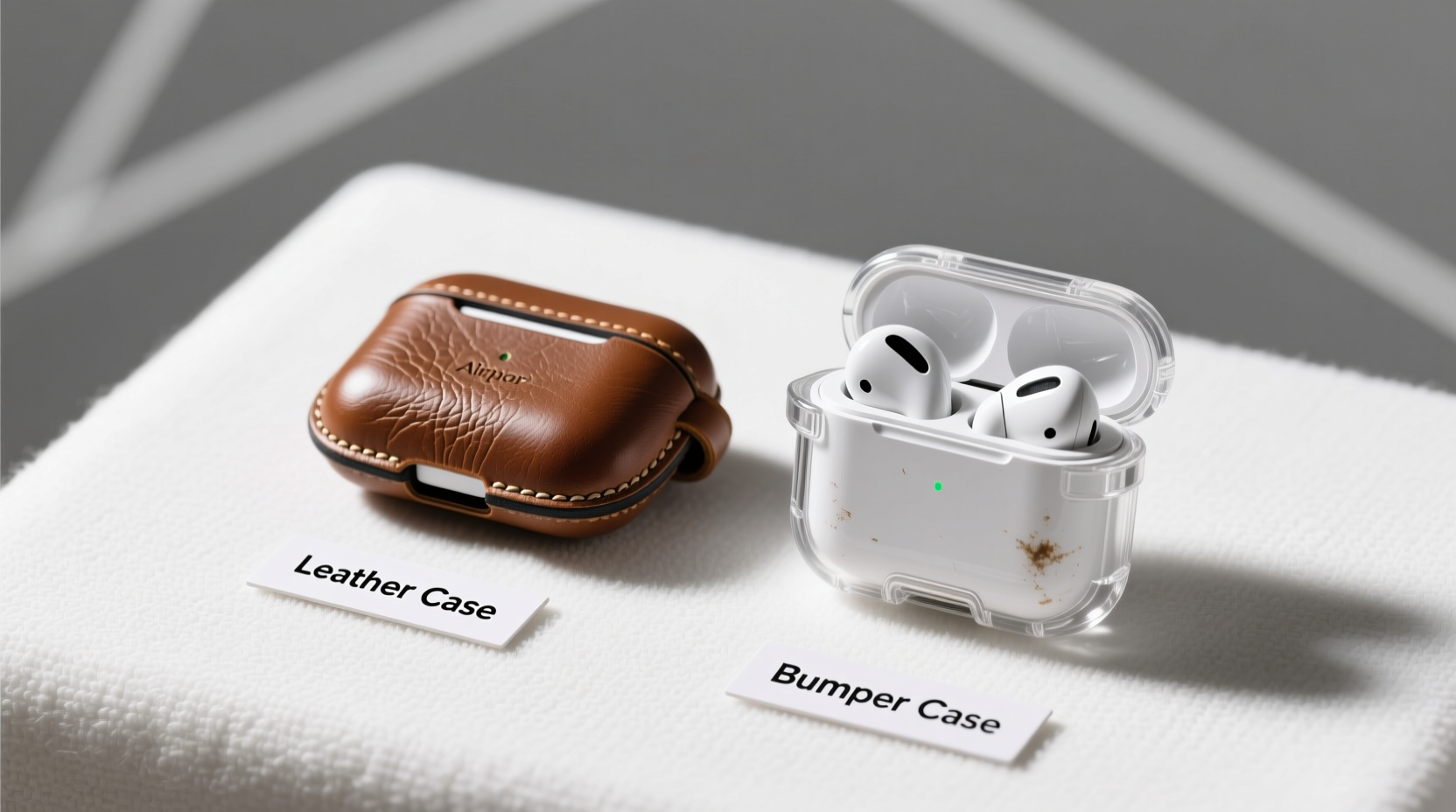
At first glance, both leather cases and silicone bumpers serve the same purpose—shielding your AirPods charging case from damage. However, their construction, materials, and intended use vary significantly.
- Leather cases are typically full-coverage sleeves made from genuine or synthetic leather. They encase the entire charging case, often featuring magnetic closures or snug fits. These emphasize aesthetics, tactile quality, and perceived longevity.
- Silicone bumpers, on the other hand, are form-fitting shells designed primarily for impact resistance. Usually semi-transparent or colored, they cover only the outer edges and corners—the most vulnerable points during drops.
While leather exudes sophistication, bumpers prioritize function. The trade-off lies in how each handles different types of threats: scratches, drops, moisture, and daily wear.
Protection Performance: What Each Case Actually Shields Against
To assess whether leather offers “added protection,” it’s essential to examine common risks:
| Threat Type | Leather Case Effectiveness | Silicone Bumper Effectiveness |
|---|---|---|
| Drops (1–3 ft) | Moderate – absorbs some impact but can crack or crease under force | High – excellent shock dispersion due to flexible material |
| Scratches & Scuffs | High – resists surface abrasions well, especially full-grain leather | Moderate – may develop micro-scratches over time |
| Dust & Debris | High – fully enclosed design limits exposure | Low – gaps around ports and seams allow particle entry |
| Moisture Resistance | Low – untreated leather absorbs moisture; treated versions fare better | Moderate – water-resistant but not waterproof |
| Long-Term Durability | High – develops patina and ages gracefully if maintained | Low to Moderate – prone to tearing, yellowing, or hardening |
This comparison reveals a crucial insight: leather excels at resisting everyday wear and enhancing longevity through aesthetic aging, while bumpers outperform in immediate impact scenarios. If your biggest concern is dropping your AirPods on pavement, a bumper might be more effective. But if you want lasting elegance and consistent scratch protection, leather has the edge.
Tip: For maximum protection, consider using a silicone inner bumper inside a leather outer case—combining shock absorption with premium finish.The Real Cost of Protection: Value Beyond Price Tags
A high-end leather case can cost $35–$60, while most silicone bumpers range from $8–$15. That fivefold price difference raises a legitimate question: does leather offer five times the protection?
The short answer is no—but value isn’t solely about impact resistance. Leather brings intangible benefits that appeal to discerning users:
- Premium feel: Genuine leather provides a tactile experience that plastic or silicone can’t replicate.
- Brand alignment: Many opt for leather to match their iPhone wallet or watch band, creating a cohesive tech ecosystem.
- Resale value preservation: A well-maintained leather case helps keep the original AirPods case pristine, potentially increasing resale value.
“People don’t buy leather accessories just for protection—they buy them for identity. The case becomes an extension of personal style.” — Daniel Park, Product Designer at UrbanGadget Co.
In this context, the “added protection” of leather extends beyond physical defense. It protects your device’s appearance, enhances user satisfaction, and supports a minimalist, refined lifestyle.
Real-World Scenario: Commuter vs. Student Use
Consider two users:
Alex, a city commuter, carries AirPods daily in a backpack alongside keys, notebooks, and a laptop. Their biggest threat is abrasion from constant contact with hard objects. After six months, Alex’s silicone bumper shows cracks near the hinge and has turned slightly yellow from UV exposure. The AirPods case underneath remains undamaged, but the bumper itself looks worn.
Jamie, a college student, frequently drops their AirPods while rushing between classes. One fall from waist height onto tile cracked the charging case lid. Jamie switches to a thick silicone bumper, which survives three subsequent drops unscathed thanks to its cushioning effect.
This mini case study illustrates a key principle: the best case depends on your environment. Leather suits low-impact, high-exposure scenarios; bumpers excel in high-drop-risk settings.
How to Choose Based on Your Lifestyle
Instead of defaulting to one type, evaluate your habits. Ask yourself:
- Do I often place my AirPods in bags with sharp or heavy items?
- Am I prone to dropping devices?
- Do I care about matching my accessories aesthetically?
- Is resale or long-term ownership important to me?
- Do I live in a humid or rainy climate?
Answering these helps determine whether scratch resistance (favoring leather) or shock absorption (favoring bumper) should take priority.
Actionable Checklist: Choosing the Right Case for You
Checklist: Selecting Between Leather and Bumper Cases- ☐ Assess your daily routine: high-motion or stable?
- ☐ Check if your current case has scuff marks or drop damage.
- ☐ Decide whether aesthetics or ruggedness matters more.
- ☐ Look for hybrid options (e.g., leather exterior with rubberized corners).
- ☐ Verify compatibility with wireless charging if applicable.
- ☐ Consider maintenance: leather needs occasional conditioning; silicone requires cleaning to avoid grime buildup.
Frequently Asked Questions
Does a leather case interfere with wireless charging?
No, most well-designed leather cases maintain a slim profile that allows Qi-compatible charging. However, avoid overly thick or metal-reinforced models, as these can block the charging field.
Can I replace a worn silicone bumper easily?
Yes, bumpers are inexpensive and widely available. Many users keep multiple colors for rotation. In contrast, replacing a premium leather case is a bigger financial decision.
Are all leather cases created equal?
No. Full-grain leather offers superior durability and develops a rich patina over time. Bonded or synthetic leathers may peel or crack within months. Always check material specifications before purchasing.
Final Verdict: Does the Added Protection Matter?
The added protection of a leather case isn’t measured in inches dropped or force absorbed—it’s reflected in sustained quality, visual appeal, and daily confidence. While a silicone bumper may win in a drop test, leather wins in long-term stewardship of your device.
If your goal is pure impact defense, go with a high-quality bumper. But if you value refinement, longevity, and holistic protection—from dust, light spills, and daily friction—then a well-crafted leather case delivers tangible benefits beyond raw shock absorption.
Ultimately, the right choice aligns with how you use your AirPods and what you expect from your tech accessories. Protection isn’t just about surviving accidents; it’s about preserving function, form, and peace of mind over time.
🚀 Ready to upgrade your AirPods protection? Evaluate your usage today and choose a case that matches both your lifestyle and standards. Share your favorite case brand or tip in the comments below!








