
Streaming video on your television has become a daily ritual for millions. Whether you're catching up on vlogs, watching cooking tutorials, or settling in for a long-form documentary, YouTube is often the go-to platform. But as ad frequency increases—especially on smart TVs and streaming devices—the experience can quickly turn frustrating. That’s where YouTube Premium comes in, promising an ad-free experience across all screens, including your living room television. But is paying a monthly fee truly justified if your only goal is to eliminate interruptions during TV playback?
The answer isn’t as straightforward as “yes” or “no.” It depends on your usage patterns, household size, alternative options, and how much you value uninterrupted viewing. Let’s examine the true cost, benefits, limitations, and smarter ways to assess whether YouTube Premium delivers enough value when used primarily for ad removal on the big screen.
Understanding YouTube Premium: What You Actually Get
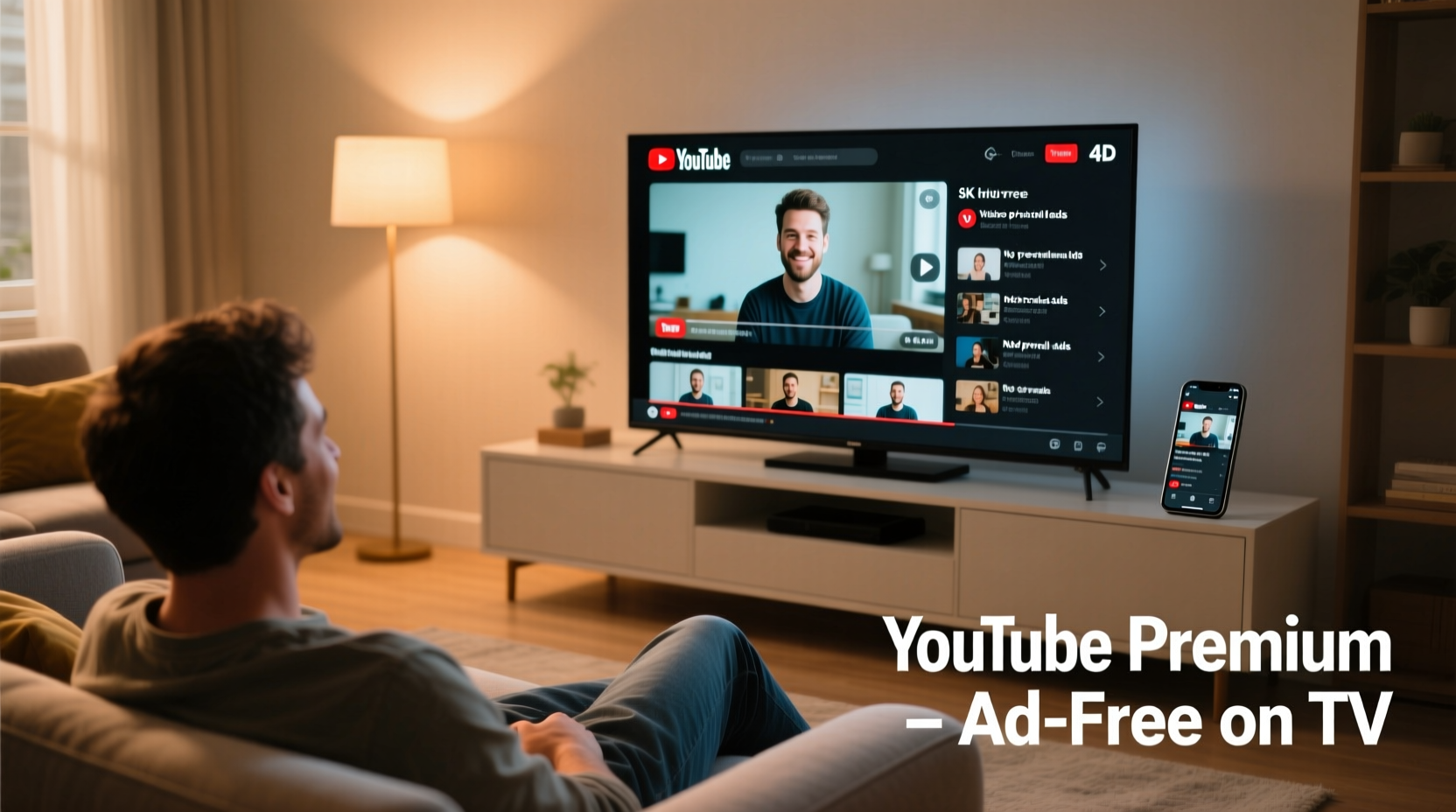
YouTube Premium is Google’s subscription service that removes ads from all videos across YouTube, including music, Shorts, and background playback on mobile. When most people consider subscribing, they’re primarily focused on one benefit: no more ads interrupting their favorite videos. But the package includes several additional features:
- Ad-free videos: No skippable, non-skippable, or display ads on any YouTube content.
- Background play: Listen to videos while using other apps or with the screen off (on mobile).
- Offline downloads: Save videos for offline viewing on phones and tablets.
- YouTube Music Premium: Full access to YouTube Music without ads, with downloadable tracks and background listening.
- Family Plan option: Up to six family members can share one subscription at a reduced per-person rate.
While these extras sound appealing, many users—particularly those focused on TV viewing—don’t use mobile-specific perks like background play or offline downloads. The core appeal remains clean, uninterrupted playback on the television. So, does the base tier justify its price when used solely for this purpose?
Tip: If you only watch YouTube on your TV and never use mobile features, consider whether YouTube Premium’s full suite adds value—or if a cheaper alternative exists.Cost vs. Value: Breaking Down the Numbers
As of 2024, YouTube Premium costs $13.99 per month in the United States for an individual plan. The Family Plan, which allows up to six members, costs $22.99 per month—just over $3.80 per person. These prices have steadily increased over the past few years, reflecting inflation and expanded content offerings.
To evaluate whether it’s worth it for TV ad removal alone, compare the cost to similar services:
| Service | Monthly Cost | Ad-Free Video on TV? | Additional Benefits |
|---|---|---|---|
| YouTube Premium (Individual) | $13.99 | Yes | Music, offline, background play |
| YouTube Premium (Family) | $22.99 (shared) | Yes | All benefits for 6 people |
| YouTube TV (Live Streaming) | $72.99 | Yes (with add-on) | Live channels, cloud DVR |
| Plex Pass (Ad-free experience) | $5–$12 | Limited to Plex ecosystem | Media server tools |
| Free Ad-Supported Alternatives | $0 | No | None |
From a pure cost perspective, YouTube Premium sits between budget-friendly media tools and full-scale live TV replacements. However, unlike YouTube TV—which offers hundreds of live channels—Premium only enhances the existing YouTube experience. If your primary consumption is creator-driven content (vloggers, educators, DIY channels), the value equation shifts significantly compared to someone who watches traditional broadcast-style programming.
Real-World Impact: How Ads Disrupt the TV Experience
Ads on YouTube via TV are notably more disruptive than on mobile. On a phone, you might glance away during a 5-second pre-roll. On a large screen, especially during family viewing or late-night relaxation, every interruption breaks immersion. Non-skippable ads lasting 15–30 seconds can pile up—especially on longer videos or playlists.
A typical hour-long YouTube session on TV might include:
- Three 30-second unskippable ads
- Two mid-roll interruptions at the 8-minute and 24-minute marks
- Banner ads along the bottom of the screen during playback
This adds up to nearly three minutes of forced advertising—and that’s before accounting for repetitive ad loops or low-quality promotional content. For viewers seeking a seamless experience akin to Netflix or Disney+, this friction diminishes satisfaction.
“Viewers report higher engagement and lower drop-off rates when content flows without interruption. Even short ads create cognitive breaks that disrupt focus.” — Dr. Lena Torres, Media Psychology Researcher, Stanford University
Removing these interruptions doesn’t just improve comfort—it can enhance retention, especially for educational or long-form content. Parents managing kids’ screen time also appreciate fewer exposure moments to inappropriate or manipulative marketing.
Mini Case Study: The Martinez Household
The Martinez family of four in Austin, Texas, uses YouTube extensively on their Samsung Smart TV. Their two children regularly watch science explainers and animation channels, while the parents stream fitness tutorials and travel vlogs. Before subscribing to YouTube Premium, they averaged 18 ad interruptions per evening session.
Frustrated by constant breaks, Mr. Martinez considered switching platforms entirely. Instead, he opted for the YouTube Premium Family Plan at $22.99/month. All four family members now enjoy ad-free viewing, and both parents use the offline download feature during commutes. One child uses YouTube Music Premium to listen to study playlists without distractions.
After six months, the family reported a noticeable improvement in viewing enjoyment. More importantly, screen time conflicts decreased because content played through without prompting questions like “Why did it stop?” or “When will the video come back?”
In their case, the shared plan paid for itself in reduced frustration and better digital wellness—even though ad removal on TV was the original motivation.
Alternatives to YouTube Premium for Ad-Free TV Viewing
Before committing to a recurring subscription, explore whether cheaper or one-time solutions could meet your needs:
- Use a browser with ad blockers: On certain smart TVs with web browsers (e.g., LG WebOS or Android TV), installing uBlock Origin via Firefox may block ads. However, YouTube frequently detects and blocks such methods.
- Stream from a PC to TV via HDMI: Run YouTube on a computer with robust ad-blocking extensions, then mirror to your TV. This bypasses app-based ads but requires extra setup.
- Third-party clients (risky): Apps like NewPipe (Android) offer ad-free YouTube but violate terms of service and aren’t available on most TV platforms.
- Switch to ad-light platforms: Services like Nebula or CuriosityStream focus on high-quality educational content with minimal or no ads, though library size is smaller.
- Wait for official promos: YouTube occasionally offers free trials (up to 1 month). Use these strategically during high-viewing periods.
While these workarounds exist, they often lack reliability, convenience, or long-term sustainability. For consistent, hassle-free performance, YouTube Premium remains the only officially supported method for removing all ads on TV.
Tip: If testing YouTube Premium, start with the free trial and monitor actual ad reduction on your TV. Real-world results vary by region and content type.Step-by-Step Guide: Deciding If It’s Worth It for You
Follow this decision framework to determine if YouTube Premium makes sense for your household:
- Track your current ad exposure: Over one week, note how many ads interrupt your TV viewing. Are they frequent, long, or particularly annoying?
- List your YouTube habits: Do you only watch on TV? Or do you also use mobile features like background play or downloads?
- Evaluate household usage: Could multiple family members benefit? If yes, the Family Plan drastically improves cost efficiency.
- Compare to other subscriptions: How does $13.99/month stack up against your Netflix, Hulu, or Spotify bills? Is YouTube used more than those services?
- Try the free trial: Sign up, disable ads on your TV, and assess the difference over 7–10 days.
- Decide based on ROI: Did the ad removal meaningfully improve your experience? Would you miss it if canceled?
This structured approach prevents emotional decisions based on momentary frustration and ensures you pay only for tangible value.
FAQ: Common Questions About YouTube Premium and TV Ads
Does YouTube Premium remove all ads on smart TVs?
Yes. Once subscribed, all ads—including pre-roll, mid-roll, banners, and overlay ads—are removed across all devices, including smart TVs, streaming sticks, and game consoles.
Can I share YouTube Premium with family members?
Yes. The Family Plan allows up to six people in the same household to access Premium benefits at a discounted rate. Each user keeps their own history, recommendations, and login.
Will YouTube eventually make all content ad-free without a subscription?
Unlikely. Advertising is YouTube’s primary revenue source. While some creators offer sponsor-free videos, the platform relies on ad sales to compensate creators and fund operations. A subscription model helps balance free access with monetization.
Final Verdict: Is It Worth It?
If your sole reason for considering YouTube Premium is to remove ads on your television, the answer hinges on frequency of use and sensitivity to interruptions. For casual viewers who watch YouTube once or twice a week, the $13.99 price tag may be hard to justify. But for households that rely on YouTube as a primary entertainment or educational source—especially with children—the peace of mind and smoother experience can easily outweigh the cost.
Moreover, if even one other feature resonates—like ad-free music, offline saving, or background listening—the value proposition strengthens significantly. And if multiple users can share a Family Plan, the per-person cost becomes competitive with niche streaming services.
Ultimately, YouTube Premium isn’t just about removing ads—it’s about reclaiming control over your viewing environment. In an age of attention overload, that small upgrade can translate into greater focus, less stress, and more enjoyment from content you already love.
🚀 Ready to reclaim your screen time? Try YouTube Premium’s free trial today, measure the real impact on your TV viewing, and decide with confidence—not frustration.








