The allure of a Chanel chain bag is undeniable. With its quilted design, interlocking CC clasp, and iconic chain strap, it’s a symbol of timeless elegance. But at prices starting around $8,000 and rising with annual increases, many wonder: is it truly worth the investment—especially when high-quality faux leather alternatives exist for under $200? The answer isn’t simply about logos or prestige; it hinges on craftsmanship, durability, emotional value, and long-term cost efficiency.
Craftsmanship and Material Quality
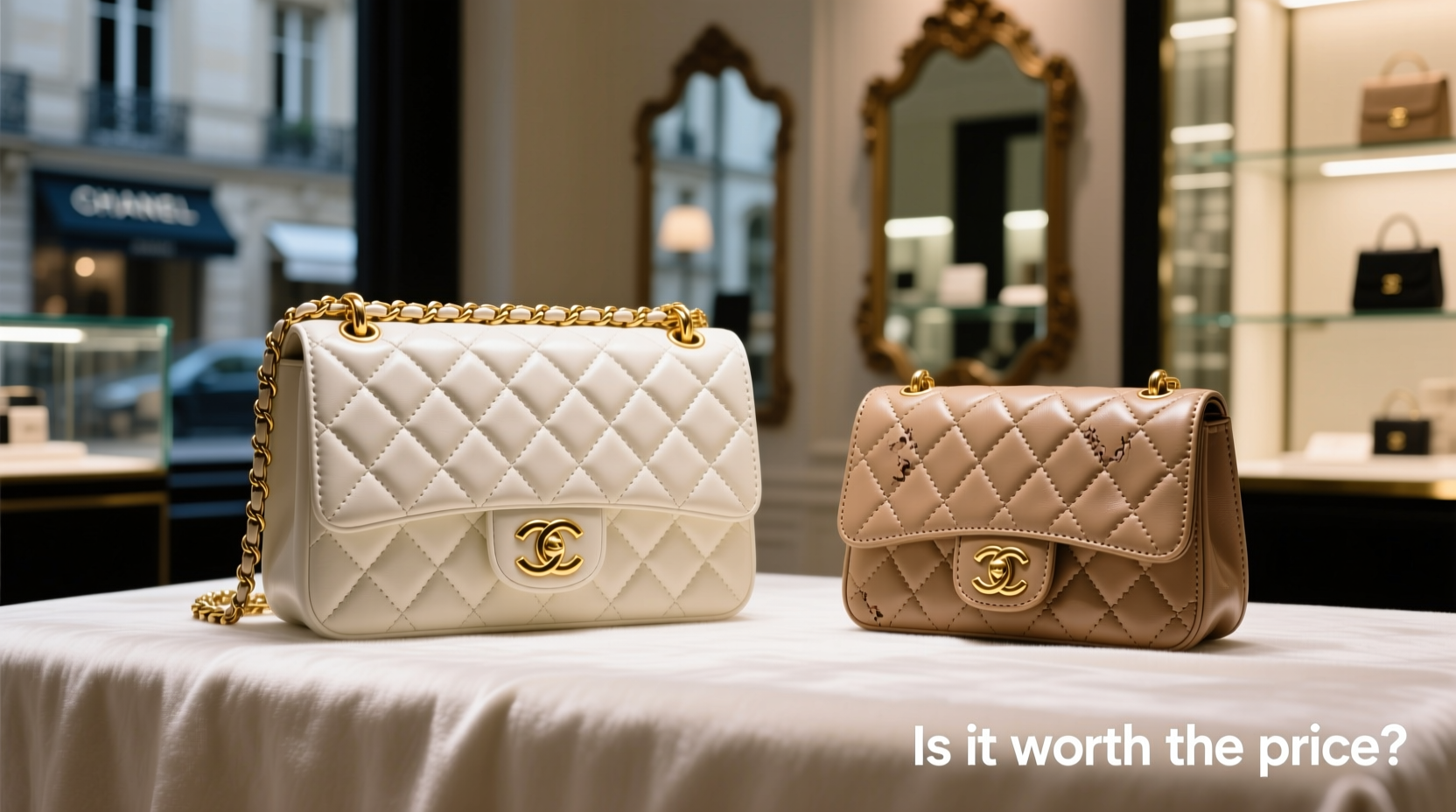
Chanel’s reputation rests on meticulous attention to detail. Each genuine Chanel chain bag is crafted in France, Italy, or Spain using premium lambskin or caviar-textured calfskin. The quilting is hand-stitched, the hardware is custom-made with palladium or gold plating, and every component undergoes rigorous quality control. This level of artistry ensures structural integrity, softness, and a finish that ages gracefully.
In contrast, even the best faux leather bags use synthetic materials like polyurethane (PU) or recycled fabrics. While modern vegan leathers have improved dramatically in texture and appearance, they still lack the breathability, weight, and tactile richness of real leather. Over time, faux leather can crack, peel, or lose shape—particularly at stress points like corners and strap attachments.
Tip: Run your fingers along the edges and stitching—genuine leather feels supple and slightly irregular, while faux leather often feels uniformly smooth and plasticky.Longevity and Resale Value
A well-maintained Chanel bag can last decades. Many collectors pass theirs down as heirlooms. Chanel also maintains strong resale demand; pre-owned classic flaps routinely sell for 70–90% of their original retail price, especially limited editions or discontinued styles. In some cases, rare models appreciate in value.
Faux leather bags, even from reputable sustainable brands, rarely hold resale value. They’re designed for shorter fashion cycles and are not collectible. After two to three years of regular use, signs of wear—scratches, fraying chains, peeling surfaces—become noticeable and harder to repair.
“Luxury goods aren’t just purchases—they’re assets. A Chanel bag is one of the few accessories that retains or gains value over time.” — Lydia Chen, Luxury Resale Market Analyst
Cost Per Use: A Realistic Breakdown
To assess true value, consider cost per use—a metric used by savvy consumers to evaluate long-term investments. If you spend $8,500 on a Chanel Classic Flap and use it three times a week for ten years, that’s approximately 1,560 uses. The cost per use comes to about $5.45.
Compare that to a $150 faux leather chain bag used twice a week for one year (104 uses): the cost per use is $1.44. While lower upfront, this doesn’t account for replacement frequency. If you replace it every 12–18 months due to wear, over ten years you’d spend $1,000–$1,500 and own nothing of lasting value.
| BAG TYPE | PRICE | LIFESPAN | APPROX. USES | COST PER USE |
|---|---|---|---|---|
| Chanel Classic Flap | $8,500 | 10+ years | 1,560 | $5.45 |
| Premium Faux Leather Bag | $180 | 1.5 years | 156 | $1.15 |
| Total over 10 years (faux) | $1,200 | N/A | 1,040 | $1.15 |
While the faux option wins on cost per use, the Chanel bag offers emotional and aesthetic value that transcends calculation. It’s not just functional—it’s a piece of fashion history.
Environmental and Ethical Considerations
For ethically conscious buyers, the decision is more complex. Genuine leather involves animal products and resource-intensive tanning processes. However, Chanel adheres to strict sourcing standards and traceability protocols. Their leather is a byproduct of the food industry, and the brand invests in sustainable production methods across its supply chain.
Faux leather avoids animal harm but introduces plastic waste. Most PU leathers shed microplastics and are non-biodegradable. Some newer plant-based leathers (like Piñatex or mushroom leather) offer eco-friendly promise but remain niche and less durable.
Ironically, the most sustainable choice may be the longest-lasting one. A single bag worn for decades generates less waste than multiple short-lived replacements—even if made from synthetic materials.
Tip: If sustainability is a priority, prioritize longevity over material origin. A well-cared-for leather bag has a smaller lifetime footprint than several “eco” bags replaced frequently.Real-Life Example: Two Buyers, Ten Years Apart
Sophia bought a black Chanel Classic Flap in 2013 for $4,200. She used it daily during her consulting career, stored it properly, and had it professionally cleaned twice. In 2023, she sold it privately for $6,800—outpacing inflation and earning a return on an item she loved for a decade.
Meanwhile, Maya opted for a series of stylish faux chain bags—one each season—from ethical fashion brands averaging $160. While she reduced animal product use and enjoyed variety, after ten years she had spent $3,200 with no resale option and admitted missing the feeling of owning something “forever.”
Their experiences highlight a key insight: luxury is personal. For Sophia, Chanel was practical and profitable. For Maya, versatility mattered more than permanence. Neither choice was wrong—only different in intention.
How to Decide: A Practical Checklist
Choosing between a Chanel bag and a faux alternative depends on your values, lifestyle, and financial goals. Ask yourself the following:
- Do I want a bag I’ll use for 5+ years? → Lean toward Chanel.
- Am I comfortable with animal-derived materials? → If not, explore high-end vegan options.
- Will I care for it properly? → Without maintenance, even Chanel degrades.
- Can I afford it without financial strain? → Never stretch beyond budget for status.
- Does it bring me joy every time I use it? → Emotional return matters as much as resale.
Frequently Asked Questions
Can a fake Chanel bag look just like the real one?
High-end replicas can mimic appearance closely, but they fail in details: stitching precision, hardware weight, leather smell, and interior lining quality. Authenticity verification is increasingly important in resale markets, making counterfeits risky and valueless.
Are there luxury vegan bags comparable to Chanel?
Brands like Stella McCartney (which avoids leather entirely) offer chic chain bags with ethical credentials. However, they don’t replicate Chanel’s heritage or resale performance. They serve a different purpose—modern ethics over legacy status.
Does owning a Chanel bag guarantee it will increase in value?
No. Only certain models (Classic Flap, Boy Bag, Wallet on Chain in classic colors) consistently retain or gain value. Limited editions, exotic skins, and proper condition are key factors. Mass-produced or trendy variants may not appreciate.
Final Thoughts: Worth It or Not?
A Chanel chain bag is worth the hype and price—if it aligns with your lifestyle and values. It’s not merely a bag; it’s a meticulously engineered object of desire, built to endure and appreciated across generations. It rewards patience, care, and emotional connection.
A faux leather bag, meanwhile, serves admirably for those seeking style, ethics, and affordability without long-term commitment. It’s ideal for trend experimentation or occasional wear.
The real question isn’t which is objectively better—it’s what kind of ownership experience you seek. Is it fleeting pleasure or lasting meaning? Versatility or legacy? When you define that, the choice becomes clear.
💬 Have you made the leap to a designer bag—or chosen a sustainable alternative? Share your story and help others navigate this meaningful decision.








