Red velvet tree skirts are a holiday staple—rich in texture, deep in color, and steeped in tradition. Over time, however, exposure to light, storage conditions, and seasonal use can dull their once-vibrant crimson sheen. Many assume that fading means it's time for a replacement or a trip to the dry cleaner, but that’s not always necessary. With careful attention and the right techniques, you can restore much of a red velvet skirt’s luster without harsh chemicals, expensive treatments, or permanent dyes.
This guide walks through natural, practical, and fabric-safe methods to revive your cherished tree skirt—preserving its integrity while bringing back warmth and depth to its appearance. Whether it’s been tucked away in an attic for years or simply worn from repeated use, these steps can help extend its life and keep it looking festive for many Decembers to come.
Understanding Velvet Fabric and Why It Fades
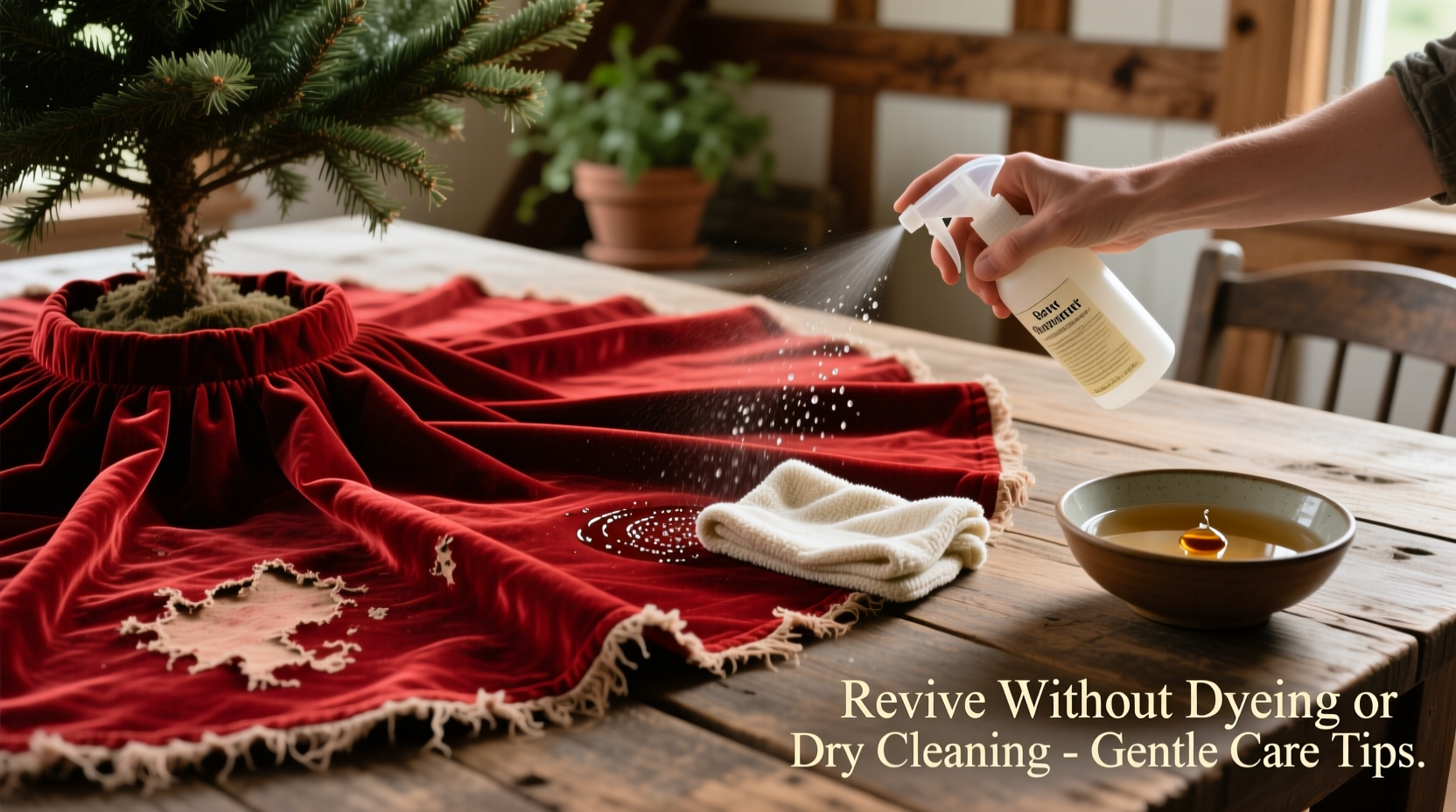
Velvet is a woven fabric with a dense pile that gives it a soft, luxurious feel. The “nap” — the direction of the fibers — plays a major role in how light reflects off the surface, which directly affects perceived color and shine. When a red velvet tree skirt fades, it's often not just about pigment loss; it's also due to flattened fibers, dust accumulation, and UV exposure altering the surface reflectivity.
Fading typically occurs from three primary sources:
- Sunlight exposure: Ultraviolet rays break down dye molecules and degrade fibers over time.
- Poor storage: Storing in plastic bags, damp basements, or compressed spaces crushes the nap and encourages mildew or static buildup.
- Dust and grime: Particles settle into the pile, creating a hazy film that diminishes color vibrancy.
Unlike flat fabrics, velvet responds uniquely to cleaning and maintenance. Aggressive scrubbing or soaking can permanently damage the pile, making gentle, targeted restoration essential.
“Reviving velvet isn’t about covering up wear—it’s about reactivating the fabric’s natural properties. A well-maintained velvet piece can look rich and fresh for decades.” — Lila Monroe, Textile Preservation Specialist, National Holiday Archive
Step-by-Step Guide to Restoring Your Red Velvet Tree Skirt
Restoration begins with assessment and progresses through gentle cleaning, fiber lifting, and environmental conditioning. Follow this timeline-based process carefully to avoid damaging delicate fibers.
- Inspect and Isolate (Day 1)
Lay the tree skirt on a clean, flat surface in natural light. Check for stains, moth damage, or areas where the backing may be separating. Mark problem zones gently with a fabric-safe tag or note. Do not fold or crease during inspection. - Dry Dust Removal (Day 1)
Use a soft-bristled clothes brush or a vacuum with a brush attachment set to low suction. Gently brush the entire surface in one direction—following the nap—to lift embedded dust. Avoid back-and-forth motions, which can tangle fibers. - Steam Treatment (Day 2)
Hang the skirt or lay it over a padded table. Hold a handheld garment steamer 6–8 inches from the fabric. Pass slowly over the surface, allowing steam to penetrate without touching the velvet. The moisture helps relax flattened fibers, restoring dimension and depth. Never rub or press while steaming. - Nap Realignment (Day 2)
After steaming, wait 10 minutes for slight drying. Then, use a velvet brush or soft toothbrush to gently lift the pile in the direction of the nap. This step enhances light reflection, making the red appear richer. - Odor Neutralization (Optional, Day 3)
If the skirt has a musty smell from storage, sprinkle baking soda lightly over the underside (not the velvet side). Let sit for 2 hours, then vacuum thoroughly with a brush attachment. This removes odor-causing particles without wetting the fabric. - Air and Rotate (Day 4)
Hang the skirt in a well-ventilated room away from direct sunlight for 24 hours. Rotate it periodically to ensure even air circulation and prevent new pressure points.
Do’s and Don’ts: Caring for Red Velvet Tree Skirts
Mistakes in handling are often irreversible with velvet. The following table outlines key practices to follow and avoid when maintaining your tree skirt.
| Do | Don’t |
|---|---|
| Brush gently in the direction of the nap | Rub or scrub aggressively |
| Use a steamer instead of ironing | Place a hot iron directly on velvet |
| Store flat or rolled around a tube | Fold tightly or hang long-term (can stretch) |
| Air out annually, even if unused | Store in plastic bins (traps moisture) |
| Use baking soda for odor control | Apply liquid cleaners or vinegar solutions |
Following these guidelines preserves both the structural and visual qualities of the fabric. Prevention is far more effective than correction when it comes to velvet care.
Real Example: Reviving a 20-Year-Old Heirloom Skirt
Maria T., a collector of vintage holiday decor from Vermont, inherited a red velvet tree skirt from her grandmother. By the time she unpacked it for her first Christmas in her own home, the fabric had lost much of its original brilliance. The red appeared dusty and uneven, especially near the center panel where it had been folded for storage.
Rather than risk damage at a dry cleaner or attempt dyeing, Maria followed the steam-and-brush method outlined here. She began by vacuuming the skirt with a brush attachment, then used a handheld steamer on a guest bed covered with a white sheet. After steaming, she brushed the nap uniformly toward the outer edge.
The results were immediate. The color regained depth, particularly in areas previously shadowed by flattened fibers. She finished by airing the skirt in a spare bedroom for a day before displaying it. “It looked like it had been freshly made,” she said. “I got more compliments on that skirt than on the tree itself.”
Maria now stores the skirt rolled around a cardboard tube, wrapped in breathable cotton muslin. She repeats the steaming process every two years as part of her pre-holiday routine.
Alternative Methods and Their Risks
While some online sources suggest using fabric refresher sprays, diluted fabric dyes, or even coffee rinses to darken faded velvet, these carry significant risks:
- Fabric refreshers: Often contain alcohol or fragrances that can degrade dyes and leave residue.
- Coffee or tea washes: May temporarily tint fabric but create uneven staining and attract insects.
- DIY dye baths: Require submersion, which can warp backing materials and distort shape.
These approaches compromise the integrity of heirloom-quality textiles. Instead, focus on non-invasive restoration that works with the fabric’s existing properties rather than attempting to alter them.
Tip: For minor color variation, rotate the skirt slightly each year so different sections face forward—this evens out sun exposure over time.Checklist: Pre-Holiday Velvet Refresh Routine
Use this checklist annually to keep your red velvet tree skirt looking its best:
- ☐ Remove from storage and lay flat on a clean surface
- ☐ Inspect for pests, mold, or seam damage
- ☐ Vacuum gently with a brush attachment (low suction)
- ☐ Steam the surface from 6–8 inches away
- ☐ Brush the nap in one consistent direction
- ☐ Air out for 24 hours in a dry, shaded room
- ☐ Store on a padded surface or roll for off-season
Completing this routine takes less than two hours and can add years to your skirt’s visual lifespan.
Frequently Asked Questions
Can I wash a red velvet tree skirt at home?
No. Most red velvet tree skirts have layered construction—velvet top, padding, and backing—that can separate when wet. Water exposure may also cause shrinking, bleeding, or permanent nap distortion. Stick to dry methods like steaming and brushing.
Why does my tree skirt look patchy after cleaning?
Uneven nap direction is the most common cause. If fibers are brushed in multiple directions, they reflect light inconsistently, creating a mottled appearance. Re-steam and re-brush the entire surface in one direction to correct this.
How should I store my tree skirt to prevent future fading?
Store it rolled around a cardboard tube and wrapped in acid-free tissue paper or unbleached cotton cloth. Keep it in a cool, dark closet—never in an attic or basement. Avoid cedar chests unless lined with breathable fabric, as cedar oils can transfer to velvet.
Final Thoughts: Honor Tradition Through Care
A red velvet tree skirt is more than a decoration—it’s often a vessel of memory, passed down through generations or tied to milestone holidays. Its condition reflects not just aesthetic preference, but respect for craftsmanship and continuity. Fading doesn’t signal the end of its usefulness; with informed care, it can remain a centerpiece for years to come.
By understanding the nature of velvet, applying gentle restoration techniques, and committing to proper storage, you preserve both beauty and heritage. These methods cost nothing more than time and attention, yet deliver visible, lasting results.
💬 Have a vintage tree skirt you’ve revived? Share your story in the comments—your experience could inspire others to breathe new life into their holiday treasures.








