When shopping for affordable yet luxurious-looking jewelry, many people turn to gold-finished pieces. Among the most popular options are gold plated rings and vermeil rings. Both offer the radiant appearance of solid gold at a fraction of the cost. But how do they hold up over time—especially when worn daily? A key concern for buyers is tarnishing: which option resists it better under regular use?
The answer isn’t as simple as choosing one over the other. Tarnish resistance depends on multiple factors, including base metal quality, gold layer thickness, plating technique, and personal lifestyle. Understanding the differences between gold plating and vermeil is essential for making an informed decision that balances beauty, longevity, and value.
Understanding Gold Plated Rings
Gold plated rings are created by applying a thin layer of gold—typically 0.5 to 2.5 microns thick—over a base metal such as brass, copper, or stainless steel. This process, known as electroplating, bonds the gold to the surface using an electric current. The result is a shiny, gold-colored ring that mimics the look of solid gold.
While gold plating offers affordability and visual appeal, its durability is limited. Because the gold layer is so thin, it can wear off relatively quickly with friction, moisture, and exposure to chemicals like lotions, perfumes, and chlorine. Once the gold wears through, the underlying base metal becomes exposed, often leading to discoloration, skin irritation, or a dull, patchy appearance.
Tarnishing in gold plated rings usually begins not from the gold itself oxidizing (pure gold doesn’t tarnish), but from the base metal reacting once the protective gold layer degrades. Sweat, humidity, and acidic skin pH accelerate this breakdown, especially on rings, which are constantly exposed to physical contact and environmental stressors.
Tip: Avoid wearing gold plated rings while washing hands, exercising, or applying skincare products to extend their lifespan.What Is Vermeil Jewelry?
Vermeil (pronounced “ver-may”) is a premium category of gold-plated jewelry defined by strict standards. According to the U.S. Federal Trade Commission (FTC), true vermeil must meet three criteria:
- The base metal must be sterling silver (at least 92.5% pure silver).
- The gold coating must be at least 10-karat gold.
- The gold layer must be a minimum of 2.5 microns thick.
This combination sets vermeil apart from standard gold plating. The sterling silver base provides a higher-quality foundation than brass or copper, and the thicker gold layer enhances both appearance and durability. As a result, vermeil rings are generally more resistant to wear and tarnishing compared to regular gold plated pieces.
Because silver itself is prone to oxidation, the thick gold layer in vermeil acts as a protective seal. As long as the gold remains intact, the silver underneath stays shielded from air and moisture—the primary causes of tarnish. However, if the gold wears down, the silver may begin to darken, requiring polishing or re-plating.
“Vermeil strikes an ideal balance between luxury and affordability. When properly cared for, it can last years—even with daily wear.” — Lena Torres, Jewelry Artisan & Materials Specialist
Comparing Tarnish Resistance: Key Factors
To determine which type of ring tarnishes slower, it’s important to evaluate several technical and practical variables. Below is a detailed comparison.
| Factor | Gold Plated Rings | Vermeil Rings |
|---|---|---|
| Base Metal | Brass, copper, or stainless steel (often reactive) | Sterling silver (higher purity, but can tarnish if exposed) |
| Gold Thickness | 0.5–2.5 microns (often less than 1 micron) | Minimum 2.5 microns (typically 2.5–5 microns) |
| Gold Purity | Usually 14k or lower; sometimes unknown | At least 10k, commonly 14k or 18k |
| Tarnish Resistance | Low to moderate; base metal reacts quickly when gold wears | High; thicker gold protects silver base longer |
| Lifespan with Daily Wear | 3–12 months before noticeable wear | 1–3+ years with proper care |
| Re-plating Potential | Possible, but frequent re-plating may damage base metal | Easily re-plated due to durable silver base |
From this comparison, vermeil clearly outperforms standard gold plating in terms of tarnish resistance and longevity. The thicker gold layer and superior base metal make it a smarter investment for everyday wear, especially for rings that endure constant friction and exposure.
Real-World Performance: A Mini Case Study
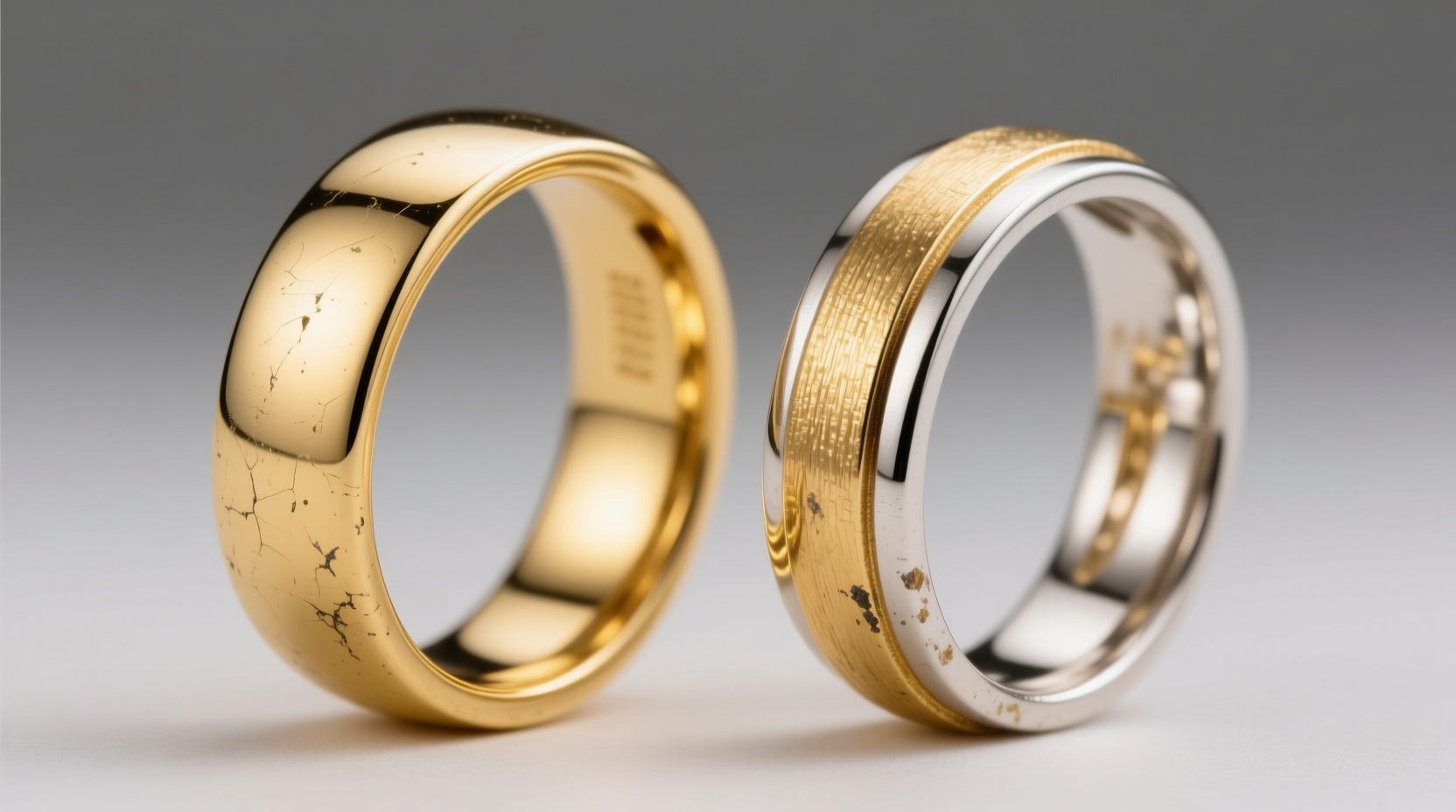
Sophia, a graphic designer from Portland, Oregon, wears her engagement-style stackable rings every day. She initially purchased two similar-looking rings—one gold plated over brass, the other 18k gold vermeil over sterling silver—for side-by-side testing.
After six months of regular wear (including handwashing, typing, and occasional gym use), the gold plated ring began showing signs of wear. The gold had faded along the band edges, revealing a darkened brass base. It developed a slight green tinge where it touched her skin after sweating.
In contrast, the vermeil ring retained nearly all its luster. Only upon close inspection could Sophia see minor micro-abrasions on high-contact areas. No discoloration occurred, and the silver base remained fully protected. After one year, she polished the vermeil ring lightly and continued wearing it without issues.
Her experience reflects broader consumer trends: vermeil maintains its appearance significantly longer, even under consistent daily use.
Care Practices That Extend Lifespan
No jewelry lasts forever without maintenance. Even the most durable finishes benefit from proper care. The following step-by-step guide outlines best practices for preserving both gold plated and vermeil rings.
- Remove During High-Risk Activities: Take off your ring before showering, swimming, cleaning, or exercising. Water, sweat, and chemicals degrade the gold layer over time.
- Clean Gently and Regularly: Wipe the ring weekly with a soft, lint-free cloth. For deeper cleaning, use mild soap, lukewarm water, and a soft brush—never abrasive cleaners.
- Dry Thoroughly: After cleaning, ensure the ring is completely dry before storing. Moisture trapped against the metal accelerates oxidation.
- Store Separately: Keep your ring in a soft pouch or lined jewelry box to prevent scratches from harder materials.
- Avoid Perfume and Lotions: Apply cosmetics before putting on jewelry. Alcohol and oils can erode the gold finish and create microscopic gaps for tarnish to form.
- Rotate Usage: If you own multiple rings, rotate them to reduce daily strain on any single piece.
- Professional Re-plating: When signs of wear appear, consider professional re-plating. Vermeil rings can often be restored affordably.
Common Myths About Tarnishing
Misinformation often leads consumers to blame the wrong factors when their jewelry deteriorates. Here are two widespread myths debunked:
- Myth: “Gold plated jewelry tarnishes because the gold is fake.”
Reality: Pure gold does not tarnish. The issue lies in the thinness of the layer and the reactivity of the base metal. Even high-karat gold plating will fail quickly if the base is low-quality. - Myth: “Vermeil never tarnishes.”
Reality: While highly resistant, vermeil can tarnish if the gold layer wears down and the silver base is exposed. Proper care is still required.
Understanding these truths helps set realistic expectations and encourages better maintenance habits.
FAQ: Your Top Questions Answered
Does vermeil turn green or black over time?
Not if the gold layer remains intact. However, if the coating wears off and the sterling silver base is exposed, it may darken due to oxidation. Unlike copper-based alloys, silver does not typically cause green skin stains. Any discoloration comes from the metal, not body chemistry.
Can I wear vermeil rings every day?
Yes, vermeil is designed for regular wear, especially with responsible care. Its thicker gold layer and high-quality base make it far more resilient than standard gold plating. Just avoid prolonged exposure to water and chemicals.
Is gold filled better than vermeil for tarnish resistance?
Gold filled jewelry contains 5% to 10% solid gold by weight, bonded to a base metal. It is generally more durable and longer-lasting than vermeil. However, vermeil offers a brighter, richer finish due to its silver base and higher gold purity. For aesthetic appeal and moderate durability, vermeil is excellent. For maximum longevity, gold filled may be preferable.
Checklist: Choosing the Right Ring for Daily Wear
Use this checklist to decide whether gold plated or vermeil is right for you:
- ✅ Do you want a budget-friendly option for occasional wear? → Consider gold plated
- ✅ Are you looking for a near-luxury look with lasting quality? → Choose vermeil
- ✅ Will the ring be worn 8+ hours a day, including during chores or workouts? → Verify vermeil specs and commit to care
- ✅ Is the gold layer at least 2.5 microns thick? → Required for true vermeil
- ✅ Is the base metal sterling silver? → Non-negotiable for vermeil
- ✅ Can you remove the ring during high-exposure activities? → Essential for longevity
- ✅ Are you willing to clean and store it properly? → Maximizes lifespan for either type
Final Verdict: Which Tarnishes Slower?
When comparing gold plated rings versus vermeil in terms of tarnish resistance during daily wear, vermeil is the clear winner. Its thicker gold layer, higher gold purity, and sterling silver base provide superior protection against oxidation and wear. While no plated jewelry lasts forever, vermeil can maintain its brilliance for years with minimal maintenance.
Gold plated rings, while attractive and inexpensive, are better suited for short-term or occasional use. Their thinner coating and reactive base metals make them prone to early degradation, especially on fingers that move constantly and encounter countless surfaces throughout the day.
If you’re investing in a ring you plan to wear regularly, vermeil offers the best balance of beauty, ethics (no cheap alloys), and durability. Look for reputable sellers who disclose plating thickness and material composition. When in doubt, request verification of the product’s adherence to FTC vermeil standards.
“The difference between jewelry that lasts and jewelry that fades isn’t just price—it’s construction. Vermeil’s integrity starts from the inside out.” — Marcus Lin, Master Goldsmith
Take Action Today
Your jewelry should reflect your style and stand the test of time. Don’t settle for rings that lose their shine within weeks. Evaluate your current collection: are your favorite pieces gold plated or vermeil? Consider upgrading key items to vermeil for a more sustainable, elegant alternative to solid gold.
Start by checking labels, asking sellers about plating thickness, and adopting a simple nightly routine—remove, wipe, and store. Small habits lead to big results. Share your experiences, ask questions, and help others discover the lasting beauty of well-made jewelry.
💬 Have a favorite vermeil ring that’s stood the test of time? Tell us your story in the comments and inspire smarter jewelry choices!








