A watch is more than just a timepiece—it’s an extension of personal style, craftsmanship, and sometimes, legacy. And while the movement inside may be engineered to perfection, the strap often speaks volumes about quality and authenticity. Leather watch straps are prized for their elegance, comfort, and natural aging process. But not all leather is created equal. With synthetic alternatives like faux leather, bonded leather, and PU imitations flooding the market, knowing how to distinguish genuine leather is essential.
Whether you're buying vintage, shopping online, or evaluating a gift, being able to confidently identify real leather ensures you’re investing in durability, breathability, and long-term value—not just aesthetics.
Understand the Types of Leather Used in Watch Straps
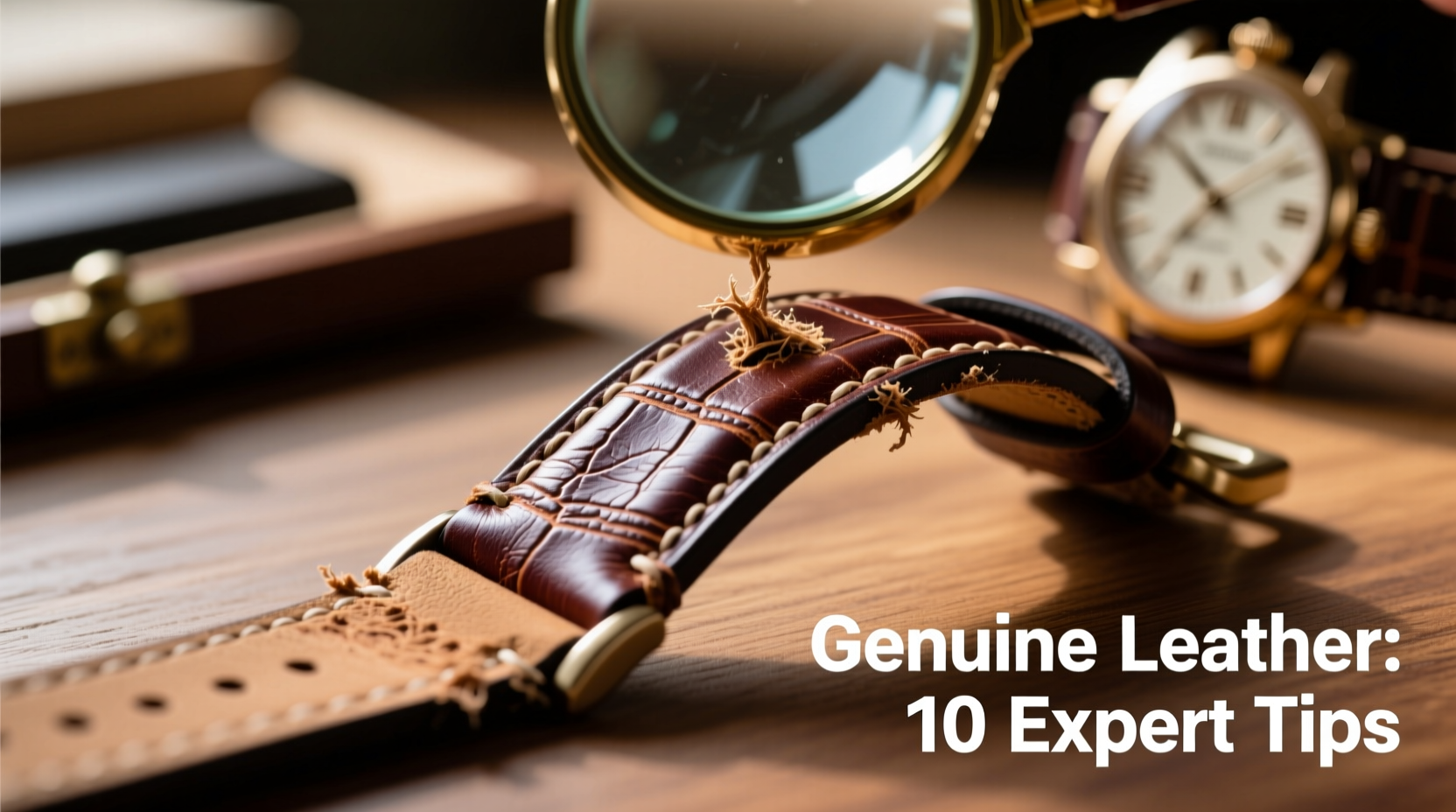
Before diving into identification techniques, it helps to understand the hierarchy of leather types commonly used in watchmaking:
- Full-Grain Leather: The highest quality, taken from the top layer of the hide with no surface sanding. It develops a rich patina over time.
- Top-Grain Leather: Slightly processed; the surface is smoothed and finished. Still high quality but less durable than full-grain.
- Corrected-Grain Leather: Imperfections have been sanded away and embossed. Often coated with pigments.
- Bonded Leather: Made from leftover scraps bonded with adhesives and pressed into sheets. Contains only 10–20% real leather.
- Faux/PU Leather: Entirely synthetic, made from polyurethane or PVC. Lacks breathability and natural texture.
Genuine leather watch straps are typically made from full-grain or top-grain calfskin, alligator, ostrich, or shell cordovan. These materials are supple yet strong, age beautifully, and feel distinctly organic to the touch.
Tip: Genuine leather will never be perfectly uniform—subtle variations in grain, color, and texture are signs of authenticity.The Five-Sense Inspection Method
Trained artisans and collectors rely on sensory cues to authenticate leather. You can too. Use this five-sense framework to assess any watch strap:
1. Touch: Evaluate Texture and Flexibility
Genuine leather has a soft, slightly uneven surface with natural grain patterns. Run your fingers across it—you should feel subtle ridges, pores, and a warm, pliable resistance. Fake leather tends to be uniformly smooth, cold to the touch, and overly flexible or stiff depending on thickness.
Press your thumb into the surface. Real leather will form small wrinkles or creases that disappear when released. Synthetic materials either resist indentation or stay indented.
2. Smell: Trust Your Nose
This is one of the most reliable tests. Genuine leather emits a distinct, earthy, slightly tannic aroma—the result of natural processing. Faux leather, by contrast, often smells like plastic, chemicals, or adhesive. If the strap has a sharp, artificial scent, especially when new, it’s likely not real leather.
“Your nose doesn’t lie. The scent of well-tanned leather is unmistakable—it’s like old books or a well-kept library.” — Daniel Reeves, Horology Craftsmanship Consultant
3. Look: Examine the Surface and Edges
Inspect the strap under good lighting. Genuine leather shows natural grain variation—no two areas look exactly alike. Look at the edge finish: real leather edges are layered, fibrous, and often hand-painted or burnished. They may appear slightly rough or textured.
Faux leather edges are usually perfectly flat, sealed with a uniform coating, and lack depth. Bonded leather often reveals tiny fiber clusters or a paper-like consistency along the cut edge.
4. Listen: The Snap Test
Gently flex the strap back and forth. Genuine leather produces a soft, low creak or whisper due to its fibrous structure. Imitation leather may snap loudly, crackle unnaturally, or make no sound at all because of its plastic composition.
5. Moisture Reaction: The Water Drop Test (Use Caution)
Place a single drop of water on an inconspicuous area of the strap. On genuine leather, the liquid will slowly bead and then absorb into the material within seconds, darkening the spot temporarily. Faux leather will repel the water, leaving the droplet intact for much longer.
Note: Perform this test only if you own the strap and are willing to accept minor temporary staining. Avoid on vintage or delicate pieces.
Checklist: How to Confirm Genuine Leather in 7 Steps
Follow this practical checklist before purchasing or accepting a leather watch strap:
- Examine the grain pattern for natural irregularities.
- Feel the surface—does it warm up in your hand?
- Smell the strap—look for a rich, organic leather scent.
- Check the underside—genuine leather often has a suede-like backing.
- Inspect the edges—are they fibrous and layered?
- Perform a gentle flex test—listen for natural creaks.
- Ask for material documentation—reputable brands disclose leather type.
Comparison Table: Genuine vs. Fake Leather Traits
| Feature | Genuine Leather | Faux/Bonded Leather |
|---|---|---|
| Surface Texture | Natural grain, slight imperfections | Uniform, often embossed |
| Edge Appearance | Layered, fibrous, may be burnished | Flat, sealed, plastic-coated |
| Smell | Earthy, tannic, natural | Chemical, plastic-like |
| Water Absorption | Absorbs slowly, darkens | Beeds up, repels |
| Durability | Long-lasting, ages well | Peels, cracks within months |
Real Example: Spotting a Counterfeit Vintage Strap
A collector once purchased what appeared to be a 1970s Omega Seamaster with an original brown leather strap. The watch itself was authentic, but something felt off about the band. Upon closer inspection:
- The grain was too consistent—like a printed pattern.
- The edges were perfectly smooth and painted black, lacking fiber layers.
- When rubbed, the surface emitted a faint chemical odor.
- A drop of water sat on the surface for over a minute without absorbing.
Further research revealed the strap had been replaced with a modern PU imitation. While visually convincing, the sensory details betrayed its authenticity. Replacing it with a hand-stitched full-grain strap restored both function and historical accuracy.
Frequently Asked Questions
Is “genuine leather” the same as real leather?
No. While technically “real,” the term “genuine leather” is often used for lower-tier products like bonded leather, which contains only a fraction of natural fibers. Full-grain or top-grain is superior in quality and longevity.
Can a leather strap be both waterproof and genuine?
Not entirely. Genuine leather is naturally porous and breathable. Some straps are treated with water-resistant finishes, but prolonged exposure to moisture will still damage them. True waterproof straps are usually silicone or rubber.
How long should a genuine leather watch strap last?
With proper care, 1–3 years depending on wear frequency and environment. Regular cleaning, dry storage, and occasional conditioning extend lifespan. Avoid wearing leather straps while swimming or showering.
Final Thoughts: Confidence Comes from Knowledge
Identifying genuine leather isn’t about memorizing jargon—it’s about developing awareness. Once you learn to see the subtle clues in texture, smell the truth in a material, and feel the difference between nature and synthesis, you’ll never second-guess a strap again.
Whether you're curating a luxury collection or simply want to ensure your daily wearer is built to last, these skills empower smarter choices. Don’t let marketing terms or glossy finishes fool you. Look closely, touch thoughtfully, and trust your senses.
💬 Have you ever been misled by a fake leather strap? Share your experience or ask a question below—we’d love to hear from you.








