
When it comes to securing your hair in seconds, few accessories are as efficient as a claw clip. But with both metal and plastic options dominating the market, many people wonder: Is the premium price of metal claws justified? Or can a well-made plastic version perform just as well? The answer depends on your hair type, styling needs, and daily routine. This guide breaks down the real differences between metal and plastic hair claws—beyond the marketing claims—to help you make an informed decision.
Durability: How Long Will Your Claw Last?
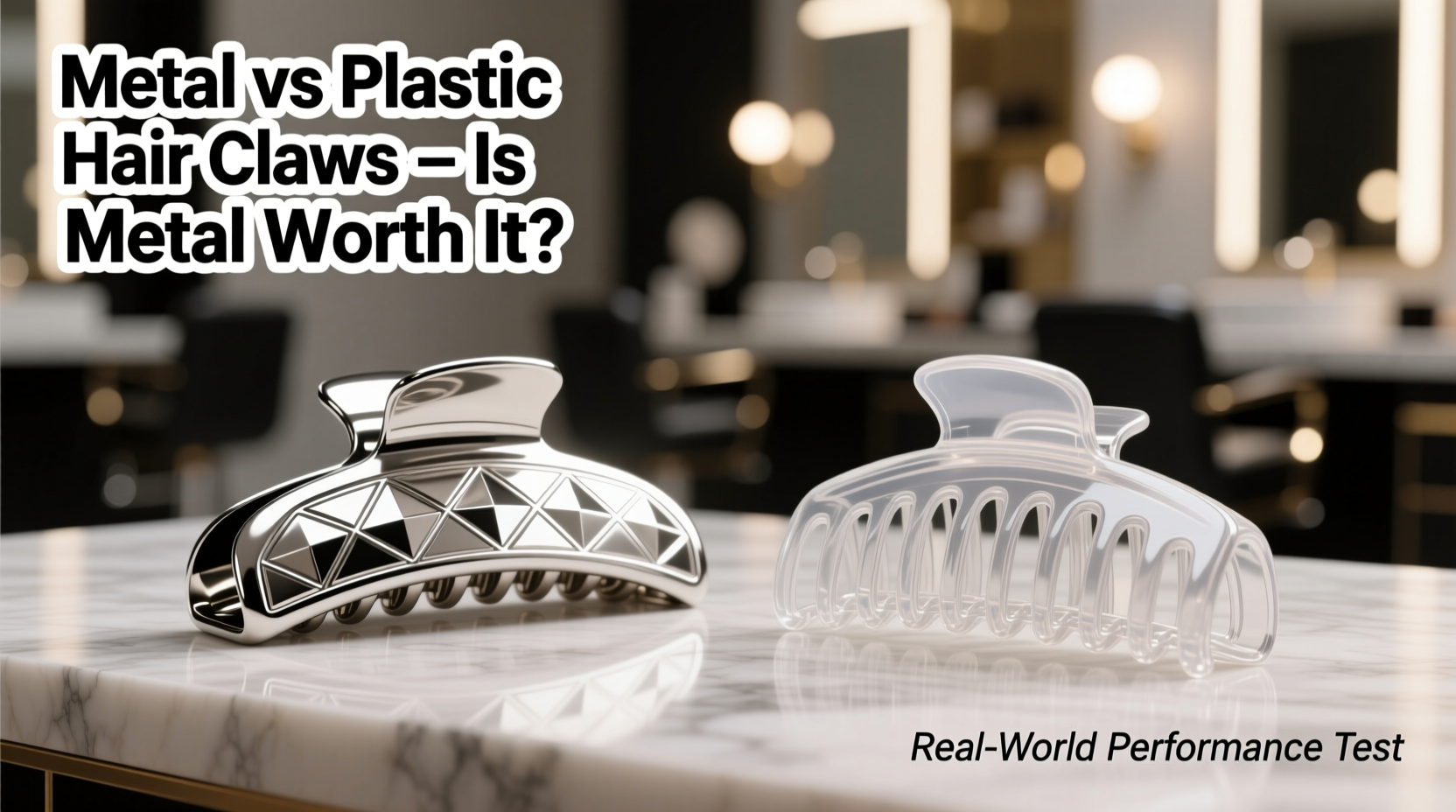
Durability is often the first factor that separates metal from plastic. Metal claws, typically made from stainless steel or alloy, are inherently stronger and more resistant to wear. They don’t snap under pressure, rarely warp over time, and maintain their spring tension for years. In contrast, even high-quality plastic claws can degrade after months of frequent use. Thin arms may crack, especially if opened too wide or used on thick hair, while the hinge mechanism can loosen, reducing grip strength.
Consider this: A single metal claw can last five years or more with regular use, while a plastic one might need replacing every six to twelve months, depending on quality and frequency of use. Over time, that makes metal a more cost-effective option despite the higher upfront cost.
Tip: Avoid dropping your claw clip on hard surfaces—especially metal ones—as repeated impact can weaken the hinge or misalign the arms.Grip Strength and Hair Type Compatibility
The performance of a claw clip isn’t just about material—it’s about how well it holds your hair. Metal claws generally offer superior grip due to their weight and structural rigidity. The added heft helps anchor the clip securely, making them ideal for thick, long, or coarse hair. Their firm closure prevents slippage, even when you’re active or outdoors in windy conditions.
Plastic claws, on the other hand, rely heavily on design for grip. Some feature textured inner ridges or rubberized coatings to improve hold, but they still tend to struggle with very dense or slippery hair types. Fine-haired users may find plastic claws sufficient, but those with voluminous or curly textures often report midday slippage or accidental dropouts.
“Metal claws provide consistent tension and distribute weight more evenly across the scalp, which reduces strain and improves hold.” — Lena Park, Professional Stylist & Educator
Comfort and Weight Distribution
While metal offers strength, its weight can be a drawback for some. Heavy-duty metal claws may cause discomfort during extended wear, particularly for people with sensitive scalps or fine hair that doesn’t support the load. Pressure points can develop behind the ears or at the nape of the neck, leading to headaches after several hours.
Plastic claws win here: they’re lightweight and sit gently on the head, making them ideal for all-day wear or casual updos. However, not all plastics are created equal. Cheaper models may have sharp edges or uneven surfaces that snag hair, so look for smooth, rounded designs with polished finishes.
If you value comfort but want durability, consider hybrid options—some brands now offer reinforced nylon or fiberglass-filled polymer claws that mimic metal’s strength without the heaviness.
Aesthetic Appeal and Style Versatility
Aesthetics play a big role in accessory choices. Metal claws often come in minimalist, polished finishes like gold, silver, or matte black, lending a sleek, modern look. They’re popular in professional settings or elevated casual outfits where subtle elegance matters.
Plastic claws, meanwhile, offer far more variety in color, shape, and pattern. From translucent jelly finishes to tortoiseshell prints and oversized retro designs, plastic allows for greater creative expression. They’re perfect for fashion-forward looks or coordinating with seasonal wardrobes.
That said, lower-end plastic claws can appear cheap or flimsy, undermining an otherwise polished appearance. High-end acetate or cellulose-based plastics bridge the gap, offering both visual appeal and improved resilience.
Comparison Table: Metal vs Plastic Hair Claws
| Feature | Metal Claws | Plastic Claws |
|---|---|---|
| Durability | High – resists breakage and warping | Moderate to low – prone to cracking over time |
| Grip Strength | Excellent – holds thick, heavy hair securely | Fair to good – varies by design and texture |
| Weight | Heavier – may cause discomfort over time | Lightweight – comfortable for all-day wear |
| Style Options | Limited to metallic finishes | Wide range of colors, patterns, and shapes |
| Price Range | $12–$30+ | $5–$15 |
| Best For | Thick, long, or coarse hair; durability seekers | Fine to medium hair; fashion-focused users |
Real-World Example: Sarah’s Switch from Plastic to Metal
Sarah, a nurse with shoulder-length wavy hair, used plastic claw clips for years. She liked their lightness and colorful designs but grew frustrated when they snapped after only a few months. During her 12-hour shifts, her clips would loosen, forcing her to re-pin her hair multiple times a day. After switching to a brushed gold metal claw, she noticed immediate improvement. “It holds my hair all shift long, even when I’m bending over patients,” she says. “And it hasn’t lost tension in eight months. It’s heavier, sure, but I barely notice it now.”
Her experience reflects a common trend: functional demands often outweigh aesthetic preferences in high-use scenarios.
Step-by-Step Guide: Choosing the Right Claw for You
- Assess your hair type: Thick, curly, or long hair benefits from metal’s grip. Fine or short hair may do better with lightweight plastic.
- Consider your lifestyle: Active jobs or frequent movement call for secure metal claws. Office or home use may allow for more stylistic plastic options.
- Evaluate comfort needs: If you wear claws for hours, test weight and pressure points. Try both materials for a week each.
- Check construction quality: Look for smooth edges, strong springs, and even closure. Avoid clips that feel brittle or misaligned.
- Budget for longevity: Factor in replacement costs. One $20 metal claw may outlast four $8 plastic ones.
Frequently Asked Questions
Do metal claws damage hair more than plastic?
No—when used correctly, metal claws don’t cause more damage. In fact, their secure hold means less tugging and fewer touch-ups, reducing overall manipulation. Just avoid twisting too tightly or leaving them in overnight regularly.
Can plastic claws be eco-friendly?
Some brands now use bioplastics or recycled materials, but most conventional plastic claws end up in landfills. Metal claws, especially stainless steel, are fully recyclable and last longer, making them more sustainable overall.
Are there hypoallergenic options available?
Yes. Surgical-grade stainless steel claws are ideal for sensitive skin or metal allergies. Avoid nickel-plated metals if you’re allergic. For plastic, look for non-toxic, BPA-free acetate or cellulose-based models.
Final Verdict: Are Metal Claws Worth It?
The hype around metal hair claws isn’t unfounded—but it’s not universal either. For people with thick, heavy, or unruly hair, or those who need reliability throughout a busy day, metal claws are absolutely worth the investment. Their durability, grip, and long-term value outweigh the initial cost.
However, plastic claws still have their place. They’re excellent for light-duty use, special occasions, or anyone prioritizing comfort and style diversity. The key is matching the material to your specific needs, not following trends blindly.
💬 Have you switched from plastic to metal—or vice versa? Share your experience and help others find their perfect claw!








