When it comes to a restful night’s sleep, few factors matter more than temperature regulation. Overheating during the night disrupts deep sleep cycles, increases tossing and turning, and leaves you feeling groggy in the morning. One of the most effective ways to maintain a cool sleeping environment is by choosing the right bed sheets. Cotton and bamboo are two of the most popular natural fiber options on the market today, both praised for their softness and breathability. But when it comes to staying cool all night long, which one truly performs better?
This article dives deep into the properties of cotton and bamboo sheets, comparing their thermal regulation, moisture-wicking capabilities, environmental impact, and long-term comfort. Whether you live in a humid climate, tend to sleep hot, or simply want to upgrade your bedding for optimal comfort, understanding the differences between these materials can make all the difference.
Thermal Regulation: How Fabric Affects Body Temperature
The human body naturally cools down during the onset of sleep, typically dropping by 1–2 degrees Celsius. Any bedding that traps heat interferes with this process, making it harder to fall asleep and stay asleep. The key to maintaining a stable sleep temperature lies in the fabric’s ability to allow airflow, wick moisture, and dissipate heat.
Cotton, especially long-staple varieties like Egyptian or Pima, has been a staple in bedding for centuries due to its breathability and soft hand feel. Its loosely woven structure allows air to circulate, helping to moderate temperature. However, cotton’s cooling effect is largely passive—it doesn’t actively cool but rather avoids trapping excessive heat.
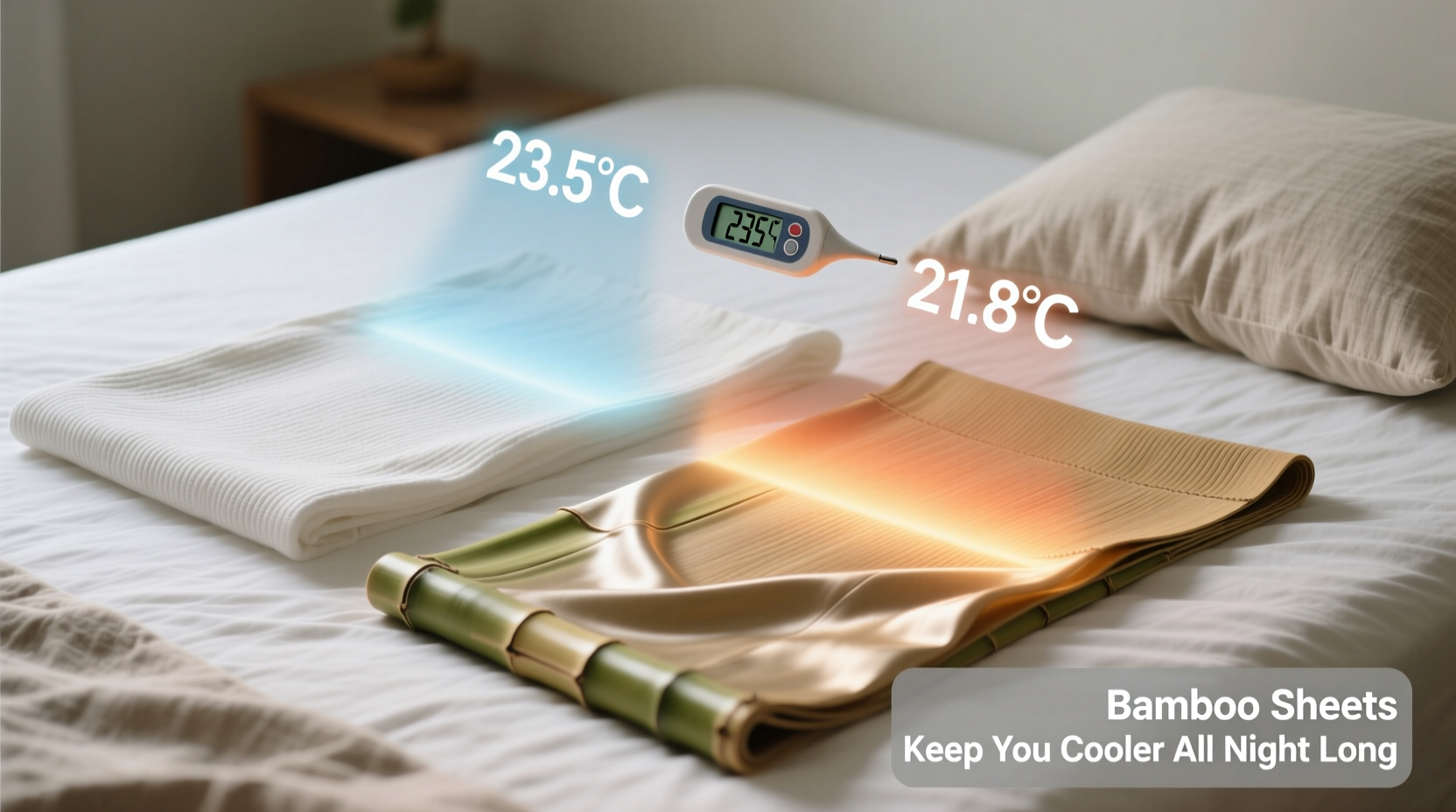
Bamboo, particularly when processed into viscose or lyocell (branded as TENCEL™), offers superior thermoregulation. The fibers have a naturally smooth, round cross-section that creates micro-gaps within the weave, enhancing airflow. More importantly, bamboo fabric is inherently more moisture-wicking than cotton—capable of absorbing up to 40% more moisture before feeling damp. This means sweat is pulled away from the skin faster, where it can evaporate, creating a natural cooling effect through evaporation.
Tip: If you frequently wake up sweaty, prioritize sheets with high moisture-wicking properties—bamboo-based fabrics often outperform cotton in this area.Mechanics of Moisture Management: Wicking, Absorption, and Drying Time
Sleeping hot isn’t just about ambient room temperature; it’s also about how well your sheets manage perspiration. Even small amounts of sweat can create a clammy sensation that disrupts sleep continuity.
Cotton absorbs moisture effectively but holds onto it longer. Once cotton becomes saturated, it feels heavier and takes longer to dry. In high-humidity environments, this can lead to a persistently damp feeling, especially if you're using multiple layers or synthetic mattress protectors.
In contrast, bamboo fibers have capillary channels that actively pull moisture away from the body. Independent lab tests show that bamboo viscose dries 30–50% faster than standard cotton under similar conditions. This rapid drying helps maintain a dry, cool surface throughout the night—even during summer months or hot flashes.
“Bamboo’s moisture management is closer to performance athletic wear than traditional bedding. It’s ideal for people who experience night sweats or live in tropical climates.” — Dr. Lena Patel, Sleep Researcher at the National Center for Healthy Sleep
Comparative Analysis: Cotton vs Bamboo Sheets
| Feature | Cotton Sheets | Bamboo Sheets |
|---|---|---|
| Cooling Performance | Moderate – breathable but not actively cooling | High – excellent airflow and evaporative cooling |
| Moisture Wicking | Absorbs well but retains moisture | Superior wicking; dries quickly |
| Softness | Softens over time; may start stiff | Inherently silky-smooth from first use |
| Durability | High – especially long-staple cotton | Moderate to high – depends on processing method |
| Environmental Impact | High water and pesticide use | Low water; fast-growing plant, but chemical processing varies |
| Price Range | $20–$200+ depending on quality | $50–$300; premium brands cost more |
| Hypoallergenic | No – prone to dust mite retention | Yes – naturally resistant to microbes and allergens |
The table highlights that while cotton remains a reliable, durable option, bamboo excels in active cooling and hygiene. For individuals with sensitive skin, allergies, or a tendency to overheat, bamboo’s hypoallergenic and antimicrobial properties offer meaningful benefits.
Real-World Experience: A Case Study in Hot Climate Sleep
Consider Maria, a 42-year-old teacher living in Miami, Florida, where summer humidity regularly exceeds 80%. She had struggled with disrupted sleep for years, waking up multiple times drenched in sweat despite using fans and keeping her AC at 72°F (22°C). After switching from 600-thread-count Egyptian cotton sheets to a set of OEKO-TEX certified bamboo lyocell sheets, she reported a dramatic improvement.
Within two weeks, Maria noted fewer nighttime awakenings and no longer needed to change her pillowcase mid-sleep. “It’s not that I don’t sweat anymore,” she explained, “but the sheets don’t feel wet. They stay cool even when I touch them after hours of sleep.” Her experience aligns with clinical observations that moisture-wicking fabrics improve subjective sleep quality in warm environments.
This real-world example underscores that fabric choice isn’t just about luxury—it directly impacts physiological comfort and sleep architecture.
Sustainability and Ethical Considerations
As consumers become more eco-conscious, the environmental footprint of bedding choices matters. Cotton, though natural, is one of the most resource-intensive crops. According to the World Wildlife Fund, it takes an average of 2,700 liters of water to produce enough cotton for a single t-shirt—equivalent to one person’s drinking needs for 2.5 years. Conventional cotton farming also relies heavily on pesticides and synthetic fertilizers.
Bamboo, on the other hand, grows rapidly without irrigation, requires no pesticides, and regenerates from its roots without replanting. However, the sustainability of bamboo sheets depends on how the raw fiber is processed. Bamboo viscose often involves chemical solvents like sodium hydroxide and carbon disulfide, which can be harmful if not properly managed. Look for certifications such as OEKO-TEX, FSC, or lyocell (TENCEL™), which use closed-loop systems that recycle up to 99% of solvents.
Tip: Choose bamboo lyocell over conventional bamboo viscose for a more sustainable and safer product.Choosing the Right Sheet: A Step-by-Step Guide
Selecting the best sheet for cooling isn’t just about material—it’s about combining fiber type, weave, thread count, and care habits. Follow this step-by-step guide to make an informed decision:
- Assess your sleep environment: Do you live in a hot, humid climate? Do you use heavy blankets? High heat and poor airflow demand superior moisture management.
- Evaluate your body’s tendencies: Do you sweat at night? Experience hot flashes? Have allergies? These factors favor bamboo’s wicking and hypoallergenic traits.
- Check the fiber source: For cotton, opt for organic or Pima/Egyptian. For bamboo, look for TENCEL™ lyocell or OEKO-TEX certification.
- Consider the weave: Percale weaves are crisper and cooler than sateen, regardless of fiber. Bamboo sateen is still cooler than cotton sateen due to inherent fiber properties.
- Test for softness and durability: Read customer reviews focused on long-term use. Some bamboo sheets soften over time, while others may pill after repeated washes.
- Factor in maintenance: Both cotton and bamboo should be washed in cold water and line-dried when possible. Avoid bleach and fabric softeners, which degrade fibers.
Frequently Asked Questions
Are bamboo sheets really cooler than cotton?
Yes, in most cases. Bamboo fibers have superior moisture-wicking and breathability, allowing for better evaporative cooling. While cotton is breathable, it retains moisture longer, which can create a warmer, damper sleeping surface.
Do bamboo sheets last as long as cotton?
High-quality bamboo sheets, especially those made with lyocell, can last 5–6 years with proper care. Cotton, particularly long-staple varieties, may last longer—up to 8–10 years—but will lose softness and color vibrancy over time. Bamboo tends to maintain its sheen and softness longer but may be more prone to pilling if blended with synthetic fibers.
Are there any downsides to bamboo sheets?
The main concerns are related to production methods. Poorly processed bamboo viscose may involve toxic chemicals and lack transparency. Additionally, some budget bamboo sheets are blended with polyester, reducing breathability. Always check labels and certifications to ensure purity and ethical manufacturing.
Final Recommendations and Action Plan
If your primary goal is to stay cool and dry throughout the night, bamboo sheets—particularly those made from TENCEL™ lyocell—are the superior choice. Their advanced moisture management, smooth texture, and natural resistance to odors and allergens make them ideal for hot sleepers, allergy sufferers, and those in humid climates.
Cotton remains a strong contender for those who value durability, tradition, and ease of care. High-thread-count percale cotton sheets offer crisp comfort and can be an excellent budget-friendly option. However, they won’t match bamboo’s active cooling performance.
- For maximum cooling: Choose 100% bamboo lyocell in a percale weave.
- For balance of cost and comfort: Opt for organic Pima cotton percale.
- To avoid greenwashing: Look for OEKO-TEX, FSC, or TENCEL™ labels.
- To extend sheet life: Wash in cold water, avoid high heat drying, and rotate between 2–3 sets.
“The best sheet is the one that supports your body’s natural sleep rhythms. For many, that means moving beyond tradition and embracing fibers engineered for thermal comfort.” — Dr. Rajiv Mehta, Director of Sleep Innovation Lab, Boston
Conclusion: Make the Cool Choice Tonight
Your sheets do more than just look pretty—they play a critical role in your sleep quality and overall well-being. While cotton has long dominated the bedding aisle, advancements in sustainable textiles have given rise to bamboo as a genuinely cooler, more hygienic alternative. By understanding the science behind fabric performance, you can make a choice that aligns with your comfort needs and values.
Don’t let another night of restless, sweaty sleep go by. Evaluate your current bedding, consider your personal sleep challenges, and take the next step toward a cooler, more refreshing rest. Whether you choose premium bamboo or high-grade cotton, the key is intentionality—selecting materials that work with your body, not against it.
💬 Have you switched from cotton to bamboo sheets? What was your experience? Share your story in the comments below and help others find their coolest night’s sleep yet!








