Every December, an estimated 2.3 million miles of wrapping paper are discarded in the United States alone—enough to circle the Earth 92 times. Globally, over 50,000 trees are cut down annually just to produce single-use gift wrap. Meanwhile, reusable fabric wraps—often marketed as “furoshiki-inspired” or “eco-wraps”—are gaining traction among sustainability-conscious households. But do they deliver on their environmental promise? Or is the shift more symbolic than substantive? This analysis cuts through marketing claims to examine the full lifecycle impact: raw material extraction, manufacturing energy, transportation emissions, end-of-life fate, and real-world usage patterns. The answer isn’t binary—it depends on how many times a fabric wrap is reused, what it’s made from, and how it’s cared for.
The Hidden Burden of Conventional Wrapping Paper
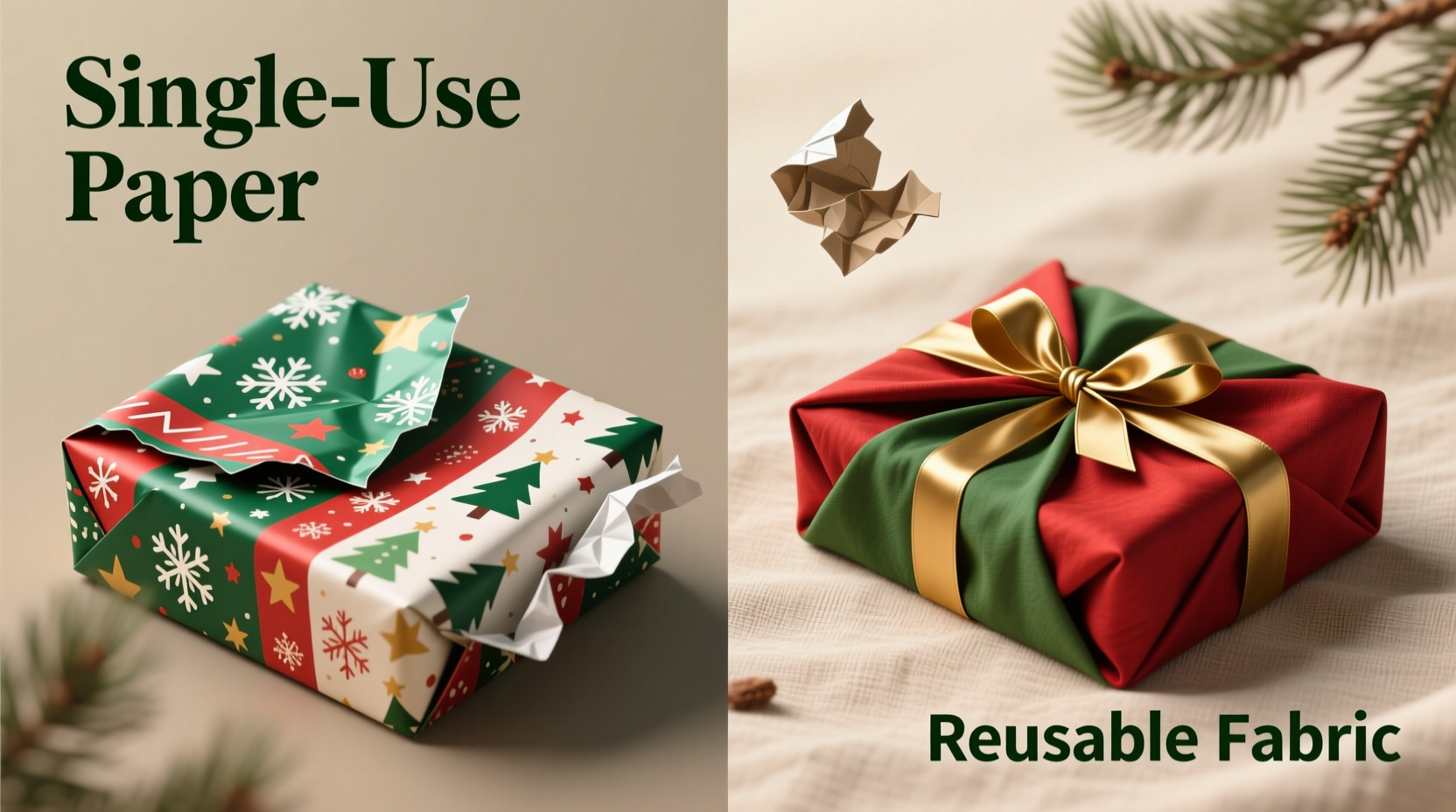
Most conventional wrapping paper appears festive but conceals a complex ecological footprint. While often labeled “recyclable,” only about 20% of wrapping paper actually gets recycled in practice. Why? Because glossy finishes, metallic inks, laminated coatings, and adhesive tapes contaminate recycling streams. A 2023 study by the Waste & Resources Action Programme (WRAP) found that 68% of wrapping paper collected for recycling was rejected at UK materials recovery facilities due to non-paper additives.
Virgin fiber paper requires intensive processing: pulping consumes vast quantities of water and energy, while chlorine-based bleaching releases dioxins into waterways. Even “recycled-content” paper carries a burden—processing post-consumer waste still demands heat, chemicals, and transportation. And when discarded, wrapping paper rarely composts cleanly: synthetic dyes and plastic-based glitter persist in landfills for decades, leaching microplastics into soil and groundwater.
One often-overlooked factor is distribution logistics. Wrapping paper is lightweight but bulky—low density means high transport emissions per functional unit. A standard 30-meter roll occupies nearly 0.015 m³ of shipping volume. When stacked across global supply chains—from Finnish pulp mills to Chinese printing plants to U.S. big-box retailers—the cumulative carbon cost adds up quickly.
Reusable Fabric Wraps: Not All Are Created Equal
Reusable fabric wraps range from simple cotton squares to artisan-dyed silk scarves repurposed as gifts. Their environmental benefit hinges entirely on reuse frequency. A life cycle assessment published in the Journal of Industrial Ecology (2022) modeled three common materials:
- Organic cotton: High water and land use in cultivation, but biodegradable if untreated.
- Recycled polyester (rPET): Lower water demand, but derived from plastic bottles—still a fossil-fuel product with microfiber shedding risk.
- Hemp or linen: Low irrigation needs, naturally pest-resistant, and high yield per hectare—but limited commercial availability increases transport emissions.
The study concluded that a fabric wrap must be reused at least 12 times to offset its higher initial carbon footprint compared to virgin wrapping paper. For rPET wraps, that threshold rises to 17 uses due to energy-intensive recycling processes involved in fiber conversion.
“Reusability is necessary—but insufficient—on its own. A ‘sustainable’ wrap used once a year for five years saves less than a well-cared-for cotton wrap reused 40 times across two households.” — Dr. Lena Torres, Circular Textiles Researcher, ETH Zurich
Comparative Impact Analysis: Paper vs. Fabric
The table below synthesizes peer-reviewed data from the European Environment Agency (EEA), WRAP, and the 2022 LCA study, normalized per 100 wrapped gifts. All values reflect cradle-to-grave impacts where possible—including consumer washing (for fabric) and disposal pathways.
| Impact Category | Conventional Wrapping Paper (100% virgin, glossy) | Organic Cotton Fabric Wrap (reused 20x) | Recycled Polyester Wrap (reused 20x) |
|---|---|---|---|
| Global Warming Potential (kg CO₂e) | 14.2 | 10.8 | 12.5 |
| Water Consumption (liters) | 3,100 | 1,950 | 820 |
| Land Use (m²-year) | 1.8 | 3.2 | 0.4 |
| Waste Generated (kg) | 4.7 | 0.03 (thread loss, minor wear) | 0.05 (microfiber capture not assumed) |
| Microplastic Release (mg per use) | 0 | 0 | 12–28 |
Note: The cotton wrap’s higher land use reflects organic farming’s lower yields—not degradation. Its water savings stem from rain-fed cultivation in suitable regions (e.g., India’s Maharashtra state). The rPET wrap’s low land and water metrics mask upstream petrochemical extraction impacts, which this model attributes to the original bottle production phase.
Real-World Usage Patterns: The Gap Between Intention and Practice
In late 2023, researchers at the University of Leeds conducted a 12-month behavioral study tracking 87 households using reusable fabric wraps. Participants received identical 50cm × 50cm organic cotton squares and were asked to log each use, care method, and eventual retirement reason.
By month 12, median reuse stood at just 7.3 times. The most common reasons for discontinuation weren’t durability failures—but convenience erosion: 41% reported “forgetting to bring wraps home from gatherings,” 29% admitted “giving up after struggling to tie secure knots,” and 18% switched back after guests expressed confusion or perceived the gift as “underwrapped.” Only two households achieved 40+ uses—both were multi-generational families sharing a centralized wrap kit stored near the front door with visual reminders.
This reveals a critical insight: environmental performance depends as much on human behavior as material science. A beautifully designed wrap fails its sustainability mandate if it sits unused in a drawer—or worse, becomes landfill-bound after three awkward attempts.
Tip: Start small—designate one fabric wrap for close family only, store it in a visible spot (e.g., hooked beside your coat rack), and pair it with printed knot instructions taped to the inside lid of your gift box.Actionable Strategies to Maximize Eco-Impact
Whether you lean toward paper or fabric, intentionality transforms outcomes. Below is a practical, evidence-informed checklist grounded in behavioral research and lifecycle data:
✅ Reusable Fabric Wrap Optimization Checklist
- Choose durable, low-maintenance fibers: Hemp or Tencel™ (lyocell) outperform cotton in tensile strength and wash resilience—fewer replacements needed over time.
- Wash cold, air-dry only: Hot water and tumble drying increase energy use by 300% and accelerate fiber breakdown. One cold wash = ~0.15 kg CO₂e; one hot wash + dryer = ~0.62 kg CO₂e.
- Assign wraps by recipient type: Keep a “family set” (larger, sturdier) and a “guest set” (smaller, pre-folded with ribbon loops) to reduce decision fatigue.
- Retire thoughtfully: When frayed, cut into cleaning rags or send to textile recycling (not landfill). Never discard intact—donate to schools or craft groups.
- Track usage: Sew a tiny fabric tag with hash marks or use a shared digital log. Hitting 15 uses triggers a “wrap milestone” celebration—reinforcing habit formation.
✅ Sustainable Paper Wrapping Protocol (If You Choose Paper)
- Use only uncoated, undyed kraft paper or newspaper—both widely recyclable and often compostable.
- Avoid plastic tape: opt for paper tape with plant-based adhesive (e.g., gummed tape activated by water).
- Decorate with natural elements: dried citrus slices, cinnamon sticks, or twine—no synthetic ribbons.
- Implement a “paper salvage station”: designate a bin for clean, unworn scraps. Reuse as tags, origami ornaments, or fire starters (if untreated).
- Calculate your household’s annual paper volume—and commit to reducing it by 25% each year through strategic reuse (e.g., saving birthday wrap for Christmas).
Step-by-Step Transition Plan: From Paper to Fabric in One Holiday Season
Switching habits mid-season creates friction. This phased approach reduces cognitive load while building confidence:
- Week 1 (Assessment): Inventory current wrapping supplies. Count rolls of paper, estimate remaining usable surface area, and note expiration dates on tape/glue. Photograph your “wrapping zone” to identify clutter points.
- Week 2 (Select & Source): Purchase *one* high-quality fabric wrap (30cm × 30cm minimum) in a neutral tone. Prioritize GOTS-certified organic cotton or Global Recycled Standard (GRS) rPET. Avoid novelty prints—they limit reuse versatility.
- Week 3 (Practice & Refine): Wrap three non-gift items (a book, a candle, a bottle of wine) using online furoshiki tutorials. Film yourself—review for knot stability and aesthetic appeal. Adjust technique before gifting.
- Week 4 (First Real Use): Gift-wrap one present for a trusted friend or family member. Include a handwritten note explaining your choice—and ask for honest feedback on ease and impression.
- Post-Holiday (Reflect & Scale): Review your usage log. If the first wrap achieved ≥5 uses, order two more in complementary sizes. If not, diagnose the barrier (storage? skill? social hesitation?) and adjust before next year.
FAQ
Can I recycle wrapping paper with metallic ink if I remove the shiny layer?
No—metallic inks are embedded in the paper fiber, not surface-coated. Scraping or peeling damages integrity and introduces contaminants. Even “metallized” paper labeled “recyclable” often contains PET film laminates invisible to sorting equipment. When in doubt, refuse it: choose matte, uncoated paper instead.
Do fabric wraps really save money long-term?
Yes—if reused consistently. A $22 organic cotton wrap breaks even with premium wrapping paper ($4.50/roll, 30 meters ≈ 60 average gifts) after 5 uses. At 20 uses, it saves $68; at 40 uses, $136. Factor in avoided tape, ribbon, and gift tags—and the math strengthens further. The real ROI, however, is ecological resilience.
What’s the most sustainable option for last-minute gifts?
Repurposed materials win every time: clean cereal boxes become elegant sleeve wraps; old maps or sheet music add narrative charm; tea towels double as wraps and hostess gifts. No purchase required—just mindful observation of what’s already in your home.
Conclusion
The choice between wrapping paper and fabric wraps isn’t about virtue signaling—it’s about aligning daily actions with planetary boundaries. Data confirms that reusable fabric wraps *can* outperform paper—but only when integrated into thoughtful, repeatable routines. Conversely, rejecting all paper ignores the reality that many households lack storage space, dexterity, or social permission to innovate. True sustainability lives in nuance: in choosing undyed kraft over glitter-laced foil, in washing wraps cold, in salvaging scraps, in gifting a hand-stitched cotton square *with* instructions—not as a statement, but as an invitation to participate.
This holiday season, don’t aim for perfection. Aim for progression. Wrap one gift with intention. Track it. Reflect. Then do it again—better. Small, consistent shifts compound faster than we imagine. Your choices ripple outward: inspiring neighbors, influencing retailers, reshaping norms. The most powerful eco-impact isn’t measured in kilograms of CO₂ saved, but in the quiet confidence of knowing your hands helped weave something gentler, wiser, and more enduring.
💬 Your experience matters. Did you switch to fabric wraps—and what made it work (or not)? Share your real-world tip, challenge, or success story in the comments. Let’s build a smarter, kinder, more practical guide—together.