Tea enthusiasts know that freshness is everything. From delicate white teas to robust pu-erhs, each variety relies on careful storage to preserve its aroma, flavor, and beneficial compounds. Two popular options—ceramic canisters and tea humidors—are often recommended, but they serve different purposes depending on the type of tea and environmental conditions. Understanding their strengths and limitations helps ensure your collection stays vibrant and drinkable for months or even years.
How Tea Degrades: The Enemies of Freshness
Before comparing storage solutions, it's essential to understand what compromises tea quality. The four main culprits are:
- Light: UV rays break down polyphenols and volatile oils, dulling flavor and color.
- Air (Oxygen): Accelerates oxidation, especially in green and white teas, leading to stale or flat taste.
- Moisture: Promotes mold growth and speeds up chemical degradation.
- Odors: Tea leaves are porous and readily absorb surrounding smells, such as spices or coffee.
Temperature fluctuations also play a role. Warm environments increase the rate of deterioration, while excessive cold (like refrigeration) introduces condensation when containers are opened.
“Improper storage can degrade high-quality tea within weeks. Light and oxygen are silent killers.” — Dr. Lin Mei, Tea Preservation Researcher, Fujian Tea Institute
Ceramic Canisters: Simplicity with Limitations
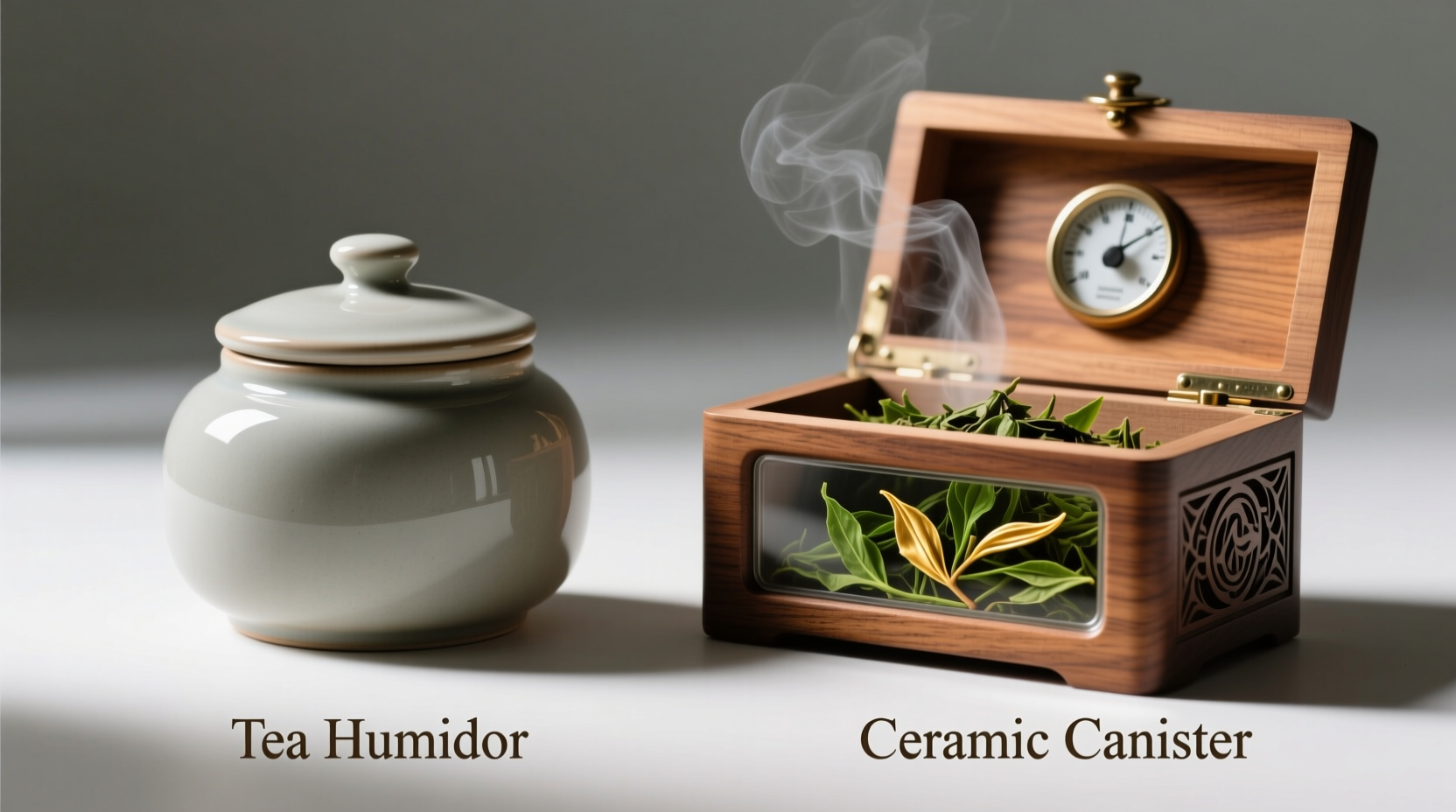
Ceramic canisters are widely used for storing dry goods, including tea. Their appeal lies in aesthetics, opacity, and moderate insulation. Typically glazed on the inside, they block light and offer a degree of moisture resistance.
However, not all ceramic containers are created equal. Many feature loose-fitting lids that do not form an airtight seal. This allows gradual air exchange, which may be acceptable for short-term storage of black or oolong teas but problematic for more sensitive varieties.
Tip: Choose ceramic canisters with rubber gaskets or silicone seals to improve airtightness. Store them in a dark cabinet away from stoves or windows.The material itself doesn’t regulate humidity. In dry climates, tea stored in ceramic jars may lose moisture too quickly, becoming brittle. In humid areas, without proper sealing, ambient moisture can seep in over time.
Tea Humidors: Precision Storage for Aging and Delicate Teas
A tea humidor is a controlled environment designed specifically for long-term tea preservation, particularly for aged teas like pu-erh, certain oolongs, and fermented varieties. Unlike simple canisters, humidors actively manage relative humidity (RH), typically maintaining levels between 60% and 75%, depending on the tea type.
Most humidors are made from wood—often Spanish cedar—which naturally absorbs and releases moisture to stabilize internal conditions. They include a hygrometer to monitor humidity and a humidification device (such as a salt-based system or gel pack) to maintain balance.
The real advantage lies in microclimate control. For aging pu-erh, consistent humidity encourages slow microbial fermentation, enhancing complexity and smoothness over time. However, this same environment would spoil green or white tea, which require dry, stable, low-humidity conditions.
When a Humidor Makes Sense
- You collect raw (sheng) or ripe (shou) pu-erh for aging.
- You live in an extremely dry climate and want to prevent tea desiccation.
- You store oxidized oolongs that benefit from slight humidity exposure.
When It Doesn’t
- You primarily drink green, white, or yellow teas.
- Your space already has high ambient humidity (above 70%).
- You lack space or budget for regular monitoring and maintenance.
Direct Comparison: Ceramic Canister vs Tea Humidor
| Feature | Ceramic Canister | Tea Humidor |
|---|---|---|
| Best For | Short- to medium-term storage of non-fermented teas | Long-term aging of pu-erh and select oolongs |
| Humidity Control | None (passive) | Active (60–75% RH adjustable) |
| Airtight Seal | Varies (often partial) | Generally excellent with gasketed lid |
| Light Protection | High (opaque material) | High (solid construction) |
| Maintenance | Low (wipe clean, refill) | Moderate (calibrate hygrometer, refill humidifier) |
| Cost | $15–$40 | $80–$250+ |
| Risk of Mold | Low (if kept dry) | Moderate (if poorly maintained) |
Real Example: A Collector’s Journey in Guangzhou
In Guangzhou, where humidity averages 75–85%, tea collector Wei Zhang learned the hard way about mismatched storage. He initially stored aged shou pu-erh in a glazed ceramic jar, believing the thick walls would suffice. After six months, he noticed musty notes and diminished sweetness. Upon inspection, the compressed cake had developed surface mold due to trapped moisture with no regulation.
He switched to a small Spanish cedar humidor with a Boveda humidity pack set to 68%. Within three months, his subsequent batches matured evenly, developing deeper earthy tones without spoilage. “The difference wasn’t just taste—it was consistency,” Wei said. “A humidor isn’t luxury; it’s necessity for serious aging.”
Conversely, when he tried storing fresh Longjing in the same humidor, the leaves absorbed excess moisture and lost their characteristic crispness within weeks. This reinforced that storage must match tea type—not just preference.
Action Plan: Choosing the Right Container
Selecting between a ceramic canister and a tea humidor depends on your tea habits and goals. Follow this step-by-step guide to decide:
- Inventory Your Tea Collection: List what you drink most—green, black, oolong, pu-erh?
- Determine Your Goal: Are you preserving freshness for immediate use, or aging tea over years?
- Assess Your Environment: Use a hygrometer to check room temperature and humidity. Below 60% RH favors dry storage; above 70% requires caution with humidors.
- Match Container to Purpose:
- For daily green/white/black tea: airtight ceramic or tin canister in a dark cupboard.
- For aging pu-erh: invest in a humidor with humidity control.
- Label and Rotate: Use the “first in, first out” rule. Label purchase dates and consume lighter teas within 6–12 months.
Checklist: Optimal Tea Storage at a Glance
- ✅ Store tea away from sunlight and heat sources
- ✅ Use opaque, airtight containers
- ✅ Keep away from strong odors (spices, coffee, cleaning products)
- ✅ Avoid refrigeration unless vacuum-sealed (condensation risk)
- ✅ Monitor humidity if using a humidor (ideal: 60–68% for pu-erh)
- ✅ Never mix tea types in the same container
Frequently Asked Questions
Can I use a cigar humidor for tea?
Yes, but with caution. Cigar humidors are often lined with Spanish cedar, which is suitable for tea. However, ensure no tobacco residue remains, and dedicate it solely to tea to avoid flavor transfer. Calibrate the humidity to 65% or lower, as cigars prefer higher moisture than most teas.
Do I need a humidor for oolong tea?
Only if you plan to age it. Most oolongs are best consumed within 1–2 years and should be stored in a cool, dark, airtight container like a ceramic canister with a tight seal. Traditional baked oolongs may benefit from slight humidity, but only under controlled conditions.
Is clay better than ceramic for tea storage?
Potential yes, but context matters. Yixing-style unglazed clay allows micro-oxygenation, which some believe enhances aging. However, it’s porous and can retain flavors, making it unsuitable for multiple tea types. Glazed ceramic offers better isolation and ease of use for everyday storage.
Final Recommendation: Match the Method to the Tea
There is no universal winner in the ceramic canister vs tea humidor debate. Each excels in its intended role. For most home drinkers who enjoy fresh green, white, or black teas, a well-sealed ceramic canister provides sufficient protection at a reasonable price. It’s practical, attractive, and effective when placed correctly.
But if you're investing in aged pu-erh or exploring the evolving character of fermented teas over time, a dedicated tea humidor becomes indispensable. It transforms storage from passive containment into active stewardship of flavor development.
💬 Ready to optimize your tea storage? Start by auditing your current setup. Replace loose-lidded jars, monitor your room’s humidity, and choose your next container based on what you actually drink. Small changes today lead to dramatically better cups tomorrow.








